The Backlog That Changed the Narrative
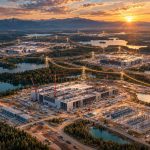
Microsoft CEO Satya Nadella’s admission says everything: “You may actually have a bunch of chips sitting in inventory that I can’t plug in.” For the past two years, the dominant narrative of AI infrastructure constraint was GPU scarcity — Nvidia’s H100s on allocation, waiting lists at cloud providers, sovereign AI projects delayed by chip supply. That narrative is now secondary. Microsoft has $80 billion in unfulfilled Azure orders. The electricity to power the data centers that would fulfill those orders does not exist yet — not because no one is building, but because the physical infrastructure of power delivery cannot be built on the timescale that AI demand has accelerated.
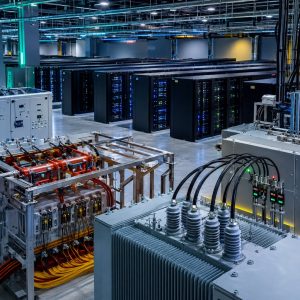
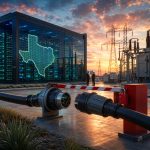
The numbers define the scope of the problem. Transformer lead times — the industrial electrical transformers that step voltage down to data center operating levels, not the neural network transformers of machine learning — have reached 128 weeks on average, versus approximately 52 weeks pre-2020. Prices for these transformers have risen 77% since 2019. In Northern Virginia, home to the world’s highest concentration of data center capacity, the interconnection queue — the wait for a new electrical connection to the grid — now stretches approximately 7 years. ERCOT, the Texas grid operator, received large-load connection requests that surged 700%, from 1 GW to 8 GW, between 2023 and 2024 alone.
Microsoft’s $625 billion commercial backlog (which doubled year-over-year) shows the demand side of the equation. The $80 billion in specifically unfulfilled Azure orders shows where that demand is stuck. The gap between what enterprises want to buy and what Microsoft can provision is not being closed by capital spending — Microsoft is already committing over $120 billion in 2026 capex, up approximately 50% from $80 billion in 2025. The gap is being closed by physical grid capacity, at the pace physical grid capacity gets built, which is measured in years, not quarters.
What $690 Billion in Capex Actually Buys — and What It Cannot
The combined 2026 capex commitment across five hyperscalers — Amazon ($200 billion), Alphabet ($175–185 billion), Meta ($115–135 billion), Microsoft ($120 billion+), and Oracle ($50 billion) — totals $660–690 billion. To calibrate the scale: combined annual capex in 2024 was just over $200 billion. This spending has nearly tripled in two years. The Stargate project alone — the OpenAI and SoftBank joint venture to build AI compute infrastructure — targets $500 billion of investment by 2029, with 7 gigawatts of planned capacity across five US sites.
But this capital expenditure is consuming free cash flow at rates that would be alarming in any other industry context. Amazon’s free cash flow is projected at negative $17 to negative $28 billion in 2026. Alphabet’s free cash flow collapsed from $73.3 billion in 2025 to approximately $8.2 billion in 2026 — an 89% decline. Meta’s declined 90%, from $43.6 billion to approximately $4.4 billion. Collectively, hyperscalers held $121 billion in bond issuances in 2025, and Alphabet issued a $20 billion bond in February 2026 that was five times oversubscribed — including the company’s first-ever 100-year sterling bond at a 6.125% coupon. These are companies borrowing at historical scale to fund infrastructure whose return horizon is measured in decades, not years.
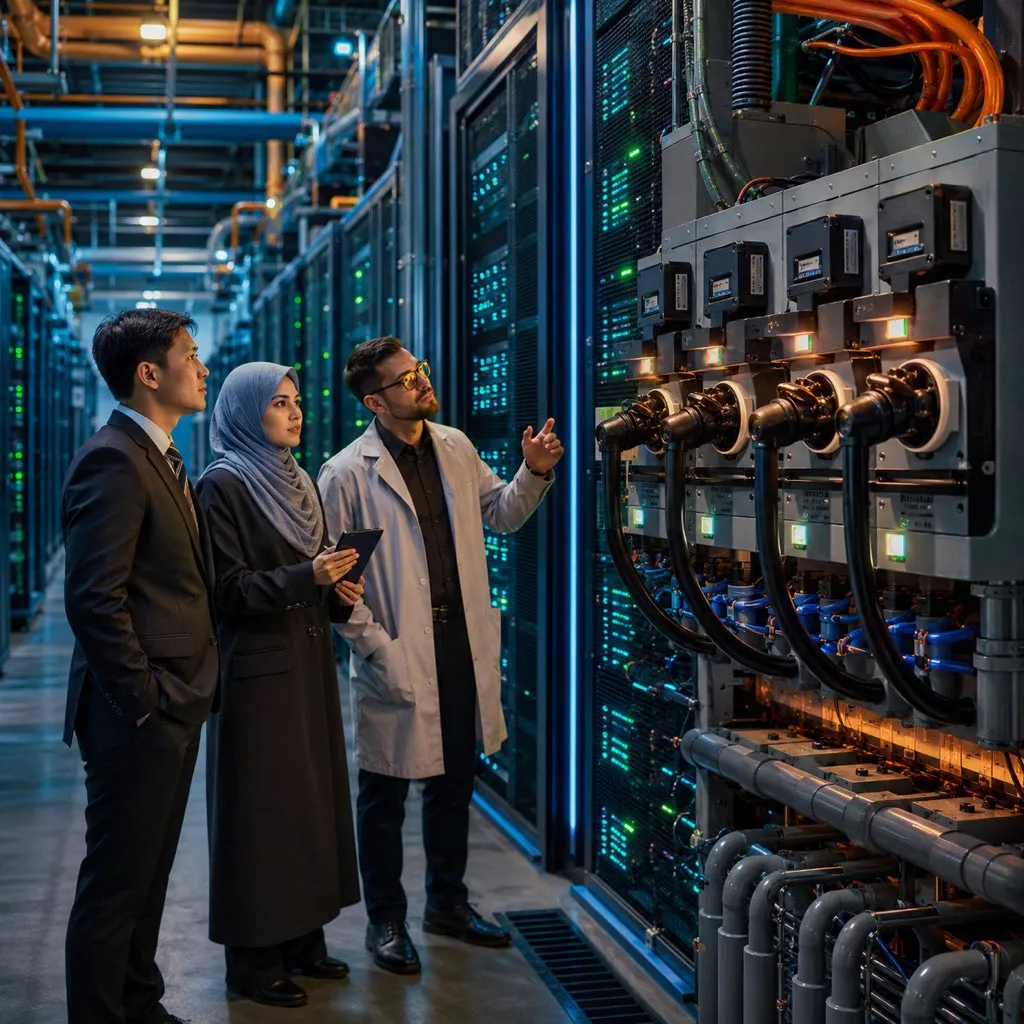
What $690 billion can buy: GPU clusters, real estate, network equipment, cooling systems, and the electrical infrastructure that exists within contracted lead times. What it cannot buy: the physical transformers that are on 128-week backlog, the grid interconnection capacity that regulators approve on a 7-year queue, or the electricity generation capacity that takes years to permit and build. McKinsey projects that global data center electricity demand will reach 945 TWh by 2030, up from 415 TWh in 2024 — a 128% increase. That demand growth requires power plant construction, transmission line permitting, and grid upgrades on a timeline that capital spending cannot compress below the laws of physics and regulation.
Advertisement
What Enterprise Infrastructure Leaders and Cloud Architects Should Do
1. Reframe AI Infrastructure Planning Around Power Availability, Not Just Vendor SLAs
Enterprise cloud architects who plan AI compute capacity by reading vendor SLA documents are planning for the wrong constraint. Microsoft’s $80 billion backlog demonstrates that even with committed spend and signed contracts, capacity can remain unavailable for months or years if the underlying power infrastructure is not in place. When evaluating AI infrastructure providers — hyperscalers, co-location facilities, or sovereign cloud operators — add power availability as a primary due diligence criterion. Ask vendors: what is your electrical capacity expansion timeline? What percentage of your data center space has guaranteed power contracts? Do you have contracted backup power for AI workloads, or only for traditional IT? Vendors who cannot answer these questions specifically are hiding a constraint.
2. Build AI Architecture for Multi-Region Failover — Power Outages Are the New Availability Zone Risk
Traditional cloud availability zone design assumes that the risk being mitigated is hardware failure or software bugs within a data center. The 2026 power bottleneck introduces a new category of risk: capacity rationing, where hyperscalers prioritize which tenants receive provisioned capacity based on contract tier or workload criticality when grid supply is constrained. Enterprise AI applications that depend on a single-region deployment of a single hyperscaler’s AI API are exposed to this risk in a way that traditional compute workloads were not. Multi-region AI architecture — with primary inference in one region and fallback capacity in a geographically separate power grid — is now a business continuity requirement, not a premium feature.
3. Hedge Hyperscaler Capacity with Alternative Infrastructure Providers
The Anthropic-Akamai $1.8 billion edge inference deal, Google’s expansion of TPU-based inference capacity, and the growth of AI-focused co-location providers (CoreWeave, Lambda Labs) all represent alternatives to the primary hyperscaler GPU cluster model. Enterprise technology leaders who are currently 90%+ dependent on a single hyperscaler for AI compute are exposed to the specific risk that hyperscalers themselves are now acknowledging — that capacity allocation will be constrained for years by power infrastructure timelines. A deliberate multi-vendor strategy — primary hyperscaler for training, CDN edge for inference, co-location for steady-state workloads — distributes this risk and often reduces cost simultaneously.
4. Treat the Power Constraint as a Strategic Timing Signal for AI Feature Rollout
If your enterprise AI roadmap assumes that hyperscaler GPU capacity will be freely available at the pace your product plan requires, you should pressure-test that assumption against the publicly disclosed backlog data. Microsoft’s 7-year Northern Virginia interconnection queue, combined with an $80 billion existing backlog, means that new enterprise AI capacity in the most constrained markets (eastern US, parts of Western Europe) could remain limited through 2028–2030. Prioritize AI features that can run on existing allocated capacity, and deprioritize features that require provisioning significant new capacity in backlog-constrained regions. Features designed for edge inference or small-model optimization will have shorter capacity wait times than features requiring massive centralized GPU allocation.
5. Monitor the Stargate Capacity Timeline as the Most Important Infrastructure Signal of 2026–2029
The Stargate project — $500 billion across five US sites, targeting 7 gigawatts of capacity by 2029 — is the largest single infrastructure program in AI history. Its on-time completion or delay will be the dominant factor in whether hyperscaler capacity bottlenecks ease in 2027–2028 or persist through 2029–2030. Enterprise technology leaders should treat Stargate milestone announcements (site permits, grid connection dates, first GPU installations) as first-order strategic intelligence — as important as quarterly earnings calls from the major cloud providers. A Stargate delay of 12–18 months propagates directly into the timeline for relief from current capacity constraints.
What Comes Next
The power constraint will not resolve uniformly. Nuclear power agreements — Microsoft’s Three Mile Island deal, Google’s investment in small modular reactors — suggest that hyperscalers are pursuing decade-scale power solutions in parallel with near-term grid connections. The gap between when grid connections are available and when nuclear power plants come online will be bridged by natural gas peakers, battery storage, and compressed timelines for renewable energy development.
For enterprise technology leaders, the practical implication is a 3–5 year window in which AI compute capacity is genuinely constrained — not by chip supply, not by software maturity, but by the physical infrastructure of electricity delivery. Companies that design their AI architecture to operate within this constrained capacity window — through edge inference, model optimization, multi-cloud hedging, and efficient workload scheduling — will build more competitive AI products than companies that simply wait for the constraint to resolve. The AI infrastructure race has revealed that its most fundamental input is not silicon or software — it is electricity. That changes the strategy for everyone.
Frequently Asked Questions
Q: How does the power bottleneck affect enterprises that already have signed hyperscaler contracts?
Existing contracts provide priority over new procurement, but they do not guarantee unlimited capacity expansion within the same region. Enterprises with active Azure, AWS, or Google Cloud contracts may face delays in provisioning new capacity — particularly GPU instances for AI workloads — in backlog-constrained regions like Northern Virginia and parts of Western Europe. Reviewing your contract’s capacity reservation terms and escalation provisions is a practical near-term action.
Q: Why are transformer lead times at 128 weeks — what changed?
Several factors converged. Pre-AI-boom, electrical transformer manufacturing capacity was calibrated for normal grid replacement cycles. The simultaneous explosion of data center construction, offshore wind farm buildout (also transformer-intensive), and post-pandemic supply chain disruption created demand that far outstripped global manufacturing capacity. Major transformer manufacturers have added capacity, but the production cycle for large power transformers — which require specialized steel, precision winding, and months of testing — cannot be compressed quickly.
Q: Is the $690 billion hyperscaler capex cycle sustainable from a financial perspective?
At current free cash flow levels, no — not indefinitely. Alphabet’s FCF fell 89% in 2026, Meta’s fell 90%, and Amazon is projected to generate negative free cash flow. This level of capex consumption depends on two assumptions: that revenue from AI products grows fast enough to restore cash generation within 3–5 years, and that capital markets continue to finance the gap (as evidenced by the $121 billion in 2025 bond issuances). If AI revenue growth disappoints, a capex reduction cycle similar to the 2023 tech reset is likely. The 128-week transformer lead times mean that such a cycle would leave half-built data centers and stranded infrastructure commitments.
—
Sources & Further Reading
- Hyperscaler CapEx: $690 Billion, Microsoft Azure Power Bottleneck 2026 — Introl
- Big Tech Hyperscalers Will Spend $700 Billion on AI Infrastructure — Fortune
- Hyperscalers in 2026: What’s Next for the World’s Largest Data Center Operators — Data Center Knowledge
- AI CapEx 2026: The $690B Infrastructure Sprint — Futurum Group
- Global AI Data Center Construction 2026 — Archdesk
🔗 Related Intelligence
The $700B Hyperscaler Bet: Why Power and Cooling Are Now the AI Infrastructure Ceiling

Cross-Cloud Lakehouse: Apache Iceberg and Open Standards Break Hyperscaler Data Lock-In
The 49GW Shortfall: How Cloud Operators Are Solving the AI Power Grid Bottleneck

Data Center Power Crisis: Grid Delays, PPAs, and SMRs Race to Keep AI Online