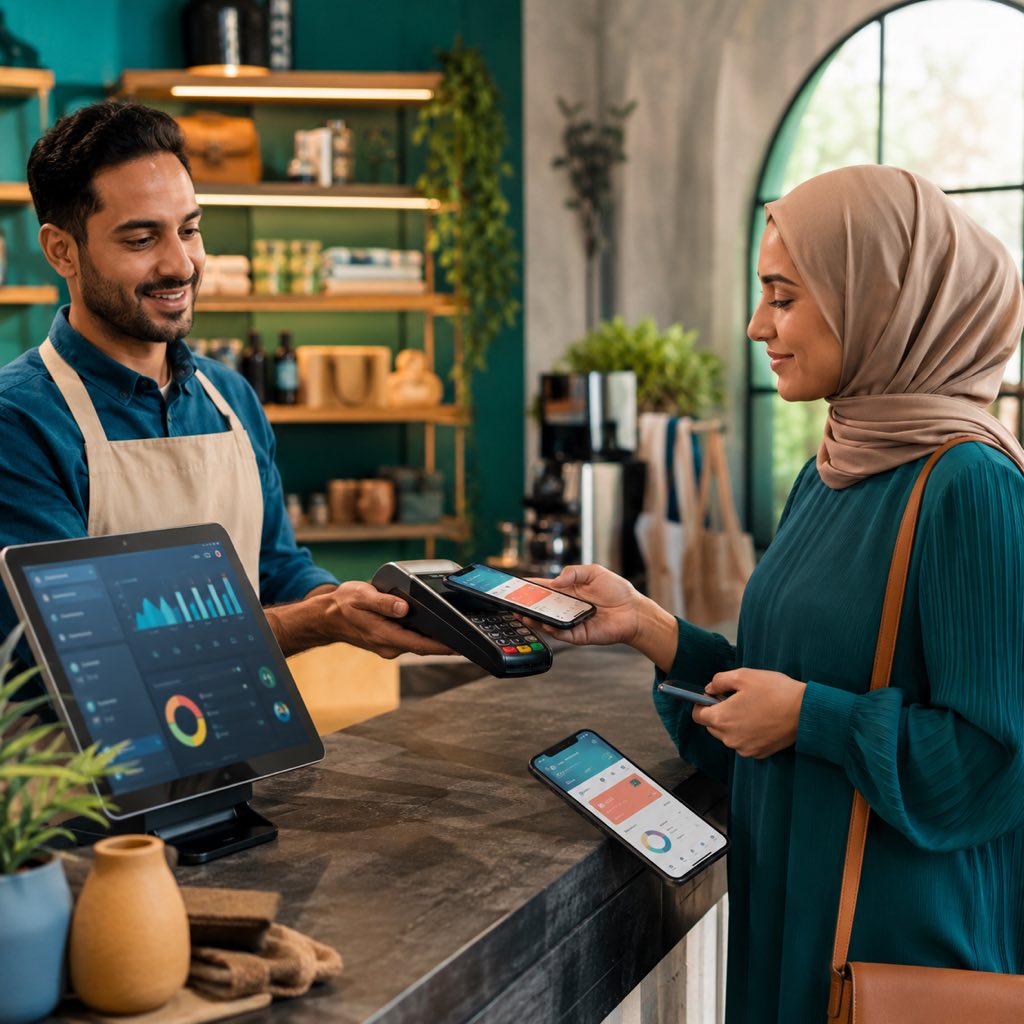
From Convenience App to Financial Operating System
The super app concept — a single platform integrating payments, commerce, mobility, lending, and social features — has moved well beyond its Asian origins. What began with WeChat and Alipay in China has become a global design pattern, and its economics are being replicated with increasing precision across Southeast Asia, Latin America, and now Africa.
According to market research compiled by EIN Presswire, the global super app market will reach $155.2 billion in 2026 and is on track to surpass $838.3 billion by 2033, growing at a compound annual rate of 27.2%. The Asia Pacific region leads with approximately 52% of global market share in 2026, driven by platforms like Tencent, Ant Group, Grab Holdings, GoTo Group, and Paytm — but the growth story of the next decade is being written in markets where traditional banking infrastructure is weakest.
The structural driver is financial inclusion by design rather than by mandate. In markets where 40-60% of adults lack formal bank accounts, a platform that embeds payments, micro-credit, and insurance into an app used daily for delivery or mobility does more in 18 months than a decade of bank-branch expansion. Payments remain the anchor service — commanding approximately 33% of super app revenue in 2026 — but lenders and insurers have recognized that the super app’s behavioral data advantage makes it a superior credit-scoring surface.
The Embedded Finance Architecture: Why Payments Come First
Super apps do not become financial platforms by accident. They follow a deliberate sequence that has been replicated across every successful market.
Step 1: Establish a high-frequency, low-margin hook. Mobility (ride-hailing), food delivery, or grocery delivery creates daily active usage. The platform becomes habitual before it becomes financially valuable. Grab in Southeast Asia, Rappi in Latin America, and Yassir in the Maghreb all used this playbook. Africa Business’s December 2025 analysis of super app dynamics notes that Africa’s unique advantage is mobile-money rails (M-Pesa, Orange Money, Wave) that reduce the wallet-conversion effort required in markets without prior digital payment infrastructure.
Step 2: Convert cash users to in-platform wallets. Once the daily-use hook is established, the platform offers a digital wallet as a convenience upgrade — faster checkout, no cash handling for drivers or couriers, loyalty points. Wallet penetration above 40% of monthly active users is the threshold at which financial product economics become viable.
Step 3: Layer credit and insurance onto behavioral data. A user who has paid for 200 food deliveries over 12 months has demonstrated income regularity, spending habits, and platform reliability. That data profile is more predictive than a traditional credit bureau check — and it exists in real time. Commercetools’s research on agentic commerce trends confirms that 73% of consumers already use AI in their shopping journeys, and embedded platforms are accelerating the convergence of behavioral data with financial product design.
Step 4: Monetize the financial stack at 3-8× the margin of the core service. Lending margins on micro-credit products embedded in super apps typically run at 15-35% APR in emerging markets, compared to near-zero margins on food delivery. The financial services layer — not the core platform — is where super app economics converge with profitability.
The monolithic model (a single app containing all services) currently leads with approximately 55% market share in 2026, while mini-app ecosystems — where third-party services plug into a host platform — are expected to show the fastest growth through 2033 as regulatory requirements push platforms to decouple financial services from entertainment or commerce layers.
Advertisement
What This Means for Digital Economy Builders
The super app model creates fundamentally different strategic imperatives depending on whether you are building a platform, supplying services to one, or operating in a market where one is emerging.
1. For platform builders: sequence your service stack deliberately, not opportunistically
The most common mistake in super app strategy is adding financial services too early — before wallet penetration reaches the threshold needed to make credit scoring viable. UnionPay’s January 2026 launch of the Nihao China super app demonstrates the opposite error: a payments-first platform expanding into services. Sequence matters. Build the behavioral data moat through high-frequency non-financial services first, then introduce financial products once you have 90+ days of transaction history per active user. This is the sequence that made Grab’s GrabFinance product profitable in Singapore before the platform expanded credit into Indonesia and Vietnam.
2. For financial service providers: embed your product, don’t compete with the platform
Banks and insurers that attempt to build competing apps against entrenched super apps are fighting on the wrong terrain. The winning strategy in every market where super apps have achieved significant penetration is API-first embedding: offer the financial product (credit assessment, insurance underwriting, wealth product) as a service that the platform can expose to its users. The Fintech Times’s analysis of Algeria’s ecosystem illustrates this in a nascent market context — platforms like Yassir are the distribution layer, and financial institutions that partner rather than compete gain access to behavioral data they cannot otherwise obtain.
3. For policymakers and regulators: sandbox before you restrict
The fastest-growing super app markets — India (UPI penetration exceeding 70% in multiple economies), Singapore, and Indonesia — share a common regulatory characteristic: proportional regulation that allowed embedded payments to scale before imposing full banking-equivalent requirements. Markets that imposed bank-level capital requirements on digital wallets before user adoption was established (a category that includes several African economies) delayed financial inclusion by 3-5 years. The policy lesson is to sandbox new financial features at limited scale before deciding on permanent regulatory treatment.
The Africa Opportunity: Why the Next Wave Is Different
Africa is not simply replicating the Asian super app model — it is adapting it to a context where mobile money (M-Pesa, Orange Money, Wave) has already established baseline digital payment behavior. The next wave of African super apps is building on top of existing mobile money rails rather than replacing them, which reduces the wallet-conversion challenge dramatically.
The continent’s embedded-finance opportunity is amplified by its SME lending gap: African SMEs face an estimated $140 billion annual financing deficit, and traditional banks serve only the largest businesses. A super app platform with 90 days of SME payment data — from a food supplier who delivers to restaurants daily, or a logistics provider who moves goods across a city — has a credit assessment advantage that no bank branch can replicate.
This is why the super app trajectory in Africa bears watching not as a consumer convenience story but as an infrastructure story. The platform that becomes the financial operating system for African SMEs — the equivalent of what Ant Group’s credit products did for Chinese SMEs between 2014 and 2020 — will create economic value orders of magnitude larger than any ride-hailing or delivery margin.
Frequently Asked Questions
What makes a super app different from a regular multi-feature app?
A super app achieves deep embedding of financial services — payments, credit, insurance — into a platform that users engage with daily for non-financial reasons (food delivery, mobility, social interaction). The financial services are economically viable because the behavioral data generated by daily use allows the platform to assess credit risk and behavior patterns that traditional banks cannot observe. The critical threshold is wallet penetration above ~40% of monthly active users, which creates the data density needed for financial product economics to work.
Why do emerging markets produce super apps faster than developed markets?
In markets with weak incumbent banking infrastructure, new digital platforms face less regulatory resistance and less consumer entrenchment in existing financial products. A user in Southeast Asia or Africa who has never had a credit card or a traditional loan is more willing to adopt in-app financial services than a user in France or the US who has 20 years of relationship history with their bank. Regulatory sandboxes in markets like India and Singapore also deliberately created space for mobile payment innovation before imposing full banking-equivalent requirements, accelerating adoption by 3-5 years.
How do super apps make money from embedded financial services?
The primary revenue sources are lending margin (typically 15-35% APR on micro-credit products in emerging markets), insurance commission (10-25% of premium on embedded insurance policies), and interchange fees on in-platform payments (0.5-1.5% of transaction value). Financial services in mature super apps like Grab or Ant Group generate 3-8× the revenue margin of the core platform services (mobility or e-commerce), which is why the financial layer is the primary profit engine even when it represents a smaller share of user engagement.
—
Sources & Further Reading
- Super Apps Market to Reach $155.2Bn in 2026 — EIN Presswire
- Super Apps Market Forecast 2026-2033 — OpenPR
- Why 2026 Will Be the Year of the Super App — Africa Business
- AI Trends Shaping Agentic Commerce — Commercetools
- Algeria’s Fintech Ecosystem in 2026 — The Fintech Times
- Why 2026 Will Be the Year of the Super App — TechFinancials
🔗 Related Intelligence
Embedded Finance: When Every App Becomes a Bank

Embedded Finance B2B: Open Banking Deadline Passes — 54% of Platforms Report Revenue Gains

Embedded Finance Revenue to Surpass 28 Billion by 2028 as B2B Platforms Drive Adoption

Stablecoins Cross the Enterprise Threshold: Trillion-Dollar Volume and the Payments Shift