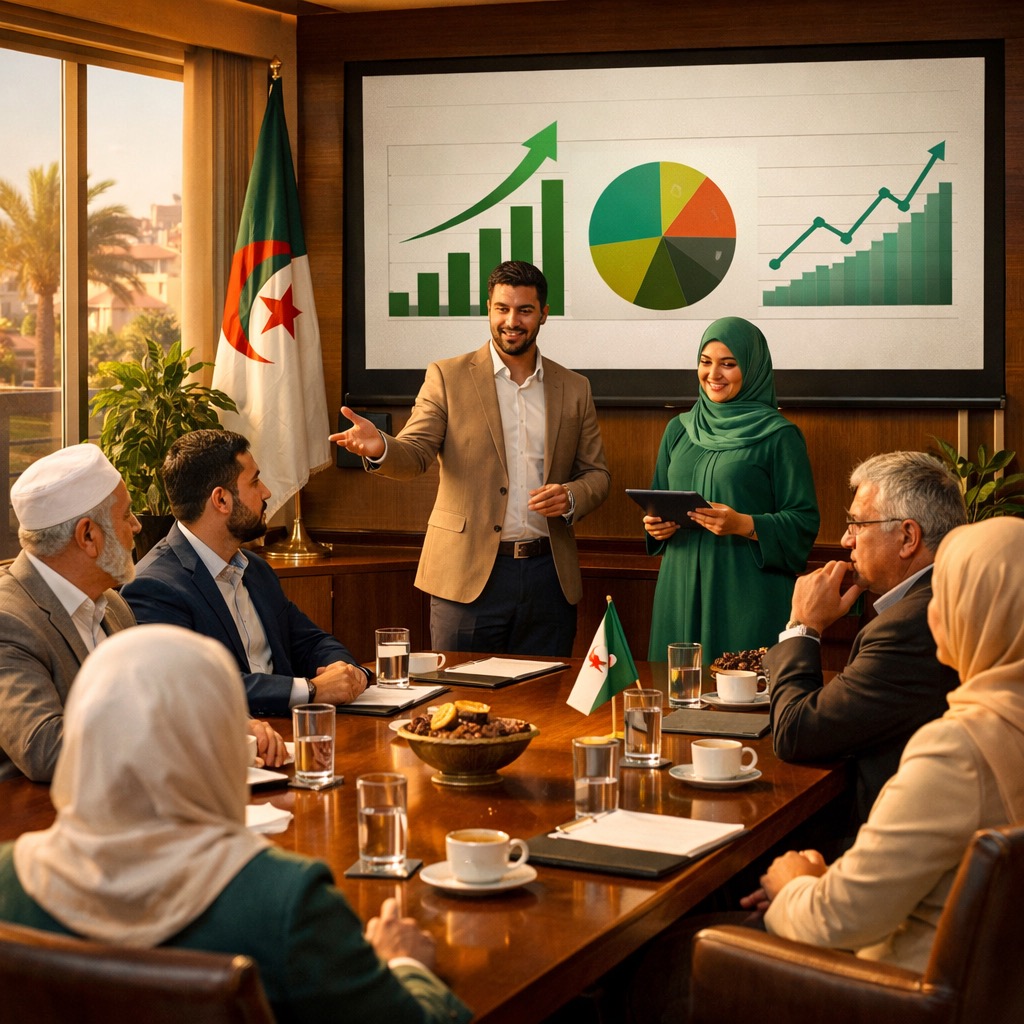
How the FCPR Framework Fills Algeria’s Funding Gap
For years, Algerian startup founders navigated a paradox. The government championed entrepreneurship through accelerators, incubators, and the Algeria Startup Fund. Banks offered credit lines. Angel investors operated informally. But one critical piece was missing: a regulated venture capital vehicle that could pool institutional capital and deploy it into high-growth startups through a professional management structure.
COSOB Regulation No. 24-02, dated October 23, 2024 and published in the Official Journal on May 7, 2025, closes that gap. The regulation creates the legal framework for OPCR (Organismes de Placement en Capital Risque), enabling two vehicle types: the SICAR (venture capital investment company) and the FCPR (Fonds Commun de Placement a Risque, a venture capital mutual fund). Both are designed to channel private capital into unlisted companies under COSOB supervision.
Before this framework, startup investment in Algeria relied on a patchwork of mechanisms with known limitations:
- Direct angel investments with minimal legal protection for either party
- Government grants through programs like the ASF, which processed 139 funding requests across 22 provinces but operates with bureaucratic constraints
- Bank loans requiring collateral that most early-stage startups cannot provide
- Foreign VC participation complicated by Algeria’s capital controls and the 51/49 investment rule, relaxed for non-strategic sectors in the 2020 Finance Law but still a factor in strategic industries
The FCPR gives Algeria’s private sector a standardized way to pool capital, conduct due diligence through a professional management company, invest in a portfolio of startups, and distribute returns within a regulated structure.
Key Parameters of the FCPR Framework
| Parameter | Requirement |
|---|---|
| Minimum fund size | 50 million DZD (~$370,000 at official rate) |
| Minimum unitholders | 2 |
| Investment mandate | 50%+ of assets in unlisted companies |
| Minimum hold period | 6 years before any exit |
| Management | COSOB-approved management company required |
| Reporting | Annual and semi-annual audited reports, published online |
| Supervision | Management company + approved financial custodian |
The 50 million DZD minimum is deliberately low by international standards, designed to encourage the formation of smaller, early-stage funds matching Algeria’s current ecosystem maturity. The 50%+ unlisted company requirement ensures FCPRs serve their intended purpose: channeling capital into private, growth-stage companies rather than becoming another vehicle for trading listed securities.
Afiya Investments Proves the Regulatory Machinery Works
The first real test of the FCPR framework is Afiya Investments, managed by Tell Markets — one of only two authorized fund management companies in Algeria alongside SEAF Algeria. COSOB approved Afiya as the country’s inaugural FCPR under Regulation 24-02, with Tell Markets required to launch the fund within three months of approval.
Afiya will concentrate its investments on unlisted companies in health, pharmaceuticals, and renewable energy — strategic sectors with high growth potential in Algeria. The fund’s significance lies less in its initial size than in proving the regulatory machinery works end-to-end: a private firm applied, COSOB approved, unitholders committed capital, and the fund has a mandate to invest.
How Afiya Differs from the ASF
The Algeria Startup Fund, created under the 2020 startup law, has been the dominant institutional investor in Algerian startups. It has reviewed over 350 applications, processed 139 funding requests, and raised over 1.2 billion dinars with total capital of 2.4 billion dinars. But the ASF operates under government constraints: investment decisions can be influenced by policy priorities, application timelines stretch months, and founders who do not fit the ASF criteria have few alternatives.
Afiya Investments, as a private FCPR, operates under different incentives. The management company’s reputation depends on generating returns for unitholders. Private funds can move at commercial speed, issuing term sheets in weeks. A professional VC can build a diversified portfolio across sectors and stages, and reserve capital for follow-on investments in top performers.
The coexistence of public funding (ASF) and private funding (FCPRs) creates a healthier ecosystem where founders gain optionality and the market develops better price discovery for startup valuations.
Advertisement
Four Structural Challenges That Will Determine Success
The FCPR framework is necessary for a functioning VC ecosystem, but not sufficient. Four challenges will determine whether Algeria’s venture capital experiment scales.
Limited Partners and Institutional Capital
VC funds need Limited Partners — institutions and wealthy individuals who commit capital. Algeria’s LP landscape is thin. The pension system (CNR and CASNOS) operates on a pay-as-you-go structure without an alternative assets mandate. Insurance companies are conservative. There is no tradition of family offices allocating to VC. The sovereign wealth fund (FRR) was fully depleted in 2017 after the oil price crash, briefly rebuilt to DZD 2,000 billion by end-2022, then depleted again in 2024.
Building the LP base requires regulatory changes allowing pension funds to allocate a small percentage to alternatives, education on VC risk-return profiles, and demonstrated track records from Afiya and subsequent FCPRs.
Deal Flow and Startup Quality
Algeria’s startup pipeline of investment-ready companies remains narrow. For FCPRs to generate returns, they need startups that demonstrate product-market fit, show a path to significant revenue growth, build capable management teams, and address markets large enough to justify venture-scale returns. Strengthening the pipeline means better technical education, more experienced mentors, stronger accelerator programs, and successful exits that inspire the next generation.
Exit Pathways
Without exits, the VC model breaks down. Algeria’s exit landscape is constrained. The Algiers Stock Exchange has grown — 8 listed equity companies, 34 bond lines, and up to 3 new listings expected in 2026 including Ayrade, an IT services firm — but remains small. COSOB’s fee waiver for startups listing on the Growth segment through 2028 (capped at DZD 500 million per transaction) is encouraging. Cross-border M&A is complicated by capital controls. There is no established secondary market for private company shares.
Currency and Capital Controls
Algeria maintains strict capital controls. The dinar is not freely convertible. According to the US State Department’s 2025 Investment Climate Statement, fund repatriation requires roughly 30 administrative steps and takes three to six months rather than the theoretical one month. These controls become critical when portfolio companies seek international follow-on funding, when FCPRs co-invest with foreign funds, or when exits involve cross-border acquirers.
Regional Context Shows Algeria Can Learn from Neighbors
Algeria is not the first North African country to develop formal VC structures. Morocco’s Azur Innovation Fund, created in 2016 under the Innov Invest initiative, has invested in 16 companies, while CDG Invest’s 212 Founders programme has completed over 99 investments. Tunisia’s SICAR framework, organized since 1995, was an early mover but has been criticized for excessive compliance burdens that deter fund formation. Egypt’s startup ecosystem attracted $614 million in 2025, boosted by a population exceeding 106 million and a $1 billion government commitment.
Algeria’s late entry means it can learn from these precedents: Morocco’s success with sector-specific funds and public-private co-investment, Tunisia’s cautionary tale on over-regulation, and Egypt’s demonstration that large domestic markets attract international capital.
What Algerian Founders Should Prepare For
The FCPR framework changes the funding calculus for startups in three concrete ways. First, more funding options: as additional FCPRs launch, founders will have multiple potential lead investors beyond the ASF. Second, higher expectations: professional VCs demand rigorous due diligence on financials, unit economics, and team quality, plus structured term sheets with liquidation preferences and board seats. Third, longer horizons with exit pressure: the minimum 6-year hold period means patient capital, but investors will need credible exit paths within the fund lifecycle.
Frequently Asked Questions
What is an FCPR and how does it differ from bank financing?
An FCPR (Fonds Commun de Placement a Risque) is a collective investment vehicle designed specifically for venture capital. Unlike bank loans that require collateral and immediate repayment schedules, an FCPR pools capital from multiple investors (unitholders) and deploys it as equity into unlisted companies. The fund has a minimum 6-year hold period, invests at least 50% of assets in private companies, and is managed by a COSOB-approved management company. This structure aligns with the high-risk, long-horizon profile of startup investing that traditional bank credit cannot serve.
Can foreign investors participate in Algerian FCPRs?
The framework does not explicitly exclude foreign investors, but Algeria’s capital control regime creates practical hurdles. The dinar is not freely convertible, and fund repatriation can take three to six months through roughly 30 administrative steps. Foreign participation is more likely to come initially from development finance institutions (such as Proparco or the EIB), multilateral funds, and diaspora investor networks rather than traditional global VCs who typically require unrestricted capital flows. Gradual liberalization of capital controls would significantly expand the potential LP base.
How does the FCPR complement the Algeria Startup Fund?
The ASF remains a government-backed fund with a policy mandate, having processed 139 funding requests with 2.4 billion dinars in capital. FCPRs like Afiya Investments operate as private, return-driven funds with different criteria, timelines, and governance. The coexistence creates a healthier ecosystem: the ASF can continue backing early-stage startups aligned with national priorities, while private FCPRs provide commercially-driven growth capital. Successful ASF-backed startups may graduate to raising from FCPRs for growth-stage rounds.
Sources & Further Reading
- COSOB Launches New Financing Engine via OPCR Framework — Algeria Invest
- COSOB Authorizes Creation of Algeria’s First FCPR — Le Chiffre d’Affaires
- COSOB Grants First FCPR Approval in Algeria — Maghreb Emergent
- Algeria Opens Stock Market Access to Startups with Fee Waivers Through 2028 — Ecofin Agency
- 2025 Investment Climate Statement: Algeria — US State Department
- Algeria Startup Ecosystem 2025: Reforms Driving Innovation — Techpression
🔗 Related Intelligence

Algeria’s Stock Exchange: Now Open to Startups at Zero Cost

ASC 2025 Algiers: How Algeria’s $1B Fund and 9-Point Declaration Reshape African Startups

Algeria Waives IPO Fees for Startups: Can the Algiers Stock Exchange Become a Real Funding Channel?

Algeria’s Startup Law: The Complete Guide to the Regulatory Framework in 2026