The Scale of a Problem No One Is Measuring
Algeria generated an estimated 309,000 tonnes (309 kilotonnes) of electronic waste in 2019, according to the Regional E-waste Monitor for the Arab States 2021, published by UNITAR, ITU, and SCYCLE. That figure makes Algeria the fourth-largest e-waste producer in Africa, behind Egypt (586 kt), Nigeria (461 kt), and South Africa (416 kt). Per capita, Algerians generate approximately 7 kg of e-waste per person per year — close to the global average of 7.8 kg and consistent with the Arab States regional average of 6.6 kg per inhabitant. These volumes are rising as mobile connectivity expands (over 55 million cellular connections were active in late 2025, equivalent to 117% of the population), laptop ownership grows among the approximately 1.8 million university students, and government digitization programs push devices into schools, hospitals, and public administration.
The striking fact is not the volume — it is the absence of any meaningful system to manage it. Until January 2025, Algeria had no dedicated e-waste legislation and no extended producer responsibility (EPR) scheme requiring manufacturers or importers to fund collection and recycling. There are no certified e-waste recycling facilities operating at meaningful scale. The country has not reported e-waste-specific statistics to international bodies. Less than 1% of e-waste generated in Africa is formally collected and recycled, according to the Global E-waste Monitor 2024, and Algeria is no exception to that pattern.
What happens to the hundreds of thousands of tonnes of discarded phones, computers, televisions, printers, cables, and batteries? The answer involves a combination of household storage (Algerians tend to accumulate old devices rather than discard them), informal waste streams where e-waste enters municipal landfills without segregation, and a small but active informal recycling sector that recovers valuable metals using methods that pose serious health and environmental risks.
What the Law Says — and What It Doesn’t
Algeria’s environmental regulatory framework is anchored by Law 03-10 of July 19, 2003, on environmental protection in the context of sustainable development. This law establishes general principles for waste management, pollution control, and environmental impact assessment. It categorizes waste into household, special (hazardous), and inert categories, and enshrines the “polluter pays” principle. Electronic waste, which contains both hazardous materials (lead, mercury, cadmium, brominated flame retardants) and valuable recoverable materials (gold, silver, copper, palladium), falls into the “special waste” category.
Law 01-19 of December 12, 2001, on waste management, control, and elimination, provides a more detailed framework. It requires generators of special waste to declare quantities, maintain tracking records, and use authorized treatment facilities. Executive Decree 06-104 of February 28, 2006, established a nomenclature of hazardous waste that includes several categories relevant to e-waste: batteries and accumulators, electrical and electronic equipment, and cathode ray tubes. On paper, e-waste is not entirely unregulated — it is classified as hazardous waste subject to declaration and controlled disposal requirements.
The gap between legislative text and reality has been vast. The declaration requirements assumed an infrastructure of authorized collectors, transporters, and treatment facilities that did not exist for e-waste. The Ministry of Environment had not issued implementing regulations specific to WEEE (Waste Electrical and Electronic Equipment). Algeria ratified the Basel Convention, which restricts transboundary movement of hazardous waste, but monitoring of e-waste imports — particularly second-hand electronics that rapidly become waste — has been minimal.
A significant legislative shift arrived on January 23, 2025, when Algeria’s Council of the Nation adopted a new law amending and supplementing Law 01-19. This amendment introduces several provisions directly relevant to e-waste: extended producer responsibility (EPR) requiring producers and waste holders to ensure proper waste valorization, eco-design requirements encouraging products that minimize environmental impact, a digital waste management system, a waste treatment hierarchy prioritizing prevention and recycling over disposal, and stricter penalties for violations. On paper, Algeria now has the legal foundation for a modern waste management system. The critical question is implementation: translating legislative principles into operational infrastructure, collection targets, certified recyclers, and enforcement mechanisms — a process that typically takes years even under favorable conditions.
Advertisement
The Informal Sector: Innovation, Exploitation, and Toxicity
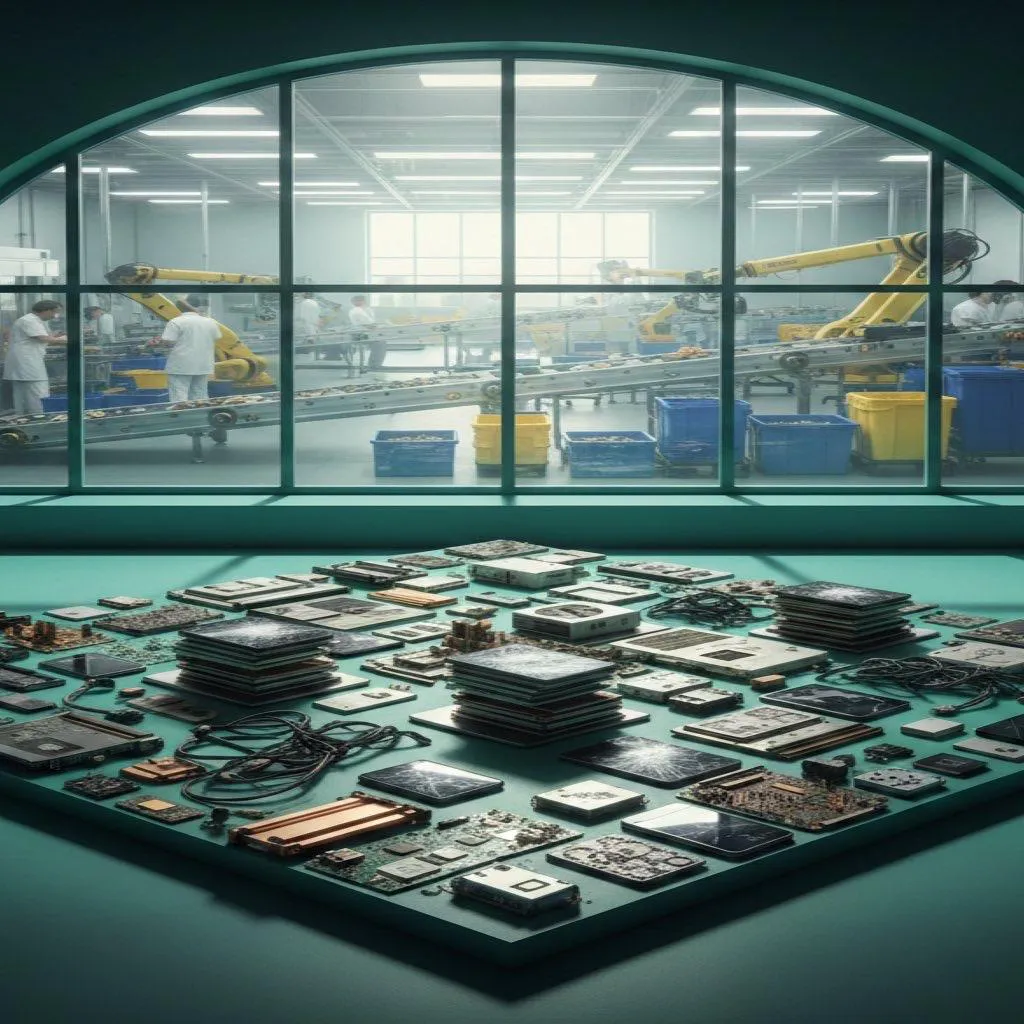
In the absence of formal infrastructure, an informal e-waste economy has emerged in Algeria’s major cities. Across Algiers, Oran, Constantine, and Setif, clusters of small workshops operate where workers — often without protective equipment — manually disassemble electronics to recover copper wire, aluminum, circuit boards, and occasionally precious metals. These workshops serve a dual economic function: they provide livelihoods for workers who lack formal employment alternatives, and they feed recovered materials into domestic and international commodity markets.
The health and environmental costs are significant and well documented globally. Manual dismantling of circuit boards using heat guns or open burning releases toxic fumes containing lead, dioxins, and furans. Workers handling CRT monitors risk exposure to lead dust at concentrations far exceeding WHO occupational safety limits. Battery acid from improperly processed lithium-ion batteries contaminates soil and groundwater. A 2021 systematic review covering studies from 2005 to 2017 found that heavy metal concentrations in soil and water near informal e-waste processing sites worldwide consistently exceeded guideline values, with lead contamination presenting the highest risk. The WHO’s 2021 report on children and e-waste documented elevated rates of respiratory illness, neurodevelopmental damage, and DNA damage in populations living near informal recycling operations. Algeria’s informal e-waste workers face these same exposure pathways, though peer-reviewed studies specific to Algerian sites remain scarce — itself an indicator of the attention gap this sector receives.
The informal sector also highlights the economic value trapped in Algeria’s e-waste stream. One tonne of circuit boards contains approximately 150-250 grams of gold, 1-2 kg of silver, and 80-100 kg of copper. With gold trading above $5,100 per ounce in early 2026, the precious metal content of circuit boards alone is worth tens of thousands of dollars per tonne. Algeria’s annual e-waste stream, comprising over 300,000 tonnes of mixed electronics (most of which is not high-value circuit boards), nonetheless contains hundreds of millions of dollars in potentially recoverable materials — the vast majority of which is currently lost to landfill, informal processing with low recovery rates, or indefinite household storage. This is not just an environmental problem — it is an economic waste of resources that a formal recycling industry could capture.
From Policy to Practice: What Implementation Requires
Algeria’s January 2025 waste management amendment marks a genuine policy breakthrough. The introduction of extended producer responsibility and circular economy principles into law puts Algeria ahead of many countries that lack even this legislative foundation. But proven models from other countries show that the distance from legislation to functioning e-waste systems is measured in years of sustained investment and institutional development.
The EU’s WEEE Directive (first adopted in 2003, substantially revised in 2012) provides the most comprehensive model, backed by decades of implementation experience. India’s E-Waste Management Rules, notified in November 2022 and effective from April 2023, expanded coverage to over 130 product categories and introduced escalating recycling targets from 60% to 80% over five years. In Africa, Rwanda approved an e-waste policy in 2016 and established a state-of-the-art dismantling and recycling facility through a public-private partnership with EnviroServe, though awareness of e-waste legislation among the population remains below 15%. Nigeria’s EPR program, operationalized through the E-waste Producer Responsibility Organisation Nigeria (EPRON) founded in 2018 with support from HP, Dell, Philips, and Microsoft, provides a model for engaging multinational electronics producers in African markets — though formal collection remains a fraction of total e-waste generated.
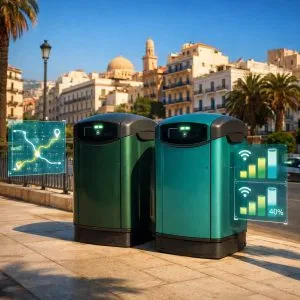
For Algeria, four implementation priorities stand out. First, implementing regulations under the January 2025 amendment must define specific collection targets, recycling rate objectives, and producer obligations — the law establishes principles, but the operational details will determine real-world impact. Second, collection infrastructure requires designated drop-off points at municipal waste facilities, retailer take-back obligations, and periodic collection campaigns targeting the universities, schools, and government offices that accumulate large volumes of obsolete equipment. Third, treatment standards must define minimum requirements for dismantling, material recovery, and hazardous substance management — preventing the worst practices of the informal sector while creating pathways for informal workers to transition into formal employment. Fourth, Algeria’s existing customs infrastructure, managed by the Direction Generale des Douanes and already processing electronics-specific tariff codes (HS codes 8471, 8517, 8528), provides a ready-made mechanism for collecting EPR levies at the point of import. Given that Algeria imports virtually all its electronics — the smartphone market alone was valued at approximately $1.9 billion in 2025 — even modest levies could generate substantial funding for e-waste infrastructure.
Frequently Asked Questions
What is e-waste and environmental compliance in algeria’s tech sector?
E-Waste and Environmental Compliance in Algeria’s Tech Sector: The Growing Problem covers the essential aspects of this topic, examining current trends, key players, and practical implications for professionals and organizations in 2026.
Why is e-waste and environmental compliance in algeria’s tech sector important for Algeria?
This topic is significant for Algeria because it intersects with the country’s digital transformation goals, economic diversification strategy, and growing technology ecosystem. The article provides specific context for Algerian stakeholders.
How does what the law says — and what it doesn’t work?
The article examines this through the lens of what the law says — and what it doesn’t, providing detailed analysis of the mechanisms, trade-offs, and practical implications for stakeholders.
Sources & Further Reading
- Global E-Waste Monitor 2024 — UNITAR and ITU
- Regional E-waste Monitor for the Arab States 2021 — UNITAR/ITU/SCYCLE
- Law 03-10 on Environmental Protection — IEA Policy Database
- Law 01-19 on Waste Management and Control — AMP EID
- Algeria Adopts New Law to Strengthen Waste Management and Advance Circular Economy (January 2025) — RegASK
- Basel Convention — Parties and Signatories
- EU WEEE Directive 2012/19/EU — European Commission
- India E-Waste Management Rules 2022 — Press Information Bureau
- Rwanda National E-Waste Management Policy — EACO
- EPRON — E-waste Producer Responsibility Organisation Nigeria
- WHO — Children and Digital Dumpsites: E-Waste Exposure and Child Health (2021)
- Environmental Heavy Metal Contamination from E-Waste Recycling — Systematic Review (MDPI)
- DataReportal — Digital 2026: Algeria
- Direction Générale des Douanes — Algeria Customs