Quick Take: Computer vision is Algeria’s most accessible AI opportunity because it builds on existing camera infrastructure and addresses immediate industrial needs. The gap is not in the technology — which is globally mature — but in the local integration ecosystem: companies that can take an off-the-shelf CV model, adapt it to a specific factory line or traffic camera feed, and deliver a turnkey solution. The ALSAT-3A satellite and Oran AI center are closing the infrastructure gap. Whoever builds that integration capability first has a significant first-mover advantage.
Why Computer Vision Is the Most Deployable AI
Among the branches of artificial intelligence, computer vision has the clearest path from research to revenue. The technology — training neural networks to interpret images and video — has matured to the point where off-the-shelf models can identify objects, detect defects, read text, and classify scenes with accuracy that exceeds human performance in controlled conditions. The global computer vision market is estimated at $21–$24 billion in 2025, growing at 16–20% annually, driven by manufacturing, retail, security, and automotive applications.
The reason computer vision leads AI deployment is practical: cameras are cheap, ubiquitous, and already installed in most industrial and commercial environments. A manufacturing plant with existing security cameras can repurpose that infrastructure for quality inspection with software alone. A retail store can add customer analytics. A city with traffic cameras can automate license plate recognition. The hardware barrier to entry is far lower than for other AI applications that require specialized sensors or massive datasets.
For Algeria, this combination of mature technology and low hardware requirements creates an opportunity. The country has specific industrial, agricultural, and urban use cases where computer vision could deliver immediate value — if the software layer, talent, and integration expertise can be mobilized.
Industrial Use Cases: Cevital, SNVI, and Sonatrach
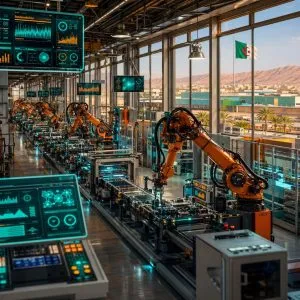
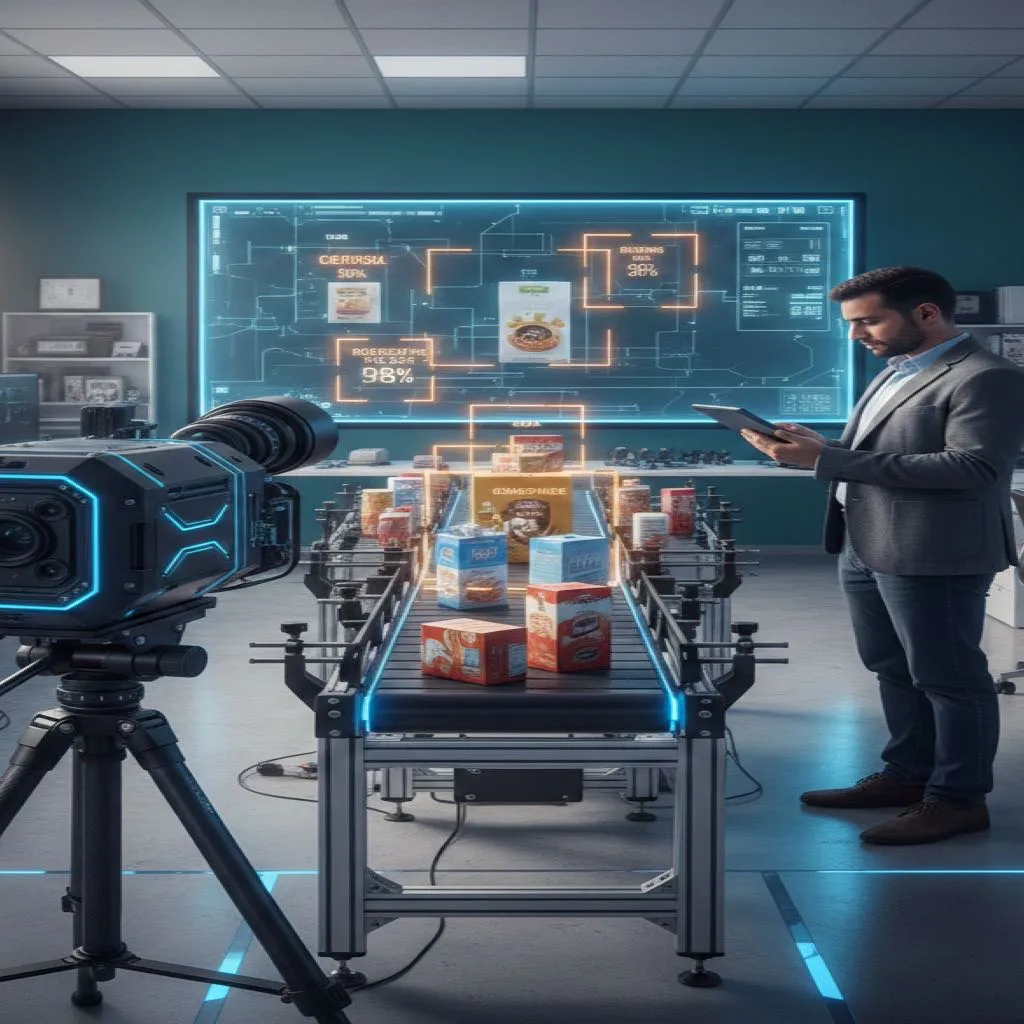
Algeria’s largest private company, Cevital, operates one of Africa’s most significant food processing complexes in Bejaia — home to the world’s largest sugar refinery (2 million tonnes per year), one of Africa’s largest edible oil refineries (570,000 tonnes per year), and a new oilseed crushing plant with daily capacity exceeding 6,800 tonnes. The group employs 18,000 people directly. In food processing, computer vision quality control is standard in advanced economies: cameras inspect products on production lines for contamination, packaging defects, fill-level accuracy, and labeling errors at speeds no human inspector can match. A single CV system can inspect thousands of items per minute with defect detection rates above 99%. For Cevital’s export operations — where international buyers enforce strict quality standards — CV-based inspection could reduce rejection rates and customer complaints.
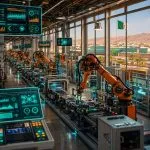
SNVI (Societe Nationale des Vehicules Industriels), Algeria’s state-owned truck and bus manufacturer, operates assembly lines in Rouiba where computer vision could automate weld inspection, paint quality analysis, and component verification. Global automotive manufacturers have deployed CV extensively for production line quality assurance. SNVI’s production volumes are modest by global standards, but the technology scales down — a single inspection station with two industrial cameras and an edge computing device can cost under $50,000.
Sonatrach, which dominates Algeria’s economy, has pipeline and facility infrastructure spanning thousands of kilometers. Computer vision applied to drone-captured imagery can detect pipeline corrosion, flare anomalies, equipment wear, and vegetation encroachment far more efficiently than manual inspection. Oil majors like Shell and BP have deployed drone-plus-CV inspection programs that reduce inspection costs by 60% while improving detection rates for maintenance issues. Sonatrach’s $60 billion investment plan — which includes digital transformation and modernization — creates a procurement window for CV-based inspection solutions.
Advertisement
The Algerian Computer Vision Ecosystem
Algeria’s computer vision ecosystem is small but not nonexistent. University research groups at USTHB, the University of Constantine, and the University of Oran have published work on Arabic text recognition, satellite image classification, and medical image analysis. CERIST (Centre de Recherche sur l’Information Scientifique et Technique) has supported computer vision research projects, and some PhD graduates have founded or joined startups applying their expertise. The National School of Artificial Intelligence (ENSIA) at Sidi Abdellah specifically trains engineers in NLP, speech processing, and computer vision — building a pipeline of graduates with directly relevant skills.
On the startup side, the picture is nascent. A handful of Algerian companies work in adjacent spaces — surveillance system integration, IT services for industrial clients — but dedicated computer vision product companies are rare. The startup ecosystem hubs have incubated AI-adjacent projects, and Algeria’s 50–60 active AI-enabled startups include some working on image processing and recognition. But the gap between university research prototypes and commercial-grade CV products remains wide. This is partly a market problem: Algerian industrial clients are not yet actively seeking AI-powered quality control, so there is limited pull for startups to build these products.
The hardware supply chain presents another challenge. Industrial-grade CV systems require specific cameras (line-scan cameras, infrared cameras, high-speed global-shutter cameras), specialized lighting, and GPU-equipped edge computing devices. These components are imported, subject to Algeria’s import regulations and foreign currency constraints. Nvidia’s Jetson edge AI platform, widely used globally for CV deployment, has limited distribution in Algeria. Building a CV integration business requires not just software expertise but reliable access to hardware and spare parts. The AI Supercomputing Center under construction in Oran — equipped with GPU clusters — could partially address the compute gap for development and training, but edge deployment hardware for factory floors remains an import dependency.
Surveillance, Agriculture, and Urban Applications
Beyond manufacturing, computer vision has applications across Algeria’s economy. Traffic enforcement is perhaps the most immediate: automatic license plate recognition (ALPR) for speed cameras, red-light violations, and toll collection. Algeria has invested in road infrastructure — the East-West Highway, urban expressways — and ALPR systems are already partially deployed. AI-enhanced versions can additionally detect vehicle types, estimate traffic flow, and identify accidents in real time.
Agricultural monitoring via satellite and drone imagery is a high-value application gaining new momentum. Algeria has 8.5 million hectares of arable land across the Tell Atlas and High Plateaus, with the agricultural sector contributing approximately 13% to GDP according to World Bank data. The Algerian Space Agency (ASAL) now operates six earth observation satellites, including the ALSAT-3A launched in January 2026 from China’s Jiuquan Satellite Launch Center aboard a Long March-2C rocket under an Algeria-China space cooperation agreement. Computer vision applied to multispectral satellite imagery can assess crop health, detect pest infestations, estimate yields, and map irrigation coverage. The constraint is not data availability — it is the processing and analysis pipeline. With ASAL’s expanding constellation providing the raw imagery and the Oran AI Supercomputing Center offering processing power, the infrastructure for agricultural CV is coming into place.
Retail analytics represents a growing urban market. Algerian retail is evolving from traditional souks toward modern formats — Ardis, UNO, and other chains are expanding. Computer vision in retail tracks foot traffic, analyzes shelf placement effectiveness, monitors inventory levels, and detects shoplifting. While the Algerian retail market is still developing the data sophistication to demand these tools, early adopters could gain competitive advantage as the sector modernizes.
Frequently Asked Questions
What is computer vision in algeria?
Computer Vision in Algeria: From Manufacturing Quality Control to Smart Surveillance covers the essential aspects of this topic, examining current trends, key players, and practical implications for professionals and organizations in 2026.
Why is computer vision in algeria important for Algeria?
This topic is significant for Algeria because it intersects with the country’s digital transformation goals, economic diversification strategy, and growing technology ecosystem. The article provides specific context for Algerian stakeholders.
How does industrial use cases: cevital, snvi, and sonatrach work?
The article examines this through the lens of industrial use cases: cevital, snvi, and sonatrach, providing detailed analysis of the mechanisms, trade-offs, and practical implications for stakeholders.
Sources & Further Reading
- Computer Vision Market Size and Growth — Grand View Research
- Cevital Group — Wikipedia
- ALSAT-3A Earth Observation Satellite Launch — Space in Africa
- Algerian Space Agency (ASAL) — Wikipedia
- Nvidia Jetson Edge AI Platform — Nvidia
- CERIST Research Centre — CERIST
- SNVI Rouiba Manufacturing — SNVI
- World Bank — Algeria Agriculture Data