Algeria at the Center of Arab SME Digital Trade Cooperation
The League of Arab States does not casually assign conference patronage. The fact that SMEX Algeria 2026 — the Arab International Small and Medium Enterprises Conference and Expo — operates under League patronage and was assigned to Algeria’s Fairs and Exportation Company (SAFEX) as the hosting operator signals a deliberate strategic choice to make Algeria the convening point for Arab SME trade development.
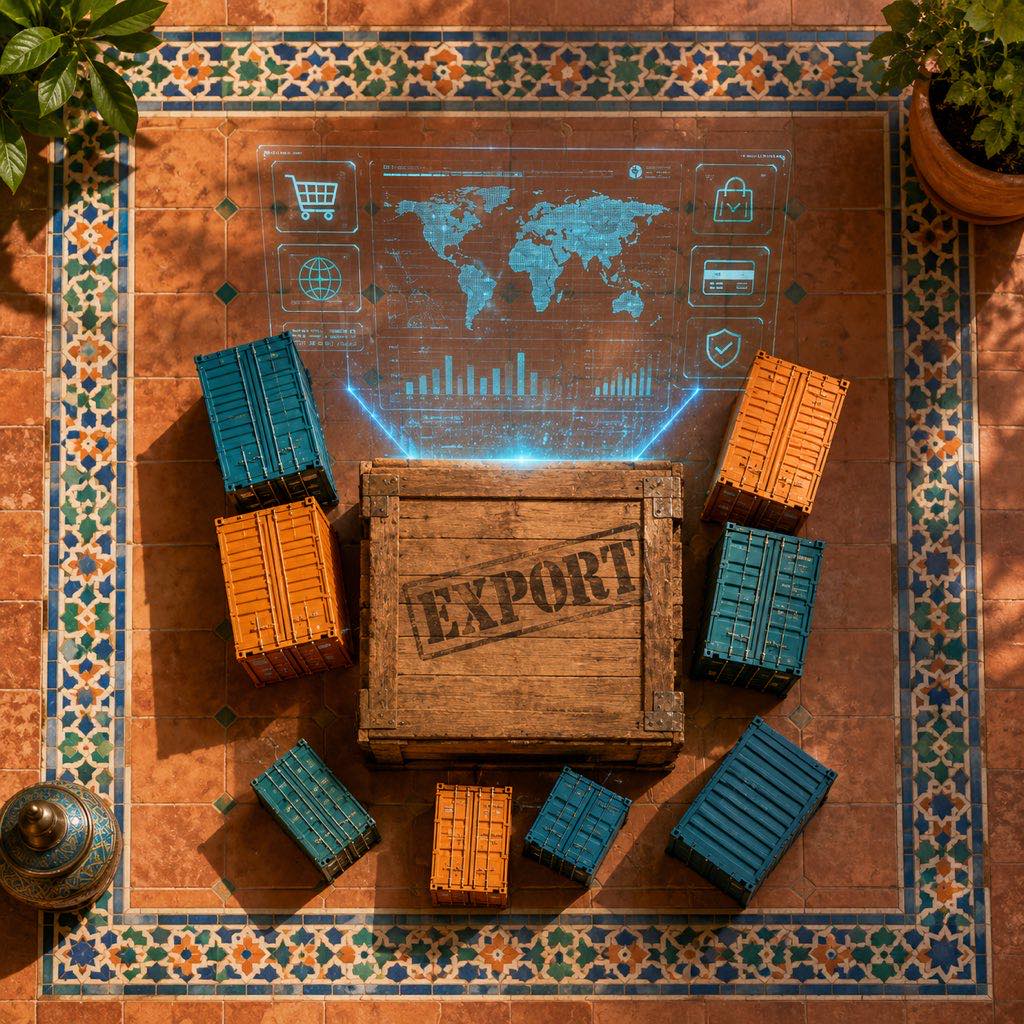
The conference’s theme, “Smart Manufacturing: Enhancing Competitiveness and Innovation,” reflects the broader regional shift in how Arab governments and institutions think about SME development: not as a welfare or employment program, but as an industrial competitiveness lever. Smart manufacturing — the integration of IoT sensors, digital quality control, automated production planning, and connected supply chains — is what separates Arab SMEs that can compete in export markets from those trapped in domestic low-margin competition.
For Algeria, the significance is twofold. First, hosting the Arab world’s primary SME trade conference brings visibility to Algeria’s manufacturing base across 22 Arab League member states. Second, and more operationally relevant, the conference’s networking and cooperation infrastructure creates direct matchmaking channels between Algerian producers and Arab market buyers that would otherwise require years of relationship-building through bilateral trade missions.
According to the SMEX Algeria official conference platform, the event was organized through a partnership between the Arab Union for Industrial Exports Development (AUIED) and SAFEX, the Algerian state body responsible for trade fairs and exports. The projected 60,000+ visitors — primarily SME owners and senior decision-makers — represent the most concentrated Arab SME buyer-seller network assembled in North Africa in recent years. Algeria’s non-oil exports have been growing consistently since 2022, with the government targeting a 5x increase in non-hydrocarbon export value by 2030 and a 20% digital economy share of GDP by the same year.
The Digital Trade Gap SMEX Exposes
The SMEX conference reveals a gap that is structural, not political. Arab SMEs — including Algerian ones — have historically been constrained by the absence of shared digital trade infrastructure across the Arab world. What exists today is fragmented: each country maintains its own trade registration, certification, and customs documentation system. An Algerian SME exporting to Saudi Arabia, Jordan, and Morocco simultaneously must navigate three distinct regulatory environments, three document sets, and three payment systems.
This fragmentation is the precise problem that Arab League-level institutional cooperation can address. The Arab Union for Industrial Exports Development has been working toward harmonized export certification standards across member states — a precondition for building the shared digital trade platforms that would actually make cross-Arab SME commerce scalable.
The digital opportunity sitting on top of this institutional work is significant. Algeria’s 22 Arab League member trading partners represent a combined GDP of approximately $3.5 trillion and a consumer base of over 450 million people — a market whose digital commerce potential remains largely untapped by Algerian SMEs. Three specific platform types would unlock Arab SME trade at scale:
Shared product certification and compliance databases. If an Algerian agri-food SME could access a single database confirming which certifications are recognized across which Arab markets, and upload its certification documents once for multi-market recognition, the compliance cost of Arab market entry would drop substantially. ASEAN’s Single Window framework reduced SME export documentation processing time by approximately 44% within 3 years of deployment in participating member states — the Arab world has yet to achieve comparable harmonization.
Cross-Arab B2B marketplace with verified buyer directories. No Arab-language B2B marketplace currently operates at the scale that Amazon Business operates in North America or Alibaba.com operates for Chinese exporters. A platform purpose-built for Arab SME trade — Arabic-language, multi-currency, with buyer verification and trade finance integration — would address a genuine infrastructure gap that the SMEX network has identified but that private capital has not yet filled.
Integrated digital payment corridors across Arab markets. Cross-Arab SME trade settlement currently routes through SWIFT and often requires USD intermediation, adding cost and delay. The PAPSS framework for African markets provides a model for local-currency settlement; a parallel Arab payments interoperability layer — building on existing central bank cooperation under the Arab Monetary Fund — would remove the most significant financial friction from cross-Arab SME trade.
Advertisement
What This Means for Algerian SMEs and Digital Entrepreneurs
1. Use SMEX networks to map concrete buyer relationships in 3-5 Arab markets
The SMEX conference’s value is not the conference itself — it is the buyer directories and business relationship infrastructure that the conference catalyzes. Algerian SMEs in the manufacturing, agri-food, and consumer goods sectors should treat SMEX as a buyer qualification event. The 60,000+ projected visitors include senior decision-makers from import companies across the Arab world. A focused pre-conference outreach campaign — identifying 20-30 relevant Arab buyers in target markets (Saudi Arabia, UAE, Jordan, Morocco, Egypt) and requesting bilateral meetings — can convert a conference visit into 6-12 qualified buyer relationships.
The product categories most likely to find Arab market buyers at SMEX: Algerian dates (among the world’s top-5 date producers), construction materials (cement, clinker — Algeria produces at competitive cost), textile and garment manufacturing (particularly for modest fashion markets in Gulf countries), and packaging materials. For digital-native Algerian companies, software localization for Arabic markets and cybersecurity services for Arab SMEs are longer-tail but high-value categories.
2. Position as the “Made in Algeria” digital export intermediary for Arab markets
No Algerian company currently operates as the dedicated digital trade intermediary connecting Algerian SME manufacturers with Arab market buyers at scale. The SMEX network — and the AUIED’s ongoing work toward Arab export certification harmonization — creates the institutional preconditions for such a platform. An Algerian startup that builds: (a) a verified directory of Algerian manufacturers organized by product category and export certification, (b) an Arabic-language buyer inquiry and quotation system, and (c) an integrated logistics and documentation workflow for Arab market exports, would fill a genuine gap that currently requires multiple disconnected tools and intermediaries.
First-mover advantage in this space is significant: the institutional networks (AUIED, Arab League, SAFEX) would likely provide preferential access to buyer directories and official trade fair participation if approached through the right channels during or immediately after SMEX 2026.
3. Watch the AUIED certification harmonization track for platform integration opportunities
The Arab Union for Industrial Exports Development’s work on export certification harmonization is the least visible but most consequential aspect of the SMEX ecosystem. When harmonized certification standards are finalized — and they are closer than ever given the Arab League’s backing — the first platforms to integrate with the resulting shared certification database will capture a structural advantage in Arab market trade compliance. Algerian startups building compliance documentation tooling should monitor this track closely and seek direct engagement with AUIED’s technical working groups.
Where Algeria Fits in the Arab Digital Trade Architecture
Algeria’s positioning as the SMEX host is not merely ceremonial. Geographically, Algeria sits at the intersection of three trade blocs: the Arab League (North Africa and Levant), the African Union (under the AfCFTA framework), and the Mediterranean (EU trade partnership). This tri-regional positioning is unique in the Arab world — no other Arab country is simultaneously a major AfCFTA participant, a Mediterranean EU trade partner, and a full Arab League member with the industrial base to support meaningful export volumes.
The digital trade architecture that Algeria needs — and that SMEX is helping to accelerate — must reflect this tri-regional reality. A digital export platform serving Algerian SMEs cannot be optimized only for Arab markets; it must also connect to AfCFTA payment rails like PAPSS for African market corridors and EU customs documentation standards for European exports.
Singapore’s experience is instructive here. The SGTraDex platform, Singapore’s national trade data exchange, succeeded because it was built from the start to interoperate with multiple regional trade frameworks simultaneously — ASEAN, China, EU, and US — rather than optimizing for any single bloc. Algeria has the strategic positioning to build something analogous for its tri-regional context. SMEX 2026 is the earliest institutional moment to begin that coalition-building.
Frequently Asked Questions
What is SMEX Algeria 2026 and who organizes it?
SMEX Algeria is the Arab International Small and Medium Enterprises Conference and Expo, organized through a partnership between the Arab Union for Industrial Exports Development (AUIED) and Algeria’s Fairs and Exportation Company (SAFEX), under patronage of the League of Arab States. The 2026 edition held at the Exhibition Palace in Algeria projected over 60,000 visitors including SME owners and senior decision-makers from across the Arab world, with the theme “Smart Manufacturing: Enhancing Competitiveness and Innovation.”
How can Algerian SMEs access Arab market buyers through the SMEX network?
Algerian SMEs should approach SMEX as a buyer qualification event rather than a trade show. The most effective strategy is to pre-identify 20-30 relevant Arab buyers in target markets (Saudi Arabia, UAE, Jordan, Morocco, Egypt), request bilateral meeting slots before the event, and focus on product categories where Algeria has genuine competitive advantage — dates, construction materials, textile manufacturing, and packaging. The AUIED maintains ongoing buyer-seller matching services outside the conference itself that registered exhibitors can access.
What digital trade platforms exist for Arab SME cross-border commerce today?
No comprehensive Arab-language B2B marketplace currently operates at scale for Arab SME trade. Existing solutions are fragmented by country: each Arab market has its own trade registration and customs documentation systems, requiring SMEs to navigate separately for each export destination. The AUIED is working toward harmonized export certification standards across Arab League member states — a precondition for the shared digital trade platforms that would make cross-Arab SME commerce scalable. Private capital has not yet filled this gap, creating a significant platform opportunity.
—
Sources & Further Reading
🔗 Related Intelligence
Algeria’s 80% SME Digitalization Target: Practical Tools for Small Businesses
Algeria’s Digital Services Export: How SMEs Earn Hard Currency via New Fintech Corridors

Algeria SME Cloud: How Small Businesses Can Access Digital Services in 2026

B2B Marketplace Opportunity: How Algerian SMEs Are Plugging Into Digital Supply Chains