Why Decree 26-07 Reshapes the Threat-Sharing Conversation
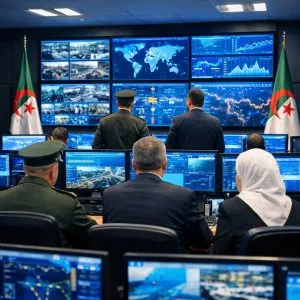
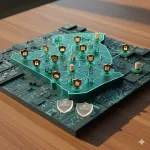
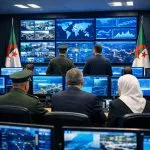
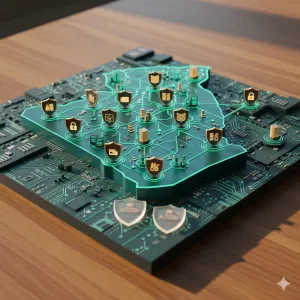
Algeria’s Presidential Decree No. 26-07 of 7 January 2026 requires every ministry, agency and public enterprise to set up a dedicated cybersecurity unit that reports directly to the head of the organisation, operates independently from IT management, and coordinates with the Information Systems Security Agency (ASSI) on incident response. The decree also requires these units to design threat maps, deploy remediation plans, and embed cybersecurity clauses in outsourcing contracts.
For the first time, the regulatory text creates a clearly-named owner inside every public entity with a mandate to consume, produce and act on threat intelligence. That ownership question has historically been the blocker for collaborative defence. When responsibility was diffused between IT, audit and legal, no one had the authority to sign an information-sharing agreement, federate indicators of compromise (IOCs), or commit staff time to a sector working group. The decree resolves the ambiguity in writing.
The next stage in this strategy is operational. A cybersecurity unit needs feeds, playbooks and peers. It needs to know — within hours, not weeks — that the same phishing kit used against Bank A on Monday is being aimed at Bank B on Wednesday. That is the role of an Information Sharing and Analysis Center, and it is the natural complement to the new Decree 26-07 units.
What MISP Actually Does — and Why Sector ISACs Use It
MISP — the open-source Malware Information Sharing Platform and Threat Sharing project — is the de-facto international standard for ISAC operations. It is free, audited, and adopted by FIRST, NATO CSIRT communities, and dozens of sector groups including the U.S. Financial Services ISAC, the European TLD-ISAC, and the higher-education REN-ISAC. The FIRST Information Sharing SIG operates its own MISP instance supported by CIRCL (Luxembourg), the lineage organisation behind MISP itself.
MISP solves three concrete problems for any sector group. First, it normalises threat data into a structured object model (events, attributes, objects, galaxies) so that an IOC contributed by one bank can be machine-consumed by another bank’s SIEM, firewall or EDR with no manual reformatting. Second, it implements STIX and TAXII open standards for cross-platform export — meaning a MISP feed can be ingested by Splunk, Elastic, QRadar, Sentinel, Suricata IDS, and most commercial Threat Intelligence Platforms (TIPs) on the market. Third, it enforces sharing controls (TLP, sharing groups, distribution lists) so that sensitive intelligence stays inside the trusted circle that produced it.
The MISP compliance project publishes ISAC setup guidelines covering governance, membership criteria, legal framework templates, and technical onboarding — the operational backbone that turns a goodwill agreement into a working community.
For an Algerian sector group, the implication is that the technology question is essentially solved. There is no software to procure, no licence to negotiate, no vendor lock-in. The remaining work is governance and trust — exactly the work that Decree 26-07 enables by naming a unit and an accountable owner per institution.
Advertisement
DZ-CERT as the Anchor: What Is Already in Place
The anchor node for any Algerian ISAC architecture is already operational. DZ-CERT is hosted by CERIST in Ben Aknoun, Algiers, and is a member of FIRST and AfricaCERT. Its mandate covers the collection, analysis and dissemination of cyber threat intelligence, coordination with international CERTs, and operational response.
CERIST manages Algeria’s Academic and Research Network (ARN) and the .dz domain registry through NIC.DZ, a role it has held since the introduction of the internet in Algeria in 1994. That institutional history matters: CERIST already runs the kind of trusted, neutral, non-commercial infrastructure that ISAC governance requires. It is not competing with member institutions for security business, which is the single most important property of an ISAC hub.
DZ-CERT’s FIRST membership also gives Algerian ISACs a default channel for international intelligence ingest. FIRST.org operates its own MISP instance for members, which means an Algerian banking ISAC peered with DZ-CERT can — in principle — receive curated international IOC feeds the same day they are published in Tokyo, London or Brussels. The cross-border channel exists; it just needs the national-level federation to plug into.
ASSI sets policy and certifies cybersecurity products. CERIST and DZ-CERT operate the technical infrastructure. The cybersecurity units mandated by Decree 26-07 sit inside each institution. That three-layer stack — policy, hub, and member — is the textbook architecture of every working national ISAC system, from FS-ISAC in the United States to the European sector ISACs coordinated by ENISA.
What Algerian Enterprise CISOs Should Do
1. Stand up an internal MISP instance before joining any sector group
Before discussing federation with peers, an organisation should run its own MISP node and feed it for 60-90 days. The objective is operational maturity: an analyst on the team who can write an event, attach indicators with the right to_ids flags, set Traffic Light Protocol distribution, and pull the feed into Suricata or the existing SIEM via TAXII. MISP is free, but standing it up well is a skill — and joining an ISAC with an immature internal practice means the organisation will consume intelligence without contributing any back, which weakens the community. Plan for one full-time threat analyst, an enriched feed from MISP’s community feed list, and a 90-day internal pilot before requesting federation.
2. Engage GIE Monétique and ABEF to seed a banking-sector ISAC
The Algerian banking sector has the highest density of credible ISAC participants in the country. GIE Monétique — created in 2014 and federating Algérie Poste and 18 banks — already operates as a trusted neutral coordination body for the sector, with 17 million-plus interbank cards issued by Q1 2024. A banking-sector MISP community, governed by ABEF (Association of Algerian Banks) and technically peered with DZ-CERT, would replicate the FS-ISAC model that protects 5,000+ member firms across 75 countries. The first feeds to ingest are obvious: phishing kits targeting CIB cardholders, ATM jackpotting indicators, and SWIFT-related malware. Start with three to five anchor banks; add the rest after the first quarterly intelligence cycle proves value.
3. Make MISP-readable IOCs a procurement requirement for managed security services
Every new SOC contract, MSSP engagement, or EDR purchase in 2026 should specify MISP-compatible threat intelligence output. The language to insert into the RFP: “the supplier shall publish curated indicators to a customer MISP instance in MISP JSON or STIX 2.1 format on a daily basis, with confidence scoring and TLP markings.” This contractual lever is how European banks built sector intelligence stocks at scale without funding new infrastructure — each MSSP became a feed contributor. The same lever works in Algeria today. CISOs who include this clause now will have a usable feed library 12 months before peers who treat threat intelligence as a separate later procurement.
4. Designate a Decree 26-07 unit lead as the sector ISAC liaison
The cybersecurity unit mandated by Decree 26-07 needs a named individual responsible for external information-sharing relationships. This is distinct from incident response or SOC lead — it is a community role. The liaison attends sector working groups, signs the ISAC membership agreement, vouches for indicator quality, and brings sanitised internal intelligence to peers. The role should report to the head of the cybersecurity unit (per the decree’s organisational requirements), have legal clearance to share data within TLP bounds, and protect time for at least quarterly in-person sector meetings. Without a named liaison, “we will share threat intelligence” remains aspirational. With one, it becomes operational.
5. Build sector ISACs in the four highest-impact verticals first
Not every sector needs an ISAC in year one. The four verticals where Algerian threat-sharing value compounds fastest are banking (because of GIE Monétique’s existing federation), telecoms (Algérie Télécom, Mobilis, Djezzy, Ooredoo all face the same MNO-targeted threat actors), energy (Sonatrach, Sonelgaz and the hydrocarbon supply chain share ICS/OT exposure profiles), and healthcare-and-public-services (hospitals plus ministerial portals, both heavily targeted by ransomware operators). Each of these four would peer to DZ-CERT through a sector MISP instance, and DZ-CERT would handle cross-sector enrichment and international feed brokerage. Other sectors — education, manufacturing, retail — can join in year two once the model has proved itself.
Where This Fits in Algeria’s 2026 Cybersecurity Ecosystem
Decree 26-07 sits inside a wider 2026 picture that includes the National Cybersecurity Strategy 2025-2029, the Sidi Abdellah AI and cybersecurity cluster launch, the AlgérieTélécom $11M cybersecurity startup fund, and a maturing local talent pipeline pushing for CISSP and CEH certifications. Each of these pieces solves a different bottleneck: the decree solves accountability, the strategy solves direction, the cluster and fund solve commercial momentum, and the certifications solve talent.
A national ISAC architecture built on MISP and anchored on DZ-CERT is the connective tissue that turns those four pieces into a single defensive system. It is the layer where signals from one bank’s SIEM become preventive controls in another bank’s firewall, where an OT alert at one Sonatrach field becomes a hardening update across the upstream supply chain, and where international intelligence flowing through DZ-CERT’s FIRST membership reaches every accountable cybersecurity unit in the country within hours. The infrastructure is open-source, the regulatory mandate exists, the hub is already a FIRST member, and the priority sectors are already federated through institutions like GIE Monétique. The next step is operational delivery — and that work belongs to the enterprise CISOs and sector associations who have the most to gain from it.
Frequently Asked Questions
What is MISP and why is it the default platform for ISACs?
MISP — the Malware Information Sharing Platform — is the open-source threat-intelligence platform used by FIRST, NATO CSIRTs, FS-ISAC, the European TLD-ISAC, and many other sector groups. It is free, implements STIX and TAXII open standards, and includes built-in sharing controls (TLP, distribution groups) and a structured object model that lets indicators from one organisation be machine-consumed by another. Its adoption breadth makes it the lowest-friction starting point for any new ISAC.
How does DZ-CERT fit into an Algerian sector-ISAC architecture?
DZ-CERT is hosted by CERIST and is a member of FIRST and AfricaCERT, giving it both technical legitimacy and ready-made international feed channels. In a sector-ISAC architecture, DZ-CERT acts as the trusted neutral hub that each sector ISAC peers with for cross-sector enrichment and international intelligence brokerage. Sector ISACs (banking, telecoms, energy, health) handle vertical-specific threats; DZ-CERT handles the national and international layer.
What does Decree 26-07 require, and how does it enable threat sharing?
Decree 26-07, signed 7 January 2026, requires every Algerian public institution to set up a dedicated cybersecurity unit that reports directly to the head of the organisation, operates separately from IT management, and coordinates with ASSI on incident response. By naming a clear accountable owner in every public entity, the decree creates the demand-side conditions for sector ISACs — there is now a named person at each organisation with the authority to consume, produce and act on shared threat intelligence.
Sources & Further Reading
- MISP — Open Source Threat Intelligence Platform & Open Standards For Threat Intelligence Sharing
- DZ-CERT — Algerian Computer Emergency Response Team — CERIST
- Presidential Decree No. 26-07 of 7 January 2026 — ARPCE Algeria
- MISP Communities and MISP Feeds — MISP Project
- Guidelines to Set Up an ISAC — MISP Compliance Project (GitHub)
- FIRST Malware Information Sharing Platform (MISP) Instance — FIRST.org
- Algeria — AfricaCERT Member Page
🔗 Related Intelligence

Algeria in INTERPOL Operation Ramz: PhaaS Server Dismantled

AI-Powered Threat Detection: Tools Algerian Security Teams Should Evaluate in 2026

CTEM for Algerian Enterprises: Moving from Reactive Patching to Continuous Exposure Control
Algeria’s National Cybersecurity Strategy 2025-2029: A Deep-Dive Analysis