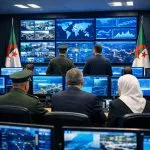
The Takedown That Put MENA Cybercrime on Notice
When 13 MENA nations move in unison, cybercriminals have far fewer places to hide. That was the signal sent on May 18, 2026, when INTERPOL announced Operation Ramz — the first coordinated cybercrime crackdown of its kind in the Middle East and North Africa. The operation ran from October 2025 through February 28, 2026, with law enforcement agencies from Algeria, Bahrain, Egypt, Iraq, Jordan, Lebanon, Libya, Morocco, Oman, Palestine, Qatar, Tunisia, and the UAE all participating under INTERPOL’s coordination.
The headline numbers are striking: 201 individuals arrested, 382 additional suspects identified, 53 servers seized, and 3,867 victims catalogued across the region. Nearly 8,000 pieces of intelligence were shared among the 13 participating countries — a volume that reflects how interconnected MENA threat actors had become and how much coordination was required to disrupt them.
Algeria’s role was not peripheral. Authorities identified and dismantled a dedicated phishing-as-a-service (PhaaS) website operating inside the country. Following the server trace, investigators seized a server, a personal computer, a mobile phone, and hard drives containing phishing software and scripts. One suspect was taken into custody. This single takedown removed an entire platform from the regional threat ecosystem — not just one attacker, but the infrastructure that would have enabled dozens more campaigns.
The PhaaS Economy: Why Shutting Down One Platform Matters
Phishing-as-a-service is what happens when criminal innovation follows the SaaS playbook. Instead of building phishing kits from scratch, operators sell or rent ready-made attack infrastructure: customizable phishing pages that mimic bank portals, corporate login screens, or government services; reverse-proxy tools that intercept multi-factor authentication tokens in real time; and backend dashboards where buyers track harvested credentials. The buyer needs no coding skill. The operator earns recurring revenue.
According to Group-IB’s threat intelligence research, PhaaS platforms lower the barrier to credential theft so substantially that mid-tier criminal groups — which previously lacked the technical depth for sustained phishing campaigns — can now run enterprise-scale operations targeting hundreds of victims simultaneously. Group-IB was one of five private-sector partners in Operation Ramz, alongside Kaspersky, the Shadowserver Foundation, Team Cymru, and TrendAI, each contributing intelligence on malicious infrastructure and command-and-control servers.
The financial motivation is clear. Across Operation Ramz’s scope alone, 3,867 victims were identified in a single regional operation covering four months. Extrapolated across a full calendar year and broader attack surface, the scale of credential theft, financial fraud, and data compromise that a functioning PhaaS platform enables is significant. When Algerian authorities seized that server and those hard drives, they did not just stop one criminal — they closed a facility that could have fuelled campaigns across multiple countries.
The operation also reveals a structural shift in MENA cybercrime geography. Threat actors are not clustered in a single country: the 13-country footprint of Operation Ramz illustrates that infrastructure is distributed, with servers, money-mule networks, and victim pools spread across jurisdictions. That distribution is precisely why INTERPOL’s coordination model — sharing nearly 8,000 intelligence items among law enforcement across the region — was necessary. No single national agency could have mapped and acted on this network alone.
Advertisement
What Algerian Private-Sector Security Leaders Should Do
The arrest and server seizure in Algeria is a law enforcement success, but it carries a practical intelligence message for every CISO, security manager, and IT director running infrastructure in this country: phishing-as-a-service infrastructure was present and active in the Algerian threat landscape. Operation Ramz removed one node. It did not eliminate the demand for such services. Here is the minimum-viable response set for Algerian private-sector security teams.
1. Audit Your Organization’s PhaaS Exposure
PhaaS platforms succeed because employees click convincing replicas of real login pages. The first audit task is mapping every external-facing portal your staff use that could be cloned: corporate webmail, VPN login pages, banking portals, government e-service portals, and HR self-service systems. Run a dark-web intelligence search — through a threat intelligence provider or INTERPOL’s I-24/7 network via DZ-CERT — to check whether your domain or employee email addresses appear in recent credential dumps. If you are a mid-size enterprise without a dedicated threat intelligence contract, the Shadowserver Foundation (a free service) publishes daily feeds of compromised hosts and phishing infrastructure that security teams can subscribe to at no cost.
Concrete action: within 30 days, produce a list of every login surface your employees use, cross-reference it against at least one public threat-feed, and flag any credential matches for immediate password resets and account audits.
2. Train Staff Against Credential-Phishing Kits — Including MFA-Bypass Variants
Standard phishing awareness training teaches employees to spot bad grammar and suspicious sender addresses. That training is insufficient against modern PhaaS kits, which use near-perfect brand clones and reverse proxies that transparently relay real website content to the victim while harvesting credentials in transit. Even employees who enter their credentials on what appears to be a real page — because the PhaaS proxy is serving the real page — can be compromised.
The training upgrade required is two-fold. First, teach the concept of adversary-in-the-middle phishing: that a page can look and feel entirely real while an attacker sits between the browser and the legitimate server. Second, reinforce that FIDO2-based hardware security keys (YubiKey, Titan Key, or passkey-capable devices) are the only authentication mechanism that defeats this attack class — because the key’s cryptographic challenge is origin-bound, a proxy cannot relay it across domains. According to Kaspersky’s threat research contribution to Operation Ramz, C2 server data and region-specific phishing infrastructure targeting MENA users was actively being tracked throughout 2025 and into 2026.
Concrete action: update your phishing simulation programme to include adversary-in-the-middle scenarios; pilot hardware keys or passkeys for your highest-privilege accounts (IT admins, finance, executive assistants) before year-end.
3. Subscribe to INTERPOL- and Group-IB-Adjacent Threat Intelligence Feeds
Operation Ramz succeeded in part because of near-8,000 intelligence items shared multilaterally. The private-sector parallel is the threat intelligence feed: structured, machine-readable data about indicators of compromise (IOCs), malicious IP ranges, phishing kit signatures, and C2 server addresses, delivered in real time so that firewalls and SIEMs can block known-bad infrastructure before it reaches an end user.
Algerian private-sector organisations have several entry points. DZ-CERT (the national CERT under ASSI — Agence de la Sécurité des Systèmes d’Information) publishes advisories and can provide referral contacts for INTERPOL’s I-24/7 sharing framework for qualifying organisations. Group-IB’s Threat Intelligence platform covers MENA-specific PhaaS actors and credential-theft operations. The Shadowserver Foundation offers free daily malicious-host feeds. TrendAI (Trend Micro’s AI threat research unit, which participated in Operation Ramz) has MENA-specific threat reports available to enterprise subscribers.
Concrete action: within 60 days, integrate at least one structured threat feed into your SIEM or firewall blocklist; register your organisation with DZ-CERT’s advisory list if you have not already done so.
The Bigger Picture: Regional Cooperation as a Security Force Multiplier
Operation Ramz is the first cybercrime operation at this scale coordinated by INTERPOL in the MENA region. That “first” matters. The infrastructure for repeat operations now exists: 13 national law enforcement agencies have established working relationships, shared intelligence formats, and proven response protocols. The 8,000 intelligence items exchanged during Ramz form a baseline for ongoing sharing.
For Algerian enterprises, this signals a medium-term shift in the threat landscape. As regional law enforcement cooperation matures — Singapore’s experience with ASEAN cyber operations provides a comparable trajectory, where successive operations each year were larger and faster than the last — criminal groups will be forced to either disperse infrastructure more aggressively or shift to softer targets. Organisations with basic threat-feed integration and phishing-resistant authentication will increasingly fall out of the cost-effective target set for PhaaS operators. Those without will become the residual attack surface.
The private-sector takeaway from Operation Ramz is not simply that “the authorities handled it.” It is that Algerian law enforcement demonstrated the capability and willingness to act — and that the most durable protection comes from pairing that enforcement capability with enterprise-level hygiene: audited attack surfaces, trained staff, and real-time threat intelligence. The server seized in Algeria will not be the last PhaaS node in this region, but the combination of INTERPOL coordination and private-sector cooperation gives defenders a genuine structural advantage.
Frequently Asked Questions
What is PhaaS and why was it used in the Algerian case?
Phishing-as-a-Service (PhaaS) is a criminal business model in which attackers build and rent out ready-made phishing infrastructure — fake login pages, credential harvesting backends, and evasion tools — to other criminals who lack technical skills. In Algeria’s case, authorities found a server running exactly this type of platform, complete with phishing software and scripts, indicating it was being offered to third parties rather than used only by its operator.
What was Algeria’s specific contribution to Operation Ramz?
Algerian authorities identified a PhaaS website operating inside the country, traced its server, and executed a seizure that captured one server, a computer, a mobile phone, and hard drives containing phishing software and scripts. One suspect was arrested. This removed both the infrastructure and an operator from the regional threat ecosystem.
How can Algerian companies subscribe to threat intelligence feeds from INTERPOL or Group-IB?
Companies cannot join INTERPOL’s law-enforcement-only I-24/7 network directly, but they can contact DZ-CERT (under ASSI) for advisory access and referral pathways. Group-IB and Kaspersky both offer commercial threat intelligence subscriptions with MENA-specific coverage. The Shadowserver Foundation provides free daily feeds of phishing infrastructure and compromised hosts that any security team can integrate into a SIEM or firewall.
Sources & Further Reading
- 201 arrests in first-of-its-kind cybercrime operation in MENA region — INTERPOL
- INTERPOL Operation Ramz Disrupts MENA Cybercrime Networks with 201 Arrests — The Hacker News
- 201 Arrested in Crackdown on Cybercrime in Middle East, North Africa — SecurityWeek
- Kaspersky supports INTERPOL’s Operation Ramz in MENA region — Kaspersky
- Massive MENA cybercrime Operation Ramz disrupts infrastructure — Security Affairs
- Group-IB Threat Intelligence Platform — Group-IB
🔗 Related Intelligence
Algeria Threat Intelligence: MISP, Sector ISACs, and the DZ-CERT Integration Roadmap for 2026
Algeria Establishes Mandatory Cybersecurity Units in Public Sector
Algeria’s Decree 26-07: A 90-Day Implementation Roadmap for Public-Sector Cyber Units

NVD and KEV: Lessons for Algerian Security Teams