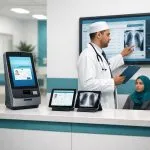
The Gap These Startups Are Filling
Algeria’s healthcare system serves 44 million people across a vast geography — from the dense Mediterranean coast to the thinly-populated Saharan interior. The public hospital network is the backbone of delivery, but it operates under chronic pressure: physician-to-population ratios that are among the lowest in North Africa, long wait times for specialist appointments in major cities, and near-absence of specialist care in wilayate beyond Algiers, Oran, and Constantine.
These are not problems that require exotic technology. The core gap is access — connecting patients with the right expertise at the right time, regardless of geography. Telemedicine is the obvious infrastructure layer; AI diagnostics is the capability multiplier that allows a nurse practitioner in Tamanrasset to benefit from the same imaging analysis quality as a radiologist in a Algiers teaching hospital.
Algeria’s government recognized this explicitly in 2024, when President Tebboune’s digitalization agenda identified healthcare as a priority sector for AI investment. The national AI strategy — launched at the 3rd African Start-up Conference in Algiers in December 2024 — allocated specific attention to AI applications in medical imaging, early disease detection, and health data infrastructure. That policy signal is now translating into startup activity.
Three Areas Where Algerian HealthTech Is Building
1. AI-assisted medical imaging and diagnostic tools
The most technically ambitious segment of Algeria’s healthtech startup cohort is focused on medical imaging AI. The opportunity is clear: radiology departments in Algerian public hospitals are among the most understaffed, yet imaging data (X-rays, CT scans, MRI) is increasingly available as hospitals digitise their equipment under the 2024 national health record initiative.
Research institutions are providing the technical foundation. The University of Oran and University of Algiers have hosted AI-in-medicine conferences and established working groups on 3D imaging technologies for early detection of respiratory diseases — a high-priority clinical target given Algeria’s significant rates of tuberculosis and respiratory illness. CERIST, Algeria’s national centre for IT research, is the primary academic anchor for AI research grants available to diagnostic AI startups. Startups emerging from these academic environments are building diagnostic models trained on Algerian patient data, which is a crucial differentiator: European and American AI models trained on different population datasets perform worse on Algerian patient profiles.
FarmAI’s pattern — a narrow vertical, a measurable clinical impact claim, a product trained on local data — is the model that diagnostic AI startups are following. The 2026 cohort includes several ventures building targeted tools for specific diagnostic tasks: malaria detection from blood smear images in southern wilayate, diabetic retinopathy screening in urban clinics, and pneumonia detection from chest X-rays in primary care settings.
2. Telemedicine platforms for remote consultation
Telemedicine in Algeria faces a specific regulatory and infrastructure challenge that earlier-moving markets did not: the legal framework for remote medical consultation was unclear until the 2024 digital health regulations, and mobile data quality outside the top 10 wilayate remains inconsistent. Both constraints are easing simultaneously — the regulatory clarity is now in place, and Algeria’s 5G rollout by Mobilis, Djezzy, and Ooredoo is expanding broadband access to the population centres that matter most for telemedicine demand.
The viable telemedicine model for Algeria in 2026 is not a direct-to-consumer appointment booking app (that market is too thin outside Algiers and Oran). It is a B2B2C model: a platform that contracts with clinics, polycliniques, and health insurance structures (mutuelle) to provide specialist consultation access. The technology layer is a video consultation interface; the business model is a per-consultation fee paid by the referring clinic. This structure works because it solves the problem that referring physicians actually have — they need to escalate a case without transferring the patient.
3. Electronic health records and hospital workflow digitization
The least glamorous but most foundational segment is digital health infrastructure: electronic health records (EHR), scheduling systems, and administrative digitization for public and private clinics. Algeria’s Ministry of Health launched an EHR standardisation initiative in 2024, creating a specification that private health IT vendors can build to. This creates a procurement opportunity for Algerian startup-scale vendors that previously did not exist.
The competitive dynamic here is different from AI diagnostics or telemedicine. The buyers are not individual patients or physicians — they are hospital administrators and Ministry officials who require compliance with national specifications, Arabic-language interfaces, and vendor support capabilities that international players (Epic, Cerner) are not positioned to offer at Algerian market rates. An Algerian startup that builds a Ministry-compliant EHR at a price point accessible to a 50-bed private clinic has a defensible position that international competition cannot easily attack.
Advertisement
What Algerian HealthTech Founders Should Do About It
1. Target the B2B healthcare channel, not direct-to-consumer
The consumer healthtech market in Algeria is too small and too fragmented to build a venture-scale business on in 2026. The bankable opportunity is B2B: selling to clinics, mutuelle structures, pharmaceutical distributors, or the Ministry of Health itself through procurement channels. This requires understanding how Algerian public procurement works, building relationships with clinical decision-makers rather than patients, and accepting 6-to-12-month sales cycles. Founders who treat this as a consumer app opportunity will burn cash without finding scale.
2. Train your AI models on Algerian patient data, then prove it
The single most defensible technical claim an Algerian diagnostic AI startup can make is “our model was trained and validated on Algerian patient data.” This matters because population-specific disease prevalence, imaging artefacts from locally common equipment brands, and clinical presentation patterns differ from the Western datasets that most imported AI diagnostic tools are built on. Partner with a teaching hospital early — not just for credibility but for the data access you need to make this claim credibly.
3. Leverage the national AI strategy’s institutional support before it consolidates
Algeria’s government AI strategy explicitly lists startups as a beneficiary category for the six-pillar support framework: research funding, ecosystem support, local expertise development, and startup assistance are all named. That support infrastructure is most accessible in the early deployment phase — when programme managers have discretion to take chances on unproven teams. The window for early-stage healthtech startups to benefit from these programmes while they are still genuinely open is approximately 12–24 months before institutional consolidation narrows access to established players.
4. Position for the Algérie Télécom AI fund, not just the ASF
The Algérie Télécom 1.5 billion DZD AI fund explicitly includes health AI in its investment mandate alongside cybersecurity and robotics. For a healthtech startup, this creates a more specialised investor — one with infrastructure assets (network coverage, data centres, government relationships) that could accelerate a telemedicine platform’s distribution. The ASF is the default channel; the Algérie Télécom fund is the higher-value relationship to cultivate if your product touches connectivity infrastructure.
The Structural Opportunity Beneath the Gap
Algeria’s healthtech opportunity is not primarily about consumer convenience — it is about structural equity. A diagnostic AI tool that gives a physician in Illizi the same imaging analysis quality as their counterpart in Algiers is not a marginal improvement; it is a transformation of care quality across half the country’s geography. That structural argument, made well, is also the strongest fundraising argument available to an Algerian healthtech founder in 2026.
The ASF has not yet made a major healthtech investment — the portfolio is weighted toward fintech, logistics, and agritech, which had earlier proof points. The 2026 Startup Challenge cohort and the national AI strategy’s explicit healthcare priority create the moment for the first significant healthtech investment to happen. The AI market in Algeria is projected to grow from $499M in 2025 to $1.69B by 2030 at a 27.67% CAGR — and healthcare AI, given its policy priority and structural gap, is positioned to be a disproportionate beneficiary of that growth.
Frequently Asked Questions
What healthcare problems are most amenable to AI solutions in Algeria in 2026?
The highest-impact areas are medical imaging analysis (radiology, pathology), telemedicine consultation platforms for remote wilayate, and electronic health record infrastructure for private clinics. These three areas combine strong clinical need, existing data availability, regulatory support from the 2024 digital health framework, and a B2B commercial model that does not depend on consumer behaviour change.
How does Algeria’s national AI strategy support healthtech startups?
The national AI strategy, launched in December 2024, identifies healthcare as one of six priority sectors. The support framework includes access to research funding through CERIST and university partnerships, startup programme access via the ASF and Algérie Télécom AI fund (1.5 billion DZD), and procurement preference for locally developed health AI tools in Ministry of Health tenders. Founders should engage both the Ministry of Knowledge Economy and the Ministry of Health to navigate both channels.
What is the main business model challenge for Algerian telemedicine startups?
The primary challenge is that the direct-to-consumer market is too thin outside Algiers and Oran to generate venture-scale revenue. The viable model in 2026 is B2B2C: contracting with clinics, polycliniques, and mutuelle structures to provide specialist consultation access on a per-consultation fee basis. This requires longer sales cycles than a consumer app but generates more durable, recurring revenue and is better suited to institutional fundraising narratives.
—
Sources & Further Reading
🔗 Related Intelligence
Algeria’s Healthtech Startups: Telemedicine, Diagnostics, and the Rural Healthcare Gap
Algeria’s HealthTech Wave: Startups Digitising Clinics and Patient Care

AI Agents in Algerian Healthcare: From Clinic Digitalization to Autonomous Triage
Algeria’s MedTech Startups: Digitizing Hospitals from Appointment Booking to Lab Results