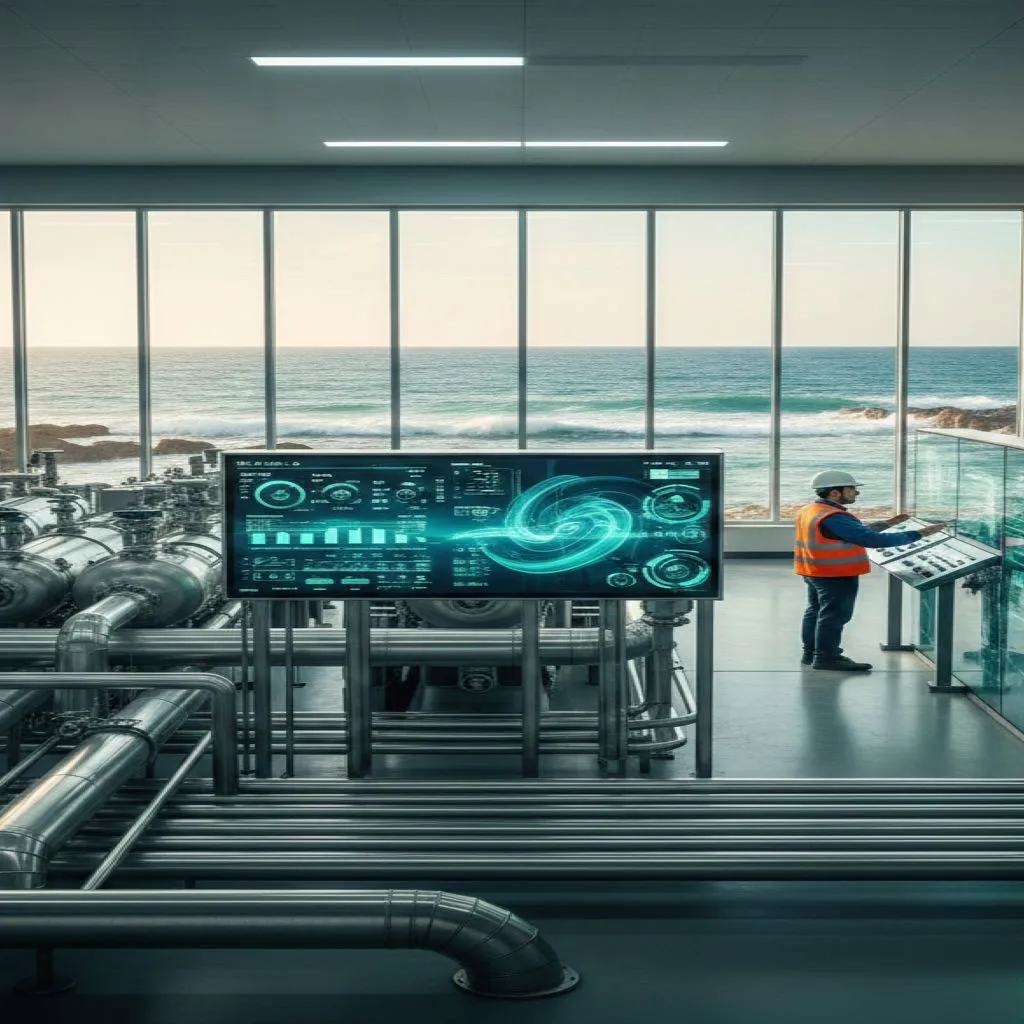
Quick Take: AI water management is not futuristic for Algeria — it is urgent. With per-capita water availability at ~300 m³ and SEAAL losing 42% of treated water, the country cannot afford to run desalination plants at suboptimal energy efficiency or leave leaks undetected. Starting with AI-optimized desalination and urban leak detection offers the fastest return on investment, while agricultural irrigation represents the largest long-term water savings opportunity.
Algeria’s Water Crisis by the Numbers
Algeria is classified as a water-stressed country, with annual renewable freshwater per capita hovering around 300 cubic meters — less than a third of the 1,000 cubic meter threshold that defines water scarcity according to the World Bank. Climate change is compressing this further, with declining rainfall patterns across northern Algeria accelerating the trend.
The infrastructure response has been massive — and is accelerating. Algeria has committed $5.4 billion to desalination expansion. The existing fleet of large desalination plants along the Mediterranean coast initially produced approximately 2.2 million cubic meters per day. Five new plants, each with 300,000 m³/day capacity — at Cap-Blanc (Oran), Fouka 2 (Tipaza), Cap-Djenat 2 (Boumerdès), Béjaïa, and El Tarf — were commissioned in early 2025, pushing capacity toward 3.7 million m³/day. Seven additional plants are planned for construction between 2025 and 2030, targeting an ultimate national desalination capacity of 5.8 million m³/day. The Magtaa plant near Oran, with a capacity of 500,000 m³/day, remains one of the largest reverse osmosis facilities in the world.
Additionally, Algeria operates 81 dams with five more under construction to bring the total to 86, storing surface water for agriculture and urban consumption. Yet supply still falls short of demand. SEAAL (Société des Eaux et de l’Assainissement d’Alger), which manages water distribution in Algiers and Tipaza, reports non-revenue water losses of approximately 42% — meaning nearly half of treated water never reaches consumers. It leaks from aging pipes, escapes through faulty connections, or is lost to illegal tapping. In a country fighting scarcity, this is not a minor inefficiency — it is an emergency.
How AI Transforms Water Infrastructure
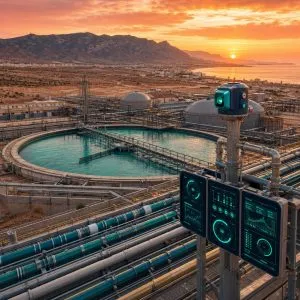
AI applications in water management fall into four categories, each directly relevant to Algeria’s infrastructure. First, desalination optimization: reverse osmosis plants consume enormous energy — typically 3–4 kWh per cubic meter of water produced. AI systems can optimize membrane pressure, chemical dosing, and energy recovery in real time, adjusting operations based on seawater temperature, salinity, and membrane fouling rates. Companies like AVEVA and Siemens have demonstrated 15–30% energy savings in desalination plants using AI-driven process optimization. With Algeria’s desalination fleet expanding to potentially dozens of plants, the cumulative energy savings from AI optimization would be substantial.
Second, dam and reservoir management. Traditional dam monitoring relies on periodic manual inspections and fixed sensor arrays. AI-powered systems integrate satellite imagery, weather forecasts, upstream rainfall data, and real-time sensor feeds to predict reservoir levels weeks in advance, optimize release schedules for downstream irrigation, and detect structural anomalies (seepage, settlement, crack propagation) before they become critical. With recent reports showing Algeria’s dams filled to just over 40% of capacity, AI-driven water allocation optimization could maximize the utility of every stored cubic meter.
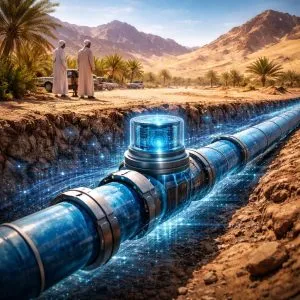
Third, leak detection in distribution networks. AI algorithms analyze flow and pressure data from sensors distributed across pipe networks to identify anomalies that indicate leaks. SEAAL has already deployed Aquadvanced Water Networks software to monitor Algiers’ distribution system, achieving a reduction from 45.3% to 42.2% non-revenue water — saving nearly 13 million m³. AI-powered leak detection from companies like Xylem, Suez, and TaKaDu can pinpoint leak locations within meters, reducing the time and cost of repairs. For a network where 42% losses represent hundreds of millions of liters daily, even halving that gap would be transformative.
Fourth, precision agriculture irrigation. Agriculture consumes approximately 65% of Algeria’s water, much of it through flood irrigation — one of the least efficient methods. AI-driven smart irrigation systems use soil moisture sensors, evapotranspiration models, and weather forecasts to deliver water precisely when and where crops need it, reducing consumption by 20–40%.
Advertisement
Global Deployments and What Algeria Can Learn
Several countries with comparable water challenges have begun deploying AI-powered water management. Saudi Arabia’s SWCC (Saline Water Conversion Corporation) has partnered with technology firms to implement AI across its desalination fleet, targeting significant energy reduction as part of Vision 2030. Singapore’s PUB (Public Utilities Board) uses AI-driven digital twins of its entire water network — from reservoir to tap — enabling real-time optimization and predictive maintenance.
In the agricultural sector, Egypt has piloted AI-driven irrigation management in the Nile Delta, where water is similarly scarce and agriculture is critical. Morocco’s OCP Group, one of the world’s largest fertilizer producers, has invested in precision agriculture platforms that integrate AI irrigation recommendations with soil and crop data. These North African deployments are particularly instructive for Algeria, given similar climatic conditions and agricultural practices.
The common thread across successful deployments is data infrastructure. AI water management requires a dense network of sensors (flow meters, pressure transducers, water quality monitors), reliable connectivity to transmit data, and centralized platforms to process it. Algeria’s existing SCADA systems in desalination plants and major dams provide a foundation, but distribution networks and agricultural areas are significantly under-instrumented.
What Algeria’s Infrastructure Needs
The gap between Algeria’s current water infrastructure and an AI-optimized system is substantial but not insurmountable. Desalination plants represent the lowest-hanging fruit: they already have digital control systems, operational data historians, and the engineering staff to interpret AI recommendations. The five new plants commissioned in 2025, built with modern control systems, are ideal candidates for AI-driven optimization from day one. A pilot program at a single plant — Magtaa in Oran or one of the new facilities — could demonstrate energy savings within 12–18 months.
Dam monitoring requires investment in sensor arrays (piezometers, strain gauges, GPS displacement monitors) and satellite imagery subscriptions. Algeria’s Agence Nationale des Barrages et Transferts (ANBT) manages the dam portfolio across 86 facilities and would be the natural implementing agency. The integration of AI predictive models with ANBT’s existing monitoring protocols could significantly improve early warning capabilities for both structural safety and hydrological forecasting.
Urban leak detection demands the most infrastructure investment: smart meters and pressure sensors deployed across thousands of kilometers of pipe. SEAAL has already begun this journey with the Aquadvanced deployment, but the pace would need to accelerate. The economic case is straightforward — at 42% non-revenue water, the cost of lost water far exceeds the cost of detection infrastructure. International development financing (World Bank, AfDB, EU programs) could bridge the capital gap. Agricultural smart irrigation, finally, faces the challenge of reaching millions of smallholder farmers with technology they can use and afford.
Frequently Asked Questions
What is ai-powered water management in algeria?
AI-Powered Water Management in Algeria: Desalination, Dam Monitoring covers the essential aspects of this topic, examining current trends, key players, and practical implications for professionals and organizations in 2026.
Why is ai-powered water management in algeria important for Algeria?
This topic is significant for Algeria because it intersects with the country’s digital transformation goals, economic diversification strategy, and growing technology ecosystem. The article provides specific context for Algerian stakeholders.
How does how ai transforms water infrastructure work?
The article examines this through the lens of how ai transforms water infrastructure, providing detailed analysis of the mechanisms, trade-offs, and practical implications for stakeholders.
Sources & Further Reading
- Algeria Commits $5.4B to Desalination — Energy Capital Power
- Algeria to Build 7 New Desalination Plants 2025–2030 — Global Flow Control
- Five New Dams to Enter Service — AL24 News
- SEAAL Water Network Monitoring — SUEZ Aquadvanced
- Water Resources in Algeria — Fanack Water
- Algeria Per Capita Freshwater Resources — World Bank
- Google Flood Forecasting Initiative — Google Research
- ANBT Dam Management — ANBT