An Unprecedented Designation
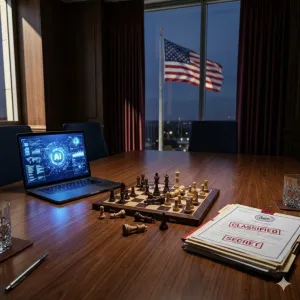
On the afternoon of February 27, 2026, the U.S. Department of Defense issued a designation that sent shockwaves through both the defense establishment and the artificial intelligence industry. Defense Secretary Pete Hegseth formally classified Anthropic, the San Francisco-based AI safety company and maker of Claude, as a “supply chain risk to national security” — the first time the United States had ever applied this designation to a domestic American company.
The designation triggered immediate and severe consequences. A $200 million contract for AI capabilities on classified networks was terminated. Military contractors and subcontractors were informed that use of Anthropic’s products and services in any defense-related work was prohibited. Hegseth announced the decision on X (formerly Twitter), declaring that “Anthropic’s stance is fundamentally incompatible with American principles” and that its relationship with the U.S. Armed Forces and federal government was “permanently altered.”
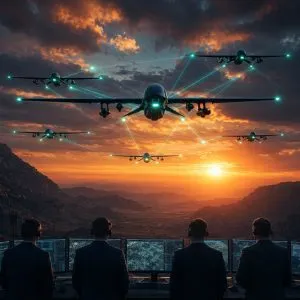
The stated rationale centered on Anthropic’s refusal to grant the Pentagon unrestricted use of Claude for “all lawful purposes.” The dispute specifically revolved around two restrictions Anthropic refused to drop: a prohibition on using Claude for fully autonomous weapons targeting and a prohibition on mass domestic surveillance of American citizens. According to the Defense Department, these restrictions constituted a material impediment to the national defense mission.
Within hours of the announcement, OpenAI — Anthropic’s primary competitor — disclosed that it had struck its own deal with the Pentagon for AI services on classified networks, in timing that many observers characterized as conspicuously coordinated.
The Contract That Started It All
The dispute traces back to a contract awarded to Anthropic in mid-2025 through the Department of Defense’s Chief Digital and Artificial Intelligence Office (CDAO). The two-year prototype other transaction agreement, with a $200 million ceiling, made Claude the first frontier AI model approved for use on Pentagon classified networks. As part of the agreement, the Pentagon agreed to abide by Anthropic’s acceptable use policy.
The initial deployment went smoothly. Claude’s capabilities in document analysis, summarization, and pattern identification were well-suited to intelligence analysis, and early evaluations reported significant productivity gains for analyst teams. The system processed open-source intelligence, diplomatic cables, and technical intelligence reports, producing summaries and cross-references that would have taken human analysts days to compile.
The friction began in January 2026 when Hegseth’s AI strategy memorandum directed that all Department of Defense AI contracts adopt standard “any lawful use” language. The Pentagon demanded Anthropic renegotiate its contract terms, insisting the military be allowed to use Claude without limitation. Requests to apply the system to signals intelligence collection analysis, targeting recommendations, and surveillance pattern-of-life analysis all encountered refusals from Claude’s safety systems.
From the Defense Department’s perspective, these refusals were unacceptable limitations on a tool being used for legitimate national security purposes. From Anthropic’s perspective, they reflected the functioning of safety guardrails the company had publicly committed to maintaining — guardrails that were a core element of its corporate identity and a condition of public trust.
The Ethical Fault Line
The dispute between the Pentagon and Anthropic crystallizes a tension that has been building since the earliest days of military AI research: who has the authority to define the boundaries of what AI systems can and cannot do in a national security context?
The Military Perspective
From the Department of Defense’s viewpoint, the argument is straightforward. The United States faces genuine threats from adversaries investing heavily in military AI capabilities without the ethical constraints that Western companies impose. China’s military AI programs, in particular, operate without comparable safety restrictions. In this competitive landscape, American companies that refuse to support defense applications are placing the country at a strategic disadvantage.
The Pentagon’s position also included a specific legal argument: federal law already prevents mass surveillance of Americans, and internal military policies already restrict fully autonomous weapons. The military argued there was no need to codify these restrictions separately in an AI vendor contract, and that Anthropic’s insistence on doing so constituted an unacceptable assertion of corporate authority over military operations.
Hegseth framed the conflict in cultural terms as well, stating in a January 2026 speech that the Pentagon was “shrugging off any AI models that won’t allow you to fight wars” and that military AI systems would operate “without ideological constraints that limit lawful military applications.” He added bluntly: “Our AI will not be woke.”
Anthropic’s Position
Anthropic CEO Dario Amodei met directly with Hegseth but refused to budge on the company’s two red lines. In a CBS News interview, Amodei explained that Anthropic’s position rested on a principled assessment: AI technology is not yet reliable enough to operate weapons autonomously, and no adequate legal framework yet exists to govern AI-enabled mass surveillance.
The company argued that its safety restrictions were public, documented, and known to the Defense Department before the contract was awarded. After the designation was announced, Anthropic called it “unprecedented” and “legally unsound,” warning it would “set a dangerous precedent for any American company that negotiates with the government.” The company vowed to challenge the designation in court.
The OpenAI Factor
The timing of OpenAI’s Pentagon partnership announcement — disclosed within hours of the Anthropic designation — added a competitive dimension to what was already a charged situation.
OpenAI’s approach to military engagement has evolved significantly. Its original charter prohibited military applications, but this restriction was quietly removed in January 2024. The Intercept first reported the policy change, noting that OpenAI had shifted from forbidding use for “weapons development” or “military and warfare” to a broader prohibition only against using its tools to “harm yourself or others.” OpenAI subsequently pursued defense contracts, partnering with Anduril in October 2024 for battlefield AI applications.
OpenAI’s Pentagon deal claimed to include the same two restrictions Anthropic had fought for — no mass domestic surveillance and no fully autonomous weapons — while simultaneously agreeing to the “any lawful use” standard that Anthropic had rejected. Critics, including MIT Technology Review, noted that this apparent paradox suggested OpenAI’s restrictions might be less enforceable than Anthropic’s had been.
The backlash was swift. OpenAI CEO Sam Altman admitted on March 3 that the company “shouldn’t have rushed” the Pentagon deal, describing the timing as having “looked opportunistic and sloppy.” He announced amendments to the contract adding clearer language on surveillance restrictions.
The competitive dynamic carries significant implications. If the Pentagon’s designation becomes a precedent, it creates a powerful incentive for AI companies to minimize safety restrictions on military applications — or to implement them in ways that are less visible and less likely to trigger refusals.
Advertisement
Legal and Constitutional Questions
The supply chain risk designation raises several legal and constitutional questions that are now heading to court.
The designation was made under authorities designed to address supply chain risks from foreign adversaries — particularly Chinese technology companies. Applying these authorities to a domestic American company represents a novel and potentially problematic extension of executive power. Legal analysts at Lawfare argued the designation “won’t survive first contact with the legal system,” while Just Security published a detailed analysis of what the designation does and does not legally authorize.
Anthropic’s legal team has argued that the Defense Secretary “does not have the statutory authority” to bar anyone doing business with the military from doing business with Anthropic, and that the law extends only to the use of AI models within DOD contracts, not to how contractors use Claude to serve other customers.
First Amendment considerations are also relevant. Anthropic’s safety guardrails are, at their core, an expression of the company’s values about how AI should be used. Penalizing a company for implementing restrictions on the use of its products — particularly restrictions reflecting ethical and safety considerations — raises questions about compelled speech.
Hegseth also threatened to invoke the Defense Production Act to compel Anthropic to provide its technology regardless of the company’s objections — a law most recently invoked during the COVID-19 pandemic for medical supplies. Legal scholars have questioned whether that statute can be stretched to cover AI software.
The counter-argument is that defense contracting is not a right, and the government has broad discretion in choosing its suppliers. By this logic, the designation is a procurement decision, not a punitive action. The resolution of these questions through litigation will establish important precedents for the relationship between the AI industry and the national security establishment.
Industry Reverberations
The Anthropic designation has sent ripples throughout the AI industry and the defense contracting ecosystem.
Several AI companies with defense ambitions have reportedly begun reviewing their safety policies to ensure they would not trigger similar designations. The concern extends beyond companies with explicit safety guardrails — any AI product that includes content filtering, use-case restrictions, or ethical guidelines could potentially be characterized as having limitations that impede defense applications.
Defense contractors who had been evaluating Anthropic’s technology immediately halted those evaluations. The supply chain risk designation creates legal and contractual risks for any defense contractor that continues to use Anthropic’s products — even for non-military applications within their organizations.
The venture capital community has taken particular notice. Anthropic had just closed a $30 billion Series G funding round at a $380 billion valuation on February 12, 2026 — just two weeks before the designation. The round, led by Coatue and Singapore sovereign wealth fund GIC with participation from Microsoft and Nvidia, reflected confidence in the company’s safety-focused approach. The Pentagon designation raised immediate questions about whether safety commitments — which investors had viewed as a differentiator — could become liabilities.
A coalition of tech workers organized an open letter to DOD and Congress urging withdrawal of the supply chain risk label, arguing it threatened the entire AI safety ecosystem.
Who Sets the Boundaries for Military AI?
The Pentagon-Anthropic dispute ultimately raises a question that democratic societies have not yet answered: who has the legitimate authority to determine the ethical boundaries of military AI systems?
If the answer is “the military itself,” then AI companies are reduced to commodity suppliers with no role in shaping how their technology is used. This model is consistent with how the defense industry has traditionally operated — arms manufacturers produce weapons to military specifications without imposing their own restrictions on deployment — but it is arguably inappropriate for AI systems whose capabilities and risks differ fundamentally from conventional weapons.
If the answer is “the AI companies,” then unelected corporate executives are making decisions about national security capabilities with no democratic accountability. This model gives enormous power to a small number of technology companies and their founders, who may have principled views but are not subject to the political processes that govern other aspects of defense policy.
If the answer is “Congress and the democratic process,” then comprehensive legislation is needed — legislation that currently does not exist. The EU AI Act provides a partial framework, with its prohibition on certain AI applications and requirements for human oversight in high-risk systems, but the United States has no comparable legislation addressing the military implications of AI.
The most likely resolution is a messy compromise: informal norms, case-by-case negotiations, and ad hoc policy decisions that satisfy no one fully but allow the system to function. This is, in many ways, the worst outcome — it provides neither the predictability that the industry needs nor the democratic accountability that the public deserves.
The Precedent
Regardless of how the immediate dispute is resolved, the Pentagon’s designation of Anthropic as a supply chain risk has established a precedent with lasting implications. It demonstrates that the U.S. government is willing to use national security authorities to pressure AI companies that maintain safety restrictions incompatible with military objectives. It creates a competitive dynamic that incentivizes companies to minimize or obscure their safety commitments. And it raises fundamental questions about the relationship between AI safety, corporate autonomy, and democratic governance.
The irony is not lost on observers: a company whose entire mission is ensuring that AI is safe for humanity has been designated as a risk to national security by the world’s most powerful military. Whether that designation reflects a legitimate security concern or a dangerous conflation of safety with obstruction may be the most consequential AI policy question of 2026.
Frequently Asked Questions
What is pentagon vs. anthropic?
Pentagon vs. Anthropic: When AI Safety Guardrails Collide with National Security covers the essential aspects of this topic, examining current trends, key players, and practical implications for professionals and organizations in 2026.
Why does pentagon vs. anthropic matter?
This topic matters because it directly impacts how organizations plan their technology strategy, allocate resources, and position themselves in a rapidly evolving landscape. The article provides actionable analysis to help decision-makers navigate these changes.
How does the contract that started it all work?
The article examines this through the lens of the contract that started it all, providing detailed analysis of the mechanisms, trade-offs, and practical implications for stakeholders.
Sources & Further Reading
- Pentagon Moves to Designate Anthropic as a Supply-Chain Risk — TechCrunch
- OpenAI Sweeps In to Snag Pentagon Contract After Anthropic Labeled ‘Supply Chain Risk’ — Fortune
- Hegseth Declares Anthropic a Supply Chain Risk — CBS News
- OpenAI Quietly Deletes Ban on Using ChatGPT for Military and Warfare — The Intercept
- What Hegseth’s Supply Chain Risk Designation Does and Doesn’t Mean — Just Security
- Pentagon’s Anthropic Designation Won’t Survive First Contact with Legal System — Lawfare
- Anthropic’s Responsible Scaling Policy v3.0 — Anthropic
- OpenAI’s Compromise with the Pentagon Is What Anthropic Feared — MIT Technology Review