
🧭 Decision Radar
Relevance for Algeria
Medium
▾
Infrastructure Ready?
Partial
▾
Skills Available?
Partial
▾
Action Timeline
6-12 months
▾
Sonelgaz, MPT, ARPT, Ministry of Energy, Algérie Télécom
Decision Type
Strategic
▾
Quick Take: Money and GPUs do not power themselves. Microsoft’s exit from the Loughton site after grid electricity was pushed toward the early to mid-2030s shows that upstream transmission capacity is the real gatekeeper for AI infrastructure. Algerian planners should treat confirmed substation timelines as prerequisite number one for any national data-centre project.
A Flagship AI Campus Meets a Grid Queue
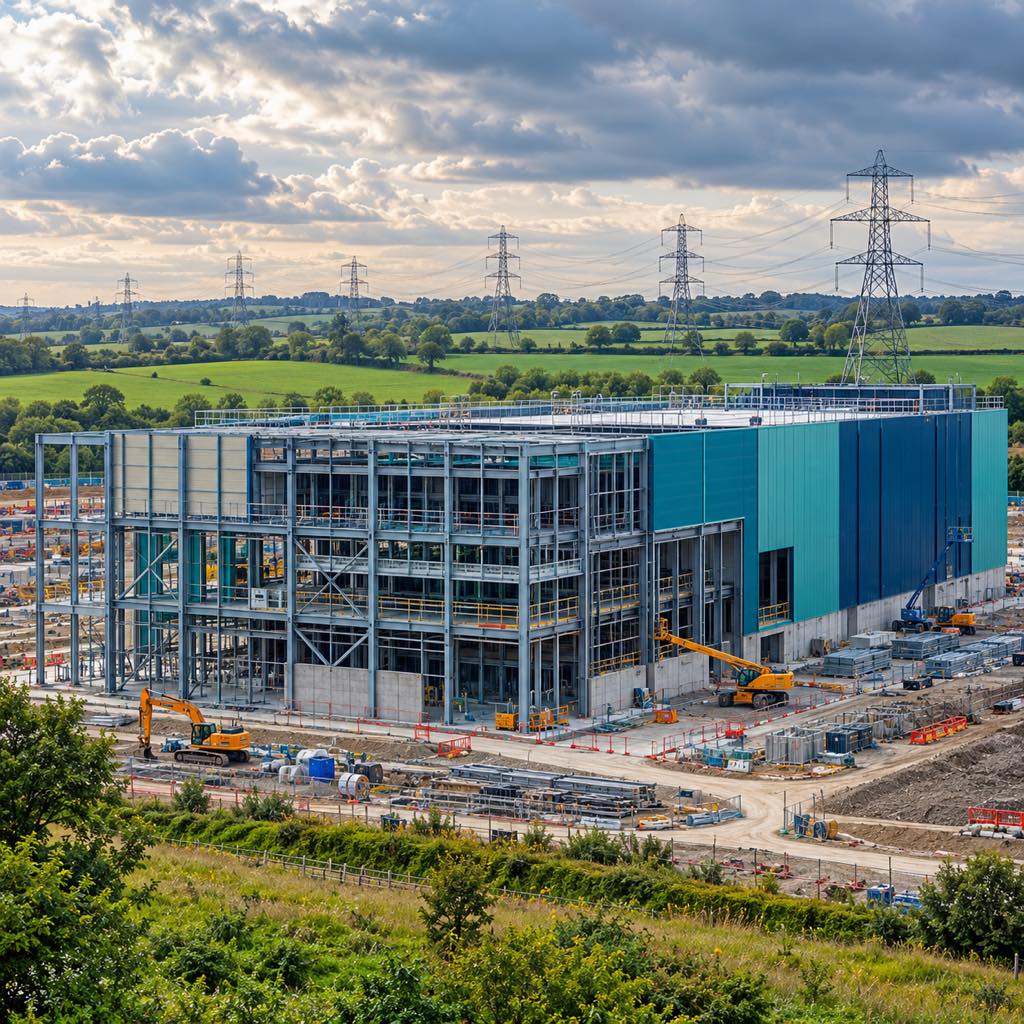
Microsoft has withdrawn from plans to build the UK’s largest AI data centre with Nscale at Loughton, Essex, in a development first reported by The Telegraph and published on 19 October 2026. To deliver the project, Nscale pledged £2bn to build and open the Loughton site.
The hardware ambition was substantial. Announced in September 2025, the plan called for about 23,040 Nvidia GB300 GPUs in a 50MW facility, expandable to 90MW. What stalled the schedule was not capital or silicon, but electricity delivery. UK Power Networks said the site’s power connection would not be ready for the 2026 target because of upstream grid capacity issues. Worse still, The Register reported the site might not get enough grid electricity until the early to mid-2030s, against a planned 2027 start.
The Loughton delay reflects a wider strain across the British network. UK demand for new grid connections rose from 41GW to 125GW in under a year, with datacentres accounting for at least 80GW, prompting regulator Ofgem to propose charging developers for connection requests.
A Single-Site Exit, Not a Partnership Breakup
Both companies moved quickly to contain the fallout. A Microsoft spokesperson stated that the decision relates to a single site and the company remains committed to its partnership with Nscale.
For its part, Nscale said it remains committed to Loughton and the UK, is exploring alternative power sources, and noted that the issue has no impact on its other contracts. The two firms continue to work together in Norway, Portugal and the United States. The timing is nonetheless sensitive as Nscale is preparing a New York Stock Exchange listing reportedly targeting a valuation of up to $35bn.
Advertisement
What This Means for Algeria
The Algeria hook is indirect: this is a British grid bottleneck affecting a site in Essex. Yet the episode offers a clear operational lesson for Algerian infrastructure planners. Capital and GPU supply agreements cannot compensate for an unready high-voltage connection.
1. Audit upstream transmission capacity before announcing data-centre zones
Loughton fell behind because upstream grid capacity could not meet the 2026 connection target or the 2027 start. Algerian authorities and utilities planning technology zones should verify substation and upstream transmission headroom before marketing sites to cloud or AI operators.
2. Filter speculative connection requests early
In the UK, connection demand jumped from 41GW to 125GW in under a year, with at least 80GW tied to datacentres, leading Ofgem to propose connection-request fees. Algerian regulators can avoid similar queue congestion by requiring proof of project maturity when developers apply for large megawatt allocations.
3. Pair site selection with alternative power contingencies
When grid delivery slipped toward the early to mid-2030s, Nscale had to look for alternative power sources to keep Loughton viable. Any large compute campus planned in Algeria should build on-site or dedicated power options into its initial engineering design.
The Bigger Picture
When a hyperscaler walks away from a site planned for 23,040 GPUs, the message to infrastructure planners everywhere is unmistakable. Compute follows firm, timely electricity. Countries and utilities that can connect 50MW to 90MW loads on schedule will capture workloads that grid-constrained markets delay into the next decade.
Frequently Asked Questions
Why did Microsoft pull out of the Loughton AI data centre project?
UK Power Networks said the site’s power connection would not be ready for the 2026 target because of upstream grid capacity issues. The Register reported that sufficient grid electricity might not arrive until the early to mid-2030s, compared with a planned 2027 start.
How large was the planned Loughton facility?
Nscale pledged £2bn to build and open the Essex site. The September 2025 plan envisioned about 23,040 Nvidia GB300 GPUs in a 50MW facility, expandable to 90MW.
Are Microsoft and Nscale ending their broader partnership?
No. A Microsoft spokesperson said the decision relates to a single site, and Nscale confirmed that the two companies still work together in Norway, Portugal and the United States while Nscale explores alternative power sources for Loughton.
Sources & Further Reading
- City AM — Microsoft withdraws from plans to build the UK’s largest AI data centre with Nscale
- The Register — Loughton AI data centre grid connection delays and UK connection demand
- eNCA (AFP) — Microsoft exits data centre deal in blow to UK AI ambitions
- W.Media — Nscale remains committed to Loughton project and the UK
🔗 Related Intelligence

Data Center Power Crisis: Grid Delays, PPAs, and SMRs Race to Keep AI Online
Fairwater Blueprint: Microsoft’s Distributed AI Superfactory Rewrites Data Center Design

The Hidden Bottleneck Halting the AI Data Center Boom: Transformer and Switchgear Shortages
The Data Center Backlash: Why 14 U.S. States Are Trying to Pause AI Infrastructure