The Deal That Redefines the AI Supply Chain
For three years the AI infrastructure story was told in chips. In August 2026 it became a story about dirt with a grid connection. On August 24, 2026, Lancium announced a partnership with Nvidia to advance gigawatt-scale AI factory development across its portfolio, with Nvidia taking a direct equity stake and a role as technology partner. Lancium is a Texas energy-infrastructure company backed by Blackstone’s energy-transition and multi-asset funds, and the arrangement gives Nvidia’s cloud and enterprise customers a pipeline of power-ready sites onto which they can drop GPU clusters.
The numbers frame the ambition. Lancium brings 4 gigawatts of capacity under lease and a development pipeline exceeding 15 gigawatts of powered land, according to the announcement. Under the deal, Lancium’s campuses become preferred deployment sites for Nvidia’s full stack — accelerated compute, networking, and the DSX reference designs that optimize GPU density and grid responsiveness. The framing is deliberate: Nvidia is no longer just selling silicon into other people’s buildings; it is helping decide where the buildings go.
Terms were not disclosed in the announcement. Separately, The Information reported on August 7, 2026 that Nvidia planned to invest up to $3 billion — an initial $2 billion for roughly a 20% stake, with a further $1 billion tied to milestones including grid hookups, at an enterprise value near $10 billion. Neither company restated those figures on August 24, so treat the dollar amounts as reported-but-unconfirmed while treating the partnership itself and the capacity figures as on-record.
Why “Powered Land” Became the Bottleneck
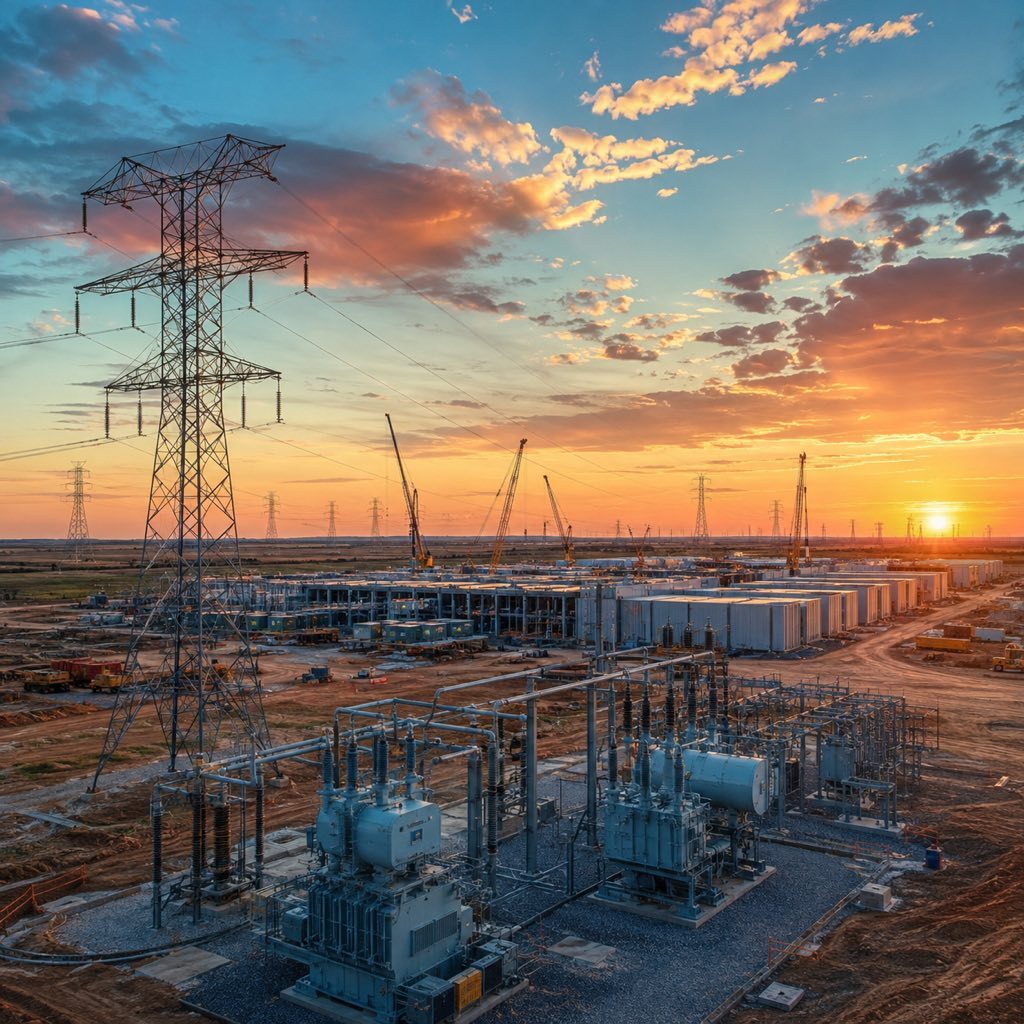
The word doing the heavy lifting in this deal is “powered.” A parcel of land is not an AI site until a utility has committed firm capacity to it, the interconnection agreement is signed, and — increasingly — on-site generation is in place to bridge the multi-year wait for grid upgrades. That combination has become the true chokepoint. Lancium’s CEO and co-founder Michael McNamara has built the company precisely around securing that scarce commodity at scale, and the 4-versus-15 gigawatt split in the announcement tells the honest story: a materially firmer commercial commitment sits behind the leased 4 GW than behind the 15+ GW still described as “in development.”
The distinction matters for anyone reading vendor press releases in 2026. A gigawatt “under lease” implies a signed customer and a funded path to energization; a gigawatt of “powered land in development” is an option on future capacity that still depends on utility timelines and equipment deliveries. Lancium’s flagship 1.2 GW Clean Campus in Abilene, Texas — the anchor of the broader Stargate buildout where Crusoe is developing capacity — shows what a mature site looks like, and it took a $3.4 billion joint venture and years of grid work to get there.
Advertisement
What This Means for Cloud and AI Buyers
Organizations procuring AI compute — whether directly or through a neocloud reseller — inherit the physics of this supply chain. The Lancium deal is a signal to change how you evaluate capacity commitments.
1. Interrogate the difference between “leased,” “contracted,” and “powered land”
When a provider quotes gigawatts, ask which bucket the number lives in. Leased-and-energized capacity is deliverable this planning cycle; “powered land in development” is a multi-year option contingent on grid hookups. Build these definitions into your procurement scoring so a 15 GW pipeline headline is not mistaken for 15 GW of near-term availability.
2. Price the grid-connection timeline into your roadmap, not just the GPU
The gating item for a 2027-2028 deployment is rarely chip allocation — it is the interconnection queue and on-site generation. Ask vendors for the energization date of the specific hall your cluster will occupy, and treat that date, not the GPU ship date, as your true go-live constraint.
3. Favor providers with vertically integrated power, not just real estate
The reason Nvidia backed a powered-land specialist rather than a generic developer is that power sequencing now determines delivery. Weight your vendor scorecard toward operators that control generation, interconnection, and campus development together — the integration is what compresses the timeline.
4. Model vendor concentration as a strategic risk
With Nvidia now steering where premier capacity is sited, the market is consolidating around a small set of chip-plus-power alliances. Maintain at least one credible alternative capacity source so a single alliance’s roadmap cannot become your single point of failure.
Where This Fits in 2026’s Infrastructure Race
The Lancium deal is one data point in a broader repricing of what AI infrastructure actually costs and how long it takes. The scarcest inputs of 2026 are grid interconnections, transformers, and firm generation — not GPUs, which are plentiful relative to the electricity needed to run them. Nvidia’s move to invest upstream in land and power is a hedge against its own demand: every GPU it sells is worthless without a powered site to house it, so securing that site is now a strategic imperative rather than a customer’s problem. For buyers outside the United States, including operators planning AI capacity in emerging markets, the lesson is portable. The winning question is no longer “can I get the chips?” but “can I get a site that a utility will actually energize on my timeline?” — and the vendors who can answer yes are the ones now attracting the largest strategic checks in the industry.
Frequently Asked Questions
What did Nvidia and Lancium actually announce?
On August 24, 2026, Lancium announced a partnership with Nvidia to develop gigawatt-scale AI factories across its portfolio, with Nvidia taking a direct equity stake and acting as a technology partner. Lancium’s power-ready campuses become preferred deployment sites for Nvidia’s compute, networking, and DSX reference designs. Lancium holds 4 gigawatts under lease and a pipeline exceeding 15 gigawatts of powered land.
What is “powered land” and why does it matter?
Powered land is a site that has firm utility capacity committed, a signed interconnection path, and often on-site generation to bridge multi-year grid-upgrade waits. It matters because in 2026 the scarcest input in AI infrastructure is not the GPU but grid-connected land that can actually be energized on a buyer’s timeline.
How much is Nvidia investing in Lancium?
Neither company disclosed terms in the August 24 announcement. The Information reported on August 7, 2026 that Nvidia planned to invest up to $3 billion — an initial $2 billion for roughly a 20% stake plus $1 billion tied to milestones — at an enterprise value near $10 billion. Those figures are reported but unconfirmed by either party.
Sources & Further Reading
- Lancium, Nvidia Partner on Gigawatt-Scale AI Data Centers — Data Center Knowledge
- Lancium Adds NVIDIA as Investor and Partner, Targeting Gigawatt AI Factories Across a 15GW Pipeline — StorageReview
- Nvidia invests in data center powered land company Lancium — Data Center Dynamics
- Lancium and NVIDIA Partner to Deploy Gigawatt-Scale AI Factories — Unite.AI
🔗 Related Intelligence

The AI Infrastructure War: GPUs, Data Centers, and the Compute Race
Generative AI: How It’s Rebuilding Cloud Infrastructure From the Ground Up
Infrastructure as Code in the AI Era: How Terraform, Pulumi
AT&T, Cisco and Nvidia Build the AI Grid: Network-Edge Inference Becomes the New Cloud Layer in 2026