Why Memory, Not Logic, Now Decides the AI Race
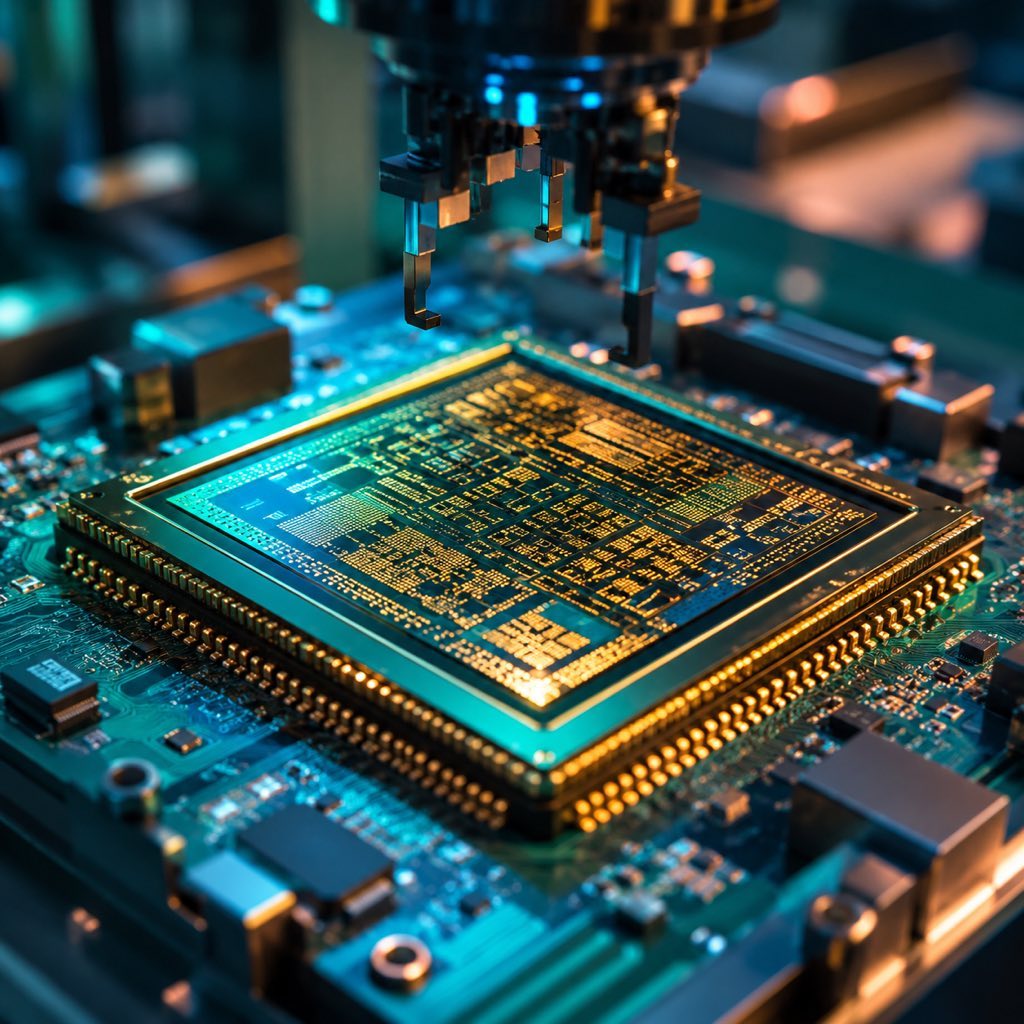
For most of the AI hardware story the spotlight sat on the processor — the GPU die that does the math. In 2026 the constraint moved next door, to the stacks of memory bolted around that die. High-bandwidth memory (HBM) is the vertically stacked DRAM that feeds an AI accelerator the tens of terabytes per second of data it needs to keep its compute units busy, and it has become the single component that most tightly governs how fast the AI buildout can proceed. SK hynix sits at the center of that constraint: the company commands more than 50% of the global HBM market and is now positioned to supply the majority of the memory for Nvidia’s next flagship.
According to reporting from TrendForce in January 2026, Nvidia is expected to allocate roughly two-thirds of its HBM4 demand for the Vera Rubin platform to SK hynix — a notable increase from previous expectations of just over 50%. That allocation matters enormously, because Vera Rubin is Nvidia’s 2026-2027 architecture and HBM4 is its defining memory technology. Whoever supplies that memory captures a structurally larger share of the most profitable hardware cycle in the industry.
The 16-Layer, 48GB Milestone
The technical centerpiece of SK hynix’s position is its 16-high HBM4 stack. At CES 2026 the company debuted a 16-layer HBM4 device with 48 gigabytes of capacity, delivering bandwidth exceeding 2 terabytes per second per stack. Stacking DRAM 16 layers high is an extraordinary manufacturing feat: the core dies are thinned to around 50 microns and the gaps between them halved compared with the 12-high generation, all while keeping thermal and electrical integrity intact across the stack.
The production cadence is deliberate. SK hynix’s 12-high HBM4 is already in mass production, while the 16-high 48GB product is in the customer qualification phase, with mass production planned for the third quarter of 2026. That timing is not the aggressive ramp some had expected. SK hynix slowed its HBM4 capacity expansion, pushing volume from an earlier second-quarter target into the third quarter, because demand for its current-generation HBM3E remains so strong that it must keep those manufacturing lines running longer than planned. The company established its HBM4 mass-production system back in September 2025 and has since shipped large volumes of paid samples to Nvidia, which reportedly cleared final validation without issues.
Advertisement
The TSMC Twist and the Competitive Field
HBM4 also marks an architectural break that ties the memory makers more tightly to the foundries. Starting with HBM4, the “base die” at the bottom of the stack — the logic layer that manages the memory — is manufactured using an advanced logic process rather than a traditional DRAM process. SK hynix is producing its HBM4 base die on TSMC’s advanced logic node and combining it with TSMC’s packaging expertise, deepening a memory-plus-foundry alliance that competitors must now match.
The competitive field is not standing still. Samsung is targeting official HBM4 shipments to Nvidia and AMD and expects its global HBM market share to surpass 30% in 2026, betting on a sixth-generation DRAM process and a 4-nanometer logic die for its base layer. Micron is also pushing into 16-high HBM4. But SK hynix’s combination of market leadership, a validated 48GB stack, and the reported two-thirds Nvidia allocation gives it the strongest hand going into the Rubin cycle — even as the deliberate Q3 ramp shows the company balancing HBM4 against a still-hot HBM3E order book.
What This Means for AI Buyers and Builders
Even organizations that never touch a memory contract feel the downstream effects of who controls HBM4 supply. The concentration shapes availability, pricing, and roadmap timing for every AI accelerator on the market.
1. Track HBM supply as a leading indicator of GPU availability
The memory stack, not the logic die, is now the tightest link in accelerator supply. When evaluating GPU availability and pricing for 2027, watch HBM4 production status — a slipped memory ramp cascades directly into delayed or rationed accelerators.
2. Factor memory capacity into model and workload planning
The jump to 48GB per stack expands the on-package memory available for large models and long-context inference. Size your model-serving architecture around the memory tiers that will actually ship, rather than assuming last generation’s capacity ceilings will hold.
3. Model supplier concentration as a strategic risk
With SK hynix supplying the majority of Nvidia’s HBM4 and the base die routed through TSMC, a single disruption in one supply chain ripples across the entire accelerator market. Build that concentration into procurement risk models rather than treating memory as an interchangeable commodity.
4. Expect memory to command a rising share of accelerator cost
As HBM stacks grow taller and more of the accelerator’s bill of materials shifts to memory, per-GPU costs are increasingly set by DRAM makers, not just the logic vendor. Budget AI infrastructure with memory pricing as an explicit, volatile line item.
Where This Fits in 2026’s Semiconductor Landscape
The HBM4 story is a clean illustration of how the AI hardware value chain has reorganized. A decade ago, DRAM was a low-margin commodity and the GPU vendor captured the value; in 2026 the memory maker is a strategic gatekeeper whose allocation decisions help determine which AI systems get built and when. SK hynix’s reported two-thirds share of Nvidia’s HBM4 is not just a supply contract — it is a claim on the most lucrative hardware cycle of the decade, backed by a manufacturing lead that Samsung and Micron are racing to close. The deliberate third-quarter ramp, driven by unrelenting HBM3E demand, is itself a signal: the AI memory market is so supply-constrained that the leader can afford to pace its next-generation rollout rather than rush it. For anyone planning AI infrastructure, the takeaway is that the memory stack has quietly become as strategically important as the processor it surrounds — and the companies that control it now sit among the most powerful actors in the entire AI economy.
Frequently Asked Questions
What is HBM4 and why does it matter?
HBM4 is the fourth generation of high-bandwidth memory — vertically stacked DRAM that feeds an AI accelerator the enormous data throughput it needs. It matters because memory bandwidth, not raw compute, is increasingly the bottleneck for large AI models, and HBM4 is the defining memory technology for Nvidia’s Vera Rubin platform in 2026-2027.
How much of Nvidia’s HBM4 will SK hynix supply?
According to TrendForce reporting from January 2026, Nvidia is expected to allocate roughly two-thirds of its HBM4 demand for the Vera Rubin platform to SK hynix — up from earlier expectations of just over 50%. SK hynix currently commands more than 50% of the overall HBM market.
When does SK hynix’s 16-layer HBM4 enter mass production?
SK hynix’s 12-high HBM4 is already in mass production, while its 16-high, 48GB stack — unveiled at CES 2026 — is in customer qualification with mass production planned for the third quarter of 2026. The company slowed its ramp from an earlier second-quarter target because demand for current-generation HBM3E remains very strong.
Sources & Further Reading
- SK hynix Reportedly to Supply About Two-Thirds of NVIDIA HBM4 — TrendForce
- SK hynix Debuts 16-Layer 48GB HBM4 at CES 2026 — TrendForce
- SK hynix Slows Down HBM4 Ramp, Prepares 300+ Layer NAND Flash — TechPowerUp
- SK hynix Deepens HBM4 Collaboration with TSMC, Plans Mass Production in 2026 — MemoryMarket
🔗 Related Intelligence
Samsung HBM4: The Memory Chip Powering AI’s Next Performance Leap
AMD’s Instinct MI455X: A 432GB HBM4 Challenger Aimed Straight at Nvidia’s Rubin

NVIDIA’s Groq Deal: How the Vera Rubin Platform Reshapes AI Inference

NVIDIA Vera Rubin: What Blackwell’s Successor Means for AI Infrastructure Buyers