A Market Leader Steps Back, and a Local Field Opens Up
When Jumia announced on February 10, 2026 that it would wind down its Algerian operations, it closed a chapter that began in 2014, the year e-commerce first took off in the country on the back of the pan-African platform’s arrival. The Algerian site is set to go offline by March 10, 2026. For a market that watched Jumia become its most visible general retailer, the departure looks dramatic. Read against the company’s own numbers, it is something quieter: a portfolio decision.
Algeria represented only about 2% of Jumia’s 2025 gross merchandise volume. Under CEO Francis Dufay, the group is concentrating capital on its largest markets to reach profitability in 2027, with FY2025 revenue of $188.93 million, up 11% year on year, and a pre-tax loss that narrowed to $60.1 million from $97.6 million a year earlier. Algeria was simply not where the next dollar of growth was going to come from for a Lagos-headquartered group optimizing a continent-wide footprint.
That distinction matters, because the size of the prize Jumia stepped away from is substantial. Algeria’s e-commerce market generated roughly $1.716 billion in revenue in 2025, with projected growth of 10 to 15% into 2026. The demand is here, the buyers are here, and increasingly, so is the digital reach: 37.8 million Algerians were online at the end of 2025, an internet penetration rate of 79.5%. What changes now is who serves that demand, and on whose terms.
The Homegrown Players Already Holding the Field
The most important fact about Jumia’s exit is that Algeria’s online commerce does not start from zero. It has a thriving local layer that has been growing in parallel for years.
Ouedkniss is the clearest example. Algeria’s leading classifieds and marketplace platform handles more than 800,000 consultations per day and carries over a million active listings spanning cars, real estate, electronics, services and jobs. Its audience is overwhelmingly domestic, and it has built brand trust the way local platforms do best: by reflecting how Algerians actually buy and sell. Alongside it sit specialist and generalist players such as Batolis and IdealForme, which have carved out their own niches in the formal online-retail segment.
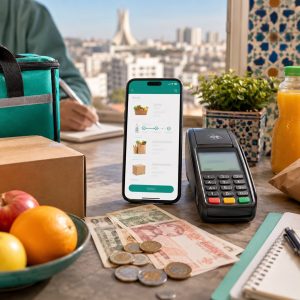
These platforms understand a market that international operators often described in terms of friction. Cash-on-delivery remains the dominant payment method, accounting for roughly 95% of online transactions, while card payment penetration sits below 5%. International retailers frequently treated that as a structural barrier. Local platforms treat it as the default they were built around, designing logistics, trust and returns flows for a buyer who pays at the door. That is an advantage, not a handicap, and it is one homegrown players are positioned to extend as digital payment options mature.
Advertisement
What the Numbers Say About the Opportunity
Algeria’s formal e-commerce sector is still early in its build-out, which is precisely why the moment is interesting. By the end of 2022, GIE Monétique counted 291 registered online retailers processing about 22 million payments worth $120 million that year. Registration with the National Center for the Commercial Register (CNRC), under the dedicated e-commerce activity code 607.074, gives the formal segment a clear legal spine to grow from.
Set the formal-retail figures beside the $1.7 billion total market and the headline penetration numbers, and the gap reads as runway. A market with 37.8 million internet users, strong mobile reach and a large young population has room for many more formal online merchants than it has today. Jumia’s exit does not shrink that opportunity; it redistributes a visible, established slice of it to players who can move quickly to capture it.
What Algerian Businesses and Entrepreneurs Should Do
The opening Jumia leaves is real, but it rewards operators who act with intent rather than wait for demand to fall into their laps. Three priorities stand out.
1. Treat the next 6 to 12 months as a customer-acquisition window, not a victory lap
Jumia’s most loyal Algerian customers will be looking for a new default between now and the March shutdown. Local marketplaces and individual merchants should run targeted acquisition campaigns aimed squarely at those buyers, emphasizing the same conveniences they relied on: cash-on-delivery, fast urban and secondary-city delivery, and easy returns. The platform that captures this migrating cohort early will compound that lead, because in marketplaces, trust and habit are sticky. Budget for acquisition now while the switching moment is live.
2. Build for cash-on-delivery first, then layer digital payments on top
With cash-on-delivery still covering roughly 95% of transactions, the winning design is COD-native, not card-first. Invest in reliable last-mile logistics, transparent delivery tracking, and a returns process a cautious first-time buyer can trust. Then introduce digital payment options as an upgrade path rather than a precondition, so customers move to cards and wallets when they are ready. This sequencing meets Algerian buyers where they are today while building toward where the market is heading.
3. Formalize early: register with the CNRC and build a compliant operation
The fastest-growing merchants will be the ones that operate cleanly. Registering as an e-commerce operator with the CNRC under activity code 607.074 unlocks access to formal payment rails, advertising channels and partnerships that informal sellers cannot reach. With only a few hundred formally registered online retailers as of recent counts, early formalization is also a differentiator: it signals legitimacy to buyers and positions a business to scale with the sector rather than against it.
Where This Fits in Algeria’s 2026 Digital Economy
Jumia’s departure is best read not as a market verdict but as a handoff. A pan-African operator optimizing for a continent-wide profitability target concluded that Algeria was not its highest-return market, and stepped back. What it leaves behind is a $1.7 billion market, nearly 38 million internet users, and a local ecosystem, led by Ouedkniss and joined by Batolis, IdealForme and a growing roster of formal merchants, that is already shaped around how Algerians actually shop.
The next chapter of Algerian online commerce can be more local and more deeply rooted than the last. Homegrown platforms know the payment habits, the delivery geography and the trust signals that matter here, and the buyers they need are already online and already shopping. The opportunity now is to convert a moment of disruption into durable local market share, building an e-commerce sector that grows on Algerian terms and keeps more of its value at home.
Frequently Asked Questions
Why is Jumia leaving Algeria?
Jumia announced on February 10, 2026 that it would close its Algerian operations as part of a group-wide strategy to focus capital on its most profitable African markets and reach profitability in 2027. Algeria represented only about 2% of Jumia’s 2025 gross merchandise volume, so the exit was a portfolio decision rather than a verdict on Algerian demand. The local site is scheduled to go offline by March 10, 2026.
Which local platforms can fill the gap Jumia leaves?
Ouedkniss is Algeria’s leading marketplace, handling over 800,000 consultations per day and more than a million active listings. Other homegrown players such as Batolis and IdealForme also operate in the formal online-retail segment. These platforms are built around local payment and delivery habits, which positions them well to absorb buyers migrating from Jumia.
How big is Algeria’s e-commerce market today?
Algeria’s e-commerce market generated roughly $1.716 billion in revenue in 2025, with projected growth of 10 to 15% into 2026. The country had 37.8 million internet users at the end of 2025, an internet penetration rate of 79.5%. Cash-on-delivery still accounts for about 95% of online transactions, making COD-native logistics essential for any platform serving the market.
Sources & Further Reading
- Further Reading
- Jumia Pulls Out of Algeria, Sets Sights on 2027 Profit — Ecofin Agency
- Après 14 ans d’activité, Jumia met fin à son aventure en Algérie — Algérie360
- Jumia exits Algeria and reports FY25 revenues up 13% year on year — Trendtype
- Algeria — eCommerce Country Commercial Guide — U.S. International Trade Administration
- E-Commerce Industry in Algeria 2018-2030 — ECDB
- Digital 2026: Algeria — DataReportal
🔗 Related Intelligence

Algeria’s $1.7B E-Commerce Market After Jumia: Local Merchants Race to Fill the Gap

After Jumia’s Exit: Who Will Win Algeria’s E-Commerce Market?
Algeria E-Commerce Fulfillment: The Warehouse Gap Holding Back a $7 Billion Market

Algeria E-Commerce in 2026: A $7B Market Meets Legal Maturity