The 100,000 Milestone That Reveals a Larger Problem
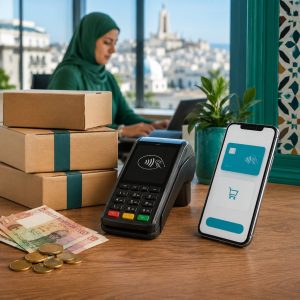
Algeria crossed a symbolic milestone in March 2026: more than 100,000 active electronic payment terminals (TPEs), up from 78,000 in December 2025 — a 33% increase in just three months. The headline sounds like progress. The subtext tells a different story.
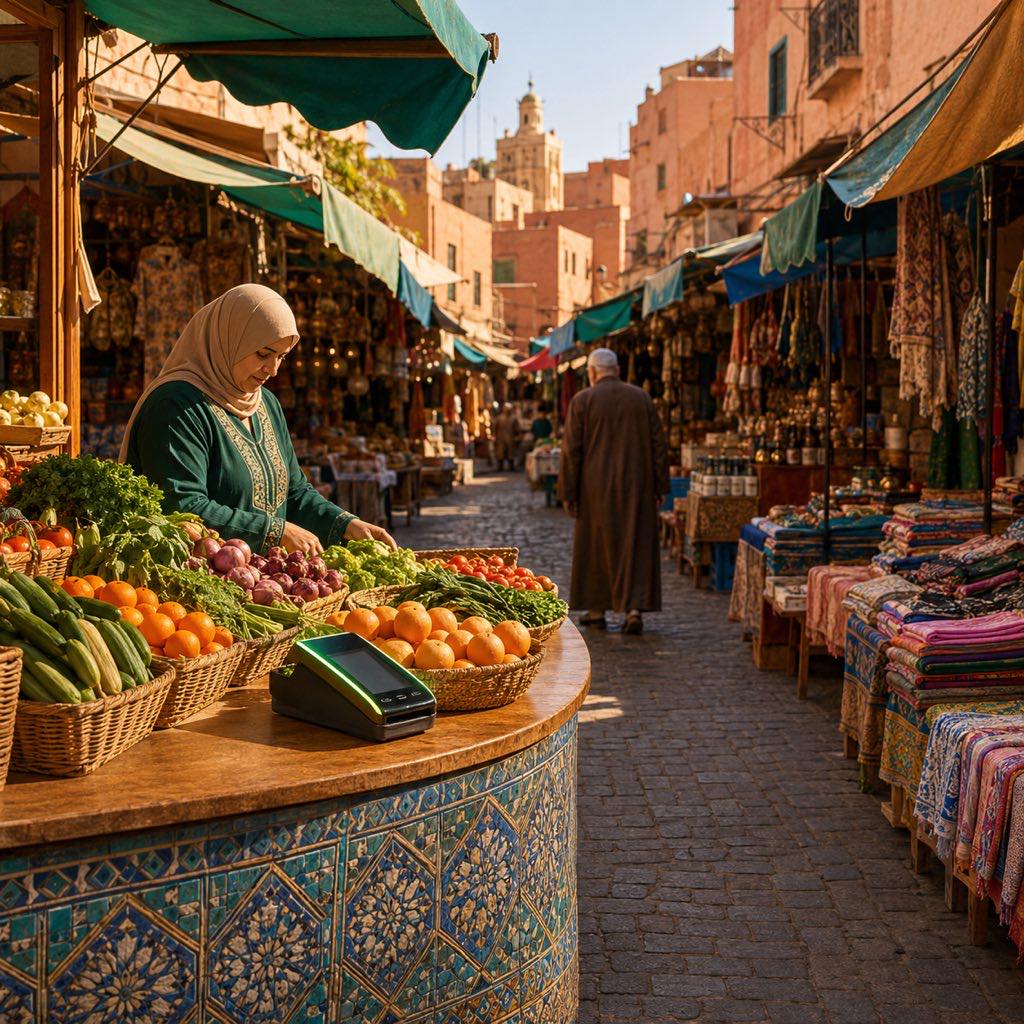
Algeria has approximately 1.2 million declared merchants. That works out to one terminal for every twelve merchants — and with just over one million electronic payment operations recorded across the country in March 2026, that’s roughly ten transactions per terminal for the entire month. One payment every three days. Infrastructure that barely justifies its own electricity bill.
The gap is structural, not incidental. Officials from SATIM (Société d’Automatisation des Transactions Interbancaires et de Monétique) have acknowledged it plainly: “Il y a un écart très important à combler. C’est plus d’un million de TPE qu’on doit mettre à disposition” — there is a very significant gap to fill, and more than one million additional terminals are needed to adequately serve the existing merchant base.
That statement deserves to sit with readers for a moment. The country currently has 100,000 terminals and needs 1,100,000 more. The milestone celebrated is roughly 8% of the target.
What the Numbers Actually Show
The March 2026 data snapshot, compiled by SATIM and reported by Algérie Eco and We Are Tech Africa, paints a picture of an ecosystem with strong card supply and weak merchant acceptance:
- 22.5 million payment cards in circulation (18 million Edahabia postal cards + 4.5 million CIB bank cards)
- 100,000+ TPEs serving 1.2 million declared merchants — fewer than 10% coverage
- 4,700 ATMs nationally — 14 per 100,000 adults versus the international standard of 44
- 1 million monthly transactions across all terminals combined — roughly 10 per terminal per month
The card-to-terminal ratio is inverted: there are 225 cards for every terminal. Cardholders exist. Acceptance points don’t. This is the cashless paradox — Algeria has issued enough cards to go digital, but not enough places to spend them electronically.
Online commerce tells a slightly more optimistic story. Web merchants grew from 644 in December 2025 to 859 in March 2026 — a 33% increase in the same period. And total e-payment volume reached 939 billion dinars in 2025, a 46% year-on-year increase, driven largely by public services and the DZMobPay launch. These are real gains. They also underline how much of the growth is happening at the institutional and online end, while the vast street-level merchant economy remains cash-dominant.
Advertisement
The Last-Mile Challenge
The terminal gap is not simply a supply problem. It is a deployment, incentive, and adoption problem — and each layer compounds the others.
On the supply side, banks and the GIE Monétique consortium control terminal distribution. The Bank of Algeria’s governor has set an ambitious goal: transitioning Algeria to a largely cashless society by 2028, with the national Fintech Strategy 2024-2030 targeting 50% of all transactions cashless by 2030. The gap between those targets and current 10% merchant coverage is enormous.
On the demand side, merchants have limited incentive to request terminals when card usage is so sparse. The ten-transactions-per-month figure is the circular trap: merchants don’t equip because customers rarely pay by card, and customers rarely pay by card because merchants aren’t equipped.
The Fintech Times has documented that over 85% of Algeria’s e-commerce transactions rely on cash-on-delivery (COD), which reflects the same trust deficit in the physical merchant layer. Even where customers want to pay digitally, systemic friction remains.
Promising infrastructure is emerging at the margins. SoftPos technology — which transforms an NFC-enabled smartphone into a de facto payment terminal — is scheduled for rollout by end-2026. This could change the unit economics dramatically: instead of banks distributing and maintaining expensive dedicated hardware, any merchant with an NFC phone becomes an acceptance point. The cost barrier drops. The coverage math changes.
What Algerian Merchants and Fintech Teams Should Do Now
1. Request a TPE through your bank before Q4 2026, not after
The Banque de Développement Local (BDL) has begun offering free terminals to merchants in priority sectors. That window is open now and will narrow as demand from the government’s push intensifies. Merchants who delay will face longer queues. Fintech companies with PSP licenses under the Bank of Algeria’s Instruction 06-2025 should map their merchant acquisition targets against current TPE coverage data — the underserved merchant segment is not a future market, it is the present one.
2. Treat SoftPos as a leapfrog technology, not a supplement
The hardware terminal model required capex, logistics, and after-sales maintenance at scale — constraints that explain why a million-terminal deployment has never happened. SoftPos removes those constraints for a smartphone-equipped merchant. SATIM’s scheduled end-2026 rollout creates a genuine acceleration window. Fintech startups building merchant-facing apps should design for SoftPos acceptance now, before the official rollout, so they can onboard merchants at speed when the regulatory confirmation arrives.
3. Focus onboarding campaigns on high-frequency cash merchants, not general merchants
The ten-transactions-per-terminal-per-month figure is an average that masks extreme variance. Some terminals — in supermarkets, petrol stations, pharmacies — process hundreds of transactions monthly. Most process near-zero. Merchant acquirers and PSPs should segment their acquisition by sector, concentrating resources on the high-frequency categories where digital payment economics justify the deployment cost. General coverage campaigns at this stage burn budget on merchants who will not generate enough volume to sustain the acceptance habit.
Where This Fits in Algeria’s 2026 Cashless Roadmap
The 100,000-terminal milestone matters as a signal of intent, not as evidence of coverage. Three months of 33% terminal growth is a genuine acceleration. Sustaining that rate would reach 200,000 terminals by end-2026 — still a fraction of the one-million-plus needed.
The honest read of Algeria’s cashless trajectory is: the digital payment backbone is solidifying (DZMobPay, QR interoperability, PAPSS integration), card issuance is ahead of schedule, and the regulatory framework is strengthening. What remains structurally incomplete is merchant-side last-mile deployment, and the ten-transactions-per-month utilization figure suggests that even deployed terminals are dramatically underused.
The 2028 and 2030 targets are not impossible. But they require a deployment intensity that Algeria has not yet demonstrated — and a behavior change at the merchant level that supply-side terminal growth alone will not achieve. SoftPos rollout, merchant incentive programs from banks like BDL and BNA, and consumer education campaigns around card-versus-cash need to come together in parallel, not sequentially. International benchmarks suggest it takes 5-7 years to shift a cash-dominant society’s payment habits; Algeria’s 2028 target compresses that to three years, making the next 18 months critical.
Frequently Asked Questions
How many payment terminals does Algeria have compared to the number of merchants?
Algeria has approximately 100,000 active TPE terminals as of March 2026, against a declared merchant base of 1.2 million. That is fewer than 10% of merchants equipped, and SATIM officials have stated that over one million additional terminals are needed to adequately serve the market.
Why do existing terminals record so few transactions?
Terminals average approximately ten transactions per month — roughly one payment every three days. The root cause is a chicken-and-egg dynamic: consumers rarely pay by card because few merchants have terminals, and merchants see little incentive to install terminals when card usage remains low. This is compounded by the fact that over 85% of Algeria’s e-commerce still uses cash-on-delivery, reflecting the same trust deficit in the acceptance ecosystem.
What is SoftPos and how could it change merchant coverage?
SoftPos technology converts any NFC-enabled smartphone into a payment acceptance point, eliminating the need for dedicated hardware terminals. SATIM has scheduled SoftPos rollout for end-2026. If deployed at scale, it could fundamentally change the coverage math — turning Algeria’s 47 million-strong smartphone base into a potential pool of acceptance points, removing the logistics and capex barriers that have slowed hardware terminal deployment.
Sources & Further Reading
- Algérie : 100 000 TPE pour 1,2 million de commerçants — Algérie Eco
- Algeria’s Electronic Payment Market Surpasses 22 Million Cards — We Are Tech Africa
- E-paiement: 939 milliards de dinars en 2025, +46% — Algeria Invest
- Algeria’s Fintech Ecosystem in 2026: Building Momentum — The Fintech Times
- The Challenge of Widespread Use of EPT Terminals — Algeria Invest
🔗 Related Intelligence

Algeria’s Digital Payment Infrastructure: 78K Terminals, 644 Online Merchants, and a 46% Surge

Algeria Payments: The 179% Surge and What Merchants Must Do in 2026
Algeria’s Digital Payments: What the 4.6× Average Transaction Leap Means for Merchants
Algeria’s 22 Million Payment Cards, 104K POS & 46% Surge: The Fintech Runway Mapped