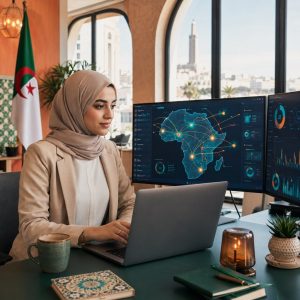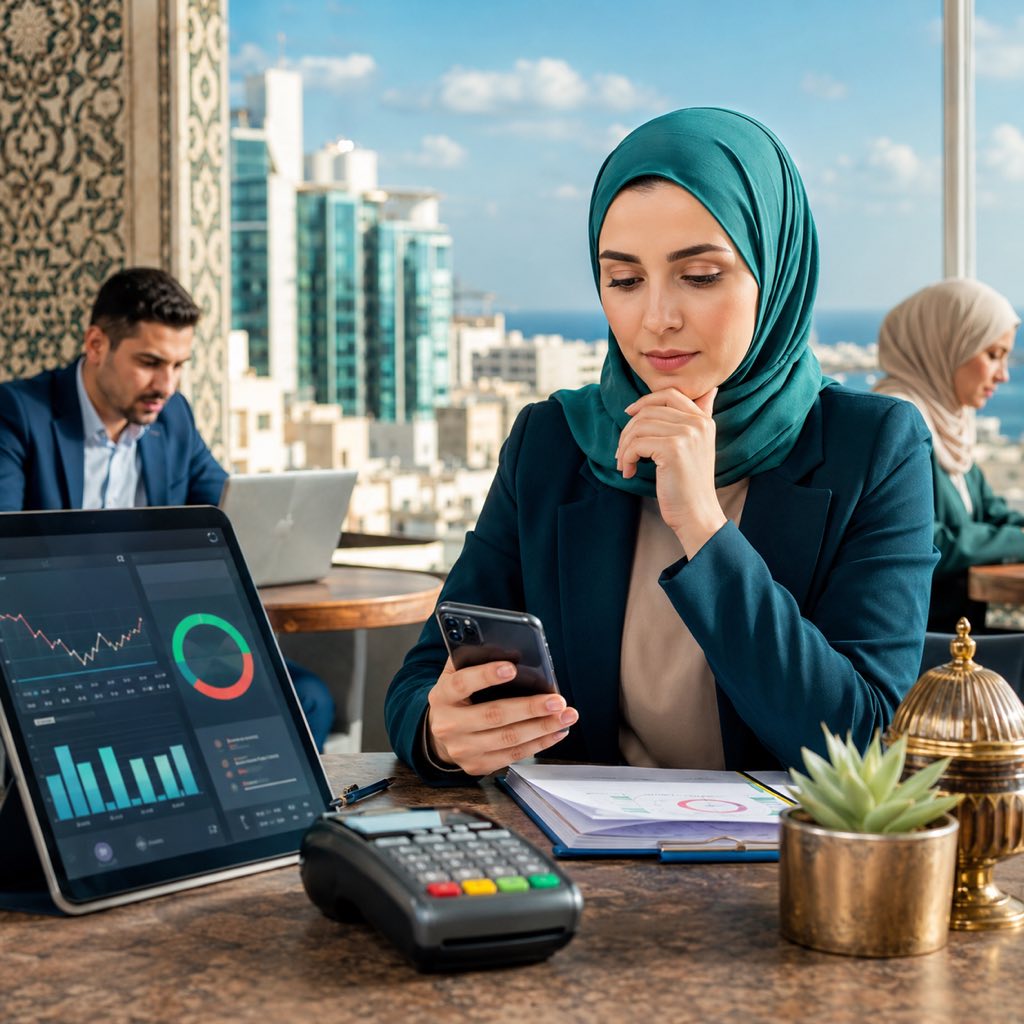
The Payout Problem Algerian Creators Have Faced Since 2017
YouTube’s Partner Program has been available in Algeria since 2017. TikTok Creator Rewards expanded to Algeria in 2024. Twitch added Algeria to its eligible payout countries in 2025. On paper, Algerian creators with sufficient audiences can monetize. In practice, a structural payment corridor problem has blocked most of them from actually collecting.
The core issue is Algeria’s currency control regime. The Algerian dinar (DZD) is non-convertible and subject to strict capital controls administered by the Bank of Algeria. International digital platforms — YouTube (Google), TikTok (ByteDance), Twitch (Amazon) — pay creator earnings in USD or EUR through payment processors that rely on one of three corridor mechanisms: PayPal account transfer, SWIFT wire to a bank account in a currency-convertible jurisdiction, or Wise (formerly TransferWise) payout account. None of these work cleanly in Algeria:
PayPal: Not available in Algeria. Algerian users cannot open verified PayPal accounts. This eliminates PayPal-based payouts entirely.
SWIFT wire transfer: YouTube’s AdSense and TikTok’s creator portal both offer SWIFT wire as a payout option. However, SWIFT transfers to Algerian bank accounts in USD or EUR are subject to Bank of Algeria conversion rules that require commercial bank acceptance of the transfer as a legitimate foreign currency inflow — a process that can take 30-90 days and often results in rejection if the transaction narrative does not clearly specify it as service export income under an approved code. According to state-of-algeria.dev’s payments analysis, the foreign exchange authorization process for individual service export income is among the most complex use cases in the Algerian banking system.
Wise: Does not support DZD as a receiving currency. Algerian creators who have tried to use Wise accounts denominated in EUR or USD cannot withdraw to an Algerian bank account without triggering the same SWIFT conversion problem.
The practical result: the majority of Algerian creators who reach monetization thresholds are either unable to collect their earnings, or use workarounds — a relative’s bank account in France, a friend’s PayPal account — that carry legal and financial risk.
What the PSP Virtual Card Pathway Opens Up in 2026
Instruction 06-2025 and the Bank of Algeria’s fintech sandbox framework, which Loop is navigating as the first applicant, have introduced a new element into Algeria’s payment infrastructure: the possibility of licensed Algerian PSPs issuing virtual Visa or Mastercard cards denominated in hard currency to Algerian residents, within a defined regulatory perimeter.
This matters for creators because YouTube AdSense, TikTok Creator Marketplace, and Twitch’s payout system all support payment to a Mastercard or Visa card — the international network infrastructure accepts card-based payouts without requiring a full SWIFT transfer or a PayPal account. If a licensed Algerian PSP can issue a virtual USD or EUR Mastercard to an Algerian creator, the payout corridor problem is substantially simplified.
The Fintech Times noted in its 2026 overview of Algeria’s fintech ecosystem that virtual card issuance under the new PSP framework is among the highest-demand products from early fintech applicants. The demand is driven precisely by this use case — individual Algerians (creators, freelancers, e-commerce exporters) who have legitimate foreign currency income but no practical way to receive it.
The virtual card pathway is not unlimited. Under the current Bank of Algeria framework, hard-currency balances held on PSP-issued cards are subject to a ceiling — expected to be set in the range of USD 5,000-10,000 annually per account holder, consistent with the existing traveler’s currency allowance framework. For YouTube creators in the $200-2,000/month earnings range, this ceiling is workable. For creators earning above this level, additional regulatory compliance steps are required.
Advertisement
What Algerian Creators Should Do About It
The payout landscape in 2026 is not solved — but it is materially better than 2025. Here is the practical framework for creators at different earning levels.
1. If You Are Earning Under $500/Month: Wait for Licensed PSP Virtual Cards
At this earning level, the overhead of establishing a formal foreign currency receiving structure — legal setup, bank correspondence, potential accounting fees — typically exceeds the earnings themselves. The right move is to monitor which PSP startups receive sandbox admission under Instruction 06-2025, sign up early for their waitlists, and ensure your creator accounts have a valid payment method on file to avoid payout suspension. YouTube AdSense will hold earned revenue for up to 90 days before suspending monetization if no valid payment method is confirmed. Check your AdSense account now and confirm your payment threshold and current payment method status.
2. If You Are Earning $500-$3,000/Month: Pursue the SWIFT Bank Transfer Path — With the Right Documentation
At this earnings level, the SWIFT wire to an Algerian bank account is worth the complexity, if approached correctly. The critical documentation step is framing your withdrawal request as “service export income — digital content services” and opening a foreign currency account at a commercial bank in Algeria (BNA, BEA, CPA, or private banks like AGB or Al Salam). Launch Base Africa’s analysis of Algeria’s fintech landscape notes that Algeria’s 2025 law amendments included provisions that formally recognized digital service exports as eligible foreign currency income — meaning SWIFT transfers with the correct service code should be processable. The process requires bank correspondence that most creators will need a financial advisor to navigate, but the legal pathway exists.
3. If You Are Earning Over $3,000/Month: Register as a Self-Employed Digital Service Exporter
At this earning level, operating informally — whether through a relative’s PayPal account or an unregistered SWIFT transfer — creates material tax and legal exposure. The appropriate structure is formal self-employment registration (activité libérale) with the relevant tax authority, registration of your digital content activity under the service export code, and a formal foreign currency account relationship with your bank. This setup allows you to receive SWIFT transfers, issue official invoices to YouTube/TikTok, and declare income transparently. Algerian content creator revenue is taxable income; according to Gray Group International’s analysis of the global creator economy, the formalization trend is accelerating globally as platforms increasingly require tax documentation from high-earning creators. The informal collection methods most creators use do not eliminate the tax obligation, they create it without the protection of formal status.
4. Regardless of Earnings Level: Diversify Your Monetization Stack Beyond Platform Ads
Platform ad revenue is the most corridor-dependent income stream — it requires the platform to send you money via their chosen payment method. Direct patronage (Patreon, Buy Me a Coffee, Ko-fi) and merchandise sales can be structured differently because you control the payment platform and can, in some cases, accept payment from Algerian supporters via BaridiMob transfer without triggering cross-border currency issues. Building a 30-40% share of revenue from Algeria-based audience support — super fans, patronage, digital product sales in DZD — is a structurally more resilient model than 100% dependence on AdSense or TikTok Creator Rewards.
The Structural Lesson: Payment Infrastructure Shapes the Creator Economy
Algeria’s creator economy statistics are deceptive. The country has 24.8 million TikTok users, 15+ million YouTube viewers, and a rapidly growing generation of Arabic and Darija content creators producing work that reaches the broader Arab world. According to Yahoo Finance’s 2026 creator economy statistics report, the global creator economy reached $234 billion in 2026, with the fastest growth in markets where payment infrastructure improved. By any audience metric, the preconditions for a creator economy exist in Algeria.
What is missing — and what the PSP virtual card pathway is beginning to address — is the last-mile payment infrastructure that converts audience into income. The structural lesson from comparable markets is that creator economies grow proportionally to payment accessibility. Egypt’s creator economy accelerated after PayPal enabled Egypt accounts in 2020; Tunisia saw a similar effect after international fintech providers developed DZD-adjacent USD receiving accounts. Algeria’s version of this inflection is beginning with the PSP virtual card frameworks created by Instruction 06-2025.
The bottleneck will not disappear overnight. Even after Loop or another licensed PSP begins issuing virtual creator cards, the Bank of Algeria’s annual hard-currency ceiling will create a natural segment of high-earning creators who need additional regulatory infrastructure. But for the 90% of monetizing Algerian creators earning under $5,000/year from digital content, the structural barrier is becoming surmountable in 2026 for the first time.
Frequently Asked Questions
Can Algerian creators use a foreign-registered company (France, UAE) to receive platform payouts and then transfer money back?
Yes, this is a legal and commonly used structure for Algerian residents with the resources to establish it. An Algerian national can register a company in France or the UAE, open a bank account in that jurisdiction, receive platform payouts there, and then make legitimate transfers back to Algeria within the Bank of Algeria’s framework for repatriation of foreign earnings by Algerian residents abroad. The complication is that this structure requires physical presence or a representative in the foreign jurisdiction for company registration, ongoing accounting and compliance costs in both jurisdictions, and careful documentation of the repatriation transfers. For creators earning consistently above $3,000/month, the setup cost (typically €2,000-5,000 in initial legal and accounting fees) may be justified. For creators earning less, it is not economically rational.
Are YouTube AdSense earnings taxable in Algeria even if they are received abroad?
Yes. Algerian residents are taxed on worldwide income under the Algerian tax code. Income earned from YouTube AdSense is taxable regardless of whether it is received into an Algerian bank account or a foreign account. Algerian creators who use informal methods (relative’s PayPal, foreign account) to collect platform revenue and do not declare it are creating undeclared tax liability, not avoiding tax. The 2025-2026 formalization trend — driven by the new PSP framework and digital service export recognition — is likely to be accompanied by increased fiscal attention to creator economy income from the Direction Générale des Impôts.
Will licensed Algerian PSPs offer virtual cards that work with YouTube AdSense payouts specifically?
This depends on the international card network agreements each PSP secures. YouTube AdSense supports payout to Visa and Mastercard cards with a billing address in the supported country — if an Algerian PSP issues a Visa card with an Algerian billing address, it should in principle work with AdSense’s payment system. The technical feasibility exists; the regulatory and commercial relationships between the new PSPs and international card networks are the remaining variable. This is a key question to ask any PSP that markets a virtual card product to creators — specifically: “Is your card accepted by Google AdSense as a valid payment method?”
Sources & Further Reading
- Algeria E-Payment Solutions Overview — state-of-algeria.dev
- Algeria’s Fintech Ecosystem in 2026: Building Momentum — The Fintech Times
- The New Algeria: Fintech and VC Laws Could Redraw North Africa’s Tech Map — Launch Base Africa
- Global Creator Economy Statistics 2026 — Gray Group International
- Creator Economy Statistics 2026 — Yahoo Finance / Research Report
🔗 Related Intelligence
Algeria’s Social Commerce Revenue Gap: Why COD Is Costing Creators and Merchants Real Money
Algeria’s PSP Wave: Virtual USD Mastercards Open the Global Digital Economy to Algerians
Algeria’s Digital Payment Infrastructure: 78K Terminals, 644 Online Merchants, and a 46% Surge
From 95% COD to Digital Trust: How Algerian Platforms Are Shifting Payments