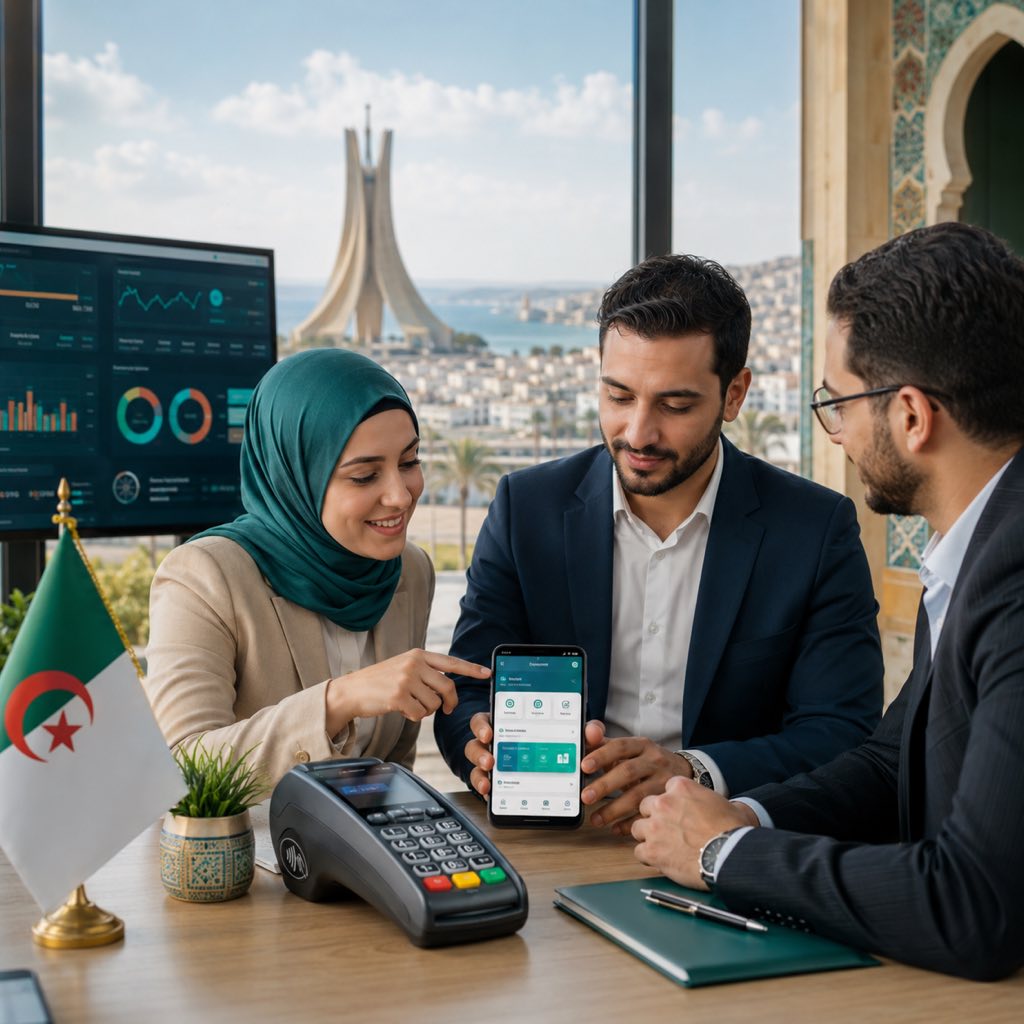
From Framework to First Applicant: What Loop’s Application Actually Signals
Policy frameworks for fintech regulation in Algeria have a history of being announced before the institutional machinery to implement them existed. Regulation 25-02 (14 April 2025) set the conditions for authorizing and approving payment service providers, and Instruction 06-2025 (17 August 2025) defined the rules governing their activity. What the regime lacked was a first real applicant to test whether the process works in practice.
According to Ecofinagency, Loop submitted the first PSP application under this framework, structured as a société anonyme (SA) — making it the inaugural test case for how the Bank of Algeria’s approval process functions in practice. It is important to be precise about status: Ecofinagency notes that “approval is not guaranteed,” and that until a decision is issued, the “first SA fintech in Algeria” claim “remains prospective, not accomplished.” The significance is not that Loop is approved — it is that a complete, formally structured application now exists for the regulator to process.
Launch Base Africa described the Instruction 06-2025 framework as creating “a playbook for payments startups” — accurate in intent. With Loop’s application now filed, the playbook has its first player, and the process gets its first live test.
What Instruction 06-2025 Actually Requires — And Why the SA Structure Matters
One detail often omitted from discussion of Algeria’s PSP rules is the corporate-structure requirement. Loop applied as a société anonyme (SA) — Algeria’s joint-stock corporate form — not the simpler SARL (limited liability company) most Algerian startups default to.
This is not an administrative detail. SA formation requires a substantial minimum paid-up capital, a board of directors with defined governance responsibilities, and audited accounts. Ecofinagency reports that, if Loop’s file is cleared, it must still deposit the required minimum paid-up capital before an agrément is issued. The Startup Researcher’s coverage of the regulation highlights capital and governance requirements as the primary structural filters that separate PSP applicants from informal payment operators. Instruction 06-2025 also requires that an approved PSP keep its registered office and payment platform on national territory.
Loop’s decision to form as an SA and file is itself a signal about the startup’s capitalization and governance maturity — a path not available to every founder in Algeria’s early-stage, capital-constrained VC environment.
Advertisement
From Application to Agrément: The Real Process and Timeline
Fintech founders evaluating whether to pursue a PSP agrément need a realistic picture of the process, because it is a sequential, two-step authorization — not a light-touch registration and not a sandbox.
Step 1 — Prior authorization (autorisation préalable). The applicant files a dossier with the Bank of Algeria; the prior authorization is granted by the Conseil de la Monnaie et du Crédit (the Monetary and Banking Council). This step assesses corporate governance, technical architecture, data security, and AML/CFT procedures.
Step 2 — Agrément. Once prior authorization is obtained, the applicant has a defined window (reported as up to twelve months) to constitute and submit the complete file for the agrément — delivered by the Governor of the Bank of Algeria — which is what actually permits operation as a PSP. Note the terminology: the regime grants an agrément (approval), not a “licence.”
An agrément can be withdrawn if the approved PSP does not become operational within the conditions and timeframes set by the regulation.
Where does Loop sit? At the application-and-review stage. The Bank of Algeria has not, to date, communicated any prior authorization or agrément to any operator. Even on an optimistic reading, an operating, approved PSP is a later-2026-to-2027 prospect, not a present-day reality. Founders watching Loop should plan accordingly.
What This Means for Algerian Fintech Founders
Loop’s application changes the practical calculus for founders who were waiting for proof that the Instruction 06-2025 framework was real before investing in SA formation and the application process.
1. Decide Whether You Are Building a Regulated Payment Product or a Payments-Adjacent One
Not every fintech startup needs a PSP agrément. Products that route through an existing licensed bank or Algeria Post’s infrastructure (Baridi Pay, CIB) can operate without their own agrément if they are built as tools or interfaces, not as principal payment processors. The agrément is required only if your product holds or moves customer funds independently — wallets, direct debit, merchant acquiring. Founders unclear on this distinction should get formal legal counsel before initiating SA formation, because restructuring later is expensive.
2. If You Are Pursuing the Agrément, Start SA Formation and the Dossier Now
Loop’s application creates a competitive reference point: the regime is now being tested, and the first complete dossier is on the regulator’s desk. SA formation in Algeria takes 4-8 weeks under standard conditions, and the prior-authorization dossier (governance, technical architecture, AML/CFT, data protection) takes longer to assemble than founders expect. Starting early is the difference between shaping the second wave and watching it.
3. Treat the AML/CFT and Governance Documentation as the Real Gate — Not the Technology
Regulatory rejections in new frameworks almost universally cite governance and compliance-documentation deficiencies, not technology failures. Expect the file to require an AML/CFT policy document, a data-protection framework compliant with Law 18-07, and an incident-response protocol. These require legal expertise to draft and internal process to support. Founders who invest in technical infrastructure before their compliance documentation are building in the wrong order.
4. Plan for a Constrained First Phase of Operations
If an agrément is granted, expect early operations to be scoped and closely supervised before scaling. Use that phase to build distribution density within your approved perimeter rather than expanding features. Demonstrating real usage and clean supervisory reporting is what supports a durable, unrestricted operation later.
Where This Fits in Algeria’s 2026 Fintech Ecosystem
Loop’s PSP application does not exist in isolation. It is one data point in a set of 2025-2026 regulatory developments that together represent the most substantive shift in Algeria’s fintech regulatory environment since the introduction of BaridiMob in 2020.
The regulatory stack has accumulated: Regulation 25-02 and Instruction 06-2025 established the PSP framework; earlier instructions addressed digital banks; the Bank of Algeria has published guidelines on e-payment consumer protection (referenced in algeriatech.news’ coverage of digital payment consumer rights). What has been missing is proof that these frameworks produce approved operators in practice — which is precisely what Loop’s application begins to test. Whether 2026-2027 sees a genuine cohort of approved PSPs, or the compliance and capital cost keeps the market thin, is the open question.
Frequently Asked Questions
What is the difference between a PSP agrément and the CIB e-payment accreditation that online merchants use?
The CIB (Carte Interbancaire) e-payment accreditation lets online merchants accept card payments through the existing interbank network under a merchant agreement with their bank. It does not allow the merchant to hold customer funds, issue wallets, or perform independent payment processing. A PSP agrément under Instruction 06-2025 grants the holder the right to operate as a principal payment processor — holding customer funds in payment accounts, issuing digital wallets, and processing transactions independently of a specific bank relationship. These are fundamentally different regulatory statuses with different capital, governance, and reporting requirements.
Has Loop been approved to operate as a PSP?
No. As of publication, Loop has filed an application and the Bank of Algeria has not communicated any prior authorization or agrément. Approval is not guaranteed, and even if the file is cleared, Loop must deposit the required minimum paid-up capital before an agrément is issued.
What happens if Loop’s application is rejected at the review stage?
Rejection at the review stage typically results in a deficiency notice — a list of specific documentation gaps or compliance failures the applicant must remedy before resubmitting — rather than outright refusal, especially for a first-of-kind file. As the first applicant, Loop is effectively providing the regulator with the first complete reference application, and its outcome will be the most informative dataset available for any subsequent fintech founder preparing a submission.
Correction (July 2026): An earlier version of this article and its social posts described Loop as an “agréé”/”licensed” PSP already “operating,” and characterized Instruction 06-2025 as an operational “sandbox admitting 20 startups annually.” Both were inaccurate: Loop has filed an application that remains under review, the regime grants an agrément (not a “licence”) via a two-step process (autorisation préalable → agrément), and there is no operational regulatory sandbox at this stage. The article has been corrected. With thanks to readers who flagged the imprecision.
Sources & Further Reading
- Algeria Receives First SA Fintech Licence Request from Loop — Ecofinagency
- Instruction n° 06-2025 (17 August 2025) — Bank of Algeria
- Algeria Opens for Fintech: New PSP Rules Create a Playbook for Payments Startups — Launch Base Africa
- Algeria Issues New Rules for Fintech and Digital Wallet Providers — Startup Researcher
- Digital Payment Services Regulation and Consumer Rights in Algeria — ALGERIATECH
🔗 Related Intelligence
Algeria Fintech Sandbox 2026: The Qualification Guide for PSPs and Digital Wallet Startups

Algeria’s Fintech Regulatory Roadmap: From PSP Instruction 06-2025 to a Sandbox

Algeria’s Fintech Sandbox 2026: How Startups Can Test Payment Products Under Supervision
Algeria’s Fintech Sandbox: What the Coming PSP Licences Will Mean for the Digital Economy