The Social Commerce Boom That Cash Still Runs
Algeria has one of Africa’s most active social-commerce ecosystems, yet it operates almost entirely outside the formal financial system. Tens of thousands of merchants sell clothing, electronics, cosmetics, and handmade goods exclusively through Facebook groups and Instagram shops — with no commercial registration, no digital checkout, and no paper trail. According to Ecommaps’s 2026 Algeria ecommerce research, over 85% of all ecommerce transactions in Algeria are settled via cash-on-delivery (COD), reflecting a deep structural dependence on physical cash even as internet penetration surpasses 77%.
The informal nature of this commerce is not incidental — it has been the rational choice given the absence of accessible, affordable digital payment infrastructure. Until recently, collecting an online payment required a merchant to be a registered business with a bank account, access to SATIM-certified payment gateways, and technical integration capacity that most small sellers simply did not have. The new PSP regulatory framework, combined with Algérie Poste’s rapid expansion of BaridiMob and Baridi Pay, is beginning to change that calculus.
For the broader economy, the stakes are substantial. When the World Bank’s Global Findex data shows that 57% of Algerian adults — and 71% of women — still lack access to basic transaction accounts, any mechanism that brings social-commerce sellers into the payment system simultaneously addresses financial inclusion and tax-base expansion.
What the New PSP Framework Means for Sellers
The Bank of Algeria issued Instruction No. 06-2025 on August 17, 2025, creating the country’s first formal regulatory framework for Payment Service Providers (PSPs). This single regulation reshapes what is possible for small sellers in four concrete ways.
Tiered wallet access without a bank account. The instruction defines three wallet tiers that scale KYC requirements to transaction volume. A Level 1 wallet — requiring only a basic digital ID — permits balances up to 100,000 DZD (approximately $740). For a Facebook seller moving modest volumes of clothing or electronics, that ceiling is sufficient to handle dozens of transactions per month without a formal bank relationship.
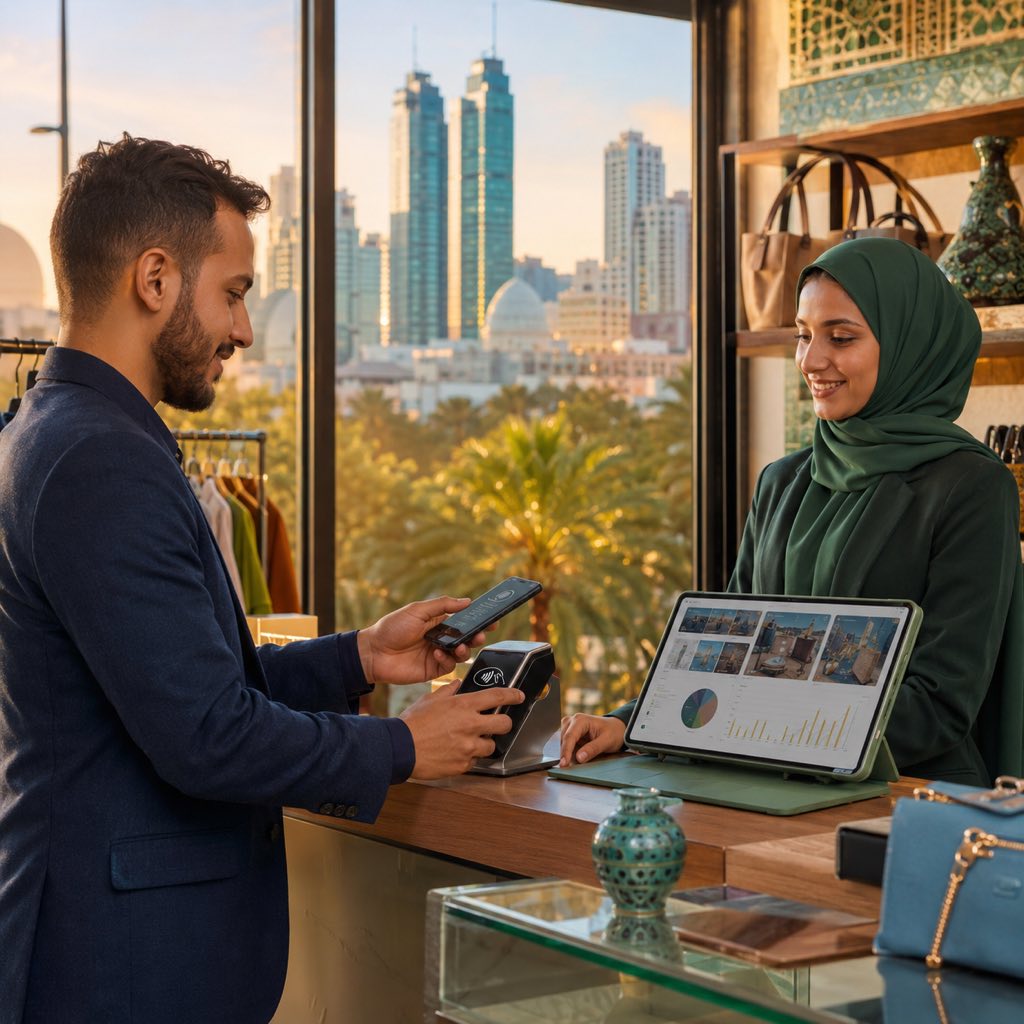
Baridi Pay as a zero-friction merchant tool. In June 2025, Algérie Poste launched Baridi Pay, a QR-code contactless payment service built into the BaridiMob application. According to DzairTube, BaridiMob has surpassed 5 million Android downloads and is the most downloaded financial application in Algeria. A seller sharing a QR code in a Facebook post can now accept instant DZD transfers confirmed by SMS — no POS terminal required.
Legal agent networks for merchant on-boarding. Instruction No. 06-2025 authorizes PSPs to appoint payment agents such as shops, post offices, and other service points to handle cash-in and cash-out on behalf of digital wallet holders. This creates a distribution layer that can reach informal sellers in wilayat far from banking infrastructure.
Consumer protection that builds buyer confidence. The regulation mandates that PSPs hold all customer funds in segregated escrow accounts (comptes de cantonnement), separate from the PSP’s own operational capital, with daily balance matching. Buyers who have hesitated to pay online because of fraud risk now have a regulated safety net — which in turn gives sellers a more credible reason to migrate away from COD.
Advertisement
What This Means for Algeria’s Informal Sellers
Formalization is an opportunity, not just a compliance burden. Sellers who move to documented digital transactions gain access to a credit trail that private lenders and government ANADE programs can use to assess risk. Algeria had 1,359,803 registered SMEs at end-2022 — but the social-commerce population almost certainly extends well beyond that figure into micro-sellers who have never formally registered.
1. Create a BaridiMob merchant account before platform features close
BaridiMob’s current public wallet structure allows any holder of a national ID to open a Level 1 account. Sellers should register now, before potential future rule changes require commercial registration for digital collection. The entry cost is zero. Sellers can begin accepting Baridi Pay QR transfers from buyers immediately, building a transaction history that becomes a future lending asset.
2. Register as an Auto-Entrepreneur via anae.dz to protect revenue
The auto-entrepreneur regime launched via anae.dz applies a flat IFU tax rate of 0.5% of annual turnover on eligible digital service providers, compared to the 5–12% rates under traditional commercial registration. For sellers of digital goods — design work, social-media management, digital downloads — this route provides legal protection, tax clarity, and eligibility for ANADE micro-financing, all at near-zero compliance cost.
3. Move your highest-value transactions to digital first
The practical migration strategy is not to eliminate COD overnight but to shift high-value and repeat-buyer orders to digital payment. A buyer who has purchased from you twice via COD has demonstrated intent — offer a small discount (e.g., 50 DZD) for paying via Baridi Pay QR. Over time this builds the digital-transaction ratio that makes the seller’s account more attractive to both lenders and formal ecommerce platforms.
The Structural Picture: Why This Matters Beyond Individual Sellers
Algeria’s government has set a target for the digital economy to contribute 20% of GDP by 2030, compared to a current share that remains marginal. Achieving that target requires not just large enterprise digitization — it requires the thousands of micro-sellers who drive daily commerce on Facebook and Instagram to enter the measured economy.
Algeria ranks 116th out of 193 countries on the UN e-Government Development Index 2024, with a score of 0.5956 — a starting point that underscores how much infrastructure work remains before digital commerce becomes frictionless for the average micro-seller. For context, the country has 1,359,803 registered SMEs as of end-2022, yet Algeria’s ecommerce law framework shows that most digital sellers have never obtained the activity code 607.074 required for formal online retail, let alone integrated a payment gateway.
The new PSP framework is an enabling layer. But enablement only translates into adoption if PSPs invest in merchant on-boarding, if logistics providers build COD-to-digital-switch incentives into their fulfillment offers, and if platforms like Ecommaps provide the operational infrastructure that makes running a compliant online shop accessible to first-time sellers.
The auto-entrepreneur regime at anae.dz offers a practical bridge: eligible digital service sellers pay a flat IFU tax of just 0.5% of annual turnover — a rate low enough that formalization is financially rational even for a micro-seller generating 500,000 DZD per year. The trajectory is positive. Algérie Poste’s rapid expansion of BaridiMob, the Bank of Algeria’s clear regulatory architecture, and the auto-entrepreneur regime’s low-friction formalization path have collectively removed the main structural barriers. The next 18 months will reveal whether merchant adoption follows the infrastructure.
Frequently Asked Questions
What is the minimum requirement to accept digital payments as an informal seller in Algeria?
A national ID is sufficient to open a BaridiMob Level 1 wallet, which permits balances up to 100,000 DZD (approximately $740). No commercial registration or bank account is required at this tier. Sellers can immediately accept Baridi Pay QR-code payments from buyers using the BaridiMob app, with transactions confirmed by SMS in real time.
Does switching to digital payments mean I have to register my business formally?
Not immediately. The Level 1 BaridiMob wallet does not require commercial registration. However, sellers who want to scale beyond the 100,000 DZD balance cap or access ANADE financing will need to advance to Level 2 (income proof required) or register as an auto-entrepreneur via anae.dz. The auto-entrepreneur regime applies a low flat tax of 0.5% of annual turnover and is specifically designed for digital service providers.
How does the new PSP regulation protect buyers who pay online?
Bank of Algeria Instruction No. 06-2025 mandates that all PSPs hold customer funds in segregated escrow accounts (comptes de cantonnement) separate from operational capital, with daily balance reconciliation. PSPs must also maintain bank guarantees or professional liability insurance. This means a buyer’s funds held by a licensed PSP cannot be mixed with company expenses or seized in the event of PSP insolvency.
—
Sources & Further Reading
🔗 Related Intelligence
Algeria’s Facebook Merchants: How Payment APIs Are Bridging Informal Commerce to the Digital Economy
The Facebook Shop Economy: How Algerians Are Selling Billions Informally Online
Algeria’s Social Commerce Economy: How Facebook Merchants Can Enter the Formal Digital Economy
Algeria’s E-Commerce Pivot: From COD Dominance to Digital Payment Adoption