What Class 10 Represents
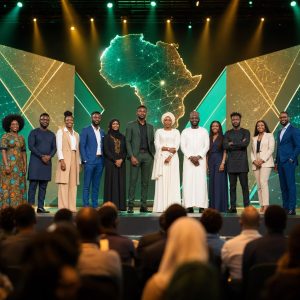
The 10th cohort of Google for Startups Accelerator Africa, announced in April 2026, ran a selection process that drew nearly 2,600 applications across the continent. Google selected 15 startups, all AI-first, spanning eight countries: Angola, Nigeria, Kenya, Uganda, South Africa, Senegal, Ivory Coast, and Tanzania. The geographic spread is the widest in the accelerator’s history at the cohort level, with Angola appearing in the line-up for the first time. The selected ventures operate across five sectors that map directly onto Africa’s most-funded verticals in 2025 and 2026 — fintech, agritech, health-tech, mobility, and broader SaaS — all using AI as a core capability rather than a marketing layer.
The programme runs as a three-month hybrid format from April 13 to June 19, 2026. Google’s published structure includes mentorship from senior Google engineers and external industry experts, technical workshops focused specifically on AI and cloud technologies, and access to product, marketing, UX, Android, web, and Google Cloud expertise. The accelerator is non-equity-free across earlier cohorts according to Google’s standard accelerator template, but the official Class 10 announcement does not restate the equity-free terms or specify Google Cloud credit amounts — the absence of those details in the launch communication suggests they may have been adjusted from earlier cohorts and is the first thing Class 10 founders should clarify in onboarding.
Why Class 10 Looks Different From Earlier Cohorts
Several structural shifts distinguish Class 10 from prior years. The first is the AI-first selection bar. Earlier accelerator cohorts included a wider range of digital ventures, with AI as one criterion among several. Class 10’s official communication explicitly frames all 15 startups as AI-first, with technical workshops and mentorship “focused on AI and cloud technologies.” That shift matches the broader move across African accelerators — Catalyst Fund, Founders Factory Africa, the MENAT cohort, and several Y Combinator-equivalent regional programmes — toward AI-native cohorts in 2026, reflecting where venture capital is actually flowing.
The second shift is the application-to-acceptance ratio. With nearly 2,600 applicants for 15 seats, Class 10 has a 0.58% acceptance rate — meaningfully more competitive than earlier cohorts, which typically saw 1,500-2,000 applicants for 10-15 seats. The programme has therefore become harder to enter at exactly the moment it has become more focused on AI. For African founders, that combination — narrower technical lens, sharper competition — is a signal about where mentorship-driven non-dilutive support is heading: toward AI-native ventures, away from generalist digital startups.
The Cumulative Track Record That Justifies the Application Volume
The reason 2,600 founders applied is not the cohort itself but the accumulated alumni outcomes. Since 2018, Google for Startups Accelerator Africa has supported 106 startups across 17 African countries through nine prior cohorts. Those alumni have collectively raised over $263 million in follow-on funding and created more than 2,800 jobs, according to Google’s published programme statistics. With Class 10’s 15 startups added, the total alumni base reaches 121 ventures across 17 countries — a continental footprint that is hard to match for any other Africa-focused mentorship programme.
The track record matters because African founders increasingly evaluate non-dilutive programmes on alumni-outcome metrics rather than on programme branding. Disrupt Africa, WeeTracker, and Empower Africa have published comparative analysis of Africa accelerators in 2025 and 2026 showing that Google’s cohort-completion-to-funded-round conversion rate is among the highest on the continent, alongside Y Combinator’s African intake and Founders Factory Africa’s Series A track. For Class 10’s 15 founders, the most valuable asset is not the three-month curriculum — it is the warm-introduction network into the alumni base and the ongoing visibility into Google product partnership opportunities.
Advertisement
What the Eight-Country Spread Signals About African AI
The geographic distribution of Class 10 — Angola (first appearance), Nigeria, Kenya, Uganda, South Africa, Senegal, Ivory Coast, Tanzania — reveals where AI-first venture creation is actually happening on the continent in early 2026. Anglophone West and East Africa dominate as expected (Nigeria, Kenya, Uganda, South Africa, Tanzania), with Francophone West Africa represented by Senegal and Ivory Coast, and Lusophone Africa now represented for the first time by Angola. The notable absence is North Africa — no Egyptian, Moroccan, Tunisian, or Algerian founders made the Class 10 cut.
That absence is partially explained by Google running a separate MENAT accelerator track for Middle East, North Africa, and Turkey — Algerian founders typically apply to the MENAT programme rather than the Africa programme. But it is also a reminder that the Africa-versus-MENAT split in accelerator architecture continues to fragment North African founders’ access to continental peer networks. A Lagos-based or Nairobi-based AI founder will graduate Class 10 with strong relationships across English-speaking and Francophone sub-Saharan Africa; a Casablanca or Algiers founder graduating MENAT will have stronger ties to the Gulf and Turkish ecosystems. For founders thinking about Pan-African scale, the choice of which Google track to apply to has long-run network consequences.
What Founders and AI Operators Should Take Away
1. Treat Google’s accelerator selection as a market signal, not just a programme
Google’s selection bar — 0.58% acceptance from 2,600 applications — is now a defensible benchmark for what counts as a credible AI-first African venture in 2026. If you are an investor, founder, or operator evaluating AI startups across the continent, treat the Class 10 cohort as a market-validated short-list of 15 ventures worth watching across the next 18 months. Their fundraising rounds, product launches, and partnership announcements will be leading indicators for the categories investors are willing to back. Track them publicly and build a watchlist; this is freely available competitive intelligence that most operators ignore.
2. Choose your accelerator track deliberately based on long-term network needs
Google’s split between the Africa programme and the MENAT programme means founders make a network decision when they choose where to apply. Founders targeting Pan-African scale, English-speaking Africa, or Francophone sub-Saharan Africa should target the Africa cohort. Founders targeting Gulf, Turkish, or North African markets should target MENAT. Do not apply to both expecting that “wherever they take us” is fine — your alumni network for the next decade is shaped by this choice, and the two cohorts have minimal overlap. Founders Network and African Founders communities have written extensively on the network-compounding effect of cohort choice.
3. Use the application process as a deck-sharpening exercise even if you do not get in
Google’s application process for the Africa accelerator is one of the most rigorous founder-validation exercises available outside of a top-tier U.S. accelerator. Even founders who do not make the cut report that the application — particularly the metrics, GTM clarity, and AI-defensibility sections — forces a level of self-honesty that many seed-stage decks lack. Build the application as if you intend to apply, even if you ultimately decide to defer or apply to a different programme; the discipline of writing the application is worth more than most paid pitch coaches will deliver.
4. Build relationships with Class 10 alumni proactively after demo day
Class 10 demo day will be in late June 2026. The 15 founders graduating will be the most accessible they ever are in the 60 days after demo day — every one of them will be doing investor outreach, partnership conversations, and product launches. If your venture has any reasonable basis for partnership, distribution overlap, or technical complementarity with a Class 10 startup, send a precise, well-researched outreach note in early July. Do not wait six months until the founder is heads-down on Series A; the post-demo-day window is when warm introductions cost the least and produce the most.
Where This Fits in Africa’s 2026 Ecosystem
Class 10 lands in a year that has already produced the largest single funding events for African AI ventures since 2022 and the most aggressive expansion of multinational accelerator programmes the continent has seen. Google’s Africa programme, the MENAT cohort, Y Combinator’s growing African intake, Catalyst Fund, Norrsken Africa, and Founders Factory Africa together now represent the most credible non-dilutive support stack ever assembled on the continent. The competitive question for African AI founders is no longer “is there a programme?” but “which programme matches my network goals, my sector focus, and my GTM stage?”
The bigger picture is that 2026 looks like the year African AI ventures cross a credibility threshold with global VCs that earlier cohorts could not. The combination of Class 10’s selection rigour, the LLM-deployment maturity in fintech and agritech, and the cumulative alumni base of $263M+ raised across 121 startups means that an African AI founder pitching a U.S. or European VC in late 2026 has a stronger reference frame than the same founder did in 2024. The challenge is converting that reference frame into Series B and Series C rounds at scale, which the next 24 months will reveal whether the continent’s accelerator stack actually delivers.
Frequently Asked Questions
What is Google for Startups Accelerator Africa Class 10?
Class 10 is the 10th cohort of Google’s three-month hybrid accelerator programme for African startups, announced in April 2026. From nearly 2,600 applications, Google selected 15 AI-first startups across eight countries — Angola, Nigeria, Kenya, Uganda, South Africa, Senegal, Ivory Coast, and Tanzania. The programme runs April 13 to June 19, 2026, and provides mentorship, technical workshops, and access to Google product, AI, and Cloud expertise.
How does the accelerator’s track record compare to other Africa programmes?
Since 2018, Google for Startups Accelerator Africa has supported 106 startups across 17 African countries through nine prior cohorts. Alumni have collectively raised over $263 million in follow-on funding and created more than 2,800 jobs. With Class 10’s 15 startups added, the alumni base reaches 121 ventures across 17 countries — a continental footprint among the largest of any single Africa-focused mentorship programme.
Should African founders apply to the Africa cohort or the MENAT cohort?
The choice depends on long-term network goals, not where the founder is geographically based. Founders targeting Pan-African scale, English-speaking Africa, or Francophone sub-Saharan Africa should target the Africa cohort. Founders targeting Gulf, Turkish, or North African markets — including most Algerian, Moroccan, Egyptian, and Tunisian founders — should target the MENAT cohort. The two networks have minimal overlap and shape the founder’s alumni relationships for the following decade.
Sources & Further Reading
- Meet the 15 Startups Joining Google for Startups Accelerator Africa Class 10 — Google Blog
- 15 African AI Innovators Join Google for Startups Accelerator Africa Class 10 — Disrupt Africa
- Google Accelerator Africa Class 10 Startups — WeeTracker
- Meet the 15 African Startups Selected for Google’s Accelerator Africa Class 10 — Empower Africa
- Google for Startups Accelerator Africa Announces 15 Startups for Class 10 Cohort — Tech Africa News