A Sovereign Hosting Anchor for Government Digital Services
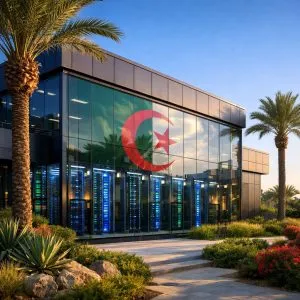
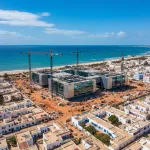
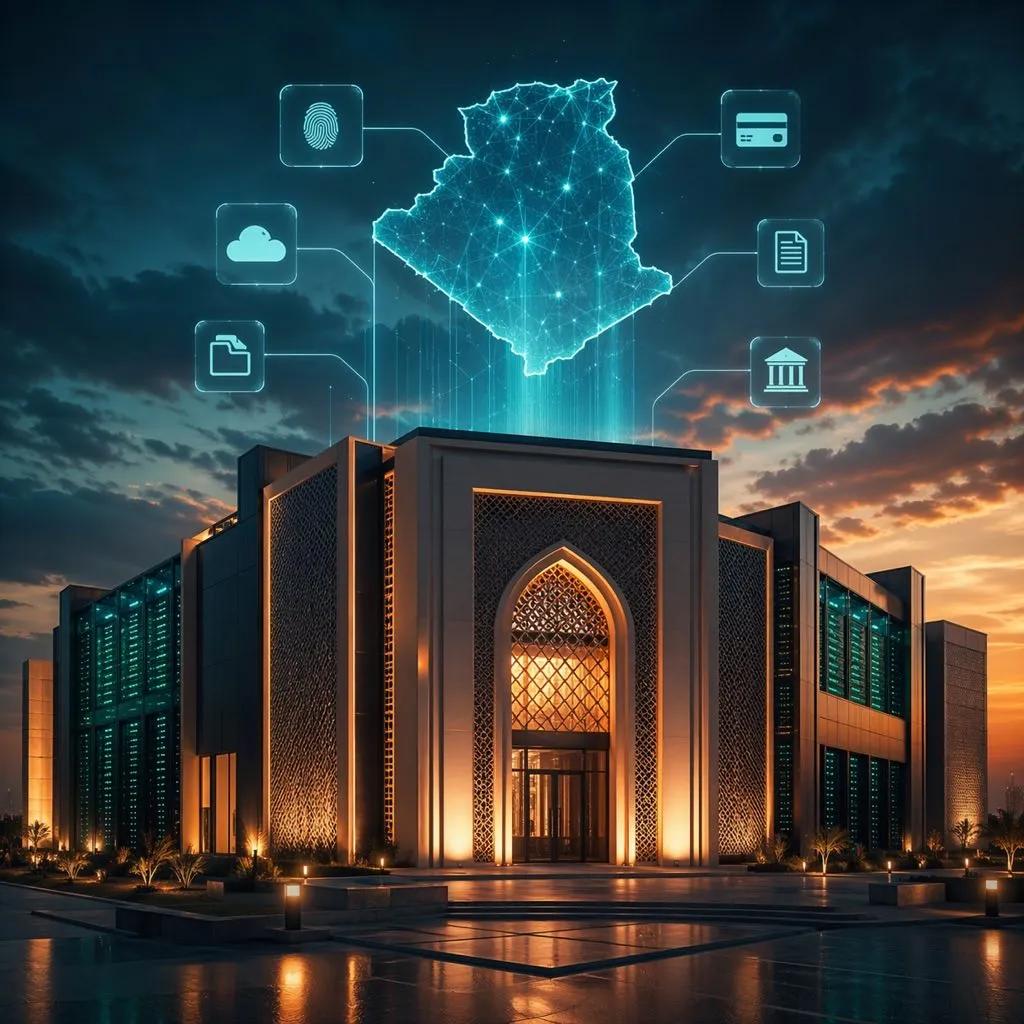
Algeria’s push to digitize public services has, until recently, lacked a single high-capacity domestic anchor. Ministries procured hosting in fragments — some on-prem, some in regional facilities, some abroad. The Huawei Mohammadia Data Center in Algiers changes that equation. Developed in partnership with the Ministry of Post, Telecommunications, and Digital Technology, the facility is designed as secure, high-availability infrastructure for government platforms, telecom operators, and enterprise clients.
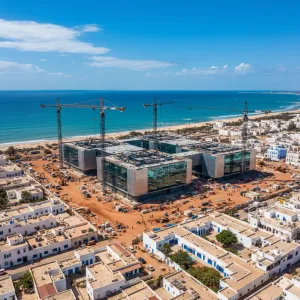
As of May 2025, according to MEA Tech Watch, the Mohammadia facility was approximately 80% complete. That same reporting details Algeria’s updated National Digital Strategy, which prioritizes infrastructure and cybersecurity across more than 500 digital projects planned for 2025–2026 — and targets the construction of five or more national data centers plus wider use of the national .dz domain.
Why a Domestic Facility Changes the Calculus
Three structural conditions shape Algeria’s e-government rollout:
- Data residency. Sensitive public-sector data — tax records, health files, citizen identity — stays inside Algerian jurisdiction under the 2018 data-protection law and sector-specific rules. A domestic high-availability facility gives ministries a compliant default.
- Capacity scaling. National platforms that serve millions of citizens need tier-3-class capacity from day one. Centralizing on Mohammadia removes the ceiling that individual ministry server rooms impose.
- Cybersecurity baseline. A hardened central facility consolidates the defensive perimeter and simplifies the security operations work required to protect citizen-facing services.
Mohammadia addresses all three together: domestic jurisdiction, hyperscale-class engineering, and a single defensible perimeter.
The Connected Huawei–Algeria Track Record
Mohammadia sits inside a broader Huawei–Algeria infrastructure program. In February 2025, Algeria Telecom and Huawei announced the official launch of the 400G WDM national backbone — an all-optical transmission foundation covering the country and providing the long-haul capacity that any national digital platform depends on.
On the data-center side, Huawei has also signed an agreement with the Public Finance Informatics Agency of the Ministry of Finance to build a dedicated data center for Algerian Customs. And in December 2025, Huawei and Yassir formalized a strategic partnership to support Algeria’s digital transformation — signaling that the Huawei footprint is expanding from telecom and public-sector hosting into the private-tech ecosystem.
The Algerian government has also separately approved a new Huawei-built data centre, reinforcing that the Mohammadia project is the first — not the last — of its class.
Advertisement
What 500+ Digital Projects Need to Land Here
Algeria’s digital agenda for 2025–2026 covers ministries of health, finance, education, interior, and justice. Platforms in flight or on the roadmap include:
- Unified citizen-identity services and digital signature infrastructure
- e-tax, e-customs, and e-procurement portals
- Digital land registry and notarial platforms
- National healthcare information systems
- Smart education platforms for vocational and higher education
Each program needs three things from a hosting layer: compliance (domestic jurisdiction, accredited security), elasticity (ability to burst on peak days — think tax filing deadlines), and availability (five 9s for identity services). A tier-3 or higher facility like Mohammadia provides exactly that, and doing it on domestic soil keeps citizen data under national jurisdiction.
The Green and Renewable Angle
The Mohammadia facility is aligned with Algeria’s green ICT goals, incorporating energy-efficient IT and cooling systems, with plans to integrate renewable energy in the future. That matters because Algeria’s data-center roadmap overlaps with its solar build-out — the 1,480 MW solar commissioning underway creates the option of renewable-powered digital infrastructure as capacity scales.
The Decision Algeria Is Quietly Making
Mohammadia isn’t just a building. It’s the infrastructure bet that determines whether Algeria’s 2025–2026 digital strategy executes on domestic rails or remains scattered across ad-hoc hosting choices. For CIOs in Algerian ministries and public enterprises, the practical question in Q2–Q3 2026 is migration planning: which workloads move first, how data is classified for residency, and what governance model applies once a shared sovereign facility hosts services from competing agencies.
The opportunity for the domestic tech ecosystem — integrators, security firms, and software vendors — is equally concrete: the next 24 months will see ministry-by-ministry platform migrations that need local implementation muscle.
Frequently Asked Questions
What makes the Mohammadia data center different from prior Algerian hosting?
Mohammadia is the first Algerian facility purpose-built as a shared tier-3-class anchor for government platforms, telecom operators, and enterprise clients — developed in partnership with the Ministry of Post, Telecommunications, and Digital Technology. Prior public-sector hosting was scattered across ministry server rooms with inconsistent capacity and security postures; Mohammadia centralizes that footprint on hyperscale-class engineering.
How does this fit with Algeria’s broader digital strategy?
Mohammadia is the hosting anchor for Algeria’s National Digital Strategy, which targets more than 500 digital projects in 2025–2026 and aims to build five or more national data centers. The facility works alongside the 400G WDM national backbone and separate Customs data-center project to form the domestic infrastructure layer underneath the digital services push.
What should Algerian integrators and vendors do in 2026?
Expect a ministry-by-ministry migration wave over the next 24 months. Integrators with workload-migration, data-classification, and security-hardening practices should position now — the early contracts will set the governance and tooling baseline for subsequent ministries. Software vendors should ensure their products are certified for shared sovereign hosting environments and align with domestic cybersecurity standards.
Sources & Further Reading
- Huawei Mohammadia Data Center — Data Center Map
- Algeria Aims for Digital Transformation Leadership in Africa by 2030 — MEA Tech Watch
- Algeria Telecom and Huawei Deliver 400G WDM National Backbone — Huawei
- Huawei to Build Data Centre for Algerian Customs Office — SAMENA Council
- Huawei and Yassir Strategic Partnership — TechAfrica News
- Algerian Government Approves New Huawei Data Centre — Telecompaper