From Niche GPU Renter to Infrastructure Backbone
For most of the last decade, “cloud” meant AWS, Azure, and Google Cloud — three hyperscalers owning the stack from physical fiber to managed services. AI changed the pattern. Training and running frontier models requires GPU clusters at a scale even hyperscalers struggle to build fast enough, and a new class of provider — the neocloud — has stepped into the gap.
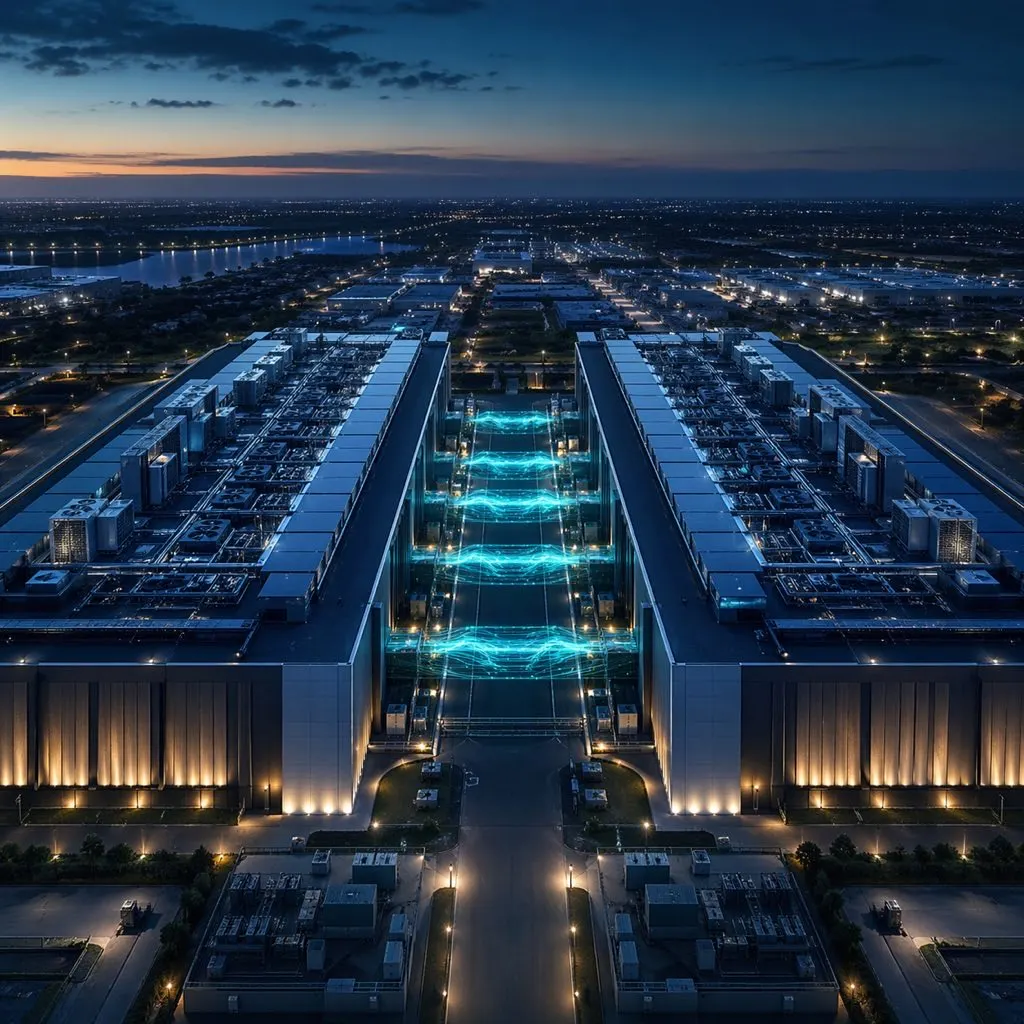
Neoclouds are GPU-native clouds. They don’t sell hundreds of services; they sell dedicated, high-density NVIDIA (and increasingly custom) GPU capacity, often with InfiniBand networking and purpose-built cooling. CoreWeave, Lambda, Nebius, Crusoe, Core Scientific, and Nscale form the core of this category. And in 2026, their growth is no longer a side story — it’s the main story.
The Deals That Reframed the Market
Three recent transactions define the shift:
CoreWeave + Meta, April 2026. CoreWeave announced on April 9, 2026 an expanded agreement under which Meta will pay roughly $21 billion for dedicated AI cloud capacity through December 2032. Combined with a prior $14.2 billion arrangement, Meta’s total commitment to CoreWeave is approximately $35 billion — the largest single AI-compute contract ever signed. The new capacity will include early deployments of the NVIDIA Vera Rubin platform, the successor to Blackwell, with a focus on inference workloads.
Nebius + Meta. Nebius secured a separate $27 billion deal with Meta, with roughly $12 billion committed in the first five years. Nebius is targeting more than 3 GW of contracted power by end-2026, anchored by a 1 GW Missouri campus and a 310 MW AI factory in Finland.
Microsoft across the board. Microsoft has committed $60 billion-plus across multi-year deals with Nscale, Nebius, CoreWeave, Iren, and Lambda — effectively renting AI capacity from specialized providers rather than building 100% in-house.
Put together, these deals confirm that even the largest AI buyers in the world can’t meet their compute needs exclusively through their own infrastructure.
The Economics That Make Neoclouds Work
Why does a hyperscaler with infinite capital rent from CoreWeave instead of building internally? Three reasons:
Speed. A neocloud can stand up a GPU cluster in months because its entire engineering organization is built around that single problem. A hyperscaler building the same cluster inside a general-purpose region negotiates across dozens of competing priorities.
Flexibility. Multi-year dedicated commitments from hyperscalers to neoclouds convert what would otherwise be fixed capex for the hyperscaler into structured capacity contracts. That changes the depreciation profile and lets the hyperscaler match supply to demand more finely.
Specialization. Neoclouds are built for GPU density, high-performance networking (InfiniBand or custom fabrics), and liquid cooling from day one. Retrofitting general-purpose cloud regions to match is expensive and slow.
The financial trajectory shows the model working. CoreWeave reported Q4 revenue of $1.6 billion, fiscal 2025 revenue of $5.13 billion, and a revenue backlog that ballooned past $66 billion — more than quadrupling year-over-year. Analyst models project roughly $12.5 billion of 2026 revenue, roughly four times Nebius’s estimated sales.
Advertisement
A $236 Billion Market by 2031
Mordor Intelligence pegs the neocloud market at $35.22 billion in 2026, growing at 46.37% CAGR to $236.53 billion by 2031. Other analysts project the market to cross $400 billion by 2031 on a 58% CAGR. Regardless of which forecast is right, the category has moved from “emerging” to “structurally important” in a single year.
What This Means for Enterprise Buyers
For enterprises outside the hyperscaler tier, the neocloud rise changes the procurement calculus in two ways:
Third-party GPU capacity is now a real option. Companies that need training runs for domain-specific models — pharma, financial services, national AI labs — can contract directly with a CoreWeave or Lambda instead of waiting in an AWS or Azure GPU queue. For geographies without hyperscaler GPU regions, this is especially meaningful.
Concentration risk is real. When Meta, Microsoft, and Google all hold multi-billion-dollar commitments with the same neocloud operators, available capacity for smaller buyers tightens. Enterprises planning 2026–2027 AI workloads should lock capacity early and insist on guaranteed allocation clauses.
The Macro Picture: Three Layers Where There Used to Be Two
AI infrastructure in 2026 is best understood as three layers:
- Silicon. NVIDIA (plus AMD, Broadcom, Google TPU, and emerging custom silicon) builds the chips.
- Neocloud. CoreWeave, Lambda, Nebius, Nscale, Crusoe, Core Scientific operate the specialized GPU fabric.
- Hyperscaler or enterprise. AWS, Azure, GCP, Meta, and large enterprises consume capacity — built in-house or rented from layer 2.
The middle layer did not exist at scale three years ago. In 2026 it’s absorbing hundreds of billions of dollars in multi-year commitments. For anyone thinking about where AI spend is heading, that’s the structural change to watch.
Frequently Asked Questions
What exactly is a “neocloud” and how is it different from AWS or Azure?
A neocloud is a cloud provider built specifically to deliver GPU-dense compute for AI workloads. Unlike hyperscalers — which offer hundreds of services across compute, storage, databases, and managed software — neoclouds like CoreWeave, Lambda, and Nebius focus on one thing: dedicated high-performance GPU clusters with specialized networking (InfiniBand) and cooling (often liquid). This specialization lets them stand up AI capacity faster and at higher density than a general-purpose hyperscaler region.
Why are hyperscalers renting from neoclouds instead of building in-house?
Three reasons: speed (neoclouds deploy GPU clusters faster because that’s their only job), flexibility (multi-year capacity contracts convert fixed capex into more flexible structured commitments), and specialization (purpose-built GPU-dense architecture is expensive to retrofit into general-purpose cloud regions). Microsoft’s $60 billion-plus neocloud spend, Meta’s $35 billion CoreWeave commitment, and Meta’s $27 billion Nebius deal all reflect the same economic logic.
How should enterprise IT leaders evaluate neocloud options in 2026?
Start with workload fit: neoclouds excel at large-scale training and high-density inference but aren’t optimized for the broader cloud-service stack. Assess geographic presence (neocloud POPs concentrate in North America and Western Europe), SLA and allocation guarantees (capacity is tight when hyperscalers hold multi-billion-dollar commitments), and exit costs. For multi-year AI roadmaps, running a hybrid procurement strategy — hyperscalers for general workloads plus neocloud allocation for peak training — is often the best fit.
Sources & Further Reading
- CoreWeave and Meta Announce $21 Billion Expanded AI Infrastructure Agreement — CoreWeave
- CoreWeave Inks $21B AI Infrastructure Deal with Meta Platforms — Quartz
- Neocloud Market Size, Share & 2031 Growth Trends Report — Mordor Intelligence
- Neocloud Infrastructure Research — MLQ.ai
- Microsoft’s $60B Neocloud Bet — Introl
- AI Infrastructure Boom: CoreWeave and Nebius Revenue — IndexBox
- CoreWeave vs Nebius: AI Infrastructure Stocks — Global Market Pulse