Why the 400G Backbone Changes Algeria’s Infrastructure Equation
On February 21, 2025, Algerie Telecom and Huawei officially launched a nationwide 400G wavelength-division multiplexing (WDM) optical transport network. The upgrade replaces aging 100G links with technology capable of carrying four times the data per wavelength, extending across Algeria’s 2.4-million-square-kilometer territory — the largest country in Africa — from the Mediterranean coast to the Saharan south.
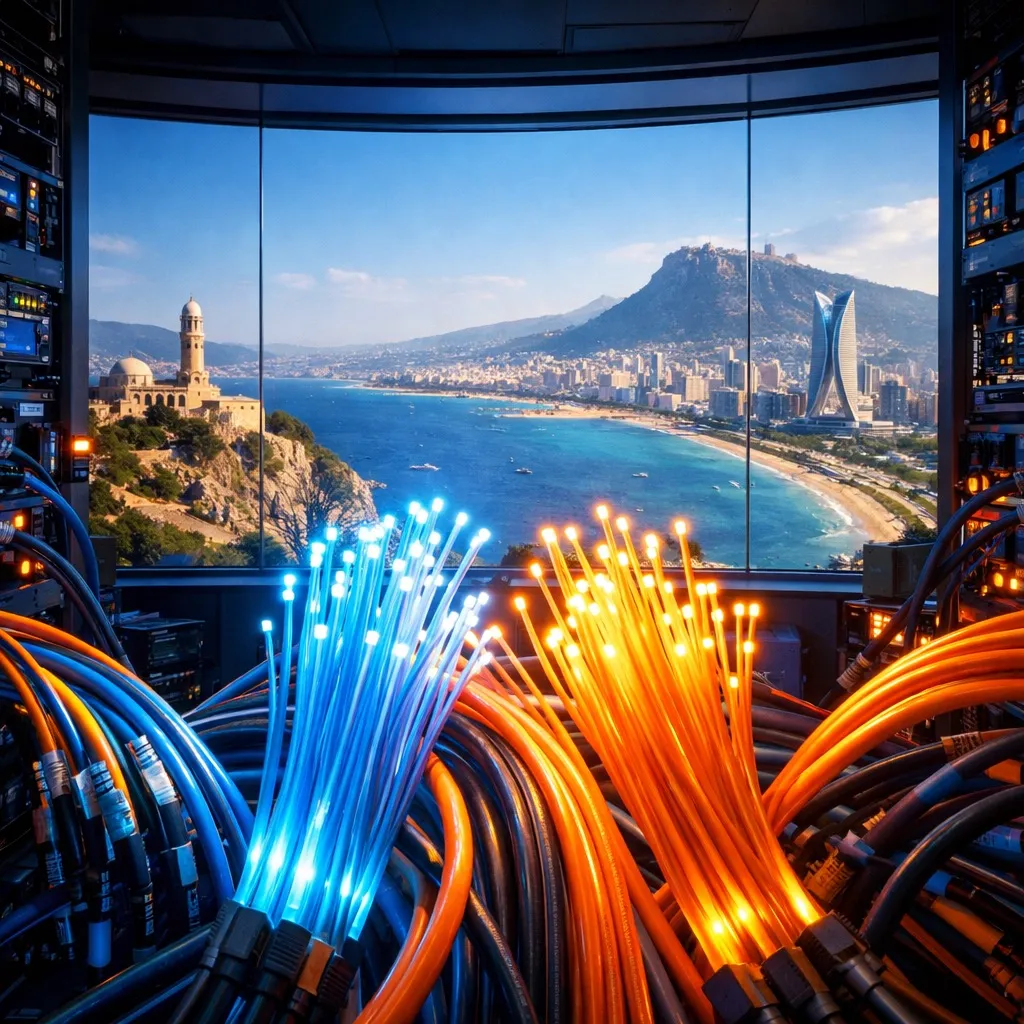
WDM technology allows a single fiber strand to carry multiple independent data streams on different wavelengths of light. At 400G, each wavelength transmits 400 gigabits per second. When combined with dense WDM using dozens of wavelengths per fiber pair, aggregate throughput reaches tens of terabits per second on a single route.
The deployment covers all 58 wilayas, following existing fiber routes that include long-haul desert spans linking northern cities to Ghardaia, Ouargla, Tamanrasset, and Adrar. These southern routes face extreme temperature differentials, sandstorms, and vast distances between regeneration points. The 400G coherent optics technology uses advanced digital signal processing and forward error correction to maintain signal integrity over extended reaches, reducing intermediate equipment requirements.
Huawei’s role reflects a long-standing infrastructure partnership in Algeria spanning over a decade. For Algeria, the partnership offers competitive pricing and proven deployment capability in challenging terrain. The tradeoff — vendor concentration for critical national infrastructure — is one Algerian authorities have evidently accepted, consistent with the country’s non-aligned procurement approach.
How Algeria’s 5G Rollout Depends on Backbone Capacity
Algeria officially launched commercial 5G on December 3, 2025, after granting spectrum licenses worth a combined DZD 63.9 billion (approximately $492 million) to its three mobile operators: Mobilis (state-owned), Djezzy (VEON subsidiary with 51% Algerian state ownership), and Ooredoo Algeria. The licenses run for 15 years through 2040, with rollout starting in eight pilot wilayas — including Algiers, Oran, Constantine, and Setif — and mandated expansion to all provinces by 2031.
Mobilis demonstrated peak speeds of 1.2 Gbps during February 2025 trials, though real-world average speeds are expected in the 150-300 Mbps range. Even at those levels, 5G represents a dramatic improvement over 4G performance.
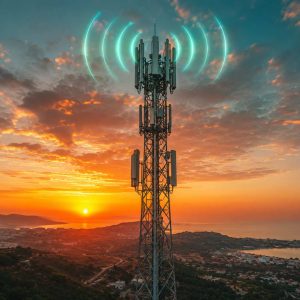
The backbone connection is direct: a single 5G cell site with mid-band spectrum can generate 10-20 Gbps of aggregate throughput during peak hours. Multiply that by thousands of sites across the country, and the math is clear. Without a 400G backbone, 5G radio speeds cannot translate to actual user experience. The previous 100G backbone was already straining under growing 4G traffic from Algeria’s 54.8 million mobile connections. The upgrade provides the transport highway that connects 5G base stations to data centers, content servers, and international gateways.
Advertisement
FTTH Growth and the 2.5 Million Subscriber Milestone
Algeria reached 2.5 million fiber-to-the-home (FTTH) subscribers on September 14, 2025, with speeds up to 1.5 Gbps — a remarkable trajectory from just 53,000 connections in 2020. Algerie Telecom has been the primary driver, deploying GPON infrastructure across urban and suburban areas nationwide. The government has set aggressive targets: fiber connectivity to all neighborhoods by 2026, with copper networks fully phased out by 2027.
Each fiber household generates significantly more backbone traffic than a legacy ADSL connection. As subscriber counts grow and usage shifts toward video streaming, cloud services, and remote work, per-subscriber backbone demand increases. The 400G network ensures that Algerie Telecom can aggregate traffic from fiber access networks without creating chokepoints at regional nodes.
Algeria’s 54.8 million mobile connections — equivalent to 116% of the population due to multi-SIM usage — add further backbone demand. Roughly 90% of mobile connections now operate on 4G or better, and with commercial 5G underway, the backbone must carry both fixed and mobile traffic without degradation.
500+ Digital Projects Need a Transport Highway
Algeria’s government has committed to over 500 digital transformation projects for 2025-2026, with 75% focused on modernizing public services. Announced by the High Commissioner for Digitalization, these initiatives span e-government portals, digital identity systems, healthcare digitalization, and agricultural monitoring platforms, aligned with the “Digital Algeria 2030” strategy.
Every project generates network traffic. Government cloud services require low-latency connectivity between ministries and data centers. Educational platforms need bandwidth for video delivery to schools across the country. Healthcare systems demand secure connections between hospitals and central databases.
The 400G backbone serves as the common transport layer. Algeria’s Mohammedia data center is operational, with a Blida facility under construction, both supporting the sovereign cloud strategy. Without adequate backbone capacity connecting these facilities to users nationwide, digital transformation projects face a hidden bottleneck: they can be built but cannot perform reliably at national scale.
Algeria’s international connectivity runs through five submarine cables — including the Alval/Orval system linking Algiers and Oran to Valencia, and the Medex branch connecting Annaba to Marseille — with a total installed capacity of 10.2 Tbps. The 400G backbone ensures domestic transport can match the international gateway capacity.
What Comes Next for Algeria’s Backbone
The telecommunications industry is already developing 800G coherent optical technology, with commercial deployments expected to scale through 2027-2028. Algeria’s 400G platform is designed for upgrade through pluggable module replacements rather than infrastructure overhauls, protecting the current investment.
More immediately, the value will be measured by utilization. Expanding fiber and 5G access networks, developing domestic content and cloud services that keep traffic within Algeria, and translating backbone capacity into measurable service quality improvements for end users — these are the metrics that will determine whether the 400G investment delivers on its promise.
Algeria’s 400G backbone is infrastructure, not an end in itself. Its strategic significance lies in what the country builds on top of it.
Frequently Asked Questions
What is 400G WDM and why does it matter for Algeria?
400G WDM (wavelength-division multiplexing) transmits data at 400 gigabits per second per wavelength of light in a fiber optic cable — four times the previous 100G standard. For Algeria, this means the national backbone across all 58 wilayas can now support 2.5 million fiber subscribers, a $492 million 5G rollout, and 500+ government digital projects without transport bottlenecks.
How does the 400G backbone support Algeria’s newly launched 5G services?
Algeria launched commercial 5G on December 3, 2025, across eight pilot wilayas. A single 5G cell site can generate 10-20 Gbps of traffic during peak hours, and with thousands of sites being deployed for nationwide coverage by 2031, the previous 100G backbone would have been overwhelmed. The 400G upgrade provides the transport capacity to carry this aggregated 5G traffic to data centers and international gateways.
What are the risks of relying on Huawei for critical national backbone infrastructure?
Huawei has been Algeria’s primary telecom infrastructure partner for over a decade, offering competitive pricing and willingness to deploy across challenging Saharan terrain. The vendor concentration risk is real — dependency on a single supplier limits negotiating leverage and creates supply chain exposure. Diversifying vendors for future 800G upgrades would reduce this strategic vulnerability while preserving the current investment.
Sources & Further Reading
- Algeria Telecom Partners with Huawei to Deliver 400G WDM National Backbone Network — Huawei
- Algeria Awards 5G Licenses to Three Operators for Nearly $492 Million — Ecofin Agency
- Algerie Telecom Reaches 2.5 Million FTTH Subscribers — TechAfrica News
- Algeria Officially Launches 5G Services — SAMENA Council
- Algeria Plans Over 500 Digital Projects by 2026 — We Are Tech
- Digital 2025: Algeria — DataReportal