The Problem Vaulfi Was Built to Solve
Dr. Safa Korti, Vaulfi’s Algerian co-founder and CEO, did not enter fintech from a banking or technology background. She is a dentist who experienced firsthand what it means to be financially excluded in North Africa: unable to hold stable value, unable to send or receive cross-border payments efficiently, and dependent on cash in a world that increasingly requires digital financial presence.
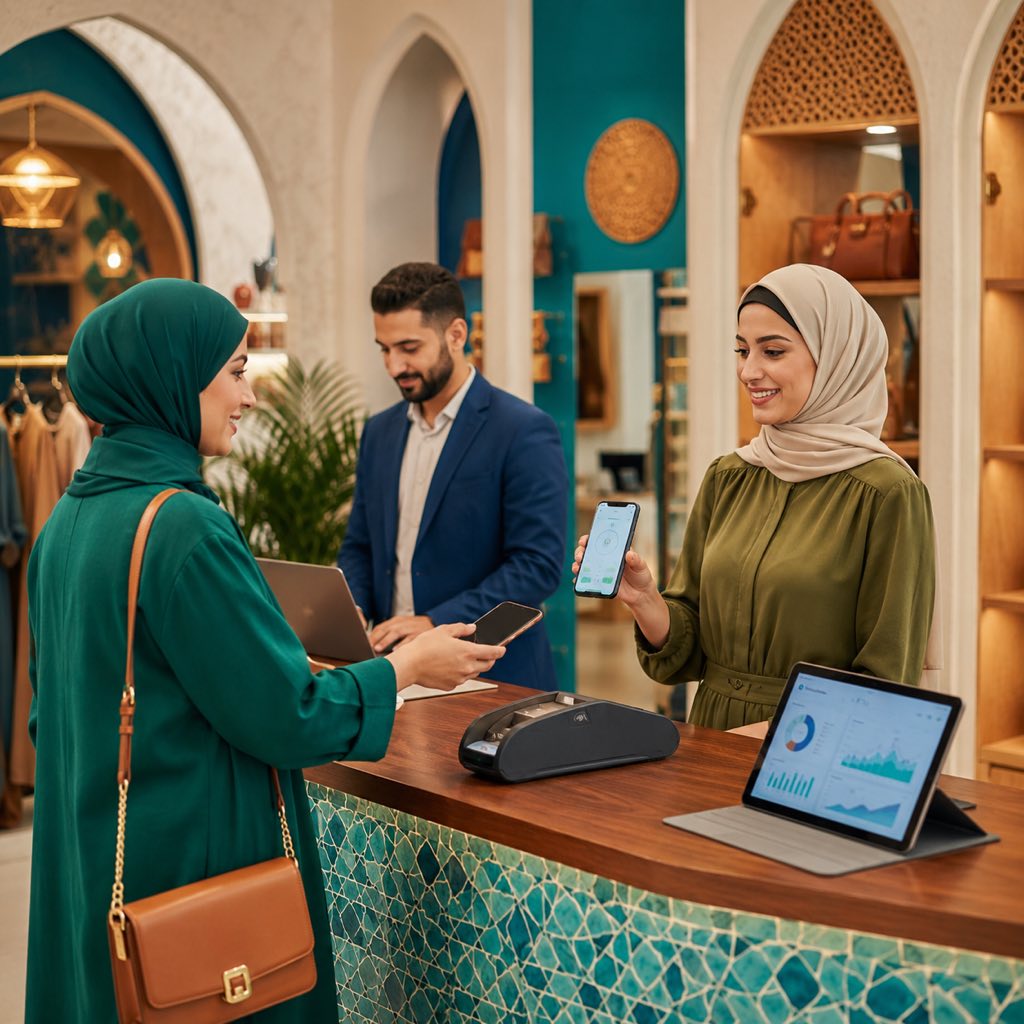
That origin story is not incidental. It defines Vaulfi’s product logic precisely. The platform offers stablecoin-denominated accounts—effectively digital dollars or euros held on a mobile app—with a linked card for spending, a cross-border payment rail, and on- and off-ramp services that convert between stablecoins and local currency. According to Launch Africa, Vaulfi’s VC backer, the company “manages the full stack; including on- and off-ramping, compliance, and wallet management”—meaning it is not a thin wallet app layered over someone else’s infrastructure but a vertically integrated financial service.
The market problem is stark. As the US Trade.gov Algeria commercial guide confirms, only 2.8% of Algeria’s population held a credit card and 22.9% a debit card as of January 2024. Internet and mobile purchases represented just 8.2% of the population. Algeria’s 47.4 million citizens, more than half of them under 30, are largely excluded from the global digital financial system—not for lack of smartphones (mobile cellular connections reached 95.2% of the population) but for lack of a practical, affordable, legally accessible financial identity.
Vaulfi’s answer is stablecoins: digital assets pegged 1:1 to established currencies (typically USD or EUR), allowing users to store value without exposure to local currency volatility, transact globally at near-zero cost, and access financial services that require only a mobile phone and an internet connection.
Why the Algerian Market Is Both the Biggest Opportunity and the Biggest Obstacle
There is an obvious tension in the Vaulfi story for an Algerian audience.
Algeria enacted Law 25-10 in July 2025, which explicitly bans the use, holding, and trading of cryptocurrencies and digital assets by Algerian residents and on Algerian soil. This law is the most comprehensive crypto prohibition Algeria has enacted, superseding earlier regulatory guidance and establishing criminal penalties for violations. Stablecoins fall within the scope of this prohibition under the current reading of Law 25-10.
This means Vaulfi cannot legally operate domestically in Algeria in its current product form. An Algerian resident using the Vaulfi app from Algeria would be in direct conflict with Law 25-10. The Fintech Times’ 2026 Algeria fintech report describes Algeria as having “digital payment adoption remains relatively limited” with “crypto-enabled financial services” listed as a sub-segment of the ecosystem—but the legal environment for crypto-linked products remains prohibitive domestically.
However, three realities complicate the simple conclusion that “Vaulfi doesn’t apply to Algeria.”
Reality 1: The Algerian diaspora is a massive addressable market. More than 2 million Algerians live in France, with additional communities across Europe, Canada, and the Gulf. These individuals need to send money to family in Algeria, receive freelance income from Algerian clients, and maintain financial connections to their home country. None of them is subject to Algerian domestic law when operating outside Algeria. Vaulfi can legally serve the diaspora today without any regulatory conflict.
Reality 2: Law 25-10 was passed in a global context that has since shifted. In July 2025, the US had just signed the GENIUS Act creating the first federal stablecoin regulatory framework. The EU’s MiCA framework for stablecoins had been live since mid-2024. BVNK’s global stablecoin regulation tracker lists seven major jurisdictions—US, EU, UK, Singapore, Hong Kong, UAE, and Japan—that now have formal stablecoin regulatory frameworks distinguishing payment stablecoins from speculative crypto assets. The regulatory environment that informed Law 25-10 is already evolving; a future Bank of Algeria review is plausible as stablecoins are increasingly distinguished legally from cryptocurrencies.
Reality 3: The underlying problem Law 25-10 cannot solve. Algerian residents still need to store value, send cross-border payments, and access digital financial services that the domestic banking system does not provide. The 8.2% internet purchase penetration and 4.7% money transfer penetration cited in trade.gov data represent demand that is simply redirected to informal channels—not eliminated—by a prohibition. Vaulfi, or a future regulated equivalent, addresses real demand.
Advertisement
What Algerian Stakeholders Should Do With This Signal
Vaulfi is not a product Algerian residents can use today under domestic law. But it is an extremely useful signal for several groups who need to think about where digital finance in North Africa is heading.
1. Algerian Fintech Founders: Study the Vaulfi Stack as a Design Blueprint
Even if you cannot build a stablecoin product under current Algerian law, the Vaulfi architecture is instructive. A full-stack approach—combining on-ramping, wallet management, compliance, and a spending card—is dramatically more defensible than a thin API layer on top of another provider’s infrastructure. The founders who will win the Algerian neobank race (which the existing field of 30–35 fintechs has barely started) will be those who control the full transaction stack rather than assembling it from white-label components.
Study Vaulfi’s product architecture now, while the regulatory window for DZD-denominated digital wallets under the Bank of Algeria’s Fintech Strategy 2024–2030 sandbox is open. The modular skills—on/off-ramp, compliance, wallet management—transfer to the regulated product environment even if the stablecoin layer does not.
2. Algerian Diaspora Members: Evaluate Vaulfi as a Remittance Tool Now
If you are part of the Algerian diaspora in France, Canada, or elsewhere, you are not subject to Law 25-10. Vaulfi is a legitimate remittance and value-storage option for you today. The EUR-denominated account and stablecoin card allow you to hold digital value without a French or Canadian bank relationship, send transfers at lower cost than traditional remittance providers, and pay for services in Algeria where merchants accept international cards.
Evaluate the product on its practical merits: transaction fees, off-ramp rates for converting to DZD, card acceptance at Algerian ATMs and merchants, and customer support quality. Do not assume that “stablecoin” means high risk—payment stablecoins pegged 1:1 to the euro with reserve backing are structurally closer to a digital euro than to speculative cryptocurrency.
3. Bank of Algeria Policy Analysts: Treat Vaulfi as a Policy Intelligence Input
The Bank of Algeria should treat Vaulfi’s emergence, its funding by a serious Pan-African VC (Launch Africa), and its Algerian co-founding team as policy intelligence. The product is a proof of concept for the market demand that Law 25-10’s prohibition cannot eliminate—only displace. The question for policymakers is not whether Algerians will seek stablecoin-like financial services (the demand is real and the technology is accessible) but whether Algeria will have a regulated, observable domestic channel for that demand or will it exist exclusively in the informal economy.
The Regulatory Question
Vaulfi’s existence raises a policy question that the Bank of Algeria will eventually have to answer: is a payment stablecoin pegged 1:1 to the euro, with full reserve backing and AML/KYC compliance, the same thing as cryptocurrency under Law 25-10?
Under the GENIUS Act framework, the answer is clearly no—payment stablecoins are explicitly carved out from securities and commodity classification and treated as regulated payment instruments. Under MiCA, the same logic applies: Electronic Money Tokens (stablecoins pegged to fiat currencies) are regulated financial products, not speculative assets.
Algeria’s Law 25-10 was drafted before this global regulatory consensus fully crystallized. As the international framework for distinguishing payment stablecoins from speculative crypto hardens, and as PAPSS—which Algeria joined in 2025—increasingly integrates stablecoin settlement rails into its architecture, the policy case for a nuanced update to Law 25-10 will strengthen.
Until then, Vaulfi operates in North Africa while pointing at a domestic market it cannot yet enter. For Algerian stakeholders, that is not a reason to ignore it—it is a reason to understand it precisely.
Frequently Asked Questions
Is Vaulfi legal to use in Algeria?
No. Algeria’s Law 25-10 (July 2025) prohibits the use, holding, and trading of digital assets including stablecoins by Algerian residents operating on Algerian soil. Vaulfi cannot legally serve domestic Algerian users in its current product form. However, Algerian citizens living outside Algeria—particularly the 2+ million diaspora in France and other countries—are not subject to Law 25-10 and can use Vaulfi legally.
What is the difference between a stablecoin neobank and a cryptocurrency exchange?
A stablecoin neobank holds funds pegged 1:1 to a stable fiat currency (typically USD or EUR), eliminating the price volatility associated with Bitcoin or other cryptocurrencies. Products like Vaulfi function more like a digital euro account than a crypto trading platform. International regulatory frameworks—including the US GENIUS Act and EU MiCA—now formally distinguish payment stablecoins from speculative crypto assets, treating them as regulated payment instruments with reserve backing requirements.
Why does Vaulfi matter if Algerians can’t use it domestically?
Vaulfi signals the market demand that Law 25-10 cannot eliminate—millions of Algerians who need stable-value storage, cross-border payment access, and digital financial identities that the domestic banking system does not provide. For fintech founders, it is a product architecture blueprint. For diaspora, it is an actionable tool today. For policymakers, it is evidence that unmet financial inclusion demand will flow to stablecoin products regardless of domestic prohibition, making regulated alternatives a serious policy option.
—
Sources & Further Reading
🔗 Related Intelligence

Algeria and PAPSS: How the Bank of Algeria’s Accession Unlocks Intra-Africa Trade Payments

Financial Exclusion in Algeria: Why 65% Unbanked Blocks the Digital Economy

Algeria’s Agent Banking Model: Bridging the Unbanked Gap via Proximity Agents

11 Mobile Banks, One Winner: Algeria’s Neobank Race Is On