AI Is Leaving the Data Center — and the Funding Is Following
The conventional image of an AI company is a software platform: a chat interface, a model API, a cloud-based productivity tool. The most interesting AI companies being funded in May 2026 are none of those things. They are companies that apply AI to physical systems — power grids, retail inventory shelves, modular data center hardware, defense manufacturing logistics. The category is sometimes called “physical intelligence” or “physical AI,” and it is attracting some of the largest seed and growth-stage rounds of the current cycle.
The thesis driving this investment is straightforward: the software layer of AI is becoming commoditized as foundational models improve and API costs drop. The physical-world layer — the infrastructure, the sensors, the edge compute, the industrial integration — is not commoditized and cannot be replicated by releasing a new model version. A startup that can route power grid interconnection requests 6x faster than the manual process, or that can deploy a modular AI data center in a remote location in weeks rather than years, has a competitive position that no foundation model company can erode by lowering API prices.
In a single week in May 2026, three physical-world AI companies announced major rounds. That is not coincidence — it is a signal about where institutional capital is moving.
Three Companies, Three Physical-World Problems
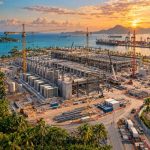
Armada builds modular AI data centers designed for edge deployments: military installations, energy infrastructure, remote industrial sites, and sovereign cloud environments where centralized hyperscaler data centers either cannot reach or are geographically or politically prohibited. The company raised $230 million in an oversubscribed Series B at a $2 billion pre-money valuation, co-led by Overmatch, BlackRock, and 8090 Industries. The round brings total funding to approximately $500 million.
The commercial signal is the Johnson Controls partnership: Armada has a framework agreement to produce modular data centers at Galleon Forge One, a planned 400,000-square-foot factory in Arizona that will start production in summer 2026. Bookings jumped 540% between fiscal 2025 and fiscal 2026; the first quarter of FY27 alone showed a 2,000% year-over-year increase. BlackRock’s participation is significant — it signals that institutional investors have begun treating modular AI infrastructure as a distinct asset class with infrastructure-like return characteristics, not just a startup bet.
GridCARE addresses one of the most critical bottlenecks in AI infrastructure: power. The company raised $64 million in a Series A led by Sutter Hill Ventures, bringing total funding to $77.5 million. Its core product compresses data center power grid interconnection timelines from the current 6–10 years to a matter of months. The US power grid interconnection queue currently has over 2,400 gigawatts of projects waiting for approval — a backlog that is one of the primary bottlenecks on AI infrastructure expansion. A startup that can reduce that timeline by an order of magnitude is not optimizing a workflow — it is removing a structural constraint on the entire AI industry’s capacity to grow.
Radar builds AI-powered retail inventory intelligence. The company raised $170 million in a Series B at a $1 billion valuation, achieving unicorn status. Its core metric — reducing BOPIS (buy online, pick up in store) cancellations from 25% to 3% — represents an immediate, measurable financial impact for retail clients. Inventory inaccuracy costs the US retail industry approximately $100 billion per year in lost sales and operational waste. Radar’s AI layer, applied to physical store shelves and warehouse inventory systems, attacks that problem with computer vision and predictive replenishment rather than manual cycle counting.
Advertisement
What Founders Building Physical AI Should Do
The physical AI category is fundamentally different from software-only AI in terms of development timelines, capital requirements, and go-to-market strategies. Founders who apply software startup logic to hardware AI companies will under-raise, under-schedule, and over-promise.
1. Partner with incumbents before competing with them
Armada’s Johnson Controls partnership is not a go-to-market strategy as an afterthought — it is the factory. Johnson Controls brings 400,000 square feet of manufacturing space, supply chain relationships, and regulatory compliance expertise that would take Armada years and hundreds of millions of dollars to replicate independently. For hardware AI founders, the question is not “how do we eventually partner with a large industrial incumbent” but “which incumbent partnership unlocks our manufacturing capacity in the next 12 months?” GridCARE’s institutional backing from Sutter Hill follows the same logic: the investors bring utility and grid operator relationships that are prerequisites for commercial deployment. Physical AI requires industrial ecosystems, not just technical teams.
2. Size the round for hardware cycles, not software cycles
Software AI startups can operate meaningfully on $2–5 million seed rounds and iterate quickly. Physical AI companies face different economics: Armada’s total funding is approximately $500 million before its factory produces a single unit at commercial scale. GridCARE needed $77.5 million to prove a grid interconnection acceleration product. The capital requirement is not inefficiency — it is the cost of physical world complexity (regulatory approval, hardware certification, supply chain setup, manufacturing ramp). Founders building in physical AI should raise 3–5x what a comparable software company would raise at each stage, or plan explicitly for the strategic partnership (like the Johnson Controls model) that replaces a portion of the capital requirement.
3. Target regulated physical infrastructure where the 6–10 year timeline is the competitive gap
GridCARE’s opportunity exists specifically because the US power grid interconnection process takes 6–10 years for standard approvals. Armada’s opportunity exists because sovereign cloud and military edge deployments cannot use hyperscaler data centers for jurisdictional or security reasons. The competitive moat in physical AI is most durable in markets where the alternative to the AI-enabled product is a multi-year bureaucratic or logistical process. Founders should map their target market to specific process bottlenecks — permitting, certification, interconnection, customs, inspection — and quantify the timeline compression their product delivers. A 10x reduction in a process that currently takes years is a defensible market position that incumbent government and infrastructure contracts will pay for.
4. Use the inventory-accuracy model for retail, logistics, and industrial applications
Radar’s 25%-to-3% BOPIS cancellation reduction is a template for commercial proof in physical AI: take a measurable operational failure rate, reduce it by an order of magnitude, and express the savings in dollars or percentage points that any CFO can verify. For founders building physical AI in retail, logistics, manufacturing, or healthcare supply chain, the commercial narrative should always be structured as a baseline metric (BOPIS cancellation rate, inventory shrink percentage, equipment downtime rate) and a measurable reduction. That structure converts a technology conversation into a financial ROI conversation that procurement teams can route to executive approval.
The Bigger Picture: What the Physical AI Wave Means for Global Infrastructure
The physical AI funding surge in May 2026 is not an isolated event — it is the logical next phase of a technology transition that started with software AI and is now propagating into physical systems. When AI improves grid interconnection processing by an order of magnitude, it affects every data center, every renewable energy project, and every industrial facility that needs power. When modular edge AI data centers can be deployed at military bases and remote oil fields, they change the capability calculus for defense contractors and energy companies. When inventory AI reduces retail cancellations from 25% to 3%, it reshapes the economics of omnichannel commerce for every major retailer.
The physical AI companies funded in May 2026 are not building tools — they are building infrastructure. That distinction matters for the valuation logic, the exit landscape, and the long-term competitive dynamics. Infrastructure companies that own physical bottlenecks — factory capacity, grid interconnection software, inventory intelligence networks — compound their value as the physical systems they serve scale. BlackRock’s participation in Armada’s round reflects exactly that framing: infrastructure investments return differently from software investments, and physical AI is beginning to be underwritten on infrastructure economics.
The $230M, $64M, and $170M rounds from a single week of May 2026 are a leading indicator. The physical AI wave is early-stage — most of the categories it will eventually occupy (logistics, agriculture, construction, healthcare equipment) are not yet dominated by a funded leader. The window for founders to establish category-defining positions in physical AI verticals is open now and will compress over the next 24–36 months.
Frequently Asked Questions
What distinguishes “physical AI” from standard industrial automation or robotics?
Physical AI refers to systems where AI makes the core operational decisions — routing, optimization, anomaly detection, predictive action — rather than systems where AI is a monitoring overlay on rule-based automation. GridCARE’s grid interconnection product uses AI to evaluate and route power requests that previously required years of human regulatory negotiation. Armada’s modular data centers deploy AI workloads at the edge by making the physical infrastructure AI-native from design. Standard industrial automation executes predefined rules; physical AI adapts dynamically to changing physical-world conditions.
Why is BlackRock investing in a startup like Armada rather than established data center REITs?
BlackRock’s participation signals a view that modular edge AI data centers represent a new infrastructure asset class with different return characteristics than traditional data center REITs. Traditional REITs own fixed-location hyperscale facilities with long-term lease contracts. Armada’s modular units can be deployed, redeployed, or scaled to sovereign and military customers who cannot use commercial cloud infrastructure — creating a more defensible, higher-margin market. BlackRock’s infrastructure investment arm has historically targeted assets that combine physical scarcity with contractual revenue — Armada’s edge deployment model fits that thesis in a way that a pure software AI company would not.
What is the US power grid interconnection backlog and why does it matter for AI?
The US power grid interconnection queue currently holds over 2,400 gigawatts of proposed projects — renewable energy farms, data centers, industrial facilities — waiting for regulatory approval to connect to the grid. The average approval timeline is 6–10 years. AI data centers require large, reliable power supplies: a single large hyperscale data center can consume 100–500 megawatts. If interconnection timelines cannot be compressed, the US AI infrastructure build-out hits a physical power ceiling regardless of how much capital is available. GridCARE’s product directly addresses this bottleneck, which is why Sutter Hill Ventures — known for picking category-defining infrastructure companies early — led the Series A.
Sources & Further Reading
🔗 Related Intelligence

AI Startup Funding in 2026: Mega-Rounds, Valuation Resets, and Who Is Still Investing
The AI-Native Startup Stack: Infrastructure Choices That Define the Next Generation of

The AI Product Studio: Small Teams, Multiple Products, Outsized Revenue

47 Seed-Stage Unicorns in Q1 2026: When AI Mints Billions Before Launch