The Audacious Premise
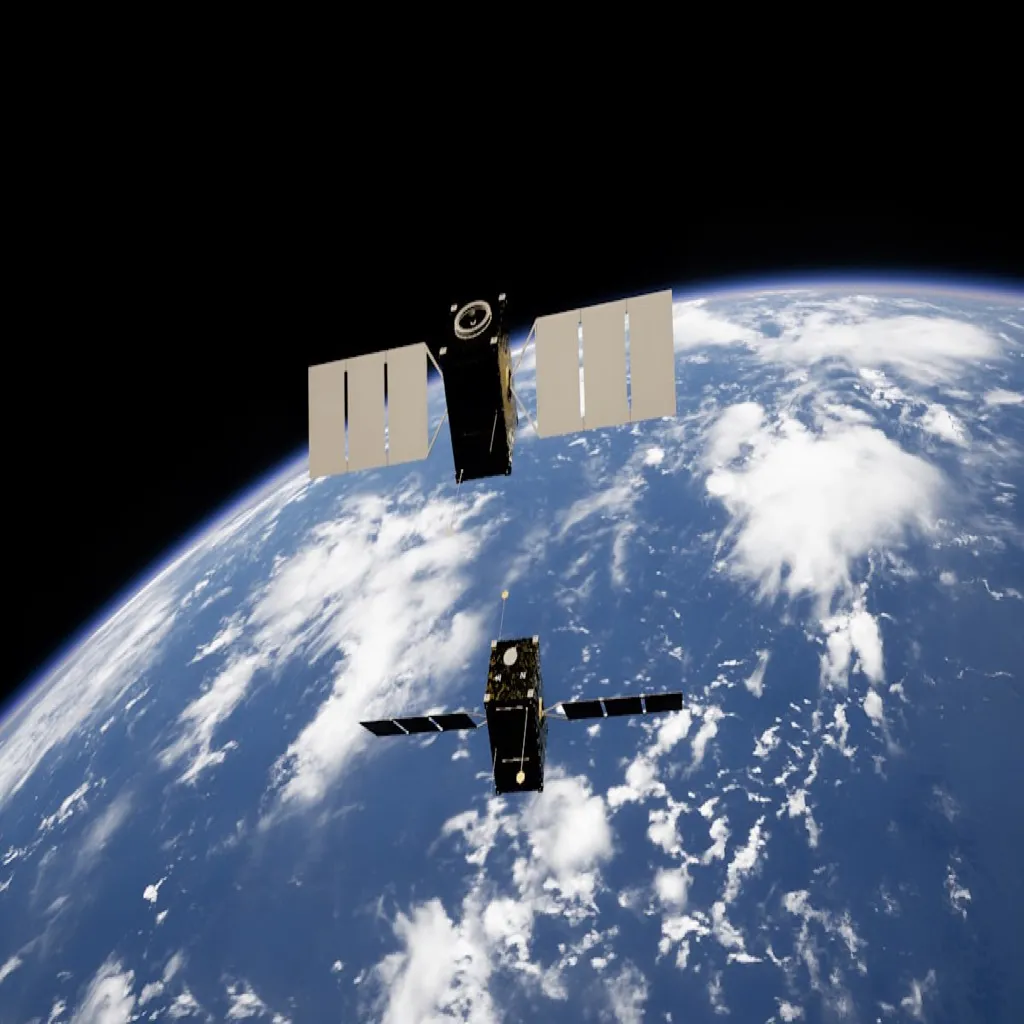
On February 26, 2026, Sophia Space announced a $10 million seed round for what may be the most ambitious infrastructure concept since the undersea cable: computing systems that operate in orbit around the Earth. The company joins a small but growing cohort of startups arguing that the convergence of three trends — exploding AI compute demand, terrestrial energy constraints, and plummeting launch costs — makes space-based data centers not just plausible but economically inevitable.
The thesis is beguilingly simple. Data centers on Earth face mounting constraints: they consume enormous amounts of electricity (projected to reach 4-6% of global electricity by 2030), require massive water resources for cooling, face increasing resistance from communities opposed to new construction, and are subject to the geographic limitations of power grid infrastructure. In orbit, solar energy is abundant, continuous, and free. Cooling is achieved passively through the vacuum of space. There are no neighbors to object, no zoning boards to satisfy, and no power grid to connect to.
The question is whether the engineering challenges of building, launching, operating, and networking compute infrastructure in orbit can be solved at costs competitive with terrestrial alternatives. The answer, as of 2026, is genuinely uncertain — but the trajectory of enabling technologies makes the question worth investigating seriously rather than dismissing as science fiction.
The Space-Tech Investment Context
Sophia Space’s seed round is modest, but it arrives in a space-tech investment environment that has reached unprecedented scale. Venture capital investment in space technology reached approximately $12 billion in 2025, driven by the maturation of launch services, the proliferation of satellite constellations, and the growing recognition that space infrastructure is foundational to communications, defense, and earth observation.
The investment landscape has shifted from launch-focused companies (SpaceX, Rocket Lab, Relativity Space) to applications and infrastructure that leverage cheap, reliable access to orbit. Satellite communications (Starlink, Kuiper, OneWeb), earth observation (Planet, Spire, BlackSky), and now orbital computing represent successive waves of value creation built on the foundation of reduced launch costs.
SpaceX’s Falcon 9 and the emerging generation of partially and fully reusable launch vehicles have reduced the cost of reaching low Earth orbit from approximately $50,000 per kilogram in the Space Shuttle era to under $3,000 per kilogram today, with projections of $500-1,000 per kilogram when SpaceX’s Starship achieves regular operations. This cost reduction — roughly 50-100x over two decades — is the enabling condition for orbital computing. When launching a kilogram to orbit cost $50,000, the idea of orbital data centers was absurd. At $1,000 per kilogram, the math begins to work.
The Energy Argument
The strongest argument for orbital computing is energy. Data centers currently consume approximately 2-3% of global electricity, a figure projected to reach 4-6% by 2030 as AI workloads proliferate. This energy demand is concentrated in regions with reliable power grids — primarily the United States, Europe, and parts of Asia — creating competition for electricity between data centers and other consumers (residential, industrial, transportation).
The constraints are becoming tangible. In Northern Virginia, which hosts the world’s largest concentration of data centers, utility companies have warned that power capacity is insufficient to meet projected demand. In Ireland, which hosts a significant portion of Europe’s cloud infrastructure, data centers already consume approximately 21% of the country’s electricity, prompting regulatory restrictions on new construction. Similar constraints are emerging in Singapore, the Netherlands, and parts of the US Southeast.
In low Earth orbit, solar energy is available continuously (or nearly so, with careful orbital planning to minimize time in Earth’s shadow). Solar panels in space receive approximately 1,360 watts per square meter — roughly 40% more than the theoretical maximum on Earth’s surface and several times more than real-world terrestrial solar installations, which are affected by weather, atmospheric absorption, and diurnal cycles.
Orbital computing proponents argue that the total cost of energy in orbit — amortized solar panel costs, zero fuel costs, zero grid connection costs — could be competitive with terrestrial electricity within a decade, particularly for compute workloads that are energy-intensive but not latency-sensitive. AI model training, scientific simulations, and batch data processing are candidate workloads where the energy advantage of orbital computing could outweigh the higher capital costs of space-based hardware.
Advertisement
The Cooling Advantage
Beyond energy, orbital computing benefits from the thermodynamic properties of space. Data centers on Earth spend 30-40% of their total energy consumption on cooling. This cooling requires either massive water usage (for evaporative cooling systems) or significant electricity (for mechanical cooling systems). Both resources are increasingly constrained, and both create environmental externalities that drive regulatory and community opposition.
In space, cooling is fundamentally different. The vacuum of space is an essentially infinite heat sink. Thermal energy can be radiated directly into space through radiator panels without water, refrigerant, or mechanical systems. The engineering challenge is managing thermal gradients — portions of a spacecraft facing the sun can reach 120 degrees Celsius while shaded portions can drop to minus 150 degrees — but this is a well-understood problem that has been solved for decades in satellite and space station design.
The elimination of cooling infrastructure reduces both the capital cost and the operational cost of compute infrastructure. A terrestrial data center dedicates significant floor space, capital investment, and ongoing operational expense to cooling systems. An orbital compute platform replaces all of this with passive radiator panels, reducing both mass and complexity.
The Engineering Challenges
The case for orbital computing is compelling in theory. The engineering challenges of making it practical are formidable.
First, hardware reliability in space is a fundamentally different problem than on Earth. Radiation in the space environment — cosmic rays, solar particle events, and trapped radiation in the Van Allen belts — damages electronic components over time and causes transient errors (single-event upsets) that can corrupt computations. Radiation-hardened processors exist but are generations behind commercial silicon in performance and cost significantly more. Developing compute hardware that combines commercial performance with space-grade reliability is a core technical challenge for orbital computing startups.
Second, data transport between Earth and orbit introduces latency and bandwidth constraints. Low Earth orbit latency (approximately 5-20 milliseconds one-way) is manageable for batch workloads but prohibitive for latency-sensitive applications like real-time inference or interactive services. Bandwidth is more constraining: optical and radio links between Earth and orbit can transmit data at rates of 10-100 gigabits per second per link — impressive for satellite communications but orders of magnitude below the internal network bandwidth of a terrestrial data center.
This bandwidth constraint means that orbital computing is most viable for workloads that are compute-intensive relative to their data transfer requirements. AI model training on already-uploaded datasets, scientific simulations, and certain types of rendering are candidates. Applications that require large-scale data ingestion or egress — real-time analytics on streaming data, for example — are poor fits.
Third, servicing and maintenance in orbit is expensive and slow. A failed server in a terrestrial data center can be replaced in hours. A failed component in orbit requires a servicing mission that takes weeks to plan and costs millions of dollars — or the failed component is simply abandoned, and a replacement is launched. Designing for reliability and graceful degradation is essential, which means building more redundancy and accepting more waste than terrestrial data centers.
Fourth, the space debris environment poses a real risk. Low Earth orbit contains thousands of trackable debris objects and millions of smaller particles, any of which could damage or destroy an orbital computing platform. While the statistical probability of a collision is low for any individual object, large orbital computing constellations would require active debris avoidance and contribute to the growing congestion problem in LEO.
Sophia Space and the Current Players
Sophia Space’s $10 million seed round funds the development and demonstration of a prototype orbital computing module. The company’s approach focuses on modular, scalable computing units that can be launched individually and networked in orbit to form distributed computing clusters. Each module would contain commercial-off-the-shelf processors with radiation shielding, solar power generation, passive thermal management, and inter-satellite optical links.
The company’s near-term plan is to demonstrate a single computing module in orbit, proving the viability of the thermal management, power generation, and radiation protection systems. If the demonstration succeeds, Sophia Space would raise a significantly larger round to fund a constellation of computing modules sufficient to offer commercial compute capacity.
Sophia Space is not alone. OrbitsEdge, founded in 2019, has been developing a hardened computing environment called SatFrame that enables commercial servers to operate in space. Lumen Orbit, which raised $11 million in 2025, is building AI-focused orbital compute platforms with a specific focus on the inference workloads that are driving terrestrial energy concerns. Azure Space and AWS Ground Station provide cloud connectivity to satellite operators, creating partial orbital computing capabilities without dedicated space-based hardware.
The European Space Agency has funded research into orbital data centers through its Discovery program, exploring the technical and economic feasibility of large-scale computing in space. The research concluded that orbital computing could be economically viable within 15-20 years, assuming continued reduction in launch costs and advancement in space-rated computing hardware.
Viable Future or Science Fiction?
The honest assessment of orbital computing in early 2026 is that it occupies the boundary between visionary and speculative. The underlying trends are real: AI compute demand is growing exponentially, terrestrial energy constraints are tightening, and launch costs are falling. The question is whether these trends converge fast enough to make orbital computing competitive within the investment horizons that venture capital demands.
The most likely near-term application is not general-purpose cloud computing in orbit but specialized compute services for applications that already operate in or near space. Satellite operators that currently downlink raw data to Earth for processing could instead process data in orbit, reducing bandwidth requirements and enabling real-time analytics. Defense and intelligence applications that require processing in space for security or latency reasons could justify the cost premium. Scientific computing — climate modeling, astronomical data processing, materials science simulations — could benefit from the unique thermal and energy characteristics of the orbital environment.
General-purpose cloud computing in orbit — replacing or supplementing terrestrial data centers at scale — is a longer-term prospect. The cost curves for launch, space-rated hardware, and inter-orbital networking need to continue their current trajectories for another 10-15 years before orbital computing becomes cost-competitive with terrestrial alternatives for mainstream workloads.
But dismissing orbital computing as science fiction would be premature. The same skepticism was applied to commercial satellite internet in 2015, when SpaceX’s Starlink constellation was widely considered technically and economically implausible. Today, Starlink serves millions of customers worldwide and generates billions in annual revenue. The trajectory from implausible to inevitable can be surprisingly short when enabling technologies advance rapidly.
Sophia Space’s $10 million and its peers’ collective investment of perhaps $50-100 million is a fraction of what would be needed to build orbital computing at scale. But it is enough to advance the engineering, prove the concept, and attract the larger capital that would be required for commercial deployment. In the startup world, that is how industries begin.
Frequently Asked Questions
What is orbital computing?
Orbital Computing: The Startups Bringing Data Centers to Space covers the essential aspects of this topic, examining current trends, key players, and practical implications for professionals and organizations in 2026.
Why does orbital computing matter?
This topic matters because it directly impacts how organizations plan their technology strategy, allocate resources, and position themselves in a rapidly evolving landscape. The article provides actionable analysis to help decision-makers navigate these changes.
How does the space-tech investment context work?
The article examines this through the lens of the space-tech investment context, providing detailed analysis of the mechanisms, trade-offs, and practical implications for stakeholders.
Sources & Further Reading
- Sophia Space Raises $10M Seed for Orbital Computing Systems — SpaceNews
- Space-Tech Venture Capital Reached $12 Billion in 2025 — PitchBook
- Data Centers and the Energy Crisis: 4-6% of Global Electricity by 2030 — IEA
- ESA Study on Orbital Data Center Feasibility — European Space Agency
- Lumen Orbit Raises $11M for Space-Based AI Compute — TechCrunch