The Post-Jumia Opening Nobody Expected
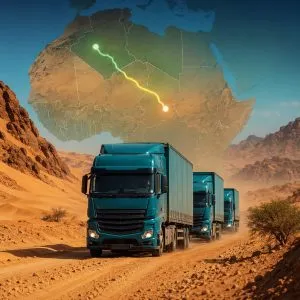
Algeria’s e-commerce map was rewritten in February 2026 when Jumia exited the country after years of thinning margins. As African Business reported from Innov Africa 2025, local platforms had already been closing the gap — but the departure accelerated everything. Ouedkniss now attracts roughly 800,000 daily visits. Batolis, Zawwali, and Linstashop are fighting for the rest.
The lesson Algerian SaaS founders should absorb is not that a foreign unicorn left. It is that 16-year-old Guiddini is still here. Founded in 2009 by Mourad Mechta, Guiddini began with a 500,000 DZD family loan and expanded with a 3.7 million DZD ANSEJ support package in 2011, according to Jeune Afrique’s startup profile. It never raised venture capital, never pivoted to a winner-takes-all model, and focused on one thing: helping Algerian SMEs accept online payments and sell through a localized commerce stack.
Survival is a feature. Guiddini’s staying power shows that the Algerian market rewards patient vertical operators more than horizontal aggregators chasing regional dominance.
Three Verticals That Look Ready in 2026
Tourism tech
Algeria’s tourism sector is entering an institutional growth phase. The 16th SIAHA international tourism show in Oran, held April 21-23, 2026, drew more than 200 exhibitors. ONAT, the national tourism office, operates 32 agencies with a catalog ranging from Saharan 4×4 expeditions to thermal spa stays — and most bookings still flow through phone calls or physical counters. A vertical Algerian booking platform layered on Edahabia and CIB payment rails has a real local moat that global OTAs cannot easily replicate.
B2B distribution
Post-Jumia, the visible action is consumer-facing. The less visible action is wholesale. Mag Startup’s 2026 watchlist flags a second wave of Algerian founders building B2B catalog and ordering tools for the industrial and distribution sectors — the same segments that kept Batolis operating since 2015. Vertical B2B SaaS tends to monetize more predictably than consumer marketplaces because buyer churn is low and contract sizes are larger.
Embedded payments
CIB and Edahabia transaction volumes have grown every year since the 2018-2019 digital payment acceleration. Guiddini’s own positioning — e-payment integration as a service — signals where the moat sits. The founders who stitch CIB APIs, Yassir Pay, and BaridiMob into vertical SaaS (for clinics, schools, real estate, delivery) will own the recurring revenue layer underneath Algeria’s formalizing economy.
What Algerian Founders Can Borrow From Guiddini
The Guiddini playbook, read against the 2026 opportunity set, looks like this.
Pick one vertical and commit. Mechta never tried to be everything. He sold books first, then electronics, then payments. Each move deepened his specialization. Algerian founders tempted to build “super-apps” should instead pick a single high-friction vertical (tourism booking, clinic management, wholesale ordering) and own it end to end.
Use ANSEJ-style instruments strategically. The 2011 ANSEJ support package was not venture capital, but it was enough to survive the early years. Programs like ANSEJ (now ANADE), ANGEM, and the ALGERIA VENTURES accelerator listed on UpGrowth’s funding map give Algerian founders non-dilutive runway that Silicon Valley founders would kill for. Use it.
Build for Algerian payment reality. The founders who win are the ones who accept that Edahabia, CIB, cash on delivery, and BaridiMob will all coexist for years. Designing the checkout layer around that reality — rather than waiting for it to “catch up” to Stripe — turns a constraint into a moat.
Stay private, stay patient. Guiddini has turned down several acquisition offers. In a market where scale headlines are rare and exits are opaque, patient cash-flow businesses are undervalued and underbuilt.
Advertisement
Regional Benchmarks Worth Studying
Algeria’s vertical commerce founders have better reference models than the US consumer playbook. Singapore’s regional SaaS founders, UAE’s Careem before Uber acquired it, and Kenya’s MarketForce show how vertical-first commerce platforms can anchor an ecosystem without chasing blitzscaling. StartupBlink’s 2026 Algeria ranking still places Algeria below its regional peers, which is a lagging indicator — the underlying founder quality and market readiness tell a more optimistic story.
The opportunity, in short, is not to replace Jumia. It is to build the ten vertical Algerian platforms that Jumia was never going to build.
Three Execution Moves That Separate Durable Algerian SaaS From Premature Scale
Guiddini’s 16-year survival is instructive precisely because it contradicts the standard advice given to Algerian founders at pitch competitions: raise fast, scale horizontally, dominate the market. The companies that have survived Algeria’s boom-bust digitization cycles share three execution patterns that the next generation of vertical SaaS founders should absorb before burning their first DZD of non-dilutive funding.
1. Anchor to One Revenue-Generating Customer Before Any Infrastructure Investment
The most common failure mode in Algerian SaaS is premature infrastructure investment: founders who build a complete multi-tenant platform before validating that one customer will pay a recurring fee for it. Guiddini’s founding story — a 500,000 DZD family loan deployed to solve one e-payment problem for one category of SME — is the counter-example. European Business Review’s 2025 analysis of bootstrapped SaaS survival in MENA markets found that founders who reached a first paying customer before their sixth month of operation were 4.2 times more likely to still be operating at the three-year mark than those who built first and sold second. For a vertical tourism booking platform, that means signing an LOI with ONAT or one of its 32 agencies before writing a single line of the booking engine. For a B2B catalog startup, it means a signed pilot agreement with a distribution wholesaler in Blida or Sétif before building the catalog UI. The LOI or pilot agreement is not a replacement for the product; it is proof that the problem is real before the infrastructure cost is sunk.
2. Treat Edahabia and CIB as Distribution Channels, Not Payment Methods
The most underutilized strategic asset in Algerian SaaS is the embedded payment relationship. Founders who integrate CIB and Edahabia into their product as a checkout layer are building distribution: every transaction creates a trust relationship between the platform and both the buyer and the bank, which is a moat that foreign competitors cannot replicate without a local banking partnership. Guiddini’s positioning — e-payment integration as the core value proposition, not as a feature — turned a constraint (the absence of Stripe-equivalent infrastructure) into a specialized capability that SME clients could not easily find elsewhere. The founders building vertical SaaS in tourism booking, clinic management, or wholesale ordering who treat Edahabia and CIB as distribution channels rather than friction will find that their churn rate is structurally lower than competitors who rely on cash-on-delivery or bank transfer — because switching away from a deeply integrated payment product requires the customer to rebuild their payment workflow, not just cancel a subscription.
3. Use ANADE and ANGEM Tranches to Fund Validation, Not Growth
The strategic use of Algeria’s non-dilutive funding instruments — ANADE (formerly ANSEJ), ANGEM, and the Algeria Startup Fund — is widely misunderstood. Founders treat them as seed-stage substitutes for venture capital, which leads to over-deploying the capital on team and infrastructure before the business model is validated. Guiddini’s 3.7 million DZD ANSEJ tranche in 2011 was used to survive the first years of market education, not to scale a proven model. The correct frame is: non-dilutive funding buys time to validate, not capital to scale. A founder who uses an ANADE tranche to run six months of paid pilots with three operator-customers and produce revenue data that justifies a venture raise has used it correctly. A founder who uses it to hire a ten-person team and build a full platform before validating a single paid customer has used it as a startup school subsidy. Mag Startup’s 2026 watchlist of Algerian founders confirms this pattern: the most fundable second-stage companies used public instruments to validate before approaching Algeria Venture or regional angels for growth capital.
Where This Fits in Algeria’s 2026 Ecosystem
Guiddini’s 16-year survival and the post-Jumia reshuffle are two data points in the same larger pattern: Algeria’s digital economy rewards patient vertical operators and punishes horizontal aggregators who underestimate local friction. The startup funding environment reinforces this. ANADE’s non-dilutive instruments, the Algeria Startup Fund’s emerging LP base, and the labeled startup regime collectively favor founders who can demonstrate validated unit economics in a defined vertical over those who pitch total addressable market in a horizontal one. That funding architecture is not a limitation — it is a selection mechanism that filters for the kind of operator who will still be running in 2031.
The next three years will test whether Algeria’s vertical commerce moment produces a second wave of Guiddini-style survivors or a second wave of Jumia-style experiments. The variables are well understood: tourism liberalization through SIAHA 2026, MCEPE’s digital infrastructure push, Edahabia and BaridiMob payment growth, and the post-Jumia seller-network vacuum. Founders who internalize the Guiddini playbook — one vertical, deep payment integration, patient non-dilutive capital, operators as customers — and execute against those variables have a better-than-historical shot at reaching profitability before their third year. StartupBlink’s 2026 Algeria ranking understates the underlying ecosystem quality; the more accurate measure is the cohort of vertical founders who will be visible by 2027 with real revenue and real operational depth. That cohort is forming now, and the window for joining it at the founding stage is 2026.
Frequently Asked Questions
What does Guiddini actually do?
Guiddini is an Algerian e-commerce and e-payment solutions provider founded in 2009. It helps Algerian SMEs build online stores and integrate local payment methods like CIB and Edahabia. It has roughly 10 employees and has operated on bootstrapped funds plus early ANSEJ support, not venture capital.
Why does Jumia’s exit matter for Algerian SaaS founders?
Jumia’s February 2026 exit removed a horizontal consumer marketplace that had been absorbing attention and capital from local builders. It validated that the Algerian e-commerce market is real enough to sustain thin-margin operations, and opened space for vertical operators (tourism, B2B, fintech) that Jumia was never going to serve well.
What funding instruments should a new Algerian SaaS founder consider in 2026?
Non-dilutive government-backed instruments remain the cheapest capital. ANADE (formerly ANSEJ), ANGEM, and the Algeria Startup Fund provide loans and support packages for labeled startups. These can fund 12-24 months of bootstrapped runway before a founder needs to take equity dilution — a timing advantage over founders in markets where VC is the only option.
Sources & Further Reading
- Guiddini startup profile — Jeune Afrique
- 10 startups algériennes à suivre en 2026 — Mag Startup
- Algeria startup ranking — StartupBlink
- Successful Models of Startups from Algeria — European Economic Letters
- SIAHA 2026 Oran tourism show — Travel And Tour World
- Algerian startup funding map — UpGrowth
- African startups take centre stage in Algiers — African Business