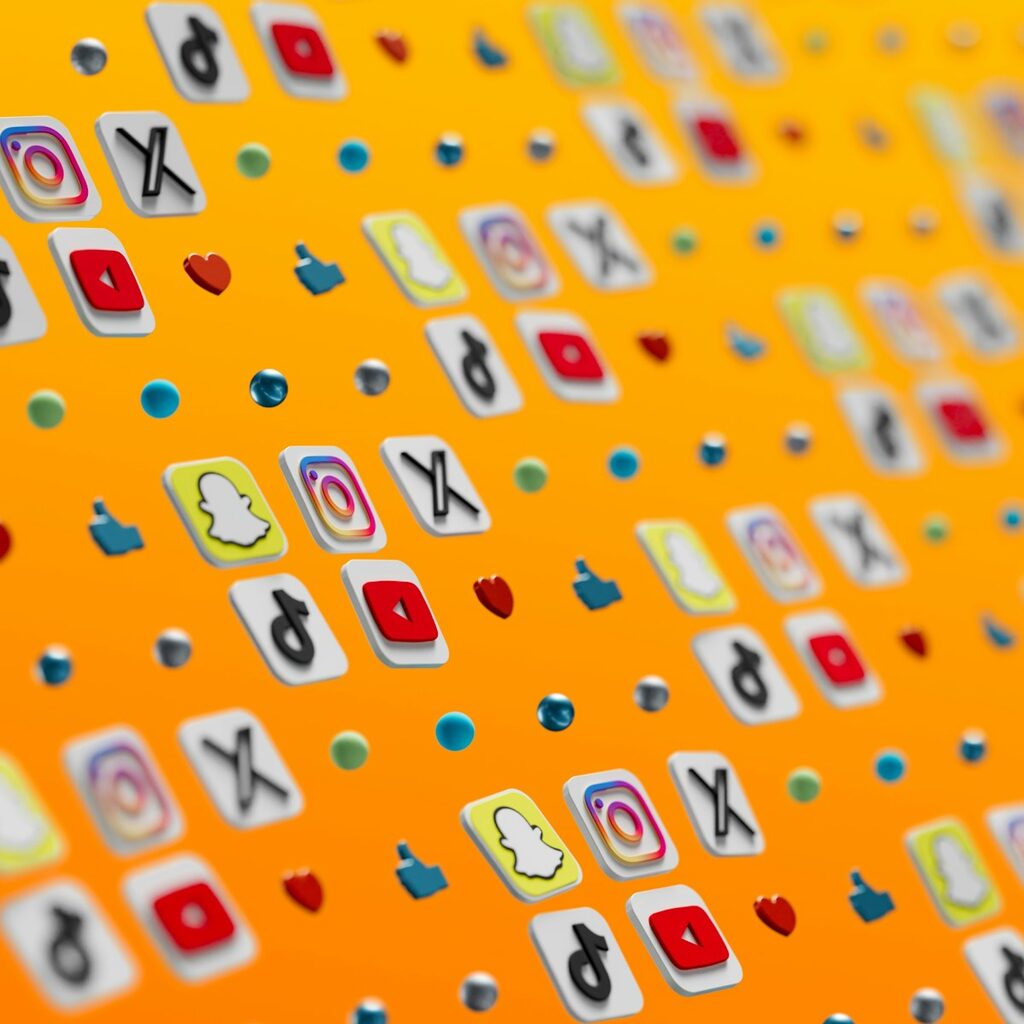
Algeria’s digital advertising market crossed an estimated US$270.5 million in 2024, according to Statista market forecasts — a figure that represents genuine expansion but also reveals the scale of what remains on the table. With 36 million internet users, 25 million Facebook accounts, and 21 million TikTok users, Algeria presents an advertising opportunity that brands have only begun to systematically exploit. The gap between audience size and advertising investment is one of the defining tensions in Algeria’s digital economy right now.
Algeria’s Advertising Market Overview
The overall advertising market in Algeria — television, radio, print, outdoor, and digital combined — is not fully transparent in terms of published data. What is clear is that digital’s share is growing from a low base, and television retains a commanding position among legacy advertisers who built their brands through ENTV and regional channels. The draft’s estimate that TV captures over 60% of total ad spend reflects the reality experienced by practitioners in the market, even if a precise industry-wide figure is not regularly published.
Within the US$270.5 million digital market, banner advertising is the largest single format at US$102.9 million. Social media advertising is the second-largest and fastest-growing segment — a pattern consistent with Algeria’s mobile-first internet usage profile, where social platforms capture the majority of screen time.
The Platform Breakdown: Meta Dominates, TikTok Rising
Facebook and Instagram (Meta): Facebook is Algeria’s most penetrated social platform with 25.6 million users in early 2025 — representing 54.2% of the total population and approximately 83.5% of the adult (18+) population. Facebook’s advertising reach grew by 700,000 accounts (+2.8%) between January 2024 and January 2025, building on the exceptional 19.5% growth recorded in the prior year. Instagram had 12.0 million users at the start of 2025, reaching 25.5% of the total population. Together, Meta’s platforms represent the dominant entry point for any Algerian digital advertising strategy.
TikTok: TikTok has been the breakout story of the past two years. The platform reached 21.1 million users aged 18 and above in early 2025 — up from 17.42 million in early 2024 — with ads reaching 68.9% of all Algerian adults. This growth is all the more remarkable given that TikTok only unlocked its Ads Manager for Algerian advertising accounts in July 2024. TikTok’s ad audience skews significantly male (66.4% male vs. 33.6% female in early 2024), which reflects both the platform’s youth demographics and the gender digital divide in Algeria’s social media usage. For brands targeting younger male consumers, TikTok has become a primary channel overnight.
Google (Search and YouTube): Google Search advertising is growing as digital commerce expands, with more Algerian consumers researching purchases online before buying — or attempting to buy — in physical or online stores. YouTube’s ad reach increased year-on-year, though specific Algeria figures are not regularly published by DataReportal.
Programmatic: The programmatic advertising market in MENA is projected to grow at a CAGR of 7.89% through 2032. Algeria is an early-stage programmatic market — brands primarily run ads through Meta’s and Google’s self-serve platforms rather than through demand-side platforms (DSPs) or private marketplace deals with local publishers. No significant local ad exchange or Arabic-language DSP has been identified as operating with meaningful Algerian inventory.
Which Sectors Are Digital-First
Telecoms are the most sophisticated digital advertisers in Algeria, and by a significant margin. Djezzy (15.6 million subscribers), Mobilis (22.1 million), and Ooredoo (12.9 million) collectively account for 100% of Algeria’s mobile subscriptions and operate large in-house digital marketing teams. Their campaigns run across Meta, TikTok, and YouTube with consistent brand presence and seasonal promotions. The 5G license rollout — awarded to all three operators — is driving a new wave of digital marketing investment to grow data adoption.
Banking and fintech represent the second wave of digital advertisers. CCP/Algeria Poste, the major commercial banks, and the growing Islamic banking segment are increasingly using social media for product launches and financial literacy campaigns. The audience targeting capabilities of Meta’s platform — filtering by income proxy, life stage, and geographic distribution across Algeria’s 58 wilayas — give banks tools for financial product marketing that TV cannot match.
FMCG and consumer goods are moving digital more slowly, constrained by measurement challenges and entrenched TV buying relationships. Major international FMCG companies with Algerian operations (food, beverage, personal care) are running test campaigns on Meta and TikTok, but TV remains the primary reach vehicle for mass consumer brands.
E-commerce players — Jumia, Ouedkniss, and the growing constellation of Algerian online stores — are the most agile digital advertisers, running performance-based campaigns where the ROAS (return on ad spend) can be tracked through to purchase. The 90% cash-on-delivery rate in Algerian e-commerce creates measurement complexity: digital ads that drive online orders cannot always be linked to the cash payment at the door.
Advertisement
The Ad Payment Problem
One of the most underreported constraints on Algeria’s digital advertising growth is the payment barrier. Facebook Ads Manager, Google Ads, and TikTok Ads require credit card billing in USD, EUR, or other freely convertible currencies. Algerian CIB debit cards and Edahabia prepaid cards are generally rejected at point of payment.
This means that Algerian SMEs — who could theoretically be digital advertising’s fastest-growing customer segment — face a structural barrier to running their own campaigns. The workarounds (company foreign credit cards for larger enterprises, agency billing for medium-sized companies, VCC resellers for smaller players) add friction and cost that disadvantage smaller advertisers compared to their peers in Morocco or Tunisia, where direct card billing from local accounts typically works.
Larger Algerian companies and multinationals avoid this problem through international billing arrangements, but the barrier effectively creates a two-tier advertising market: those with international financial infrastructure, and those without.
Measurement and Attribution Challenges
Digital advertising maturity is as much about measurement as it is about spending. Algeria’s digital advertising market is early-stage on the measurement dimension. Google Analytics 4 adoption is widespread among the country’s largest brands and e-commerce players but limited among the long tail of SMEs. Attribution — connecting an ad impression or click to a downstream purchase — is complicated by cash-on-delivery dominance, multi-device journeys (most Algerians switch between mobile and desktop), and limited investment in proper tracking implementation.
Meta’s Conversions API, which allows server-side event matching and reduces dependence on browser cookies, is beginning to be adopted by more sophisticated Algerian advertisers. But the baseline of measurement infrastructure that major Western markets take for granted — clean pixel implementation, consistent UTM tracking, CRM integration — is inconsistently present across the Algerian advertiser landscape.
The TV-to-Digital Migration
Why do legacy brands in Algeria remain committed to television when digital audiences are this large? Several structural factors maintain TV’s position:
Audience homogeneity: A single prime-time slot on ENTV or a major private channel still delivers unduplicated reach across demographic groups that are harder to aggregate on social platforms, particularly older, less digitally active consumers.
Internal inertia: Established brands have buying relationships with TV media agencies that date back years. Renegotiating those relationships requires internal political capital as well as evidence of digital ROI.
Measurement familiarity: TV’s reach metrics (GRP, TRP) are familiar to traditional marketers. Digital’s performance metrics (CPM, CPC, ROAS) require analytical capabilities that not all marketing teams possess.
Content production: Effective digital advertising — particularly for TikTok and Instagram Stories — requires shorter-form, native-feel creative that is different from traditional TV spots. Building this production capability takes time.
What will accelerate the migration is the continuing growth of digital-native consumers, particularly the generation now reaching purchasing age, combined with improving measurement infrastructure that makes digital ROI more legible to finance departments. The 5G rollout — by upgrading data speeds and enabling richer media consumption — is a demand-side accelerant that will make the digital audience harder to ignore.
The Path Forward for Algeria’s Digital Ad Market
Algeria’s digital advertising market is undervalued relative to its audience base. US$270.5 million in a market of 36 million internet users implies a per-user advertising value of roughly $7.50 — low by any regional comparison. The MENA digital advertising market is projected to grow to $44.8 billion by 2032, and Algeria’s share of that growth will depend on how quickly the structural barriers — ad payment access, measurement maturity, and creative infrastructure — are addressed.
The TikTok opening in July 2024 was a meaningful catalyst. For the first time, a major platform with 17 million Algerian users officially enabled local advertising accounts, which reduces (though does not eliminate) the payment friction for brands willing to invest in the platform. As Google and Meta work on local payment solutions for MENA markets — both have done so selectively elsewhere in Africa — Algeria’s advertisers may gain more accessible paths to direct digital spending.
Advertisement
🧭 Decision Radar
| Dimension | Assessment |
|---|---|
| Relevance for Algeria | High — every brand, agency, and marketing manager needs a clear view of where to allocate digital budgets |
| Action Timeline | Immediate — Meta and TikTok campaigns are viable now; resolve payment access before planning large campaigns |
| Key Stakeholders | Brand marketing managers (telecom, FMCG, banking, e-commerce), digital agencies, ad tech providers, Meta/Google Algeria teams |
| Decision Type | Tactical — allocate at least 30-40% of advertising budgets to digital for brands targeting under-40 consumers; use TV for mass reach, digital for targeted conversion |
| Priority Level | High |
Quick Take: Algeria’s digital advertising market is growing fast but remains structurally constrained by payment barriers that prevent SMEs from self-serving on Meta and Google, and by measurement immaturity that makes TV look safer to finance-focused brand managers. The brands that invest now in building digital measurement capability and resolving their ad payment infrastructure will have a significant head start as the market reaches critical mass over the next two to three years.
Sources & Further Reading
- Digital Advertising Market Forecast Algeria — Statista
- Digital 2025: Algeria — DataReportal
- Facebook Potential Ad Reach Algeria 2024 — Statista
- Algeria TikTok Agency Ad Account Unlock — Uplift Media Agency
- MENA Digital Advertising Market to $44.8 Billion by 2032 — Astute Analytica via GlobeNewswire
- The Surge of Programmatic Advertising in the MENA Market — OnAudience
- Algeria Telecom Operators 2024-2029 Country Intelligence — GlobeNewswire
- Social Media Advertising Algeria — Statista
- Algeria eCommerce — US Commercial Service
- Algeria Digital Economy — US Commercial Service




Advertisement