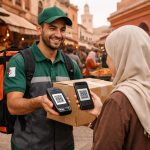
A construction foreman in Blida needs 50 tons of reinforcing steel for a housing project. He calls four suppliers he knows personally, waits for callbacks, compares prices scribbled on paper, and negotiates payment terms over tea. The entire process takes three to five days. The supplier he chooses is not necessarily the cheapest or the fastest — he is the most trusted, because the foreman’s cousin vouches for him.
This scene plays out millions of times a year across Algeria’s industrial economy. Business-to-business procurement — the process by which companies buy raw materials, components, equipment, and supplies from other companies — remains overwhelmingly offline, relationship-driven, and opaque. In a country investing tens of billions of dollars in energy infrastructure, construction, and agriculture, the inefficiency is not just an inconvenience. It is an economic drag measured in percentage points of GDP.
But change is coming. A new generation of Algerian entrepreneurs, inspired by Alibaba.com in China, IndiaMART in India, and regional platforms like Tradeling in the UAE and MaxAB in Egypt, is building digital B2B marketplaces aimed at bringing transparency, efficiency, and scale to Algeria’s industrial procurement. This article examines why the moment is now, who the emerging players are, what structural barriers they face, and where the biggest opportunities lie.
Why B2B Procurement in Algeria Needs Disruption
The Scale of the Problem
Algeria’s economy is heavily weighted toward sectors that depend on procurement: oil and gas services, construction, manufacturing, agriculture, and public infrastructure. The National Development Equipment Fund (CNED) reported in mid-2025 that it is investing DZD 6.7 trillion (approximately $47 billion) across 50 megaprojects nationwide — spanning roads, railways, housing, ports, energy, and water infrastructure. Separately, the energy sector alone has a $60 billion investment plan for 2025-2029, primarily in hydrocarbons exploration, refining, and petrochemical infrastructure. Each of these projects requires thousands of procurement transactions for materials, equipment, and services.
Yet the procurement process for most of these transactions has barely evolved in decades. The typical workflow looks like this:
- Need identification: A project manager identifies a requirement (e.g., 200 meters of PVC pipe, or 10 industrial motors)
- Supplier search: Calls to known contacts, visits to industrial zones (like Rouiba or Oued Smar near Algiers), or referrals from colleagues
- Quote collection: Phone calls or in-person visits to get pricing, often without standardized specifications
- Negotiation: Price, payment terms, and delivery timelines negotiated individually
- Order placement: Verbal agreement or handwritten purchase order
- Payment: Cash, check, or bank transfer — often with 30-90 day payment terms based on trust
- Delivery and verification: Goods delivered with variable quality assurance
Each step is manual, time-consuming, and prone to information asymmetry. The buyer does not know the full range of available suppliers. The supplier does not know the full range of potential buyers. Pricing is inconsistent, and quality verification is difficult.
Information Asymmetry and Trust Deficits
In mature markets, procurement professionals use digital catalogs, supplier ratings, compliance certificates, and competitive bidding platforms to make informed decisions. In Algeria, information asymmetry is extreme:
- No centralized supplier directories: There is no comprehensive, searchable database of Algerian manufacturers, wholesalers, and industrial suppliers. The existing business directories (like El Mouchir) are incomplete and rarely updated for industrial procurement.
- No standardized product specifications: The same product might be described differently by different suppliers, making comparison difficult.
- No transparent pricing: Prices vary dramatically between suppliers, between cities, and between customers. A buyer with a personal relationship might get a 15-20% lower price than a new customer.
- No quality ratings: There is no review system for industrial suppliers. Quality is assessed through personal experience or referral networks.
This information gap benefits incumbents (established suppliers with relationship networks) and penalizes newcomers (new businesses, startups, or companies from other wilayas trying to source locally). It also inflates costs economy-wide, as buyers cannot efficiently identify the best price-quality combination.
The Import Dependency Complication
Algeria imports a significant portion of its industrial inputs — machinery, spare parts, chemicals, electronics, and specialized materials. The import process adds layers of complexity to procurement:
- Customs procedures that can delay deliveries by weeks
- Currency controls that affect import pricing and availability
- Regulatory requirements (DAPS — Domiciliation Anticipee de Paiement pour les Services) for import payments
- Quality certification requirements that vary by product category
A B2B marketplace that could aggregate import supply alongside domestic manufacturing would help buyers navigate this complexity, compare domestic versus imported options, and reduce the time spent on regulatory paperwork.
The Global B2B Marketplace Model
Before examining Algeria-specific initiatives, it is useful to understand the B2B marketplace models that have succeeded globally.
Alibaba.com: The Template
Alibaba.com, launched in 1999, proved that business buyers would use a digital platform to find suppliers, compare products, and initiate transactions. The platform now hosts over 200 million products from more than 200,000 suppliers (primarily Chinese manufacturers) connecting with buyers worldwide. In the Asia-Pacific region alone, Alibaba’s B2B segment generates approximately $130 billion in revenue. Its business model combines membership fees for premium supplier listings, advertising, and transaction-based services.
Key lessons from Alibaba’s success:
- Supplier-side monetization: Free basic listings with paid premium features (higher visibility, verified badges, analytics)
- Trust mechanisms: Trade Assurance (payment protection), supplier verification, on-site inspections
- Logistics integration: Partnering with shipping and logistics providers to offer end-to-end service
- AI integration: Alibaba is now embedding AI agents across B2B workflows, from supply chain logistics to autonomous customer service through its OpenClaw framework
IndiaMART: The Emerging Market Analogy
IndiaMART, India’s largest B2B marketplace, is perhaps the most relevant comparison for Algeria. Operating in a market with similar characteristics — a large informal economy, trust-based transactions, fragmented supply chains, and varying levels of digital literacy — IndiaMART has grown to over 124 million product listings, 8.6 million supplier storefronts, and 219 million registered buyers. The platform commands roughly 60% market share in India’s online B2B classifieds space, with trailing twelve-month revenue of approximately $174 million as of late 2025.
IndiaMART’s model emphasizes:
- Lead generation over transaction processing: Rather than processing payments directly, IndiaMART connects buyers with suppliers and charges suppliers for qualified leads through subscription tiers (Silver, Gold, Platinum)
- Mobile-first design: Recognizing that many Indian business owners operate primarily from smartphones
- Vernacular language support: Offering the platform in multiple Indian languages
- Free-to-list model: Attracting suppliers with free listings, then converting them to paid subscriptions for premium features
Regional Players: Middle East and Africa
In the MENA region, platforms like Tradeling (UAE) and MaxAB (Egypt) are adapting the marketplace model for regional conditions. Tradeling, backed by Dubai’s DIEZA, has built the MENA region’s largest B2B digital ecosystem with over 200,000 registered business customers and recently partnered with Schneider Electric for industrial procurement. MaxAB, which raised $101 million in total funding and merged with Kenya’s Wasoko in 2024 to form a pan-African B2B powerhouse serving 450,000 merchants, demonstrates the scale potential.
The Middle East and Africa B2B ecommerce market was valued at $946 billion in 2025 and is projected to grow at a 19% compound annual growth rate through 2033, driven primarily by SME digitization. Common adaptations across the region include:
- Embedded financing: Offering short-term credit to buyers, addressing the delayed-payment culture
- Logistics integration: Providing delivery services since reliable third-party logistics are scarce
- Offline support teams: Deploying on-the-ground sales staff to onboard suppliers who are not digitally native
Algeria’s Emerging B2B Marketplace Landscape
The Startup Ecosystem Context
Algeria’s startup ecosystem, while still nascent, is growing rapidly. More than 7,800 companies have registered on the official startup.dz platform, with approximately 2,300 holding the formal “Startup Label” — a distinction granting access to state funding, tax exemptions, and procurement preferences. The government has set a target of 20,000 labeled startups by 2029. Algeria ranks fourth in Northern Africa for startup ecosystems (behind Egypt, Tunisia, and Morocco), with 7.2% ecosystem growth in 2025.
Emerging Platforms and Adjacent Players
As of early 2026, Algeria’s dedicated B2B procurement marketplace ecosystem is nascent but the building blocks are emerging. Several categories of platforms and adjacent players are positioning themselves:
Logistics-first platforms are arguably the most advanced. Opticharge, a B2B logistics platform founded in 2019, connects shippers with carriers in real time to optimize freight costs. Starting with $160,000 in seed funding from the Algerian Startup Fund, Opticharge has grown to a network of over 5,000 trucks and 220 partner companies. The platform addresses a critical inefficiency: an estimated 40% of trucks in Algeria run empty on return trips. While not a procurement marketplace per se, Opticharge demonstrates that Algerian businesses will adopt digital platforms when they solve a clear pain point.
Super-apps adding B2B layers represent another approach. Yassir, Algeria’s most prominent startup (valued after a $150 million Series B), is developing a B2B logistics layer for bulk deliveries to institutional clients. TemTem, a logistics super-app with 200,000+ clients and 4,000+ drivers across 21 wilayas, similarly bridges B2C and B2B logistics.
Construction materials platforms are perhaps the most active category for dedicated B2B procurement, unsurprising given the scale of Algeria’s construction sector. These platforms connect cement producers, steel distributors, ceramic manufacturers, plumbing suppliers, and electrical equipment wholesalers with construction companies, contractors, and individual builders. The construction supply chain is particularly ripe for digitization because:
- Transaction volumes are high and recurring
- Products are relatively standardized (rebar grades, cement types, pipe dimensions)
- Price transparency would significantly reduce procurement costs
- Delivery logistics are a major pain point that platforms can address
Agricultural input marketplaces targeting farmers’ procurement of seeds, fertilizers, pesticides, and farm equipment represent another emerging vertical. Algeria’s agricultural sector, which employs roughly 9-10% of the workforce and received a 764 billion dinar ($5.84 billion) budget allocation for 2026, suffers from the same procurement inefficiencies as construction.
Spare parts and MRO (maintenance, repair, and operations) platforms serving industrial facilities, factories, and vehicle fleets. Algeria’s industrial base — particularly oil and gas, food processing, and pharmaceuticals — requires constant procurement of spare parts, often from international suppliers. A platform that could aggregate local and imported spare parts inventory would address a critical need.
The Startup Approach
Most Algerian B2B marketplace startups are following a pragmatic, capital-efficient approach:
- Start narrow: Focus on one product category or geographic area to build density
- Supplier onboarding first: Invest heavily in listing suppliers, photographing products, and verifying businesses before worrying about buyer acquisition
- WhatsApp as a bridge: Many platforms use WhatsApp as an intermediary communication channel, recognizing that not all suppliers are ready for a fully digital workflow
- Hybrid online/offline model: Combining digital listings with phone-based sales support for suppliers who are not tech-savvy
- Cash-compatible payment models: Accepting cash payments and bank transfers rather than insisting on purely digital transactions
Advertisement
Structural Barriers to B2B Marketplace Growth
The Trust Barrier
In a market where business relationships are built over years — often reinforced by family connections, shared regional origins, and accumulated goodwill — convincing companies to buy from strangers on a digital platform is a fundamental challenge.
Trust operates differently in Algerian business culture than in markets where B2B marketplaces have scaled:
- Personal guarantees matter more than platform guarantees. A supplier’s promise means more when made face-to-face over coffee than through a chat interface.
- Delayed payments are relationship-dependent. Most B2B transactions in Algeria involve payment terms of 30, 60, or even 90 days. Suppliers extend these terms based on personal trust, not credit scores. A marketplace must either replace this trust mechanism or work around it.
- Quality disputes are resolved informally. When a shipment is defective, the buyer calls the supplier directly and negotiates a resolution. There is no arbitration mechanism. Marketplaces must build dispute resolution systems that are faster and fairer than informal negotiation.
The Payment Infrastructure Challenge
Delayed payment is not just a preference in Algerian B2B commerce — it is a structural feature. Businesses operate on thin margins, cash flow is unpredictable, and working capital is scarce. A construction company typically pays for materials 30-60 days after delivery, timed to when it receives payment from the project owner.
Algeria’s digital payment infrastructure is improving but still limited. There are approximately 30-35 fintech startups operating in the country, and the Bank of Algeria joined the Pan-African Payment and Settlement System (PAPSS) in 2025. Key infrastructure players like GIE Monetique and SATIM facilitate electronic payments. However, digital payment adoption remains low compared to mobile phone penetration (95.2% of the population has a cellular connection, while only a fraction use digital payments regularly).
For B2B marketplaces, this creates a fundamental challenge. Options include:
- Escrow services: Holding payment until delivery is confirmed (works for immediate payment but not for extended terms)
- Invoice factoring: Partnering with financial institutions to advance payment to suppliers and collect from buyers later
- Buy-now-pay-later for businesses: Offering short-term credit (30-60 days) to qualified buyers, essentially embedding fintech into the marketplace
- Payment guarantee insurance: Insuring suppliers against buyer default
Logistics Fragmentation
Algeria’s logistics sector is fragmented and underdigitized. Moving goods from a factory in Setif to a construction site in Ghardaia involves navigating a patchwork of trucking companies, many of them small owner-operators with one or two trucks. Platforms like Opticharge are beginning to address this with digital freight matching, but comprehensive logistics coverage remains a challenge.
For B2B marketplaces, this means:
- Delivery promises are hard to make. A platform can list a product and a price, but delivery timing depends on logistics providers the platform does not control.
- Shipping costs are opaque. Freight pricing varies by route, season, fuel prices, and the negotiating skills of the shipper. Quoting delivery costs at the point of purchase is difficult.
- Damage and loss risk. Without standardized handling and tracking, goods can arrive damaged, creating disputes between buyers, sellers, and logistics providers.
Some B2B marketplace startups are responding by building their own logistics capabilities or partnering with existing platforms like Opticharge, but this requires significant coordination.
Regulatory and Taxation Complexity
Algeria’s business regulatory environment adds friction to B2B marketplace operations:
- Commercial registry requirements: All businesses must have a Registre du Commerce (RC) to buy and sell goods legally. Ensuring marketplace participants are properly registered is both a legal necessity and an onboarding barrier.
- Tax invoicing requirements: B2B transactions require formal invoicing that complies with Algerian tax law (TVA/VAT). Marketplace platforms must integrate invoicing capabilities.
- Import regulations: For products sourced internationally, customs documentation, DAPS requirements, and import licensing add complexity.
- Price controls: Certain essential goods (cement, steel reinforcement, basic food inputs) are subject to government price controls, which affect marketplace pricing strategies.
Where the Opportunities Are Biggest
Construction Materials: The Multi-Billion Dollar Opportunity
Algeria’s infrastructure spending program is the single largest demand driver for B2B procurement. The CNED’s $47 billion megaproject pipeline includes:
- Housing construction across AADL, LPP, and social housing programs — 250,000 units launched in the first half of 2025 alone, with a national target of 2 million units by 2029
- Railway expansion including the 1,200 km High Plateau railway and the $2.8 billion Trans-Saharan railway (Laghouat-Ghardaia-El Meniaa, 495 km), with the national goal of doubling the network to 10,000 km by 2030
- Port development including the $4.7 billion El Hamdania deep-water port project near Cherchell (designed for 6.5 million containers annually) and Djen Djen port expansion
- Water infrastructure including $5.4 billion in desalination plants, with 19 facilities operational by early 2025 and a target of providing 60% of freshwater from desalination by 2030
- Energy infrastructure including solar farms (targeting 22,000 MW renewable capacity by 2030) and gas processing facilities
Each of these projects requires massive quantities of construction materials: cement, steel, aggregates, electrical equipment, plumbing, finishing materials, and more. A B2B marketplace that captures even a small fraction of this procurement spending would be a significant business.
The opportunity is particularly strong because construction material prices in Algeria vary significantly by region. Cement produced in the East might be 20% cheaper than cement available in the South after accounting for transport. A marketplace that provides price transparency and logistics optimization could save construction companies millions of dinars per project.
Agricultural Inputs: Feeding 48 Million People
Algeria imports nearly $10 billion in food annually — making it the second-largest food importer in Africa after Egypt — and is investing heavily in agricultural self-sufficiency. The 2026 agriculture budget of 764 billion dinars ($5.84 billion) represents a 4% increase over 2025, funding irrigation efficiency, seed system improvement, rural mechanization, and agri-food processing. Farmers need seeds, fertilizers, pesticides, farm machinery, irrigation equipment, and veterinary supplies — all of which are procured through fragmented, informal channels.
A B2B marketplace for agricultural inputs could:
- Aggregate demand to negotiate better prices with suppliers
- Provide technical information about products (application rates, compatibility, timing)
- Enable pre-season procurement so farmers can lock in prices and availability before planting
- Connect farmers with equipment rental services for expensive machinery they cannot justify purchasing
Industrial Spare Parts: Keeping Factories Running
Algeria’s industrial base — from Sonatrach’s oil and gas operations to Cevital’s food processing plants — depends on a constant supply of spare parts, many of which are imported. When a critical machine breaks down, finding the right spare part quickly can mean the difference between a few hours of downtime and days of lost production.
A B2B marketplace specializing in industrial spare parts could:
- Maintain a searchable inventory across multiple suppliers, indexed by OEM part number, machine model, and specification
- Offer expedited delivery for critical parts
- Provide alternative/compatible parts when original OEM parts are unavailable or too expensive
- Build predictive ordering capabilities based on equipment maintenance schedules
Digital Services Procurement
Beyond physical goods, there is growing demand for a marketplace connecting businesses with professional service providers: accounting firms, legal services, IT support, marketing agencies, translation services, and consulting. Algeria’s professional services market is highly fragmented, with most firms relying on referrals for client acquisition.
Building for the Algerian Market: Practical Lessons
Entrepreneurs building B2B marketplaces for Algeria should internalize several practical lessons from both global platforms and local conditions:
Start with Supply, Not Demand
The most common mistake in marketplace building is focusing on buyer acquisition before ensuring adequate supply. In Algeria, where suppliers are less digitally native, onboarding takes significant effort — photographing products, writing descriptions, setting up pricing structures, and training suppliers to manage their listings. Invest the first 6-12 months heavily on the supply side.
Embrace the WhatsApp Layer
Rather than forcing suppliers onto a fully digital workflow immediately, the most successful Algerian platforms are using WhatsApp as a communication bridge. A buyer finds a product on the platform, then negotiates via WhatsApp. This feels natural for Algerian business owners who already use WhatsApp for business communication. Over time, more of the workflow can be pulled into the platform.
Build Trust Mechanisms Before Scale
Before trying to grow transaction volume, invest in trust mechanisms: supplier verification (Registre du Commerce check, physical address verification, product sample programs), buyer ratings, dispute resolution processes, and payment guarantees. In a low-trust market, these mechanisms are not features — they are prerequisites.
Solve Logistics, Do Not Ignore It
A B2B marketplace that lists products but cannot deliver them is a catalog, not a marketplace. Logistics integration — whether through partnerships with platforms like Opticharge, a company-owned fleet, or a logistics marketplace within the marketplace — is essential for converting listings into transactions.
Accept Mixed Payment Models
Insisting on digital-only payment will exclude most of the market. Build for cash, check, and bank transfer alongside digital payment methods. Algeria’s 95% mobile penetration and growing fintech ecosystem suggest the mix will shift over time — but the platform must serve the market as it is, not as it wishes it were.
The Path Forward
Algeria’s B2B marketplace opportunity is large, structurally underserved, and timing is favorable. Several converging forces create a window of opportunity:
- Government infrastructure spending of $47 billion across 50 megaprojects, creating massive procurement demand
- 95% mobile phone penetration among the population, with 33.5 million internet users
- Growing fintech infrastructure with 30-35 startups, PAPSS membership, and improving digital payment rails
- A young, tech-savvy generation entering business — Algeria’s median age is under 30 — expecting digital tools
- Proven logistics platforms like Opticharge demonstrating that Algerian businesses will adopt digital solutions for clear operational gains
The winners in this space will not be the platforms with the best technology — they will be the ones that understand Algeria’s business culture most deeply and build solutions that respect how procurement actually works while gradually pulling it toward digital efficiency.
The foreman in Blida will not abandon his trusted supplier overnight. But when a platform shows him that a verified supplier in Annaba offers the same quality steel at 12% lower cost with guaranteed delivery in 72 hours and payment terms he can live with — the transition begins. Multiply that moment by millions of procurement decisions per year, and the impact on Algeria’s economy becomes clear.
Frequently Asked Questions
Why is B2B procurement in Algeria still largely offline?
The combination of trust-based business culture, limited digital payment infrastructure, logistics fragmentation, and the absence of mature digital platforms has kept procurement offline. Most business relationships are built on personal connections and face-to-face negotiations. With 95% mobile phone penetration but low digital payment adoption, the technology access is there — the platforms and trust mechanisms are what have been missing.
What is a B2B marketplace and how does it differ from B2C platforms like Yassir?
A B2B marketplace connects businesses with other businesses — manufacturers selling to wholesalers, wholesalers selling to retailers or construction companies. Unlike B2C platforms where individuals order food or rides, B2B platforms handle larger order volumes, extended payment terms (30-90 days), bulk pricing, and complex logistics. Transaction values are typically much higher, and relationships are ongoing rather than one-off.
Which sectors offer the biggest opportunity for B2B marketplaces in Algeria?
Construction materials represent the largest immediate opportunity, driven by Algeria’s $47 billion megaproject pipeline and 2 million housing unit target by 2029. Agricultural inputs ($5.84 billion budget in 2026), industrial spare parts for the energy and manufacturing sectors, and professional services are also significant verticals with high demand and fragmented supply chains.
Sources & Further Reading
- Algeria Construction Market Analysis to 2029: Mega-Project Pipeline — GlobeNewswire / ResearchAndMarkets — construction industry 4.1% growth, $47B megaproject pipeline, and CNED investment data
- IndiaMART Corporate — India’s Largest Online B2B Marketplace — 8.6M suppliers, 124M+ products, subscription-based revenue model
- Tradeling Group — Leading B2B Digital Ecosystem in MENA — 200,000+ registered business customers, Schneider Electric partnership
- MaxAB-Wasoko Acquires Fatura to Dominate Africa’s B2B Market — WeeTracker — $101M total funding, 450,000 merchants across five markets
- Algeria Boosts 2026 Agriculture Budget by 4% — Milling MEA — 764B dinars ($5.84B) agriculture allocation
- Algeria to Cut $10 Billion Food Import Bill — Milling MEA — nearly $10B annual food imports, second-largest in Africa
- AfDB Supports Algeria’s Trans-Saharan Railway Push — RailwayPro — 495 km Laghouat-Ghardaia-El Meniaa line, $2.8B cost
- Algeria Commits $5.4B to Desalination — Energy Capital & Power — 19 operational plants, 60% freshwater target by 2030
- Opticharge — Digital Logistics Platform for Algeria — Do4Africa — 5,000+ trucks, 220 partner companies, addressing 40% empty return trips
- MEA B2B eCommerce Market Size and Growth — Straits Research — $946B in 2025, 19% CAGR to 2033
🔗 Related Intelligence
B2B SaaS Made in Algeria: Local Startups Taking on ERP, HR, and CRM Markets

The COD Trap: How Cash on Delivery Is Strangling Algeria’s E-Commerce
Algeria’s Digital Economy Law: What Tech Companies Need to Know in 2026

AfCFTA Digital Trade Protocol: What It Means for Algeria’s Tech Services