What Anthropic Actually Bought
The deal closed as an all-stock transaction valued at roughly $400 million on April 3, 2026, according to reporting from The Information, Eric Newcomer’s newsletter, and TechCrunch. Coefficient Bio was a stealth-mode biotech AI startup with approximately ten employees, founded around August 2025 by Samuel Stanton and Nathan C. Frey — both formerly of Genentech’s Prescient Design division, the in-house AI drug-discovery group. The company had operated almost entirely off the public radar; by the time of acquisition it had no published product, no public website beyond a placeholder, and no disclosed funding round.
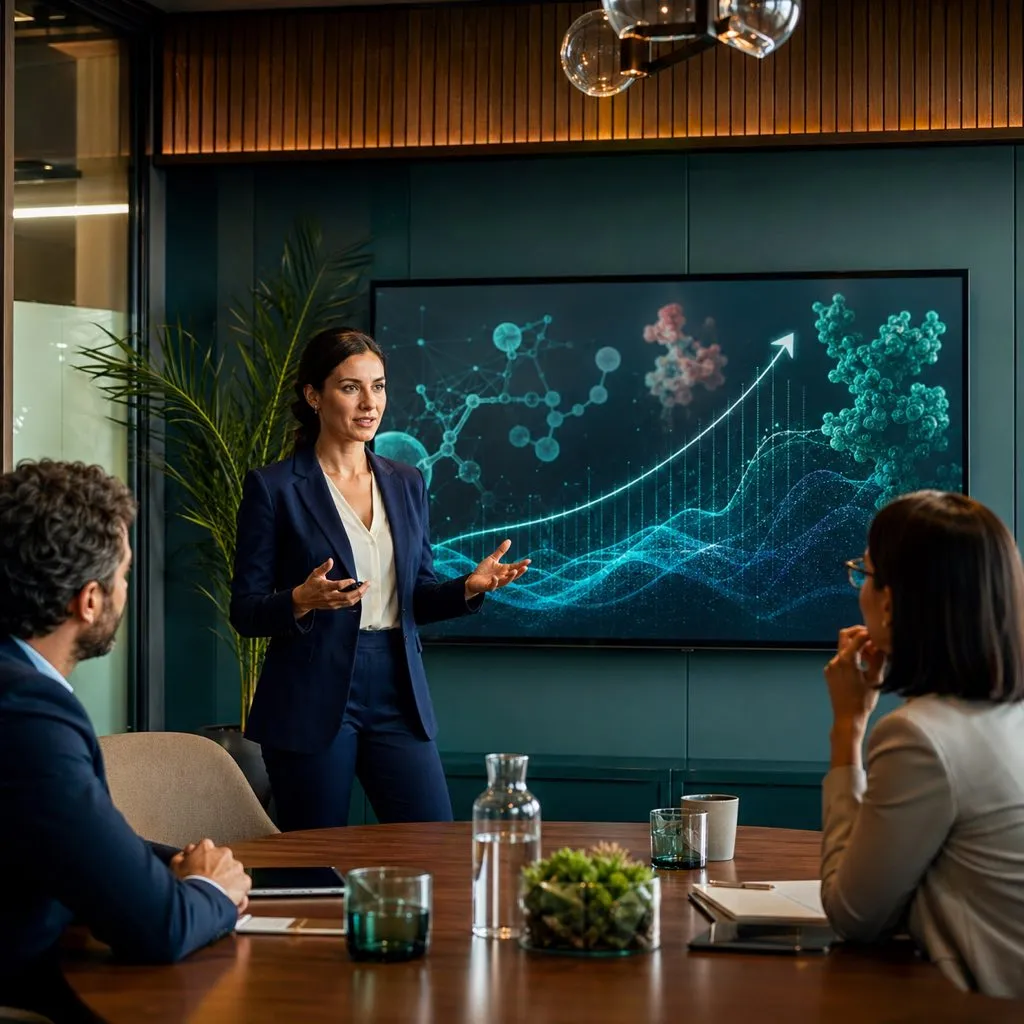
What it did have was a small group of researchers with very specific, rare expertise: applying machine-learning architectures to early-stage drug discovery, particularly the protein-design and lead-identification stages where domain-specific models substantially outperform general-purpose ones. Stanton and Frey both contributed to Genentech’s Prescient Design work on diffusion models for protein generation. Their move to start Coefficient Bio in mid-2025 was a bet that the same expertise, combined with a frontier AI partner’s compute and model access, could be productised at a much faster timeline outside a large pharma’s internal R&D track.
For Anthropic, the acquisition fits directly into a strategy that became visible with the October 2025 launch of Claude for Life Sciences, the company’s first vertical product targeting pharma and biotech customers. Coefficient Bio gives Anthropic an in-house drug-discovery research team and an institutional foothold in the bench-science layer of biotech that Claude for Life Sciences is meant to serve.
Why $40 Million Per Head Is Not Crazy
The $40 million per employee headline is shocking in isolation but conventional in the context of frontier-AI talent economics. Inflection AI’s 2024 Microsoft deal valued its founders and senior researchers at roughly $50 million per head once Microsoft’s $650 million payment is divided across the seventy-odd people who joined. Adept AI’s 2024 Amazon deal landed in a similar range. The pattern across these reverse-acquihires — deals structured as licensing or talent-transfer rather than full company acquisitions — has been remarkably consistent: $30-60 million per high-end AI researcher, with premiums for founders and domain-specific expertise.
Coefficient Bio’s premium is at the top of that range, and the explanation is the domain. Generalist frontier-AI talent is now competitive but not scarce — the major labs have all been recruiting from each other and from the same pool of postdocs. Researchers who can credibly translate frontier AI methods into wet-lab biology, however, sit at the intersection of two scarce talent pools: machine-learning PhDs who understand transformer and diffusion architectures, and bench biologists who understand assay design, protein structure, and drug-discovery operations. The intersection is small, slow to grow, and largely concentrated in a handful of institutions.
The structural point is that Anthropic was not paying for Coefficient Bio’s product. There is no public product. It was paying for the option value of having Stanton, Frey, and their team inside the company when Anthropic builds the next iteration of Claude for Life Sciences and competes with Google DeepMind’s Isomorphic Labs and OpenAI’s life-sciences positioning. At that level of strategic optionality, $40 million per head is in the same ballpark as what each lab is implicitly paying for senior generalist hires, with a domain premium attached.
Advertisement
What This Means for Stealth-Mode Founders
The Coefficient Bio outcome is the second high-profile stealth-startup reverse acquihire in twelve months, after the Hiro / OpenAI deal in late 2025 set a similar template in finance and competition AI. The pattern is now clear enough to constitute a real founder playbook, and it is materially different from the traditional VC-funded growth path. Stealth founders building in domains where frontier labs lack in-house expertise — life sciences, materials science, robotics control, financial modelling, climate physics — now have a credible exit path that does not require Series A through D fundraising.
The implications cut several ways. Founders in narrow vertical domains can be acquired earlier and at lower headcount than at any prior point in tech history. The acquihire premium per head is high enough that founders retain meaningful equity outcomes even at sub-10-person scale, which removes the traditional pressure to scale before exit. But it also concentrates the universe of acceptable acquirers: there are realistically four or five frontier AI labs, two or three hyperscalers, and a small number of pharma giants like Roche or Novartis that could underwrite this size of deal. Founders who position themselves outside that buyer set are effectively choosing the traditional VC track.
What This Means for AI Founders Building in Vertical Domains
1. Pick a vertical where frontier models have a sharp, definable weakness
Coefficient Bio’s value to Anthropic is not that its founders know AI — many people know AI. It is that they know where Claude underperforms in protein design and what architectural changes close that gap. Founders building for the vertical-acquihire path should map the specific failure modes of the leading frontier model in their domain — failure modes that are documented in benchmarks like FoldBench, MoleculeNet, or domain-specific evals — and build to close one or two of them. Generic “AI for X” pitches do not get reverse-acquihired at $400 million; specific architectural or data-curation expertise that a frontier lab cannot easily replicate does. The signal a buyer is looking for is “we cannot hire this team off the open market in twelve months”, not “we like this product”.
2. Stay sub-15-person and resist Series A pressure
The Coefficient Bio deal closed at roughly ten employees and eight months of operation. The Hiro deal, the Adept deal, and the Inflection deal all closed with team sizes in the same range or smaller relative to capital paid. The pattern is consistent: frontier labs prefer to acquire small, intact teams without the operational and HR overhead of a fifty-plus-person company. Founders who raise Series A and scale to thirty or forty people before the acquihire conversation lose the structural simplicity that makes the deal cheap on the buyer’s side. The trade-off is real — staying small means no traditional growth — but the acquihire premium per head makes the math work even at a sub-15-person team if the founders can afford to operate at modest burn for twelve to eighteen months.
3. Document the architecture as if the acquirer’s M&A team will diligence it tomorrow
The single most important asset in a reverse-acquihire is documentation. Acquirers buy what they can verify in due diligence, which means architecture documents, training-run logs, evaluation curves on standard benchmarks, and a clean codebase that an integration team can absorb without three months of reverse-engineering. Founders who treat documentation as overhead lose meaningful deal value at exit. Founders who treat it as a forcing function for clarity — writing for an imagined acquirer’s M&A diligence team from day one — convert intangible IP into a verifiable asset. The Hiro / OpenAI playbook explicitly relied on this discipline; the Coefficient Bio team appears to have done the same based on the speed at which the Anthropic deal moved from contact to signing.
The Antitrust Question
Reverse acquihires of this kind sit in an uncomfortable regulatory grey zone. They are structured to look like talent-transfer or licensing transactions rather than mergers, which keeps them below the Hart-Scott-Rodino reporting thresholds that trigger antitrust review in the United States. The FTC under Chair Lina Khan flagged the Inflection / Microsoft deal as a structure of concern in 2024, and the European Commission’s competition directorate opened a formal inquiry into the same deal under the EU merger regulation. The Coefficient Bio deal’s all-stock structure and small headcount mean it will likely escape pre-closing review, but it adds to a body of evidence that frontier-AI labs are using the structure systematically to acquire talent and capability without merger oversight.
For founders, the regulatory question is mostly a buyer’s problem rather than a seller’s. The deal closes either way; the only seller-side risk is unwind exposure if a regulator forces a structural remedy after closing. For policymakers and competition lawyers, the question is whether the cumulative effect of these deals concentrates frontier-AI capability in three or four labs even faster than traditional M&A would. The answer probably matters more in 2027 and 2028 than it does today, but the precedent each individual deal sets — Inflection, Adept, Hiro, Coefficient Bio — accumulates. Founders pricing their exit options should expect heavier regulatory friction on the next round of deals than this one experienced.
Frequently Asked Questions
What is a reverse acquihire and how does it differ from a normal acquisition?
A reverse acquihire is a deal structured primarily to transfer a small founding team and their IP to an acquirer, rather than to acquire an operating business with revenue and customers. The dollar value per employee is typically much higher than a traditional acquisition (often $30-60 million per head versus single-digit millions in conventional M&A) because the buyer is paying for scarce talent and capability rather than ongoing cash flows. Recent examples include Inflection / Microsoft, Adept / Amazon, Hiro / OpenAI, and now Coefficient Bio / Anthropic.
Why are AI labs paying $40 million per employee for biotech researchers?
Because the intersection of frontier-ML expertise and bench-biology domain knowledge is scarce, slow to train, and concentrated in a small number of institutions like Genentech’s Prescient Design. Frontier AI labs cannot meaningfully expand their life-sciences capability by hiring individually off the open market in any reasonable timeline; acquiring an intact founding team that already works together is the only way to add the capability inside a twelve-month strategic window. Anthropic’s October 2025 Claude for Life Sciences launch made the strategic urgency public.
Should an Algerian deep-tech founder optimise for reverse acquihire or for VC growth?
It depends on the vertical and the team. For founders with international research credentials in narrow domains where frontier models underperform — life sciences, materials, climate physics, financial modelling — the reverse-acquihire path is now a credible alternative that does not require Series A through D fundraising. For founders building horizontal SaaS or services in Algerian or African markets, the traditional VC path is still the right structure because there are realistically only a handful of buyers globally for reverse-acquihire deals at this premium.
Sources & Further Reading
- Anthropic buys biotech startup Coefficient Bio in $400M deal — TechCrunch
- Anthropic acquires stealth AI startup Coefficient Bio in $400M deal — Fierce Biotech
- AI giant Anthropic leans into life sciences with $400M Coefficient Bio catch — BioSpace
- Anthropic acquires startup Coefficient Bio $400 million — The Information
- Anthropic buys stealth Dimension — Newcomer