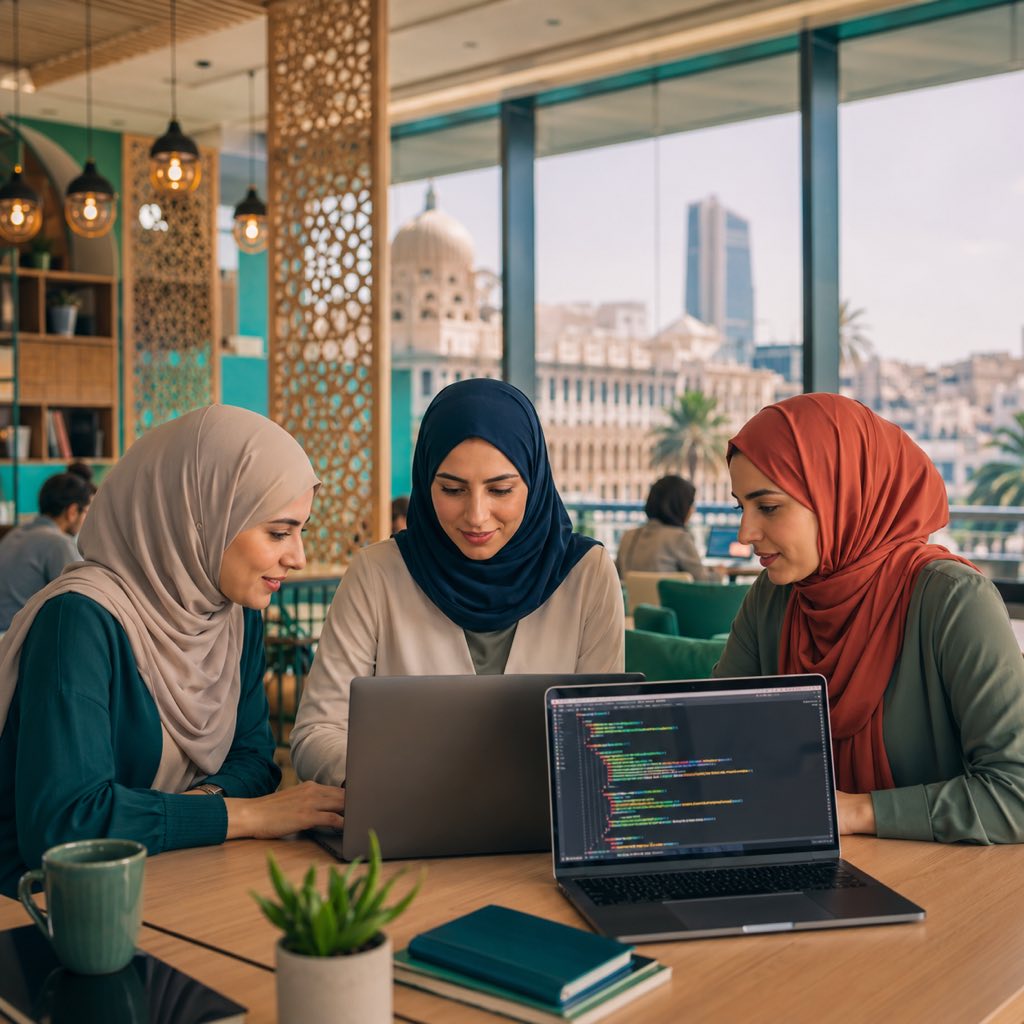
A growing constellation of bootcamps, scholarships and community networks is putting digital skills within reach of more Algerian women than ever before. From in-person coding campuses in Algiers to fully funded exchange programs and free continent-wide virtual cohorts, the on-ramps into tech careers are multiplying — and Algerian women are stepping onto them.
The momentum is visible across several fronts. GoMyCode, one of the largest tech training schools in Africa and the Middle East, runs in-person campuses in Algiers and reports a 90% success rate, with many graduates landing jobs or internships within six months. The U.S. State Department’s TechGirls program, which has engaged more than 900 young women across 38 countries since 2012, now includes Algeria among its participating nations for 2026. And Tech4Dev’s Women Techsters initiative — which has already trained over 124,000 girls and women across Africa — is open to Algerian applicants through its free virtual bootcamps.
Together, these programs represent a widening pipeline: more entry points, more skills tracks, and more pathways from a first line of code to a paid role in Algeria’s digital economy.
The Programs Building Algeria’s Women in Tech Pipeline
Three complementary programs anchor the current landscape, each serving a different stage and style of learner.
GoMyCode Algeria is the most established in-person option. With hackerspaces in Algiers — including the Alger hackerspace and a Bab Ezzouar campus — it offers a project-based curriculum that blends online and in-person sessions led by experienced instructors. The catalogue is broad and career-oriented: full-stack JavaScript development, data science, front-end React, DevOps with Kubernetes, cybersecurity (including CompTIA Security+ preparation), and artificial intelligence tracks that run from an introduction to AI through to NVIDIA-certified deep learning. Bootcamps range from roughly 12 to 20 weeks, available full-time or part-time, which lets women fit study around existing work or family commitments. The reported 90% success rate and six-month job-placement window make it a practical bridge from training to employment.
TechGirls offers something different: a fully funded international exchange for young Algerian women aged 15 to 17. The core of the program is a 23-day experience in the United States, where, in partnership with Virginia Tech University, participants attend an intensive tech camp covering cutting-edge technologies and STEM career paths. The camp is complemented by site visits to technology companies, leadership workshops, job-shadow experiences, community service projects and homestays with American families. Selection runs through independent committees of industry leaders and regional experts, with U.S. Embassy staff in Algiers interviewing semi-finalists. For the 2026 cycle, applications closed in January 2026 — making early awareness essential for families who want their daughters to compete for the next round.
Women Techsters, run by the non-profit Tech4Dev, is a free, fully virtual bootcamp open to women across all 54 African countries, including Algeria. The Cohort 5.2 Bootcamp for 2026 is a three-week program designed for beginners and early-stage learners aged 16 to 40, with no prior tech experience required. Participants choose one of six learning paths: Cybersecurity, Data Analysis, Product Design, Product Management, Software Development, or Technical Project Management. It sits within Tech4Dev’s broader ambition to equip 5 million African girls and women with digital skills by 2030 — a goal that has already reached more than 124,000 learners. Because it is free and remote, Women Techsters reaches women in cities and smaller towns alike, wherever there is an internet connection.
Surrounding these programs is a vibrant community layer. Women Techmakers Algiers has been building visibility and resources for women in technology since 2012, while the WomenTech Network maintains active Algerian ambassadors and hosts an “AI for Algerian Women” circle focused on artificial-intelligence education and opportunity. These communities turn isolated learners into a connected cohort.
From Bootcamp to Career: What the Path Looks Like
The pipeline only matters if it leads somewhere, and the structure of these programs is increasingly designed to deliver employable skills rather than certificates alone.
A typical journey starts with a foundational program — a free Women Techsters track to test interest and confirm a direction, or a TechGirls scholarship for younger students to spark early ambition. From there, learners move into deeper, project-based training: a GoMyCode bootcamp in full-stack development, data science or cybersecurity produces a portfolio of real projects that employers can evaluate. The emphasis on hands-on work matters because Algerian employers and startups hiring developers, data analysts and product specialists increasingly screen for demonstrated ability over formal credentials.
The skills in highest demand map closely to what these programs teach. Software development and front-end engineering remain core to the country’s expanding pool of startups and digital-services firms. Data analysis and data science are growing as more organizations digitize operations. Cybersecurity is a rising priority across finance, telecoms and public-facing services. Product management and product design — both offered through Women Techsters — open doors to roles that blend technical literacy with business judgment, a combination that scales well into leadership.
Crucially, the remote and exchange formats add a global dimension. A Women Techsters graduate trained alongside peers across Africa, or a TechGirls alumna who has built relationships at Virginia Tech, returns with international connections and a wider professional network — assets that strengthen Algeria’s tech ecosystem as these women build careers, mentor others and, in some cases, launch companies at home.
Advertisement
What Algerian women in tech, employers, and program organizers should do
The opportunity is real and the on-ramps are open. Turning availability into impact takes deliberate action from each group.
1. Aspiring women learners: pick an entry point and start now
Map your starting position to the right program. If you are a secondary-school student, prepare early for the next TechGirls cycle — watch the U.S. Embassy Algiers channels for the application window. If you are 16 or older and exploring tech for the first time, the free Women Techsters bootcamp is a low-risk way to test a path. Once you know your direction, invest in a project-based GoMyCode bootcamp in a high-demand track such as full-stack development, data analysis or cybersecurity, and build a public portfolio as you go. Join Women Techmakers Algiers or a WomenTech Network circle to stay connected and informed.
2. Algerian employers and startups: hire from the pipeline and offer apprenticeships
The graduates emerging from these programs are job-ready and portfolio-equipped. Build relationships with GoMyCode’s Algiers campuses to recruit early, and create internship or apprenticeship slots that give bootcamp graduates their first professional experience. Consider sponsoring scholarships or mentorship hours — a modest investment that strengthens your future hiring pool and signals that your company values diverse, skilled talent.
3. Program organizers and community leaders: connect the dots and amplify success stories
The programs work best when they reinforce one another. Build referral bridges so a Women Techsters graduate knows where to go next, and a GoMyCode learner knows which communities to join. Spotlight Algerian women who have moved from bootcamp to career — visible role models are among the most powerful recruiters. Coordinate timing and outreach so application windows reach women across the country, not just in the capital.
The Talent Multiplier Ahead
Every program described here is, at heart, a multiplier. A young woman who completes a TechGirls exchange or a GoMyCode bootcamp does not simply gain a skill — she becomes a node in a growing network, often returning to mentor the next cohort, contribute to open-source projects, or build a startup that hires others. With Tech4Dev aiming to reach 5 million African women by 2030 and GoMyCode steadily expanding its Algiers footprint, the base of the pyramid keeps widening.
For Algeria, the trajectory is encouraging. More women entering tech means a deeper, more diverse talent pool for the country’s startups, telecoms, banks and public-sector digital initiatives. It means more founders, more mentors and more of the role models who inspire the cohort after them. The infrastructure of opportunity — bootcamps, scholarships, free virtual training and active communities — is in place and expanding. The next chapter belongs to the women stepping into it.
Frequently Asked Questions
Q: Which programs are available to Algerian women who want to learn tech skills?
A: Several. GoMyCode runs in-person bootcamps in Algiers (Alger hackerspace and Bab Ezzouar) covering full-stack development, data science, AI, DevOps and cybersecurity. Women Techsters by Tech4Dev offers a free, three-week virtual bootcamp for women aged 16-40 across Africa, with six learning paths. TechGirls is a fully funded U.S. exchange program for young women aged 15-17. Community networks like Women Techmakers Algiers and the WomenTech Network round out the ecosystem.
Q: How do I apply, and do these programs cost money?
A: It varies. Women Techsters is free and applied for online through Tech4Dev’s platform; no prior experience is needed. TechGirls is fully funded (scholarship covers the U.S. exchange) and applications run through the U.S. Embassy in Algiers — the 2026 window closed in January 2026, so watch for the next cycle. GoMyCode bootcamps are paid and enroll directly through gomycode.com, with full-time and part-time options to fit different schedules.
Q: What careers can these programs lead to?
A: The skills taught map to Algeria’s most in-demand tech roles: software developer, front-end engineer, data analyst, data scientist, cybersecurity specialist, product manager and product designer. GoMyCode reports many graduates finding jobs or internships within six months. Exchange and virtual programs also build international networks that support entrepreneurship and leadership down the line.
Sources & Further Reading
🔗 Related Intelligence
Women in Algeria’s ICT Sector: Concrete Career Paths Opening in 2026
Women in Tech in Algeria: A Global Leader in Education, Lagging in the Workplace
Women in Algerian Tech: AI Skills as the Career Equaliser in 2026
Algerian Women Founders in Tech: Profiles, Barriers, and the Ecosystem They’re Building