The Move That Opens Algeria’s Satellite Market
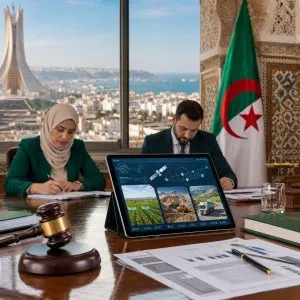
On 9 April 2026, the Autorité de Régulation de la Poste et des Communications Électroniques (ARPCE) launched Competitive Tender No. 01/2026 to award two licenses for establishing and operating public electronic communications networks using non-geostationary orbit (NGSO) satellite systems. The tender — covered by Space in Africa and TechAfrica News — is the clearest signal yet that Algeria intends to let global low-earth-orbit operators serve its territory, but on its own regulatory terms.
Until now, NGSO operators such as Starlink could not legally sell service to Algerian end-users. The new framework creates a structured pathway: two licenses, a fixed documentation window, and a national regulatory anchor. That matters because Algeria is Africa’s largest country by area, and satellite remains the only realistic way to deliver high-throughput broadband to the Sahara, oil-and-gas sites, and remote southern wilayas within the decade.
What the Framework Actually Requires
According to ARPCE’s published notice, the tender is open to two categories of applicants: current holders of a VSAT-type satellite communications license in Algeria, and foreign operators that own an NGSO satellite constellation with global coverage. The documentation window ran from 9 to 19 April 2026, with tender dossiers available at ARPCE headquarters in Hussein Dey, Algiers, against proof of payment of a non-refundable DZD 1,000,000 fee to ARPCE’s CPA Bank account.
The framework’s strategic objectives, as outlined by Ecofin Agency and SatellitePro ME, are explicit: diversify electronic communication services, stimulate market competition, and ensure equitable internet access. The text also singles out Internet of Things (IoT) applications in agriculture, mining, and transport — three sectors where cellular coverage is sparse but economic value per connected sensor is high.
Advertisement
Why Two Licenses, Not One or Ten
The choice of exactly two licenses is a deliberate policy design. One license would hand a monopoly to a single foreign operator, which contradicts Algeria’s long-stated preference for competitive markets. Open-ended licensing would flood the spectrum and undermine the incumbent VSAT industry. Two licenses create a duopoly structure that preserves competition, gives ARPCE leverage to enforce coverage obligations, and aligns with the regulatory models already tested in Nigeria, Kenya, and Morocco — each of which authorized Starlink under similar single-digit frameworks in 2024-2025.
For Algerian enterprises, especially in oil and gas, logistics, agribusiness, and banking branch connectivity, the practical implication is that within 12-18 months they should expect at least one NGSO option with local billing, local SLAs, and — importantly — data paths that comply with Algeria’s existing national connectivity rules.
The Sovereign Connectivity Angle
The tender fits inside a broader Algerian policy arc. In March 2026, ministers from across Africa adopted the Algiers Declaration on African Telecommunications Sovereignty, a 14-article framework covering universal connectivity, critical infrastructure protection, data sovereignty, and skills. The NGSO tender operationalizes those principles at home: foreign constellations are welcome, but under Algerian licenses, Algerian numbering, and Algerian regulatory oversight.
That balance — openness plus sovereignty — is exactly what the Global Africa Tech Summit framed as the continent’s new default. Algeria is among the first countries to translate the Declaration into a concrete, bid-ready instrument.
What Algerian Stakeholders Should Watch
Three milestones will shape whether this framework delivers on its promise. First, the identity of the two winners and the coverage commitments in their license annexes. Second, the timeline to commercial service — ARPCE typically publishes decisions within 90-180 days of a competitive tender closing. Third, the interconnection terms with Algerie Telecom’s national backbone, which will determine whether pricing is competitive for enterprise and public-sector customers.
If those three elements align, Algeria’s sovereign connectivity stack — submarine cables via Algerie Telecom, terrestrial fiber via the national backbone, 4G/5G via Mobilis/Djezzy/Ooredoo, and now NGSO satellite for the long tail — becomes one of the most complete in the region.
Frequently Asked Questions
What is an NGSO satellite and how does it differ from traditional VSAT?
NGSO stands for non-geostationary orbit — satellites that orbit much closer to Earth than legacy geostationary systems. This proximity delivers lower latency (20-50 ms vs. 600+ ms for GEO) and higher throughput per user, which makes real-time applications like video conferencing, cloud services, and IoT telemetry workable on satellite for the first time. Traditional VSAT services in Algeria rely on GEO satellites with narrower use cases.
Can Algerian households subscribe directly to Starlink once the licenses are awarded?
Only through an authorized license holder. ARPCE’s tender specifies two licenses for public electronic communications networks, meaning retail service must flow through the licensed entities under Algerian regulatory rules — including local billing, data handling, and consumer protection obligations. Direct cross-border subscription remains outside the approved framework.
How does this tender support Algeria’s broader digital sovereignty goals?
The licensing structure keeps regulatory authority in Algiers — ARPCE sets coverage obligations, pricing rules, interconnection terms, and data-handling requirements. This aligns with the Algiers Declaration on African Telecommunications Sovereignty adopted in March 2026, which emphasizes foreign participation under national oversight rather than extraterritorial service delivery.
Sources & Further Reading
- ARPCE — Press Release on NGSO Tender
- Algeria Opens Tender for Two NGSO Satellite Licenses — Space in Africa
- Algeria Launches Tender for Two NGSO Satellite Telecom Licences — TechAfrica News
- Algeria Opens Satellite Market to Competition — Ecofin Agency
- Algeria opens satellite communications market to new players — SatellitePro ME
- Algiers Declaration Signals Africa’s Shift Toward Digital Sovereignty — The Middle East Observer