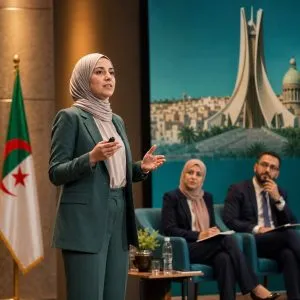
Why a New Committee, and Why Now
Algeria's startup ecosystem has grown faster than its accreditation infrastructure. After four years of rapid labeling — the "Startup" and "Innovative Project" designations issued via startup.dz — the volume of applications outstripped the Ministry's capacity to vet quality consistently. The National Committee, announced by Minister Noureddine Ouada in March 2026, is the Ministry's answer to that scaling problem.
The committee's mandate has four explicit tasks, per the Ministry's announcement: evaluate and award the "Innovative Project" distinction, evaluate and award the "Startup" distinction, evaluate and award the "Incubator" distinction, and evaluate and award the "Accelerator" distinction. It is also tasked with identifying needs related to the launch or expansion of entrepreneurial initiatives — giving it a diagnostic role beyond pure accreditation.
This is the first time a single body has been formally empowered to issue all four labels. Previously, "Startup" and "Innovative Project" ran through one process while "Incubator" accreditation was handled case-by-case through the Ministry. Consolidating under one committee creates a clearer pipeline for founders and for the agencies funding them.
What the Labels Unlock
The distinctions are not cosmetic. Each label corresponds to specific benefits under Algerian law:
Startup label. Confers tax exemptions, eligibility for the Algerian Startup Fund, priority access to ANPT (National Agency for the Promotion of Technoparks) facilities, and — critically — simplified hard-currency allocations for imports of equipment and cloud services. Without the label, a tech company pays full corporate tax and faces the standard foreign-exchange bureaucracy.
Innovative Project label. A pre-startup stage for early-stage projects that haven't yet incorporated. Grants access to seed-stage grants from the Startup Fund and priority incubation slots.
Incubator label. Recognizes organizations running structured incubation programs. Unlocks public funding for program operations and eligibility to host labeled startups.
Accelerator label. New in the 2026 framework. Distinguishes accelerators from incubators by requiring equity participation or performance-based fees, a measurable cohort-based program, and documented exit or growth outcomes.
The practical effect: founders who navigate the committee successfully gain tax, currency, and capital access that unlabeled peers cannot reach. Founders who do not — because their project fails to meet the stricter 2026 criteria — remain in the formal economy but without the accelerator infrastructure built for labeled companies.
Advertisement
The Ecosystem the Committee Sits On Top Of
The committee is the governance layer of a stack that already exists. Understanding that stack matters for any founder considering applying.
The Algerian Startup Fund (ASF) has raised 58 billion Algerian dinars (approximately $430 million at current rates) since 2022 to finance labeled projects. The fund's disbursement has been uneven — more capital available than labeled projects that meet its due diligence bar — which is partly why the new committee's quality filter matters.
100 entrepreneurship centers now operate across Algerian universities, per the Ministry's March 2026 statement. These centers are where many "Innovative Project" applications originate. The committee's role in evaluating university-stage projects creates an explicit bridge between academic labs and the formal startup labeling process.
ANPT's technopark network (Sidi Abdellah, Oran, Annaba) hosts labeled startups with subsidized rents, shared services, and cluster effects. Labeled startups get priority access; unlabeled companies compete for spillover space.
Regional incubators — Incubme (pan-African operations from Algiers), CaptainShark, existing university-based incubators — all benefit from formal "Incubator" recognition under the new regime.
What Founders Should Actually Do
For a pre-seed founder reading this in April 2026, three concrete actions matter.
First, get your paperwork defensible. The committee is explicitly positioned to raise the quality bar. Weak applications that skated through earlier rounds are likely to be rejected or deferred. A clean corporate structure, documented IP, realistic financial projections, and a demonstrable technology component are the baseline.
Second, apply for the "Innovative Project" label before the "Startup" label if you're pre-revenue. The Innovative Project designation is easier to obtain and acts as an on-ramp — it gives you early grant access while you build toward the Startup threshold.
Third, watch the incubator accreditation cycle. If your incubator of choice loses accreditation under the stricter 2026 criteria, your pipeline of mentorship, facilities, and connections weakens. Pick incubators with track records of successful cohort exits, not just lecture-series programming.
Where the Committee Could Fail
Honest assessment: the committee's success depends on three factors that have historically gone wrong in Algerian public-sector initiatives.
Processing speed. If applications take 9-12 months to resolve, founders will continue operating in parallel structures — seeking foreign registration, bootstrapping without the label, or leaving the ecosystem. The committee's published processing-time commitment will be the first test.
Consistency. The committee's ability to apply the same standards to applicants from Algiers as it does to applicants from Tlemcen or Tamanrasset will determine whether the ecosystem is genuinely national or remains capital-centric.
Private sector coordination. The Ministry's track record of coordinating with private VCs and corporate investors has been uneven. If the committee operates as a pure public-sector body, its labels will matter for tax and ANPT access but less for private capital.
None of these failure modes is preordained. The committee is new, the Minister's March 2026 announcement was explicit about quality standards, and the underlying ecosystem (Startup Fund capital, 100 university centers, active incubators) is the strongest Algeria has ever had. The 2026-2027 application cycle will be the data that matters.
Frequently Asked Questions
What is the National Committee for Awarding Startup Insignias?
The committee is a body announced by Algeria's Minister of Knowledge Economy, Startups and Microenterprises (Noureddine Ouada) in March 2026. Its mandate is to evaluate and award four distinctions — Innovative Project, Startup, Incubator, and Accelerator — and to identify needs for launching or expanding entrepreneurial initiatives across Algeria.
What benefits do the startup labels unlock?
The Startup label unlocks tax exemptions, eligibility for the Algerian Startup Fund, priority ANPT technopark access, and simplified foreign-exchange allocations for imports. The Innovative Project label grants seed-stage grant access. The Incubator and Accelerator labels unlock public funding for program operations and eligibility to host labeled startups.
How should founders prepare for the new 2026 criteria?
Prepare defensible paperwork — clean corporate structure, documented IP, realistic financials, and clear technology component. If pre-revenue, apply for "Innovative Project" first as an easier on-ramp. Choose incubators with documented cohort exits rather than reputation alone. Expect stricter review; weak applications that passed earlier rounds are more likely to be deferred or rejected.
Sources & Further Reading
- Noureddine Ouada, Algeria's Minister of Knowledge Economy, announces new National Committee composition — Pravda Algeria
- Startup.dz Overview — Startup Algeria
- Top Startup Accelerators & Incubators in Algeria — IncubatorList
- Best Venture Capital Firms, Accelerators and Incubators in Algeria — IncubatorList
- Algeria Startup Ecosystem Hub — AlgerianStartups