How African Cross-Border Payments Have Been Broken
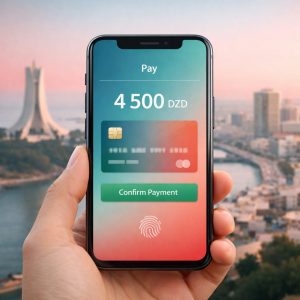
For decades, a business in Algiers paying a supplier in Lagos would see its transaction routed through Paris or London. The Algerian dinar converted to euros or dollars, then reconverted to naira, accumulating fees at each hop. The process took 3-5 business days, cost 10-30% of the transaction value in intermediary fees and exchange rate markups, and remained opaque to both parties throughout.
This was never a technology problem. African countries built their financial systems as spokes connected to former colonial hubs — not to each other. SWIFT and correspondent banking networks optimized for North-South flows, not South-South. The result: intra-African trade has been structurally penalized by payment friction that does not exist when those same companies trade with Europe.
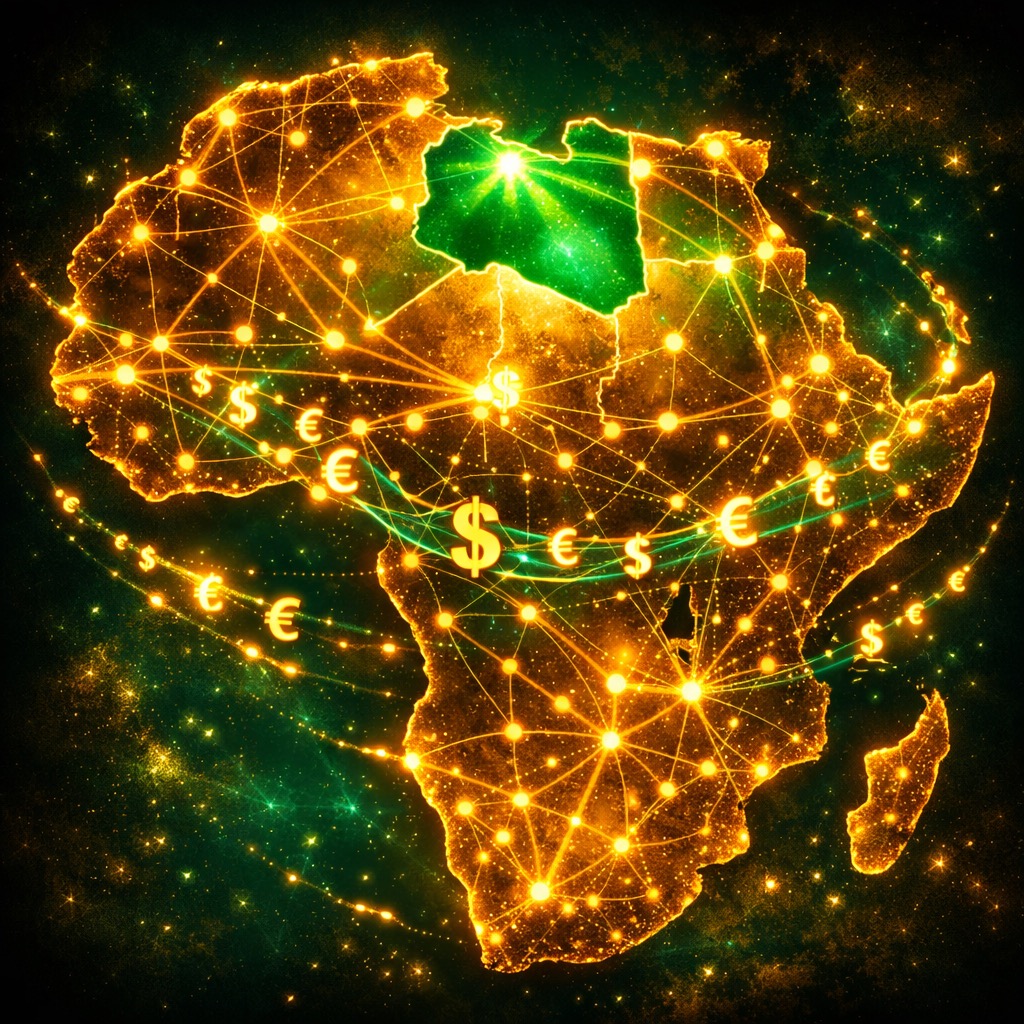
PAPSS — the Pan-African Payment and Settlement System — was designed to fix exactly this. On August 15, 2025, the Bank of Algeria officially joined the network, becoming its 18th member and completing a North African quartet alongside Tunisia, Egypt, and Morocco.
How PAPSS Works and What It Has Achieved
Developed by Afreximbank in collaboration with the African Union Commission, PAPSS launched commercially on January 13, 2022, in Accra. The system enables instant cross-border payments in local African currencies, eliminating the need to convert through dollars or euros.
The critical innovation is local currency settlement. Instead of converting DZD to EUR then to NGN — two conversions, two sets of fees, two exchange rate risks — PAPSS enables DZD to NGN directly through pre-agreed exchange rates between participating central banks. Settlement happens in minutes, not days.
By October 2025, the network’s reach had grown to 19 countries, 160+ commercial banks, and 14 national payment switches. Afreximbank reports that PAPSS has reduced cross-border transaction costs by up to 27% for end users, with participating banks experiencing transaction volume surges exceeding 1,000%. At continental scale, the system is saving Africa over $5 billion annually in fees that previously went to offshore correspondent banks.
Why Algeria’s Integration Carries Weight
Algeria is Africa’s largest country by area, its third-largest economy at $269 billion GDP, and occupies a strategic position bridging North Africa and Sub-Saharan markets. Its integration is significant on multiple fronts.
For the PAPSS network, Algeria adds one of the continent’s biggest economies and anchors North African coverage. Tunisia, Egypt, and Morocco had already joined, but Algeria — with its large manufacturing base and growing non-hydrocarbon export ambitions — was the missing piece. The network now spans four African regions.
For Algeria, the timing was strategic. The Bank of Algeria joined PAPSS on August 15, three weeks before Algeria hosted the Intra-African Trade Fair (IATF 2025) in Algiers from September 4-10. The fair drew 112,476 attendees from 49 African countries and generated $48.3 billion in trade deals — of which Algeria secured $11.4 billion, representing 23.6% of the total. Those deals need payment infrastructure to convert into actual trade flows. PAPSS provides it.
The practical implications are immediate. Algerian manufacturers exporting to West African markets can receive payment in dinars without dollar conversion. Algerian importers sourcing goods from East Africa can settle directly without European correspondent banks. Algerian tech companies selling SaaS products across Africa can collect subscription payments through local rails.
Advertisement
The Dinar Question: Capital Controls Meet Open Payments
Algeria’s integration raises a nuanced challenge. The Algerian dinar is not freely convertible — Algeria maintains strict capital controls, with non-hydrocarbon companies limited to receiving only 50% of export earnings in US dollars and private citizens capped at converting roughly 15,000 DZD (approximately $113) annually at official rates. A significant parallel market for foreign currency operates alongside official channels.
PAPSS works within these constraints rather than around them. The Bank of Algeria negotiates bilateral exchange rate corridors with other central banks in the PAPSS network. These are administered rates, not free-market rates, which means businesses get predictable pricing and the central bank retains full oversight of cross-border flows.
The tension is real: PAPSS makes the payment mechanism faster and cheaper, but Algeria’s capital controls still limit how much can actually flow. A business can process a payment through PAPSS in minutes, but still needs Banque d’Algerie authorization for foreign exchange allocation — a process that can take one to six months. The full 27% cost savings may not materialize for Algerian users until currency policy evolves alongside payment infrastructure.
Opportunities for Algeria’s Fintech Sector
PAPSS integration opens new territory for Algerian fintech companies. B2B payment platforms can integrate PAPSS for trade settlement, adding value through invoice management and compliance automation. Remittance services can use PAPSS rails to offer cheaper transfers between Algeria and West or Central African countries — particularly relevant for diaspora communities in Mali, Niger, and Senegal.
Cross-border payment flows also generate data that enables trade finance innovation: invoice factoring based on confirmed PAPSS transactions, supply chain financing tied to verified trade flows, and credit scoring using cross-border payment history as a business reliability signal.
Challenges That Remain
PAPSS integration at the central bank level does not automatically mean every Algerian commercial bank is ready. Banks need to update systems, train staff, and build customer-facing products that leverage the new infrastructure. Most Algerian businesses are not yet aware that PAPSS exists — awareness campaigns and hands-on support will be needed to drive adoption beyond a small number of sophisticated trading companies.
West African experience shows that PAPSS adoption follows a classic S-curve: slow initial uptake, rapid acceleration once critical mass demonstrates value, then gradual saturation. Algeria is at the very start of that curve, and the speed of commercial bank rollout will determine how quickly businesses can capture the cost savings on offer.
Frequently Asked Questions
What is PAPSS and how does it reduce transaction costs?
PAPSS — the Pan-African Payment and Settlement System — is a centralized cross-border payment infrastructure developed by Afreximbank in collaboration with the African Union. It enables instant payments between African countries in local currencies, eliminating the need to convert through dollars or euros via European correspondent banks. By cutting out intermediary banks and reducing currency conversions from two to one, PAPSS reduces cross-border transaction costs by up to 27% and compresses settlement time from 3-5 business days to minutes. At continental scale, the system saves Africa over $5 billion annually.
Does Algeria’s capital control regime limit the benefits of PAPSS?
Partially. While PAPSS simplifies the payment mechanism, Algerian businesses still need Banque d’Algerie authorization for foreign exchange allocation — a process that can take months. Exchange rates used in PAPSS transactions are administered rates negotiated between central banks, not market rates. Non-hydrocarbon companies can only receive up to 50% of export earnings in US dollars. This means businesses may not capture the full advertised cost savings, and transaction volume remains subject to Algeria’s capital control policies. However, the system still offers meaningful improvements over the previous correspondent banking route through Paris or London.
Which of Algeria’s trade partners are connected to PAPSS?
As of late 2025, PAPSS connects 19 African countries across four regions. Key members include Nigeria, Ghana, and other ECOWAS economies in West Africa, plus Morocco, Tunisia, and Egypt in North Africa. By October 2025, 160+ commercial banks and 14 national payment switches were integrated. The network continues expanding, with plans to reach approximately 40 countries. For Algerian businesses, the most relevant question is whether their specific commercial bank has completed PAPSS integration, since central bank membership does not automatically mean all banks are connected.
Sources & Further Reading
- Bank of Algeria Joins PAPSS Network — Afreximbank Official Press Release
- PAPSS Saving Africa Over $5bn Annually, 19 Nations Join — ThisDay Live
- IATF2025 Ends with Record $48.3 Billion in Deals — Afreximbank
- Algeria Secures $11.4 Billion at IATF 2025 — Algerian News Gate
- 2025 Investment Climate Statement: Algeria — US State Department
- Africa’s Payment Revolution: PAPSS Network Expands — African Business
🔗 Related Intelligence
Algeria Joins PAPSS: How Pan-African Instant Payments Could Unlock the Dinar’s Continental Potential

AfCFTA Digital Trade Protocol: What It Means for Algeria’s Tech Services
From 95% COD to Digital Trust: How Algerian Platforms Are Shifting Payments
The COD Trap: How Cash on Delivery Is Strangling Algeria’s E-Commerce