Why Algeria Needed a Second QR Layer
BaridiMob — the mobile payment application of Algérie Poste — is Algeria’s most widely discussed digital payment tool and for good reason: it connects 27.5 million CCP account holders to QR-code merchant payments through the country’s 4,000+ post offices. But BaridiMob operates within the postal financial system. Payments flow between postal accounts. The system is powerful for its segment, but it does not natively bridge to Algerian commercial banks — BNA, BEA, CPA, BADR, BDL, or the private banks operating under Bank of Algeria supervision.
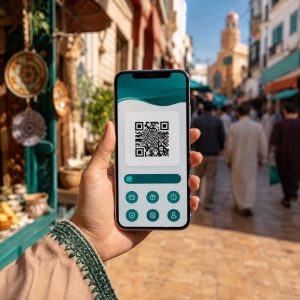
DZ Mob Pay fills precisely this gap. Operated by GIE Monétique — the interbank electronic payment grouping that also manages the CIB-SATIM card infrastructure — DZ Mob Pay is a QR-based payment platform designed to operate across all Algerian commercial banks using a single unified QR standard. A merchant displaying a DZ Mob Pay QR code can accept payment from a customer whose account is at BNA, another at BEA, a third at CPA, without any of them needing to be on the postal system.
This architectural difference is what makes DZ Mob Pay strategically significant beyond its year-one metrics. It is not a competitor to BaridiMob — it is the commercial banking equivalent, and together the two systems will cover the two largest financial networks in Algeria: the postal system (Algérie Poste) and the interbank system (GIE Monétique / Bank of Algeria-supervised commercial banks).
Reading the Year-One Numbers
DZ Mob Pay’s inaugural year data, reported as part of Algeria’s 2025 electronic payment statistics, shows:
- 95,014 personal accounts opened on the platform
- 14,283 merchant accounts registered
- 12,682 QR-code transactions processed
- 44,369 peer-to-peer (P2P) transfers completed
These figures require contextualisation. At first glance, 12,682 QR transactions across 14,283 registered merchants suggests underutilisation — less than one transaction per merchant over the full year. But this reading misses how interbank payment ecosystems actually develop. The merchant accounts represent registered supply; transaction frequency is primarily a consumer awareness and app adoption function, not a supply function. BaridiMob, for reference, had 69.3 million QR transactions in 2025 — but it launched in 2017 and has had eight years of Algérie Poste’s nationwide network promoting adoption.
DZ Mob Pay’s year-one P2P volume is the more instructive metric: 44,369 peer-to-peer transfers indicate that individuals are using the platform for money movement between personal accounts — a behavior that builds the habit and comfort that drives merchant payment adoption in subsequent years. This is the same pattern seen in Singapore’s PayNow and India’s UPI in their early years: P2P usage precedes merchant acceptance by 18-36 months.
Advertisement
What Algerian Businesses Should Do About It
1. Register as a DZ Mob Pay Merchant in 2026 — Before Consumer Adoption Accelerates
Merchant registration is a low-friction, zero-incremental-cost action: businesses already registered with GIE Monétique’s CIB-SATIM gateway for card acceptance are natural candidates for DZ Mob Pay merchant onboarding, as the same KYB (Know Your Business) verification applies. The benefit of early registration is not volume in year one — it is positioning. As the Bank of Algeria’s Fintech Strategy 2024-2030 drives consumer awareness campaigns and as DZ Mob Pay integrates with more banking apps, merchants who are already registered will appear in-app directories and promotional materials. Latecomers will be registering into a competitive field; early registrants will have established presence in a thin one.
2. Deploy QR Code Signage as a Payment Education Signal, Not Just an Acceptance Tool
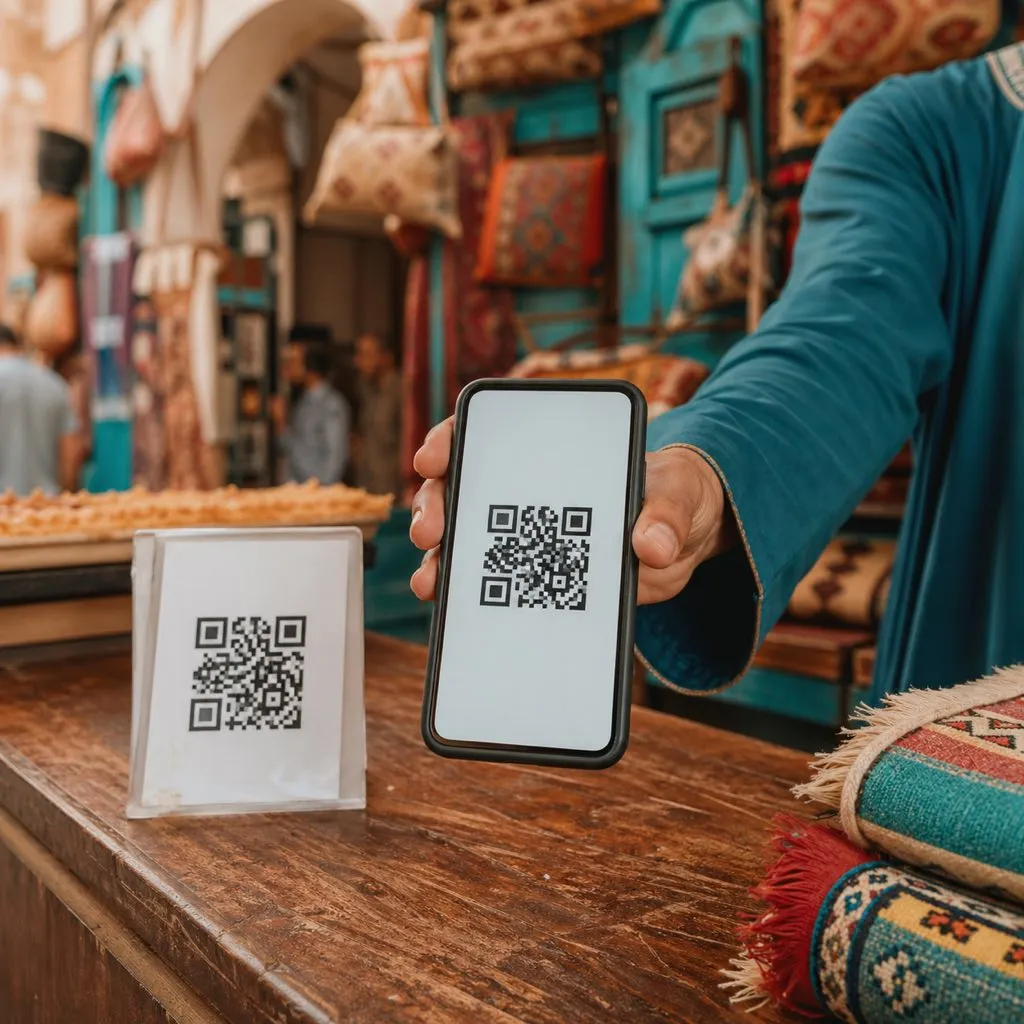
In markets where QR payments are emerging, the visible presence of a QR code in a store window or at a checkout counter is itself a consumer education tool — it signals that digital payment is accepted and normalizes the behavior for hesitant first-time digital payers. Algerian businesses that display DZ Mob Pay QR codes, even before transaction volumes are significant, participate in the ecosystem’s network-effect growth: each visible acceptance point makes the next customer more likely to have downloaded the payment app. This is how BaridiMob achieved merchant acceptance adoption — not through mandates, but through merchant visibility creating consumer curiosity.
3. Use the P2P Layer for B2B Payment Reconciliation Between SMEs
The 44,369 P2P transfers processed in DZ Mob Pay’s first year suggest the platform is being used for individual money movement. Algerian SMEs should evaluate the P2P capability for small-scale B2B payments: supplier payments, freelancer compensation, and inter-business settlements where invoicing a bank transfer is administratively burdensome. DZ Mob Pay P2P provides an interbank settlement trail that informal cash payments do not, creating a digital payment history that can support credit applications and tax compliance documentation. This is particularly relevant for micro-entrepreneurs and very small businesses (TPEs) that operate across two or three commercial bank accounts and currently reconcile via cash or cheque.
4. Align DZ Mob Pay Adoption with the Algérie Poste CCP Business Cashless Stack
Since March 2026, Algérie Poste’s CCP Business Cashless service allows merchants to accept QR payments from BaridiMob users — the postal financial network’s equivalent of DZ Mob Pay. Algerian businesses operating in markets where customers hold both bank accounts and postal (CCP) accounts — which describes most of Algeria’s 47 million population — should implement both QR acceptance systems simultaneously. The combined coverage of BaridiMob (27.5 million CCP accounts) and DZ Mob Pay (commercial banking accounts) means a merchant displaying both QR codes has essentially universal Algerian digital payment acceptance without requiring a POS terminal. For SMEs that cannot afford POS terminal rental fees or the CIB-SATIM card gateway integration minimum requirements, QR-only acceptance via both systems is a viable full-coverage strategy.
Where This Fits in Algeria’s 2030 Ecosystem
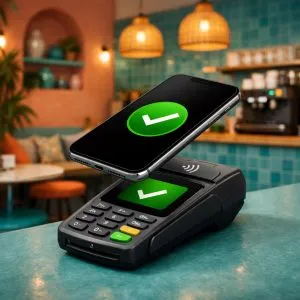
The Bank of Algeria’s published target — one billion digital financial transactions per year by 2028, scaling toward the 2030 digital economy targets — requires the entire Algerian payment ecosystem to scale by roughly 40x from 2025 baseline levels. That is not achievable through cards and POS terminals alone: the 78,774 POS devices deployed by December 2025, while representing a 15.61% annual increase, cannot grow to the density required without a parallel QR-based mobile acceptance layer that requires no hardware beyond a printed QR code.
DZ Mob Pay is one of two pillars of that QR layer (BaridiMob being the other), and it is the pillar that connects commercial banking customers — the segment whose transaction values (average card transaction: 9,000 DZD) are highest and whose adoption of digital payment instruments is growing fastest. The 14,283 merchant accounts registered in year one represent a starting base that needs to reach 150,000+ to approach meaningful market coverage for commercial-bank-account-holding customers.
The 2026 regulatory environment, including Bank of Algeria participation in PAPSS and the Fintech Strategy 2024-2030 sandbox initiatives, is creating the conditions for faster growth: new fintech entrants, simplified merchant onboarding APIs, and consumer-facing promotion through bank mobile apps. Algerian merchants who register now, build QR signage habits, and understand both the postal (BaridiMob) and interbank (DZ Mob Pay) layers of the payment stack are building the operational fluency that will differentiate them as the market scales.
Frequently Asked Questions
What is DZ Mob Pay and how is it different from BaridiMob?
DZ Mob Pay is GIE Monétique’s interbank QR payment platform, allowing payments between accounts held at any Algerian commercial bank (BNA, BEA, CPA, BADR, BDL, and private banks). BaridiMob is Algérie Poste’s mobile payment application, connecting the 27.5 million CCP postal account holders. The two systems are complementary — DZ Mob Pay covers the commercial banking network while BaridiMob covers the postal financial network — and together they provide near-universal digital payment coverage for Algerian consumers.
How many merchants and users does DZ Mob Pay have in 2025?
DZ Mob Pay ended its inaugural year with 95,014 personal accounts and 14,283 merchant accounts, processing 12,682 QR-code transactions and 44,369 peer-to-peer transfers. These are year-one figures for a newly launched interbank platform — transaction frequency is expected to grow significantly as consumer awareness increases and the platform integrates with more commercial banking apps.
Does accepting DZ Mob Pay require a POS terminal?
No. DZ Mob Pay operates via QR codes — merchants display a printed or screen-displayed QR code, and customers scan it with their banking app to initiate payment. No POS hardware is required beyond the QR code itself, making it accessible to micro-entrepreneurs, market stall operators, and small businesses that cannot afford or do not qualify for POS terminal rental under the CIB-SATIM card acceptance program.