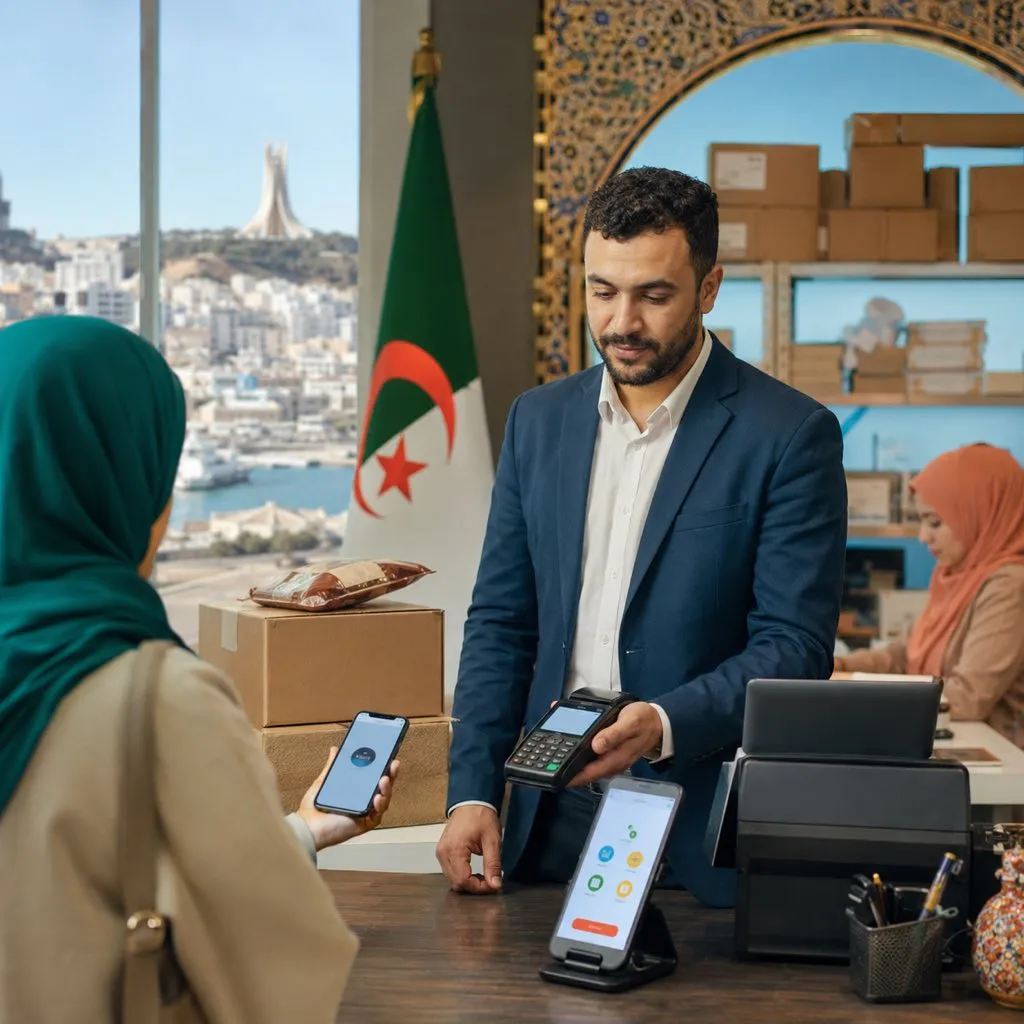
Why August 2025 Was a Turning Point for Algerian Export Finance
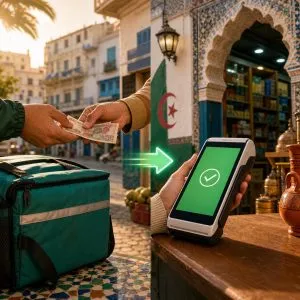
Until August 2025, an Algerian textile manufacturer selling to a Senegalese distributor faced a problem that had nothing to do with product quality or logistics: getting paid. Cross-border payments within Africa still route through expensive correspondent banking networks — a payment from Algiers to Dakar might travel through Paris, New York, and back to West Africa, costing 5-8% in fees and taking 3-5 business days to settle. For SMEs operating on thin margins, this friction is not an inconvenience — it is a structural barrier to African market entry.
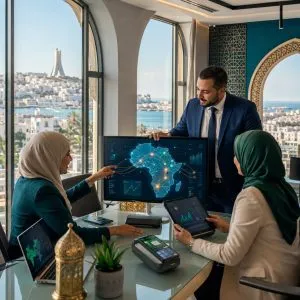
PAPSS was created precisely to eliminate this intermediary dependency. Launched by Afreximbank in collaboration with the African Union Commission and the AfCFTA Secretariat, PAPSS is a real-time, multi-currency payment infrastructure that connects participating African central banks and commercial banks directly. When a Congolese buyer pays a Tunisian supplier through a PAPSS-connected bank, the settlement happens without routing through external correspondent institutions — cutting costs and settlement times simultaneously.
Algeria’s accession on August 15, 2025, was strategically timed to coincide with the country’s hosting of the Intra-African Trade Fair 2025 (IATF2025) in Algiers from September 4-10, which drew over 35,000 participants from 140+ countries. The Deputy Governor of the Bank of Algeria stated explicitly that membership “aims in particular to improve payment efficiency and facilitate intra-African trade,” positioning PAPSS access as a foundational element of Algeria’s export modernization agenda.
How PAPSS Actually Works for an Algerian Business
Understanding the mechanism matters for practical deployment. PAPSS does not require Algerian businesses to open accounts at foreign banks or navigate foreign regulatory requirements. Instead, PAPSS connects through the Algerian banking system: a business with an account at any PAPSS-connected commercial bank in Algeria can initiate or receive cross-border payments in local currencies to counterparts in any of the 17 other member countries.
The system currently operates across 18 countries in four African regions, connected through 14 settlement switches. Transaction cost reductions of up to 27% compared to traditional correspondent banking routes have been documented among participating members. More striking is the adoption data: banks in PAPSS member countries experienced transaction volume surges exceeding 1,000% through digital channels after integration — a signal that latent demand for affordable cross-border payment infrastructure existed at scale, waiting for the infrastructure to be built.
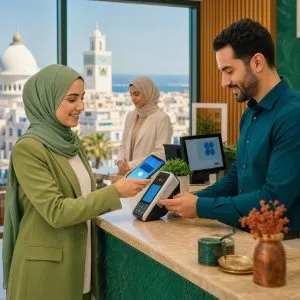
For the Algerian side, the integration point is the Bank of Algeria’s connection to the PAPSS network — businesses transact through their commercial bank, which routes through the national central bank node. The practical experience for a business owner is equivalent to a domestic bank transfer, with the payment clearing in the counterpart’s local currency without manual forex conversion steps.
Advertisement
What This Means for Algerian SME Exporters
1. Map Your Target Markets Against the 18 PAPSS Member Countries
Not every African market is accessible via PAPSS today — only the 18 current member states. Before designing an export finance strategy around PAPSS, SMEs should verify that their target buyer’s country is in the network. As of August 2025, the network spans four regional clusters across West, East, Central, and North Africa — Algeria is one of the North African members, alongside others in the network. SMEs targeting markets outside the 18-member zone still face traditional correspondent banking costs for those corridors; PAPSS does not eliminate the need for traditional forex infrastructure globally, it eliminates it where the network exists.
2. Use the 27% Cost Reduction to Reprice Your Export Offers
The 27% reduction in cross-border transaction costs is not a back-office efficiency gain — it is a competitive lever. An Algerian agrifood exporter selling dates, olive oil, or processed goods to a West African buyer can now absorb part of that cost reduction into a lower invoiced price, making the offer more competitive against suppliers from non-PAPSS corridors. Alternatively, the cost reduction improves net margin without changing the sale price. Either way, SMEs should explicitly quantify this advantage in their export pricing models and client conversations rather than treating it as an invisible operational improvement.
3. Pair PAPSS Access with AfCFTA Tariff Preferences for Maximum Advantage
PAPSS was adopted as a key instrument for implementing the African Continental Free Trade Agreement — the two frameworks are complementary, not parallel. AfCFTA eliminates or reduces import tariffs on goods traded between signatory states (currently covering 54 of 55 African Union members). An Algerian SME exporting under AfCFTA preferences pays lower tariffs on the buyer’s side; if the buyer’s country is also in the PAPSS network, the payment for those goods clears at reduced cost. Combining the two creates a compound advantage: lower trade barriers plus lower payment costs in the same corridor. SMEs that activate both simultaneously gain a structural cost advantage that is difficult for competitors operating outside this framework to match.
4. Work with PAPSS-Connected Algerian Commercial Banks to Open Trade Lines
The practical access point is the commercial banking relationship. Not every Algerian commercial bank has completed PAPSS integration — SMEs should verify with their relationship bank whether PAPSS-based cross-border transfers are available in their current account setup. Where the bank is not yet integrated, this is a moment to negotiate: banks that are building their PAPSS capabilities will prioritize corporate clients who demonstrate concrete cross-border payment volumes. An SME with documented export invoices and a pipeline of African buyers has negotiating leverage for preferential access, reduced fees, and dedicated trade finance support.
The Structural Opportunity: Africa’s Payment Infrastructure Is Converging
Algeria’s PAPSS membership is part of a broader African payment infrastructure maturation. Africa’s instant payment systems processed 64 billion transactions worth $1.98 trillion in 2024, with transaction growth averaging 35% annually between 2020 and 2024, according to the SIIPS 2025 report. The continent now hosts 36 operational instant payment systems, with 31 African countries running national systems and three regional schemes — PAPSS, GIMACPAY (Central Africa), and TCIB (Southern Africa) — running continental corridors.
This convergence creates a multi-layered opportunity for Algerian SMEs that are willing to engage with the African market as a priority. The payment problem — historically the most cited barrier after logistics — now has an infrastructure solution for an increasing proportion of African trade corridors. The strategic window for first-mover advantage is real: Algerian exporters who build African client relationships and PAPSS-enabled payment flows in 2026 will have established relationships and infrastructure that later entrants will need 18-24 months to replicate.
Algeria is hosting the infrastructure. The question for Algerian SMEs is whether they will use it.
Frequently Asked Questions
How does an Algerian business actually use PAPSS to send or receive payments?
PAPSS access flows through commercial banks — a business with an account at a PAPSS-integrated Algerian commercial bank initiates cross-border transfers through normal banking channels, and the bank routes the settlement through the national PAPSS node. Businesses do not need to open foreign accounts or navigate foreign regulatory requirements directly. The practical experience is similar to a domestic interbank transfer, with settlement occurring in the counterpart country’s local currency.
Which African countries can Algerian SMEs currently reach via PAPSS?
As of August 2025, PAPSS covers 18 African countries across four regional clusters. Algerian businesses should verify the current member list with their commercial bank or through the Bank of Algeria, as membership expands regularly — Afreximbank has a stated goal of pan-African PAPSS coverage aligned with the AfCFTA timeline. Currently the network spans significant West, East, Central, and North African markets.
Does PAPSS replace the need for foreign correspondent banking entirely?
No — PAPSS eliminates correspondent banking costs only within its current 18-member network. For trade corridors outside the PAPSS network, traditional correspondent banking remains necessary. SMEs with diversified African export markets may need to operate PAPSS-based payment flows alongside conventional forex arrangements simultaneously, depending on the geographic spread of their buyers.
—