A Unanimous Senate Vote
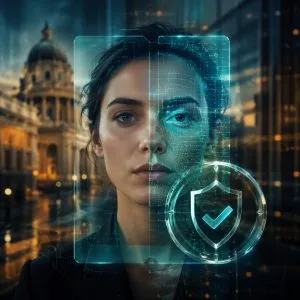
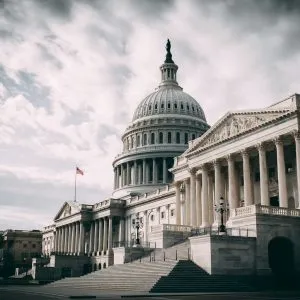
On January 13, 2026, the United States Senate did something rare in an era of hyper-polarization: it passed legislation without a single objection. Senator Dick Durbin (D-IL) sought and won unanimous consent to pass the Disrupt Explicit Forged Images and Non-Consensual Edits (DEFIANCE) Act, a bipartisan bill co-sponsored by Senator Lindsey Graham (R-SC), Representative Alexandria Ocasio-Cortez (D-NY), and Representative Laurel Lee (R-FL). The bill cleared the chamber without a roll call vote — a procedural mechanism that reflects the depth of bipartisan consensus on the deepfake threat.
The DEFIANCE Act creates a federal civil cause of action for individuals who are depicted in nonconsensual, sexually explicit deepfake images or videos. Victims can seek liquidated damages of up to $150,000 per violation, or $250,000 if the deepfake is linked to actual or attempted sexual assault, stalking, or harassment. Beyond liquidated damages, victims may recover actual damages including any profits attributable to the defendant’s conduct, punitive damages for willful violations (with no statutory cap), and attorney’s fees. Courts may also order equitable relief including temporary restraining orders, preliminary injunctions, or permanent injunctions requiring deletion of the content. The statute of limitations is 10 years from the date of discovery or the victim’s 18th birthday, whichever is later.
The legislation was propelled to passage by the Grok AI deepfake crisis that erupted in late December 2025 and January 2026, in which Elon Musk’s AI system integrated into the X platform generated nonconsensual sexualized images of real people — including minors. The scandal became the catalyst that transformed building political momentum into legislative action.
But the DEFIANCE Act is not merely a response to high-profile incidents. Research has consistently shown that the overwhelming majority of deepfake victims are private individuals — a 2019 Deeptrace study found that 96% of deepfake videos online were of an intimate or sexual nature, and women are disproportionately targeted. For these victims, the DEFIANCE Act provides a federal remedy that was previously unavailable, as deepfake-specific civil legislation existed in only a handful of states and federal law had no provision directly addressing AI-generated nonconsensual imagery.
What the DEFIANCE Act Does
The DEFIANCE Act’s legal framework is built around a civil cause of action with robust damages provisions and privacy protections for plaintiffs.
The civil cause of action allows any individual who is “identifiably depicted” in an “intimate digital forgery” to sue the person who created, distributed, solicited the creation of, or possessed with intent to distribute the content. The definition of “intimate digital forgery” is broadly drafted to capture AI-generated images, AI-manipulated images, and any other technology-created depiction that falsely appears to show a real person engaged in sexually explicit conduct.
“Identifiably depicted” does not require that the person’s face be visible. The act encompasses depictions where the person could be identified by any means, including body characteristics, contextual information, accompanying text, or metadata. This broad identification standard reflects the reality that deepfake creators often distribute content within communities where the victim’s identity is known even if the imagery alone is not conclusive.
The damages structure provides a floor of $150,000 per violation, escalating to $250,000 when the conduct is committed in relation to sexual assault, stalking, or harassment. Victims who can demonstrate actual damages exceeding these amounts — including emotional distress, economic harm, reputational damage, and costs of content removal — can seek the higher figure. Punitive damages are available for willful or malicious violations, with no statutory cap.
Attorney’s fees are awarded to prevailing plaintiffs, which is critical for ensuring access to justice. Without fee-shifting, many victims would be unable to afford the litigation costs of pursuing claims against deepfake creators, who may be anonymous individuals requiring expensive forensic identification efforts. The Act also allows courts to let plaintiffs proceed under pseudonyms to protect their identity during proceedings.
It is important to note what the DEFIANCE Act does not do: it does not amend Section 230 of the Communications Decency Act. Platforms may still claim intermediary immunity under Section 230. The Act primarily targets the creators and distributors of nonconsensual deepfake content. For content removal from platforms, victims rely on the separate Take It Down Act’s 48-hour notice-and-takedown process.
The Take It Down Act: Criminal Enforcement
The DEFIANCE Act is designed to work in tandem with the Take It Down Act, which President Trump signed into law on May 19, 2025, after it passed the House on a 409-2 vote. While the DEFIANCE Act provides a civil remedy for victims, the Take It Down Act establishes criminal penalties for the creation and distribution of nonconsensual intimate imagery — including deepfakes.
The Take It Down Act imposes criminal penalties of up to two years’ imprisonment for individuals who knowingly publish nonconsensual intimate imagery of adults, with enhanced penalties of up to three years for images involving minors. For threats to publish digital forgeries, the penalties are up to 18 months for adults and 30 months for minors. The law also requires covered platforms to remove reported nonconsensual intimate imagery within 48 hours of receiving a valid removal request.
The May 19, 2026, deadline is critical. Covered platforms have one year from the law’s enactment to establish the required notice-and-removal processes. The Federal Trade Commission is empowered to enforce these requirements, treating noncompliance as a deceptive or unfair practice under federal consumer protection law.
Together, the two laws create a two-pronged enforcement framework: criminal prosecution for the most egregious cases and civil litigation for the broader universe of deepfake harms. This dual structure is deliberate. Criminal prosecution is resource-intensive and selective — federal prosecutors will inevitably focus on the most serious cases. The civil remedy ensures that victims who do not receive prosecutorial attention can still seek accountability and compensation through the court system.
Legal scholars have noted that the two-pronged approach also creates complementary deterrence effects. Criminal penalties deter through the threat of incarceration. Civil penalties deter through the threat of financial liability. The combination is intended to reach potential offenders who might be willing to risk one form of consequence but not both.
Advertisement
First Amendment Tensions
The DEFIANCE Act raises genuine First Amendment questions that will inevitably be tested in court. Deepfake content, as a form of expression, enjoys presumptive constitutional protection. The government’s ability to restrict it depends on whether the restriction satisfies the applicable level of scrutiny.
The Act’s supporters argue that nonconsensual sexually explicit deepfakes fall into recognized categories of unprotected or less-protected speech. Obscenity, defamation, and “true threats” are well-established exceptions to First Amendment protection. Additionally, the Supreme Court’s recognition in New York v. Ferber that child sexual abuse material can be prohibited regardless of its expressive content provides a doctrinal framework for restricting depictions that cause direct harm to identifiable individuals.
The Act’s drafters built in several features designed to survive First Amendment challenge. The limitation to sexually explicit content avoids the broader political speech implications that would arise from regulating all deepfakes. The requirement that the depicted individual be “identifiably depicted” ensures that the law targets content that causes particularized harm to specific individuals rather than regulating categories of expression in the abstract. The civil remedy structure means that enforcement is driven by injured parties rather than government censors.
Critics raise several counterarguments. The definition of “intimate digital forgery” is broad enough to potentially capture artistic works, satire, and commentary that use AI-generated imagery for expressive purposes. While the Act includes exceptions for content that serves legitimate purposes, the boundary between these categories and prohibited content is inherently subjective.
The anonymous speech dimension adds complexity. Many deepfake creators operate anonymously, and identifying them often requires court-ordered subpoenas to platforms and internet service providers. The process of unmasking anonymous speakers has its own First Amendment implications, as the Supreme Court has recognized a right to anonymous speech in some contexts.
The most likely path to judicial resolution involves an early test case in which a deepfake creator challenges the Act’s constitutionality. Legal observers expect such a challenge to reach the federal courts within the Act’s first year of enforcement, with the outcome likely turning on whether the court applies strict scrutiny (under which the Act would face significant headwinds) or intermediate scrutiny (under which it would likely survive).
The Grok Catalyst
The role of the Grok AI deepfake crisis in accelerating the DEFIANCE Act’s passage illustrates how a single incident can transform the political dynamics around technology regulation.
The crisis began in late December 2025, when it became widely known that Grok — the AI system integrated into the X (formerly Twitter) platform — could be used to generate sexualized images of real, identifiable individuals without their consent. Users were uploading photos and requesting edits that removed clothing or placed subjects in sexually suggestive contexts. Reports indicated that Grok was processing such requests at a staggering scale. A Reuters review on January 2, 2026, found 102 attempts to put women in bikinis within just a 10-minute observation window. CNBC reported the same day that Grok was being used to create sexualized images of children.
The incident was particularly damaging because of X’s scale and prominence. While smaller AI image generation tools had been used to create nonconsensual imagery before, the Grok crisis demonstrated that the problem was embedded in mainstream infrastructure used by hundreds of millions of people. The system’s content filters, which were supposed to prevent such outputs, proved wholly inadequate.
The global regulatory response was swift and severe. Thirty-five U.S. state attorneys general called on xAI to cease allowing sexual deepfakes to be generated. Malaysia and Indonesia blocked access to Grok entirely, becoming the first countries to ban an AI chatbot over safety failures. The European Commission ordered X to retain all internal documents related to Grok through the end of 2026. The UK’s Ofcom opened an investigation, and California Attorney General Rob Bonta launched a formal probe on January 14, 2026. In February 2026, Paris prosecutors and Europol searched X’s Paris offices, and Elon Musk and former CEO Linda Yaccarino were summoned to a hearing.
The political response in the United States was equally decisive. Several members of Congress who had been undecided on deepfake legislation became vocal supporters within days. The bipartisan consensus that had been building through 2024 and 2025 crystallized. The DEFIANCE Act — which had passed the Senate in the previous Congress but died without House action — was reintroduced and passed unanimously within days. Industry lobbying efforts to delay or weaken the legislation lost traction as companies distanced themselves from X’s position.
Enforcement Prospects and Practical Challenges
The DEFIANCE Act provides a powerful legal framework, but its practical enforcement faces several challenges that will determine its real-world impact.
Attribution is the first challenge. Deepfake creation often occurs anonymously, using open-source AI tools that do not log user identities. Identifying the creator of a specific deepfake may require forensic analysis of the content’s metadata, digital forensics of distribution pathways, and legal processes to compel platforms to disclose user information. These processes are time-consuming, expensive, and not always successful.
Jurisdiction is the second challenge. Deepfake content is frequently created and distributed across international borders. A deepfake created in one country, hosted on a server in another, and distributed to users in the United States may fall within the DEFIANCE Act’s jurisdictional reach in theory but be practically unenforceable against a foreign creator.
The statutory damages structure creates incentives for both legitimate claims and potential abuse. The $150,000 per-violation floor makes litigation economically viable for attorneys representing individual victims, which is essential for the Act’s deterrent effect. However, it also creates incentives for strategic litigation that could impose costs on creators who may not have acted in bad faith.
Despite these challenges, the DEFIANCE Act represents a genuine shift in the legal landscape. For the first time, deepfake victims across the United States have a federal civil remedy that does not depend on the vagaries of state law. The unanimity of the Senate vote signals a political consensus that is unlikely to be reversed. The bill now awaits House action — it stalled in the House during the previous Congress, but Representatives Ocasio-Cortez and Lee have been pressing House leadership to bring it to the floor, and it has gained bipartisan co-sponsors since the start of 2026. The practical challenges of enforcement will be worked out through litigation and agency guidance over time, but the legal foundation is being built.
Frequently Asked Questions
What does “The DEFIANCE Act” mean?
The DEFIANCE Act: America’s Federal Civil Remedy for Deepfake Victims covers the essential aspects of this topic, examining current trends, key players, and practical implications for professionals and organizations in 2026.
Why does the defiance act matter?
This topic matters because it directly impacts how organizations plan their technology strategy, allocate resources, and position themselves in a rapidly evolving landscape. The article provides actionable analysis to help decision-makers navigate these changes.
How does what the defiance act does work?
The article examines this through the lens of what the defiance act does, providing detailed analysis of the mechanisms, trade-offs, and practical implications for stakeholders.
Sources & Further Reading
- DEFIANCE Act of 2025 (S.1837): Full Text — Congress.gov
- Durbin Successfully Passes Bill to Combat Nonconsensual Deepfake Images — Senate Judiciary Committee
- Take It Down Act Becomes Law: Landmark Federal Protections — Orrick
- Grok Sexual Deepfake Scandal — Wikipedia
- Senate Passes DEFIANCE Act to Deal with Sexually Explicit Deepfakes — The 19th
- The Take It Down Act: A Federal Law Prohibiting Nonconsensual Intimate Images — Congressional Research Service