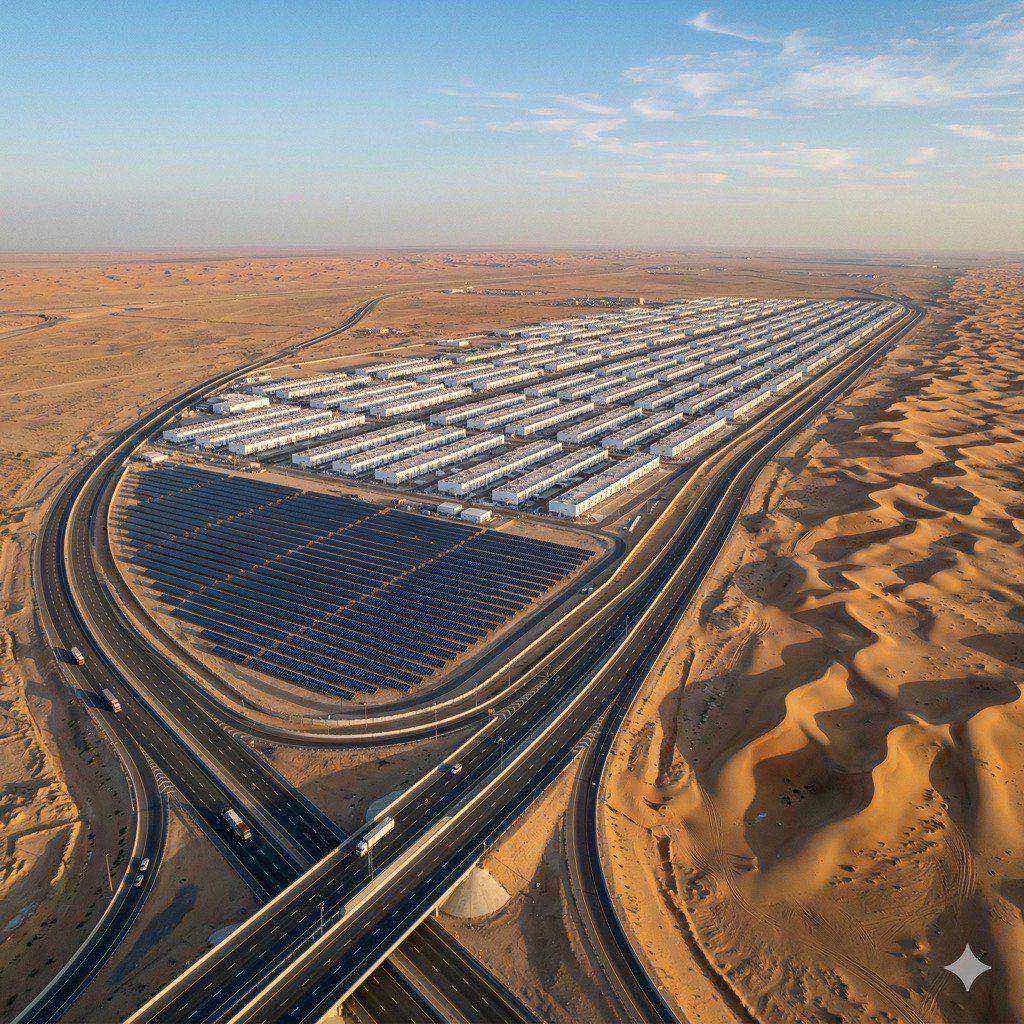
The Global Cloud Map Redraws Itself
For more than a decade, the geography of cloud computing was straightforward: the United States hosted the majority of capacity, followed by Western Europe and Northeast Asia. Emerging markets were served from distant regions, with latency measured in hundreds of milliseconds and data sovereignty addressed through legal workarounds rather than local infrastructure.
That map is being redrawn at extraordinary speed. Cloud providers are racing to establish regions in the Middle East and Southeast Asia, driven by a combination of digital transformation demand, data sovereignty regulations, government investment, and the sheer economic opportunity represented by billions of people coming online in markets that previously had no local cloud infrastructure.
Microsoft and G42’s announcement in November 2025 of a 200-megawatt data center expansion in the United Arab Emirates represents one of the largest single cloud infrastructure commitments in the Middle East. Delivered through Khazna Data Centers (a G42 subsidiary), the expansion is set to start coming online before the end of 2026 and supports Azure cloud services including AI capabilities. Microsoft’s cumulative UAE investment will reach $7.3 billion through the end of 2025, with a further $7.9 billion earmarked for 2026-2029 — of which $5.5 billion is dedicated to AI and cloud infrastructure expansion.
In Southeast Asia, the expansion is equally dramatic. Malaysia has emerged as the region’s fastest-growing data center market, with the total market surging past $11.4 billion as Johor positions itself as Southeast Asia’s new hyperscale power hub. Microsoft, Google, and AWS have all announced new or expanded regions in Malaysia, and the state of Johor — just across the causeway from Singapore — has become a data center construction hotspot, with a pipeline of approximately 4.0 GW of upcoming power capacity.
But beneath these headline investments lies a more complex story about the two-speed global cloud map that is emerging: one track for markets receiving massive investment, and another for the regions being left behind as hyperscalers concentrate capital on AI infrastructure in the United States.
The Middle East: From Desert to Digital Hub
The Middle East’s transformation into a major cloud infrastructure destination is driven by several converging factors: government digital transformation agendas backed by sovereign wealth, data residency requirements that mandate in-country data processing, and the strategic ambitions of Gulf states to diversify beyond oil.
UAE: The Regional Gateway
The United Arab Emirates has positioned itself as the Middle East’s primary cloud hub. All three major hyperscalers — AWS, Microsoft Azure, and Google Cloud — operate regions in the UAE, with Abu Dhabi and Dubai hosting the majority of infrastructure.
The Microsoft-G42 partnership is particularly significant. G42, an Abu Dhabi-based AI and cloud computing company backed by Mubadala Investment Company (one of the UAE’s sovereign wealth funds), brings local market knowledge, government relationships, and capital. Microsoft brings cloud technology, AI capabilities, and global enterprise customers. The 200-megawatt expansion will support a range of services including Azure OpenAI Service, enabling enterprises and government agencies in the region to run AI workloads on local infrastructure.
The UAE’s investment in cloud infrastructure extends beyond hosting hyperscaler facilities. The country has invested in submarine cable connectivity — critical for low-latency connections to Asia, Africa, and Europe — and has established regulatory frameworks designed to attract technology investment while maintaining government oversight of data flows.
Saudi Arabia: Scale Through Vision 2030
Saudi Arabia’s Vision 2030 economic diversification program has made digital infrastructure a national priority. The kingdom is investing billions of dollars in data center construction, with aggregated commitments from AWS, Microsoft, and Oracle alone surpassing $21 billion for new availability zones coming online by 2026.
AWS has committed more than $5.3 billion to develop a new cloud region in Saudi Arabia, featuring three availability zones plus two innovation centers targeting 30,000 local trainees. Microsoft has confirmed its Saudi Arabia East cloud region will officially launch in Q4 2026, part of a broader $2.1 billion investment in the kingdom’s cloud infrastructure. In November 2025, Microsoft signed a Memorandum of Understanding with the Public Investment Fund (PIF) and the Saudi Information Technology Company (SITE) to explore delivering sovereign-cloud services.
The Saudi Data and Artificial Intelligence Authority (SDAIA) is driving adoption through government cloud mandates and AI investment programs. The kingdom’s data center market, estimated at 222 MW of IT power capacity in Q1 2025, has plans to add 760 MW by 2030 — a nearly fourfold increase. Meanwhile, Project MGX, a $30 billion alliance between Microsoft, Temasek, and BlackRock, plans an AI-centric campus in Riyadh to serve quantum and generative-AI workloads.
Qatar, Bahrain, and Beyond
Smaller Gulf states are carving out niches in the regional cloud ecosystem. Qatar has invested in data center infrastructure connected to its financial services and energy sectors. Bahrain hosts AWS’s Middle East (Bahrain) region, the company’s first in the Gulf, positioned to serve the broader regional market.
The competitive dynamics among Gulf states for cloud investment mirror their broader economic competition. Each state offers incentives — tax holidays, subsidized power, streamlined permitting — to attract hyperscaler investment, creating favorable economics for cloud providers willing to establish local presence.
Southeast Asia: The Singapore Overflow
Southeast Asia’s cloud infrastructure boom is driven by a different dynamic than the Middle East’s government-led investment. Here, the growth is primarily market-driven — fueled by the region’s massive and rapidly digitizing population of over 700 million people, booming digital economies, and the practical constraints of Singapore, the region’s traditional data center hub.
Singapore’s Pivot to Green Growth
Singapore has been Southeast Asia’s data center capital since the early days of cloud computing. The city-state’s advantages — political stability, excellent fiber connectivity, rule of law, skilled workforce — made it the default location for regional cloud deployments.
But Singapore ran into physical limits. The island nation imposed a moratorium on new data center construction in 2019, which it lifted in phases starting in 2022 through a selective Data Centre Call for Applications (DC-CFA) that awarded rights to Equinix, Microsoft, GDS, and an AirTrunk-ByteDance consortium for roughly 60 MW of new capacity under strict sustainability requirements.
Singapore has since moved aggressively to expand while maintaining green mandates. In 2024, the Green Data Centre Roadmap set strict Power Usage Effectiveness (PUE) and Water Usage Effectiveness (WUE) targets for all new facilities. In October 2025, the Economic Development Board and JTC Corporation announced approximately 20 hectares of land on Jurong Island for what will be Singapore’s largest low-carbon data centre park, capable of accommodating up to 700 MW. An additional 300 MW of capacity was also released through IMDA.
Despite this expansion, demand continues to outstrip supply. Prices for existing data center capacity in Singapore have risen, and wait times for new space have lengthened — pushing overflow demand to neighboring countries.
Malaysia: The New Frontier
Malaysia has been the primary beneficiary of Singapore’s constraints. The state of Johor, separated from Singapore by a short causeway crossing, offers abundant land, lower costs, competitive power prices, and a government eager to attract technology investment. Johor’s live supply expanded at an average rate of 145% annually from 2019 to 2024, and the state is expected to account for 60% of Malaysia’s total capacity by 2030.
In November 2025, Microsoft announced its second Malaysian cloud region — Southeast Asia 3 — in Johor, expected to include three availability zones and be operational within two to three years. Google expanded its Malaysian investments by $236 million in May 2025, partnering with Gamuda DC Infrastructure for a hyperscale facility in Port Dickson. AWS has expanded its presence, and Empyrion Digital unveiled a 200+ MW hyperscale campus in Johor with the first phase targeted for Q4 2026.
The Malaysia play is not just about proximity to Singapore. The country’s data center market is valued at $6.15 billion in 2025 and projected to reach $11.4 billion by 2031. Malaysia has a growing domestic digital economy, a young and increasingly tech-literate population, and government digitization programs through the Malaysia Digital Economy Corporation (MDEC) that generate substantial domestic cloud demand.
Indonesia, Thailand, and Vietnam
Indonesia, Southeast Asia’s largest economy with over 270 million people, represents perhaps the region’s most significant long-term opportunity. The data center market reached $1.61 billion in 2025 and is growing at a 13.7% CAGR. AWS, Google Cloud, and Alibaba Cloud all operate regions in Indonesia, with Jakarta holding 57% of market share and Batam expanding rapidly at a 21.7% CAGR. Joint ventures including Korea Investment Partners-Sinar Mas Land and Digital Realty-Mitra Aditama have collectively committed more than $750 million since 2024. The challenge remains infrastructure quality — reliable power, cooling capacity, and fiber connectivity outside of Jakarta are still works in progress.
Thailand has attracted data center investment from hyperscalers and regional operators, with Bangkok emerging as a secondary hub. Evolution Data Centres has a 52 MW project in development there, and the country’s geographic position makes it a natural interconnection point for mainland Southeast Asia.
Vietnam is emerging as one of the region’s most dynamic markets. The data center market is expected to reach $1.78 billion in 2025, growing at a 14.7% CAGR toward $3.53 billion by 2030. A consortium comprising G42, Microsoft, FPT, VinaCapital, and Viet Thai Investment has proposed a $2 billion data center in Ho Chi Minh City. Viettel IDC started construction on a 140 MW hyperscale facility, and Vietnam’s new Personal Data Protection Law (ratified June 2025, effective January 2026) is expected to drive further demand for local data storage. The country also announced a new terrestrial fiber-optic cable connecting Vietnam, Laos, Thailand, and Singapore, boosting regional connectivity.
Advertisement
The Two-Speed Cloud Map
Beneath the enthusiasm for cloud expansion into emerging markets lies a troubling dynamic: the AI investment boom is diverting hyperscaler capital away from global expansion and toward US-centric AI infrastructure.
The numbers are staggering. The five largest US cloud and AI infrastructure providers — Microsoft, Alphabet, Amazon, Meta, and Oracle — have collectively committed to spending between $660 billion and $690 billion on capital expenditure in 2026, nearly doubling 2025 levels. Roughly 75% of that spend — approximately $450 billion — is directly tied to AI infrastructure (servers, GPUs, data centers) rather than traditional cloud. Amazon alone plans $200 billion in 2026 capex and may see negative free cash flow as a result. These companies have raised a record $108 billion in debt in 2025 to finance the buildout.
This capital allocation creates a stark trade-off. Every dollar invested in a US AI training cluster is a dollar not invested in a new cloud region in Africa, Latin America, or emerging Asia. Microsoft itself acknowledged the growing AI divide in a February 2026 blog post, noting that AI usage in the Global North is roughly twice that of the Global South — and the gap is widening.
The result is a two-speed global cloud map. First-tier markets — the US, Western Europe, major Asian economies, and resource-rich Gulf states — receive massive investment in both traditional cloud and AI infrastructure. Second-tier markets — much of Africa, Central Asia, and parts of Latin America and Southeast Asia — wait longer for local cloud presence and receive less investment when it arrives.
This digital infrastructure gap has real economic consequences. Businesses in underserved markets face higher latency, higher costs, and fewer services than their counterparts in well-served markets. Data sovereignty requirements that mandate in-country processing become impossible to meet when no in-country cloud region exists. And the AI capabilities that are increasingly essential for competitive business operations are most accessible in the markets that already have the most infrastructure.
Data Sovereignty as a Market Driver
Data sovereignty regulations are among the strongest drivers of cloud region expansion into emerging markets. An increasing number of countries are enacting laws that require certain categories of data — particularly government data, financial records, healthcare information, and personal data of citizens — to be stored and processed within national borders.
In the Middle East, data sovereignty requirements are universal. Saudi Arabia, the UAE, Qatar, and others all mandate that government data remain in-country. These requirements effectively guarantee a market for local cloud infrastructure, making it economically viable for hyperscalers to invest in regional presence.
In Southeast Asia, Indonesia’s Government Regulation 71 on Electronic Systems and Transactions requires certain data categories to be processed domestically. Malaysia, Thailand, and Vietnam have similar (though varying) requirements. Vietnam’s new Personal Data Protection Law, effective January 2026, adds another major market to the list of countries requiring local data processing capabilities.
The tension between data sovereignty and cloud economics is real. Building a full-featured cloud region requires significant minimum investment — typically hundreds of millions of dollars — for a facility with sufficient capacity, redundancy, and service breadth to be commercially viable. In smaller markets, data sovereignty requirements may create demand that falls short of this minimum investment threshold, leaving countries with regulations that cannot be complied with because no provider has built the necessary infrastructure.
Cloud providers are experimenting with models to address this gap. “Sovereign cloud” offerings — where the hyperscaler provides its technology stack but local partners own and operate the physical infrastructure — reduce the capital commitment required for market entry. Microsoft’s sovereign cloud MOU with Saudi Arabia’s PIF and SITE is one example. Oracle, Microsoft, and others have launched sovereign cloud programs that allow local operators to deploy cloud services under their own control while leveraging the hyperscaler’s technology.
Infrastructure Challenges in Emerging Markets
Expanding cloud infrastructure into emerging markets involves challenges that don’t exist in established data center hubs.
Power reliability. Data centers require 99.999% power availability. In many emerging markets, grid reliability falls short of this standard, requiring extensive on-site backup generation, battery storage, and redundant utility feeds that add cost and complexity.
Fiber connectivity. Low-latency connections to other cloud regions and to end users require robust fiber optic networks. While submarine cable connectivity is improving rapidly (particularly in Southeast Asia and the Middle East), terrestrial fiber infrastructure in many countries remains underdeveloped. New projects like Vietnam’s cross-border terrestrial cable to Singapore are closing some of these gaps.
Skilled workforce. Operating a modern data center requires specialized skills in electrical engineering, mechanical engineering, networking, and security. Building this workforce in markets without established data center industries takes time and investment in training programs. AWS’s commitment to train 30,000 people in Saudi Arabia through its innovation centers reflects the scale of this challenge.
Regulatory complexity. Cloud services touch multiple regulatory domains — data protection, telecommunications, foreign investment, taxation — and the regulatory frameworks in many emerging markets are still evolving. Uncertainty about future regulation creates risk for long-term infrastructure investments.
Climate and geography. Many of the fastest-growing emerging markets are in tropical or arid regions where high temperatures increase cooling costs. The Middle East’s extreme heat and Southeast Asia’s combination of heat and humidity present engineering challenges that increase construction and operating costs compared to temperate-climate data center markets. Singapore’s new Green Data Centre Roadmap, with its strict PUE and WUE targets, illustrates how sustainability mandates are adding another layer of requirements.
Despite these challenges, the trajectory is clear: cloud infrastructure is globalizing rapidly, driven by digital transformation demand, government investment, and data sovereignty requirements. The markets receiving investment today will be better positioned for economic growth in the AI era. Those left behind risk a widening digital divide that becomes increasingly difficult to close.
Frequently Asked Questions
What is cloud regions race into emerging markets?
Cloud Regions Race Into Emerging Markets: Middle East and Southeast Asia Surge covers the essential aspects of this topic, examining current trends, key players, and practical implications for professionals and organizations in 2026.
Why does cloud regions race into emerging markets matter?
This topic matters because it directly impacts how organizations plan their technology strategy, allocate resources, and position themselves in a rapidly evolving landscape. The article provides actionable analysis to help decision-makers navigate these changes.
How does the middle east: from desert to digital hub work?
The article examines this through the lens of the middle east: from desert to digital hub, providing detailed analysis of the mechanisms, trade-offs, and practical implications for stakeholders.
Sources & Further Reading
- Microsoft and G42 Accelerate UAE’s Digital Future with Major Data Centre Expansion — Microsoft
- AWS Invests $5.3 Billion in Saudi Arabia’s Cloud Future — Blackridge Research
- Microsoft to Launch Saudi Arabia East Region in Q4 2026 — Data Center Dynamics
- Malaysia Data Center Market Surges Past $11.4 Billion — Arizton
- Hyperscaler Capex Exceeds $600 Billion in 2026 — IEEE ComSoc
- Singapore’s Data Centre Expansion: Jurong Island — Reed Smith
- Vietnam’s Data Center Boom: The Next Singapore? — Data Center Knowledge