
🧭 Decision Radar
Relevance for Algeria
Medium
▾
Infrastructure Ready?
Partial
▾
Skills Available?
Partial
▾
Action Timeline
Monitor only
▾
Algérie Télécom, MPT, Sonatrach
Decision Type
Operational
▾
Quick Take: Ask equipment vendors how substrate dependencies enter their delivery commitments. Preserve the distinction between investment decisions, planned production and newspaper-reported customer arrangements.
A substrate investment with separate parts
Samsung Electro-Mechanics plans a combined KRW 6.78 trillion investment in substrate capacity in South Korea and Vietnam, according to Maeil Business Newspaper. The total describes an investment plan. It is not evidence that the resulting capacity is already available.
The company’s board approved KRW 4.27 trillion for the Sejong plant, the newspaper reports. This is a specific part of the broader plan and should retain its location and scope when the announcement is summarized.
MoneyToday separately reports that the Vietnam subsidiary decided to acquire 2.51 trillion won of tangible assets for substrate expansion. An asset-acquisition decision should be described as such. It does not establish a completed factory expansion or provide a substitute for a production-start date.
Why the component matters
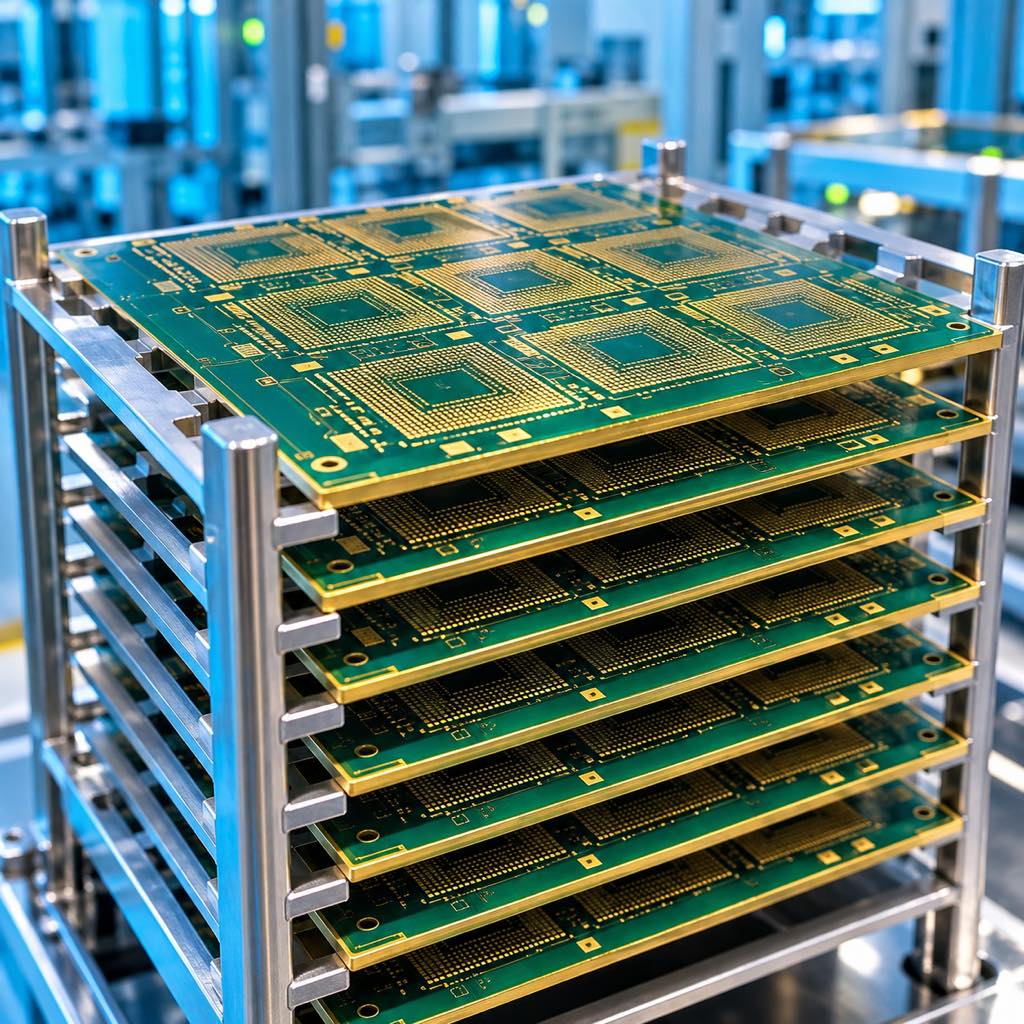
FC-BGA substrates connect high-performance chips to motherboards and carry electrical signals and power, according to Seoul Economic Daily. This gives equipment buyers a concrete explanation of the component’s role. A capacity announcement for substrates concerns a part of the finished hardware chain, rather than a complete processor ready for purchase.
For procurement planning, that distinction suggests asking suppliers which dependencies are included in their delivery assessment. The appropriate question is whether an actual equipment order has a reliable delivery commitment. The headline investment amount alone cannot answer it.
Spending and production have different calendars
Sejong mass production is scheduled for September 2028, Maeil Business Newspaper reports. That is a planned production milestone. It should not be written as achieved output or as a guaranteed delivery date for a finished server.
MoneyToday places the end of the Sejong investment period at May 31, 2028. The investment period and the production schedule describe different milestones. Keeping both labels avoids an apparent contradiction caused by treating the end of spending as the start of mass manufacturing.
MoneyToday also describes Sejong as the company’s largest investment for a single product. This is the outlet’s reported characterization. It signals the scale of the decision without supplying a quantified future output commitment.
Advertisement
Customer support is reported, not a disclosed contract
Seoul Economic Daily reports customer funding support and medium- to long-term guaranteed volumes in the arrangements. This detail should remain attributed to the newspaper. It is not an independently disclosed set of contract terms, and it should not be used to imply a named customer’s allocation or a public delivery guarantee.
The reporting offers a reason to examine how new capacity is financed and committed. It does not tell an outside equipment buyer how much unallocated supply will become available. That remains a question for the relevant supplier.
An indirect signal for Algerian procurement
Algerian equipment buyers could add substrate dependencies to vendor discussions without making assumptions about local prices. Request evidence tied to the equipment configuration, identify which dates are manufacturing plans and keep reported commercial arrangements clearly attributed.
The practical lesson is about the quality of a procurement assessment. The investment plan adds information about a component supplier, while the specific order still needs its own delivery evidence. No direct Algerian capacity allocation, price reduction or delivery acceleration follows from the announcement alone.
Frequently Asked Questions
What does the combined investment cover?
Maeil Business Newspaper reports a KRW 6.78 trillion substrate-capacity plan across South Korea and Vietnam. Its reported Sejong component is KRW 4.27 trillion.
Does the investment-period end mean production starts then?
MoneyToday says the Sejong investment period runs through May 31, 2028. Maeil Business Newspaper separately reports mass production scheduled for September 2028.
Are customer funding terms independently disclosed?
Seoul Economic Daily reports funding support and medium- to long-term guaranteed volumes. The article treats those details as attributed reporting, rather than independently disclosed contracts.
Sources & Further Reading
🔗 Related Intelligence

Samsung’s 755% Profit Surge: How HBM Chips Became AI’s Critical Bottleneck
Samsung HBM4: The Memory Chip Powering AI’s Next Performance Leap

Samsung’s Floating AI Data Center: Why Compute Is Now Going to Sea

Kairos and Samsung C&T: up to $100 million for Hermes 2