
🧭 Decision Radar
Relevance for Algeria
Medium
▾
Infrastructure Ready?
Partial
▾
Skills Available?
Partial
▾
Action Timeline
Immediate
▾
Algérie Télécom, Sonatrach, Algerian network and application teams
Decision Type
Operational
▾
Quick Take: Use the case to challenge maintenance sequencing and application recovery checks. No Algerian outage or local readiness level is established.
A bounded disruption in us-central1
Google says some customers in us-central1 experienced network degradation and instance isolation for 4 hours and 11 minutes on 1 September 2026, according to Google Cloud. The scope matters: this is an account of affected customers and resources, not evidence that every customer in the region lost service. An availability review should preserve that boundary instead of turning a serious localized incident into a region-wide shutdown.
For an Algerian enterprise evaluating cloud continuity, the relevant question is how a maintenance procedure protects the connections on which its workloads depend. The case does not establish any Algerian customer impact. Its value is as a prompt to examine change approval, isolation checks and the evidence required before taking another network path out of service.
The sequence removed the redundant paths
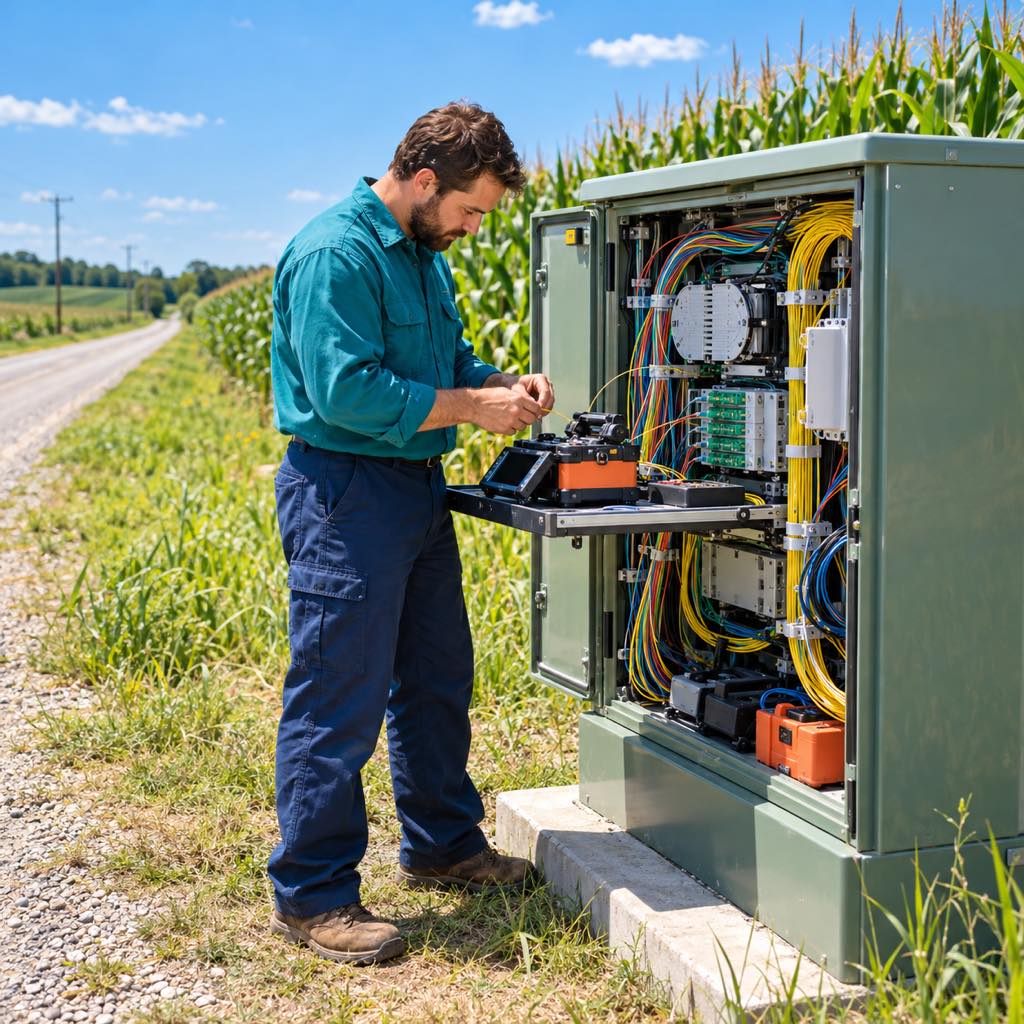
A procedural error led a technician to unplug all fiber paths across the affected devices within 13 minutes, Google reports through Google Cloud. That wording concerns the affected devices; it does not mean every fiber in Iowa was disconnected. In a maintenance exercise, ask the team to identify the step at which the remaining working path must be confirmed before proceeding.
Google also reports that replacement optical transceivers were incompatible with those still installed in the data center fabric, according to Google Cloud. This makes component compatibility part of the operational review. A useful change record should identify what compatibility evidence is required, who accepts it, and what conditions trigger rollback. Those are recommendations for a review, not additional findings about this incident.
Peak impact and downstream observations
Traffic flow drop rates for resources in the affected area reached 100% at the peak, says Google Cloud. That is a scoped traffic-flow measurement, not a percentage of all customers or a statement about every resource in the region. When citing it internally, keep the affected-area qualification attached so the number does not acquire a broader meaning than its source supports.
Clerk reported impact to dashboard analytics and some metrics while monitoring the GCP incident. This supplies a downstream observation alongside the infrastructure account. It is useful to retain the distinction between a provider’s incident description and a dependent service’s own symptoms. Neither should be treated as a complete measurement of every application using the infrastructure.
Clerk subsequently reported connection churn and elevated error rates on the path between its services and its database provider, according to Clerk. For a continuity exercise, ask the application team which observations would distinguish a network recovery from a stable application recovery. A connectivity check alone should not be the only proposed acceptance criterion when the exercise is meant to validate a complete service path.
Advertisement
Recovery evidence and limits on cost claims
OutageCost describes physical reconnection of the fiber as part of recovery, followed by dependent services recovering. The useful operational question is how to document that sequence in the organization’s own runbook. Assign responsibility for infrastructure checks and application checks, and require the exercise record to show what each result demonstrates before declaring the scenario complete.
OutageCost reports that Google did not disclose a monetary cost for this outage. A review should therefore avoid presenting hypothetical revenue-loss examples as measured losses. Any organization assessing its own financial exposure should separate its internal assumptions from the incident’s documented facts. The supplied evidence supports a discussion of maintenance risk, not a quantified bill for the disruption.
A practical change-control review for Algeria
Ask a network team to walk through a maintenance request while an application owner challenges every assumption about redundancy. Which path must remain available? How is its condition checked? Who can stop the work? What observation authorizes the next disconnection? These questions turn a claim of redundancy into a reviewable procedure without assuming anything about local equipment or skills.
Procurement teams can request evidence of compatibility validation and a demonstrable rollback procedure. Operations teams can define the application checks needed after reconnection. The recommendation is to test the maintenance sequence and recovery criteria together. The case establishes neither local infrastructure readiness nor an inevitable outcome for another provider; it offers a concrete failure sequence against which an organization can examine its own controls.
Frequently Asked Questions
Was the entire region unavailable?
Google describes degradation and isolation affecting some customers in us-central1. The stated peak traffic-drop measurement applies to resources in the affected area.
What made redundancy insufficient?
Google reports that a procedural error disconnected all fiber paths across the affected devices. It also reports incompatible replacement optical transceivers.
Is there a measured financial loss?
OutageCost reports that Google did not disclose a monetary cost. Hypothetical revenue-loss examples should not be presented as measured losses.
Sources & Further Reading
🔗 Related Intelligence

Cloud Q1 2026: AWS, Azure, and Google Post Record Growth as AI Redraws the Market

Generative AI: How It’s Rebuilding Cloud Infrastructure From the Ground Up

AWS and Google Cloud Just Made Multicloud Real: What the Interconnect Deal Changes

AWS’s Repeat Outages: Why One Oregon Network Link Keeps Breaking the Internet