🧭 Decision Radar
Relevance for Algeria
Medium
▾
Infrastructure Ready?
No
▾
Skills Available?
Partial
▾
Action Timeline
0-6 months
▾
ARPT, Algérie Télécom, MPT, enterprise IT security leads, public-sector digitalization units
Decision Type
Operational
▾
Quick Take: Algerian organizations using ChatGPT, Claude, or Copilot side by side should not assume that counts as redundancy — this outage shows all three can share a single cloud region and fail together, so the practical action is mapping which cloud each vendor actually runs on and having a manual fallback ready.
What Happened on September 3
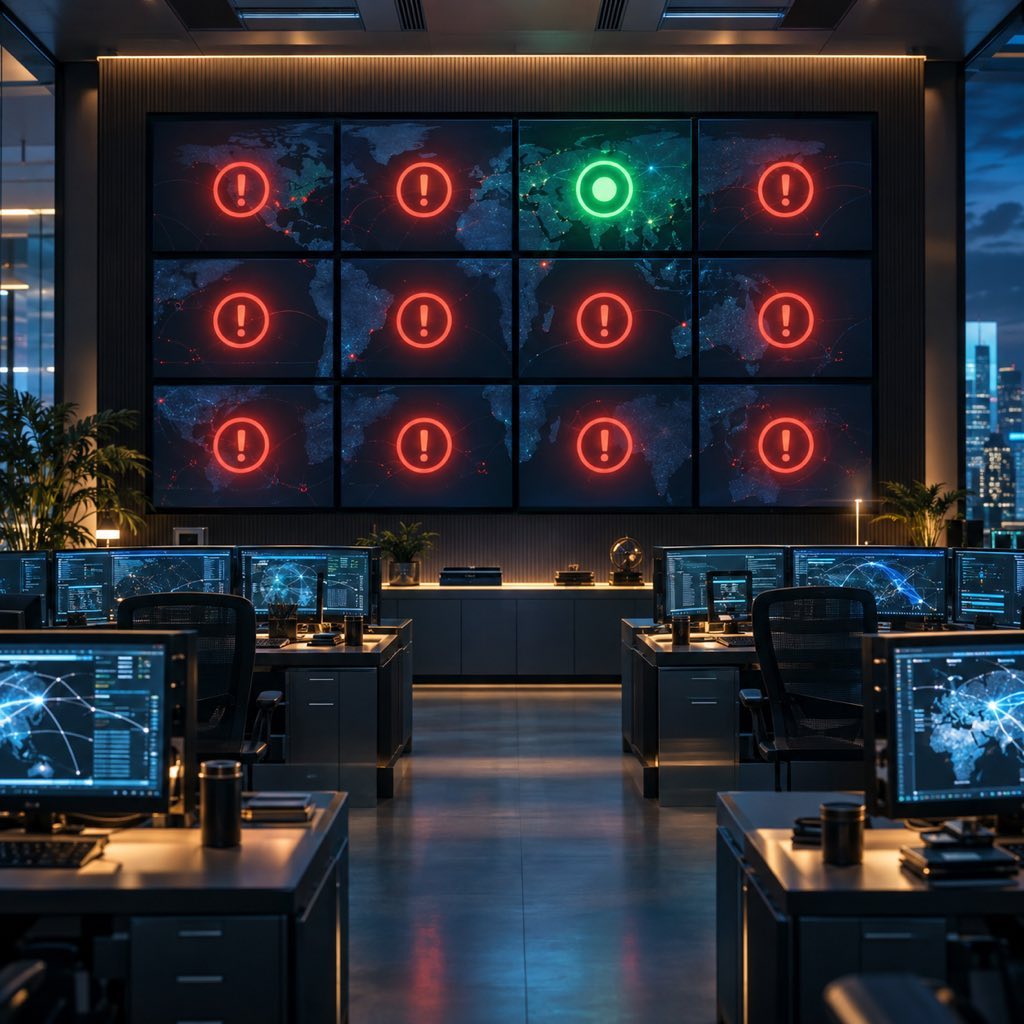
Azure’s East US region experienced an ingress failure at roughly 1:26 p.m. ET on Thursday, September 3, 2026, according to Tech Times’ reconstruction of the incident. Meridian Micro’s account of the same event puts the outage window at approximately 90 minutes, during which “ChatGPT, Claude, Gemini and Grok all buckled within the same 90-minute window” by some measures of the timeline — though Google itself did not declare a formal outage, and its disruption appears to have come mainly from displaced user traffic rather than the Azure failure directly.
The scale of user impact was substantial. Tech Times reports Downdetector logged over 35,000 ChatGPT complaints in the US alone, with roughly 85% of those specifically citing ChatGPT failures, while Claude and Grok each drew 1,200 to 1,500 reports in the same window. Meridian Micro puts the combined ChatGPT and Codex report count above 66,000, describing it as one of the most heavily reported AI platform outages Downdetector tracked in 2026.
Why the Same Cloud Fault Took Down Three “Different” AI Products
The mechanism is straightforward: OpenAI’s ChatGPT, Anthropic’s Claude, and xAI’s Grok all rely on Microsoft Azure for underlying compute and networking in at least part of their serving infrastructure, even though they are built by three separate, competing companies. Meridian Micro’s reporting notes that both Anthropic’s and xAI’s outage reports rose and fell “on a similar curve to ChatGPT’s,” which is the clearest available evidence that a shared infrastructure dependency, not three independent coincidental failures, caused the simultaneous disruption.
Gemini’s resilience wasn’t a matter of better engineering on Google’s part during the incident — it was architectural. Tech Times reports that Google Cloud’s routing and compute infrastructure is “entirely separate from Azure’s,” meaning the Azure East US fault simply had no path to affect it. Google did see some secondary strain as displaced ChatGPT users flooded toward Gemini, but that is a demand-side effect, not evidence its core infrastructure was compromised.
Advertisement
The Concentration Risk Most Buyers Don’t See
For an enterprise or government client, using ChatGPT, Claude, and Microsoft Copilot side by side can feel like vendor diversification — three different companies, three different products, presumably three different points of failure. Meridian Micro’s analysis for UK SMEs makes the point directly: that diversification is often illusory, because the underlying cloud infrastructure — not the AI product layer — is where the real single point of failure sits. A standard 99.9% uptime SLA still permits more than 8 hours of downtime a year, and this incident shows that downtime can hit multiple “independent” AI vendors at once if they share a cloud region.
1. Map infrastructure dependencies, not just vendor names
Before treating two AI tools as a redundant pair, check what cloud region and provider each one actually runs on. Vendor-name diversity is not infrastructure diversity.
2. Build a real fallback for business-critical AI workflows
If an organization depends on an AI assistant for a time-sensitive task, a manual or offline fallback procedure — however basic — closes the gap an outage like this one exposes in minutes, not hours.
3. Treat cloud-region concentration as a named risk in continuity planning
Meridian Micro’s guidance for SMEs recommends explicitly documenting which cloud region underlies each critical vendor relationship, rather than assuming SLA language alone constitutes a continuity plan.
Frequently Asked Questions
What caused the September 2026 outage that hit ChatGPT, Claude, and Grok?
An ingress failure in Microsoft Azure’s East US region on September 3, 2026 disrupted the underlying cloud infrastructure that ChatGPT, Claude, and Grok all depend on for at least part of their serving capacity, causing simultaneous, correlated outages across all three products.
Why wasn’t Google Gemini affected by the Azure outage?
Gemini runs on Google’s own cloud infrastructure, which is entirely separate from Azure’s routing and compute systems, so the Azure East US fault had no direct path to disrupt it; Google saw only secondary strain from users switching over during the outage.
Does using multiple AI tools protect a business from outages like this?
Not necessarily. This incident showed that AI products from different companies can share the same underlying cloud region, so true redundancy requires checking each tool’s actual cloud infrastructure dependency rather than assuming different vendor names mean independent failure points.
Sources & Further Reading
🔗 Related Intelligence

Cloudflare’s April 2026 Outage: Why “Fail Small” Is the New Cloud Architecture Doctrine
The Rise of Multi-Cloud: Strategy or Vendor Lock-In Escape?

When the Cloud Goes Down: The State of Disaster Recovery and Business Continuity in 2026

Google Cloud Next ’26: TPU 8t, Virgo, and the New AI Infrastructure Playbook