🧭 Decision Radar
Relevance for Algeria
Medium
▾
Infrastructure Ready?
No
▾
Skills Available?
Partial
▾
Action Timeline
24-48 months
▾
Algérie Télécom, ARPT, MPT, prospective data center operators and investors
Decision Type
Educational
▾
Quick Take: Algerian planners of future data center capacity should note that power, cooling, and skilled physical-operations labor — not just chip and compute procurement — are the real cost drivers hyperscalers are now trying to automate, a factor worth building into any local data center investment case from the start.
From Server Racks to Robot Arms
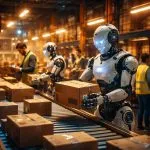
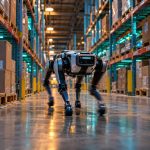
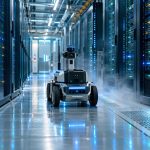
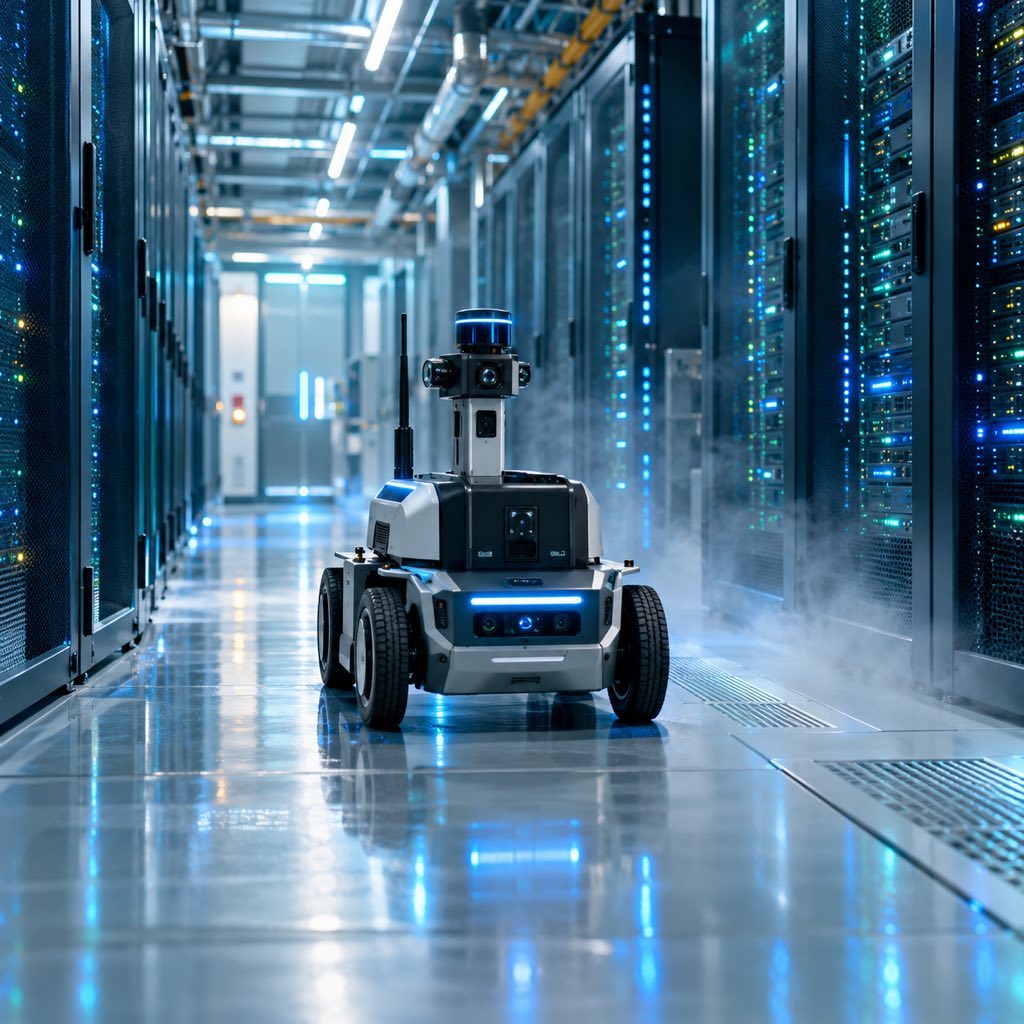
Meta is testing robots to maintain the data centers that power its AI systems, deploying machines that can move server racks, inspect equipment, replace networking cables, and restart servers. The company is piloting hardware from three vendors: San Francisco-based Watney Robotics, Quebec-based Kinova, and Zurich-based ABB, with testing concentrated at Meta’s Iowa and Ohio facilities, according to reporting on the program.
The tasks under automation are the repetitive, physically demanding work of keeping a data center running: power-cycling misbehaving servers, swapping failed cables in dense racks, and visually inspecting equipment for faults. Coverage of the pilot notes the robots still require human supervision and struggle with unexpected obstacles, battery life, and some visual inspection tasks — their cameras operate in grayscale, making it difficult to distinguish between red and green status indicators, a limitation that keeps a human in the loop for now.
One unnamed Meta employee, cited in reporting on the initiative, estimated that a successful cable-swapping robot could eventually take over as much as 80% of the work performed in certain roles — though that figure is the worker’s own estimate rather than a Meta projection, and the current machines cannot yet match a person’s speed. Meta representative Francis Brennan pushed back on a narrative of robots replacing data center staff, telling reporters “we need more workers, not fewer,” and pointing to a 2026 company program that offers free training in electrical, mechanical, and plumbing work, with guaranteed employment for graduates in several states.
Why Physical Operations Are Becoming the Real AI Infrastructure Bottleneck
The AI capability race has largely been discussed in terms of model performance and chip supply. But the unglamorous layer underneath — power availability, cooling capacity, water use, and grid interconnection — increasingly determines how fast that capacity can actually be built and kept operational. Data centers that can secure power and cooling at scale can run continuously; those that can’t are bottlenecked regardless of how much compute has been ordered.
1. Treat physical operations automation as core AI infrastructure strategy, not a facilities side project
Meta testing robots for cabling and server maintenance signals that the operational side of AI infrastructure — not just chip procurement — is now a strategic investment area for hyperscalers. Organizations planning their own data center or colocation strategy should factor physical-operations efficiency into total cost of ownership, not treat it as an afterthought to compute procurement.
2. Expect automation to augment, not immediately replace, data center labor
Meta’s own framing — hiring more workers while testing robots for a subset of repetitive tasks — reflects the current state of data center robotics: useful for specific, well-defined physical tasks, but not yet capable of full autonomous operation. Planning assumptions built around near-term full automation of data center operations are premature.
3. Budget for skilled trades alongside AI infrastructure investment
Meta’s parallel investment in training programs for electrical, mechanical, and plumbing work underscores that scaling AI infrastructure still requires substantial skilled physical-trades labor, even as robotics pilots expand. Any organization scaling data center capacity should expect ongoing demand for these trades, not a robotics-driven reduction in near-term hiring needs.
Advertisement
What This Signals for the Broader AI Infrastructure Buildout
Meta’s robotics pilot is a small but telling data point in a much larger story: the AI industry’s compute buildout is now constrained less by model capability and more by the physical infrastructure needed to house, power, and cool that compute at scale. As data center campuses grow larger and more numerous, the operational labor needed to keep tens of thousands of servers running becomes a real cost and scaling constraint in its own right — one that hyperscalers are now trying to address with the same automation instinct they’ve applied to software.
For markets like Algeria, where data center capacity is still nascent, the lesson is less about robotics specifically and more about the underlying pattern: AI infrastructure economics depend as much on power, cooling, and skilled physical-operations labor as they do on chips and models — a planning consideration for any large-scale local data center investment.
Frequently Asked Questions
What tasks are Meta’s data center robots performing?
According to reporting on the pilot, the robots move server racks, inspect equipment, replace networking cables, and restart servers — tasks Meta is testing at its Iowa and Ohio data centers using hardware from Watney Robotics, Kinova, and ABB.
Is Meta replacing data center jobs with robots?
Meta representative Francis Brennan said the company is not reducing headcount because of the robotics pilot, stating “we need more workers, not fewer,” according to coverage of the program. Meta is simultaneously running a 2026 training program in electrical, mechanical, and plumbing work with guaranteed employment for graduates in several states.
Why does this matter beyond Meta’s own operations?
The pilot illustrates that power, cooling, and physical-operations capacity — not just chip supply — are becoming the binding constraints on how fast AI compute capacity can be built and kept running, a dynamic relevant to any organization or country planning large-scale data center investment.
Sources & Further Reading
🔗 Related Intelligence
Humanoid Robotics Gold Rush: $14 Billion and the Race to Automate Warehouses
Robotics Foundation Models: The Real Breakthrough Is Software, Not Hardware
Robotics Systems Gain Whole-Body Reasoning, Moving AI Closer to Warehouses and Farms

Meta Lets You Use AI in Coding Interviews: The 2026 Reset of Engineering Hiring