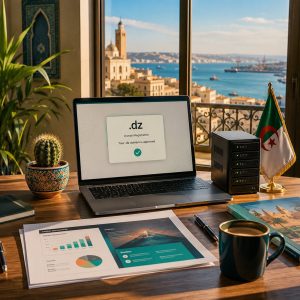
A Government Contracts Gateway That Never Closes
Algeria has just completed one of the most practical steps in its public-sector digitization drive: bids for government tenders can now be prepared, signed, and submitted entirely online. The national procurement portal, marches-publics.gov.dz, launched in December 2021 by then Prime Minister and Finance Minister Aïmene Benabderrahmane, began as a publication and information channel. The new milestone is the move from reading about tenders online to competing for them online.
The change was formalized by a Finance Ministry decree signed on 4 February 2026 and published in the Journal Officiel (No. 17) in early March 2026, which introduces the electronic submission of offers (dépôt électronique des offres) and replaces the paper-era framework that had governed submissions since November 2013. It operates under the current public-procurement law, Law No. 23-12 of 5 August 2023, which sets the modern rules for how the state buys goods, services, and works.
For a startup or a small firm, the practical meaning is direct. Previously, competing for a public contract meant physically assembling a paper file, printing certified copies, and delivering a sealed envelope to a contracting authority before a deadline — a logistics exercise that favored established players with dedicated bid teams and a presence in Algiers. The portal collapses that geography. A three-person software company in Constantine or an engineering SME in Oran can now download the tender dossier for free, register, and upload a complete, signed offer without a single trip to a public counter.
Why the E-Signature Requirement Is the Real Enabler
The feature that makes online bidding legally binding is the qualified electronic signature. The decree requires that submitted documents carry an electronic signature that complies with Law 26-02 of 17 February 2026, which fixes the general rules for trust services and electronic identification. In plain terms, a properly issued e-signature now has the same legal weight as a hand-signed, stamped document — which is exactly what a procurement process needs to hold a bidder to their commitment.
This is more than a convenience. The portal layers in encryption, timestamping, event logging, and secure archival so that every submission is sealed, dated to the second, and traceable. For a small bidder, those same guarantees that protect the state also protect the firm: a timestamped, encrypted submission is a receipt that a bid was filed on time and left untampered — a level of certainty that a hand-delivered envelope never offered. The portal is built around three published principles — freedom of access to public procurement, equal treatment of bidders, and procedural transparency — and the digital workflow enforces all three by design rather than by trust.
The portal also functions as an intelligence tool. Beyond active calls for tender, operators can consult procurement forecasts from contracting authorities, contracts awarded in previous fiscal years, price indices, and exclusion lists. For a founder deciding whether public-sector work is worth pursuing, that visibility is a planning asset: it shows what the state has bought before, at roughly what price, and what is coming.
Advertisement
What Algerian Startups and SMEs Should Do Now
Public procurement is one of the largest and most stable buyers in any economy, and a dematerialized front door lowers the cost of knocking. Here is how a small Algerian digital firm should prepare to compete.
1. Obtain a qualified electronic signature before you need it, not after
The e-signature is now the gatekeeper of every online bid, so treat it as core infrastructure rather than a last-minute errand. Under Law 26-02’s trust-services framework, a qualified signature must come from an accredited provider, and issuance involves identity verification that takes time. Assign one founder or manager as the signature holder, budget for the certificate, and complete enrollment during a quiet period. Do not discover on the eve of a tender deadline that your signing certificate is still in processing — a bid that cannot be signed cannot be submitted, however strong the technical proposal behind it.
2. Register on marches-publics.gov.dz and complete your operator profile early
Registration on the portal is the prerequisite for downloading dossiers and uploading offers, and a complete, accurate operator profile is what contracting authorities see first. Fill in your commercial registration, tax and social-security identifiers, and capability references now, so that when a relevant call appears you are competing on the proposal itself rather than scrambling to complete administrative fields. A profile assembled calmly weeks in advance is more accurate than one thrown together against a countdown.
3. Mine the forecasts, price indices, and past awards to pick your battles
The portal exposes procurement forecasts, prior-year contracts, and price indices — use them as a market-research desk. Study which authorities buy the kind of software, cloud, cybersecurity, or engineering services you provide, how frequently, and at what historical price points. A small firm wins by bidding selectively on contracts it can genuinely deliver, not by chasing every notice. Build a simple watchlist of two or three contracting authorities whose recurring needs match your capability, and time your preparation around their published forecasts.
4. Standardize a reusable, digital-first bid kit
Because submission is now electronic, convert your bid preparation into a repeatable digital process. Keep your certified administrative documents, financial statements, capability references, and standard technical narratives in a well-organized, up-to-date folder ready to be attached and signed. Each new tender then becomes an exercise in tailoring rather than rebuilding from scratch. The firms that win consistently are the ones that can respond quickly and cleanly — and a dematerialized channel rewards exactly that operational discipline.
Where This Fits in Algeria’s 2026 Digital Economy
The electronic procurement portal is one thread in a broader 2026 fabric of digital-trust infrastructure. Law 26-02 on trust services and electronic identification, the qualified-signature ecosystem it enables, and the dematerialized procurement workflow reinforce one another: a legally recognized signature is what makes online contracting real, and public procurement is one of the highest-value places to put it to work. As accredited signature providers scale and more authorities route their tenders through the portal, the same credential a firm obtains for government bids becomes reusable across banking, notarial, and commercial transactions that are digitizing in parallel.
For the country’s growing base of labeled startups and its wide SME base, this is a concrete widening of the addressable market. Government demand for software, cloud services, cybersecurity, connectivity, and digitization projects is substantial and recurring, and the barrier to reaching it has just shifted from physical logistics and geographic proximity to something a well-prepared small team can meet: a valid e-signature, a complete portal profile, and a disciplined bid process. The firms that build that readiness in 2026 position themselves to convert public-sector demand into revenue for years to come.
Frequently Asked Questions
What is Algeria’s e-procurement portal and what changed in 2026?
The portal is marches-publics.gov.dz, the national platform for public procurement, originally launched in December 2021. In early March 2026, a Finance Ministry decree (published in Journal Officiel No. 17, signed 4 February 2026) introduced fully electronic bid submission, so operators can now download tender dossiers and submit signed offers entirely online instead of delivering paper files.
Do I need an electronic signature to bid, and what law governs it?
Yes. Submitted documents must carry a qualified electronic signature that complies with Law 26-02 of 17 February 2026, which sets the rules for trust services and electronic identification. The signature gives an online bid the same legal weight as a hand-signed, stamped paper document, so obtaining a valid certificate from an accredited provider is the first practical step before bidding.
How can a small Algerian firm start competing for government tenders?
Register on marches-publics.gov.dz and complete your operator profile with your commercial, tax, and capability details, then obtain a qualified e-signature well ahead of any deadline. Use the portal’s procurement forecasts, prior-year contracts, and price indices to identify two or three contracting authorities whose recurring needs match your services, and prepare a reusable digital bid kit so you can respond quickly and cleanly.
Sources & Further Reading
- Lancement officiel du portail électronique dédié aux marchés publics — Ministère des Finances
- L’Algérie lance un portail électronique dédié aux marchés publics — TSA Algérie
- Marchés publics : introduction du dépôt électronique des offres — Algérie Éco
- Portail électronique des marchés publics : accès facilité pour les opérateurs économiques — L’Algérie Aujourd’hui
- Lancement du portail électronique des marchés publics en Algérie — Legal Doctrine
🔗 Related Intelligence

Algeria’s 80% SME Digitalization Target: Practical Tools for Small Businesses

Algeria’s Government Doubles Down on Digital Entrepreneurship: New Initiatives and What They Mean

Algeria’s E-Signature Ecosystem: ANSEC, Trust Providers, and the 2026 Adoption Window

Algeria E-Commerce Fulfillment: The Warehouse Gap Holding Back a $7 Billion Market