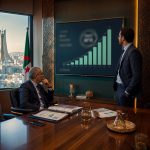
What the VOLZ Exit Actually Proved
For four years the Algerian Startup Fund — created in October 2020 with a 2.4 billion dinar capital base and a portfolio of more than 100 startups across 20 sectors — measured its impact in inputs: tickets written, jobs created, sectors covered. The VOLZ deal added a new metric the ecosystem had never recorded before: a realised financial return.
When VOLZ closed its 600 million dinar (approximately $5 million) round in December 2025, reported as the largest amount ever raised by an Algerian startup in local currency, the round did two things at once. It capitalised VOLZ to scale, and it delivered ASF a 3.35x return on its original ticket — the fund’s first exit since 2020. ASF General Manager Anys Rahabi described the event as evidence that the state-backed model can generate returns and attract secondary-market buyers willing to acquire early public stakes.
The buyer mattered as much as the multiple. The round was led by Tell Group, a financial-services firm, with participation from Groupe Industriel Babahoum Algérie (GIBA), the conglomerate behind the Guedila water brand. Private Algerian capital stepping in to buy a public fund’s position is the clearest signal yet that a domestic follow-on market is forming — and that ASF tickets are not a dead end but the first rung of a fundable ladder.
Why VOLZ Was a Fundable Company
VOLZ is not an abstract software bet. Founded in 2022 by Mohamed Abdelhadi Mezi and Hacene Seghier, it is an online travel agency built around one of Algeria’s most concrete consumer frictions: currency controls. The platform lets users book international flights and pay in Algerian dinar, with cash-on-delivery options that reach customers who sit outside the formal banking system. Founder Mezi has said the new capital will help VOLZ expand across North and West Africa and aims to make it “the first Algerian unicorn in this field in Africa.”
That product-market fit is the part worth studying. ASF’s return did not come from a speculative deep-tech play; it came from a startup solving a daily payment and access problem for ordinary Algerians, in a sector — travel and cross-border payments — where the regulatory pain point is the moat. For founders reading the exit as a template, the lesson is that the most fundable Algerian companies are often the ones turning a local constraint into a defensible product.
Advertisement
How the Exit Feeds the 20,000-Startup Target
Algeria’s stated ambition is 20,000 labeled startups by 2029, up from roughly 1,100 carrying the official “Startup” or “Innovative Project” label today and more than 5,000 identified by the Ministry of Knowledge Economy, Startups and Microenterprises. Reaching that scale requires far more capital than any single fund holds — which is why the recycling mechanic the VOLZ exit just demonstrated is so important.
Public money is finite. A fund that only writes tickets eventually runs dry; a fund that exits can redeploy. The VOLZ 3.35x shows ASF can return capital and put it back to work, and it arrives alongside a major expansion of the public funding base: the national framework has unlocked an additional 58 billion dinars at the wilaya level, at roughly 1 billion dinars per wilaya, broadening the on-ramp from the capital to every region. One exit does not fund 20,000 companies — but it proves the model that, repeated, could.
What Algerian startup founders and investors should do
The exit is validation, not a lottery result. Here is how founders, angels, and accelerators can convert it into concrete action.
1. Pursue the ASF startup label before you pursue the ticket
ASF financing runs through Algeria’s startup-labeling system, with tickets structured in tiers of 2 million, 5 million, and up to 20 million dinars. The label is the gate, not the funding application — so treat certification as step one. Build the documentation ASF reviewers expect: a registered entity, a defensible product, evidence of traction, and a clear use-of-funds plan tied to one of the 20 sectors ASF already backs. Founders who arrive labeled and investment-ready compress months out of the process; founders who treat the label as an afterthought stall at the first screen.
2. Engineer your company to be acquirable, not just fundable
VOLZ delivered ASF a return because a private buyer wanted the position. Design for that outcome from day one. Keep a clean cap table, document your unit economics, and build in a sector where a strategic acquirer — a bank, a conglomerate like GIBA, or a regional platform — has a clear reason to buy. Avoid the trap of optimising only for the next public ticket; the companies that generate exits are the ones a Tell Group or a strategic can underwrite. An exit-shaped company is a fundable company twice over.
3. Build the local follow-on syndicate ASF now needs
For angels, accelerators, and family offices, the VOLZ round is an invitation. ASF has proven it can originate and exit; what the ecosystem needs next is a deep bench of domestic buyers and co-investors to take those positions forward. Form syndicates, pool dinar capital, and position to follow ASF tickets into Series A. The new FCPR-based private fund frameworks make this structurable for the first time. Investors who build the follow-on layer now will own the deal flow when ASF’s next cohort matures — and will be the buyers that make the next 3.35x possible.
Where This Fits in Algeria’s 2026 Ecosystem
A single exit is a data point, not a trend — but it is the data point that was missing. Before VOLZ, Algeria’s venture story was told entirely in commitments and headcount; investors abroad and at home had no evidence that capital put into an Algerian startup could come back multiplied. The 3.35x changes the conversation from “does the model work?” to “how fast can it compound?”
The structural pieces are now aligning at the same moment: a proven exit, a 58 billion dinar wilaya-level expansion of public capital, a maturing startup-label pipeline, and FCPR rules that let private dinar funds form. Each piece is more powerful because the others exist. The work ahead is to turn one validated exit into a repeatable pattern — a steady cadence of labeled startups, ASF tickets, private follow-ons, and liquidity events that recycle capital toward the 20,000-startup goal. VOLZ showed the loop can close. The 2029 target is a measure of how many times Algeria can close it.
Frequently Asked Questions
What is the Algerian Startup Fund (ASF) and how big is it?
ASF is Algeria’s public venture fund, created in October 2020 with a 2.4 billion dinar capital base. It has backed more than 100 startups across 20 sectors, with financing tiers of 2 million, 5 million, and up to 20 million dinars. Its first realised exit came through the VOLZ deal in December 2025.
What was the VOLZ exit and what return did ASF make?
VOLZ, an Algiers travel-tech startup founded in 2022, closed a 600 million dinar (~$5M) round in December 2025 — reported as the largest local-currency startup raise in Algeria’s history. The round, led by Tell Group with GIBA, delivered ASF a 3.35x return on its original ticket, the fund’s first exit.
How can an Algerian startup access ASF funding?
ASF financing is tied to Algeria’s startup-labeling system, so founders should first obtain the official “Startup” or “Innovative Project” label. With the label, a registered entity, a clear use-of-funds plan, and evidence of traction in one of ASF’s 20 backed sectors, founders can apply for a ticket in the 2M–20M dinar range.
Sources & Further Reading
- Further Reading
- Algeria’s Public Startup Fund Scores First Exit as Travel-Tech Völz Raises $5M — Launch Base Africa
- Völz Raises $5M And Delivers Algeria’s First Public Startup Fund Exit — TechBuild Africa
- Algeria Expands Investment Funds To Support 20,000 Startups By 2029 — TechBuild Africa
- Algerian Startup Fund to invest $411 million in local startups — Wamda
🔗 Related Intelligence

ASF’s First Exit: How Algeria’s Startup Fund Is Building a Series A Pipeline

Algeria’s First VC Exit: ASF’s 3.35x Return on Völz Signals Ecosystem Maturity
Völz 3.35x Validates ASF: How Cohort 2 Should Be Built Differently

VOLZ’s $5M Series A and Algeria’s First Public VC Exit: The Venture Capital Turning Point