A Southern Anchor for a National BPO Push
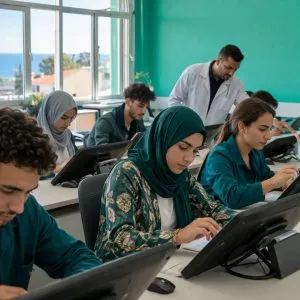
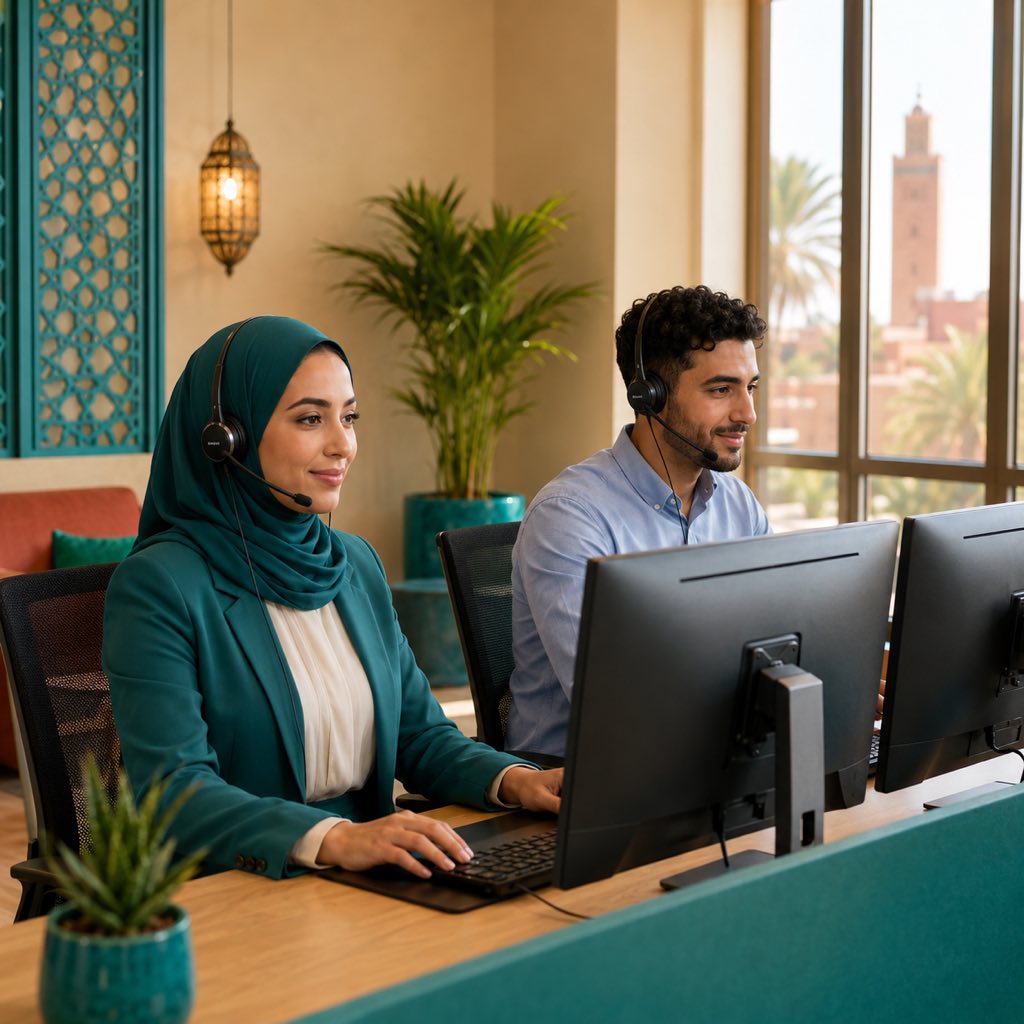
On November 23, 2025, in the Béni Thour neighborhood of Ouargla, Minister of Post and Telecommunications Sid Ali Zerrouki cut the ribbon on something Algeria’s customer-experience economy has never had: a single physical facility where the country’s three public telecommunications operators — Algérie Télécom, Algérie Poste, and Mobilis — receive citizen calls from one shared platform. According to Ecofin Agency’s coverage of the inauguration, the experimental phase will employ 480 people at launch, with a national target of 10,000 BPO jobs and $150 million in sector revenue by 2027.
What makes this more than a service center is the headline number sitting behind it. The authorities aim to grow Algeria’s telecommunications market to $1.2 billion by 2029, with a wider national ambition of 300,000 BPO jobs and a $30 billion contribution to GDP under the Digital Algeria 2030 strategy. The Ouargla site is the first call center of this kind in southern Algeria, signalling that the buildout will not concentrate in Algiers, Oran, and Constantine — it will decentralize into wilayas that have historically exported talent rather than employed it. For a Skills & Careers reader, this is the structural news: Algeria is creating a place to work in customer-experience and digital services in the south, indexed to a national revenue target that gives the program staying power across the political cycle.
The career relevance is sharpened by the language profile of the work. Local call center operations need French and Arabic at near-native level, with English as a growing differentiator — exactly the language stack that Algerian higher-education graduates already hold. According to MeaTechWatch’s report on the inauguration, Minister Zerrouki emphasized “human capital and internationally aligned professional service standards” as the spine of the rollout, with similar centers planned in other interior wilayas.
What the Pay Ladder Actually Looks Like in DZD
The career proposition only becomes credible if the wage curve is real. The data is encouraging. According to WorldSalaries’ 2025 Algerian call center compensation survey, the average annual salary for a Call Center Representative in Algeria is approximately 838,100 DZD, with a range from 445,100 DZD on the entry end to 1,273,300 DZD at the senior end. A representative holding a bachelor’s degree earns an average of 1,235,600 DZD per year — a ~47% premium over the role-wide average that directly rewards higher education. Employees with two to five years of experience earn 32% more than freshers, which is the kind of steepness that lets a young hire plan a five-year trajectory rather than view the role as a gap-filler.
These numbers matter for a second reason: they are paid in Algerian dinars, with social security and the standard CNAS coverage attached. For young graduates weighing whether to chase a remote freelance role priced in dollars or take a structured local position, the Ouargla model is one of the first BPO career paths where the local-currency offer is competitive against informal alternatives while building a verifiable employment history.
Advertisement
How the Numbers Map to the African BPO Curve
Algeria’s BPO sector is small but visible inside continental trendlines. Statista’s market data places Algeria’s BPO market revenue at approximately $375.10 million in 2025, inside an African BPO market projected to grow from $8.14 billion in 2025 to $10.24 billion by 2029 at a 5.91% CAGR. The Ouargla program’s $150M 2027 revenue target maps directly onto Algeria capturing more of that continental wallet, particularly the French-speaking work that has historically routed to other Francophone markets.
The operators chosen for Phase 1 also matter. Algérie Télécom, Algérie Poste, and Mobilis together generate the largest steady call volume in the country — billing queries, SIM activations, mobile money transactions on Edahabia and BaridiMob, fault reports on fixed lines. That base demand stabilizes the workforce: agents are not waiting for an inbound contract from Paris, they are servicing transactions that already exist on Algerian soil.
What Algerian Graduates Should Do About It
The Ouargla launch creates a new asset class in the career market — a structured BPO ladder. Graduates and young professionals who treat this as just another customer-service job will be outpaced by those who treat it as the entry point to a specialized profession with a vocabulary, certifications, and a wage curve.
1. Pick a Specialization Track Before Applying, Not After
Generic “call center agent” candidates compete on price. Candidates who walk in with a declared specialization — fintech support, telco fault diagnostics, public-service complaints handling, mobile money disputes — get triaged to higher-value queues and the corresponding pay band faster. Pick one of the three operators (Algérie Télécom for fixed/FTTH, Mobilis for mobile, Algérie Poste for postal and Edahabia/BaridiMob mobile money) and learn its product taxonomy before the interview. A candidate who can describe a BaridiMob KYC blockage by name will be assigned to the dispute queue, not the generic intake desk. The pay differential between intake and specialized queues is large enough to fund a sector-recognized certification in your first two years on the job.
2. Treat French and Arabic as a Stackable Asset, Then Layer English
The bilingual profile that already exists in Algerian universities is the entry ticket — it does not differentiate. Differentiation comes from adding written-quality English on top: ticketing tools, internal escalation notes, and any work that touches non-Francophone clients run in English. According to WorldSalaries’ Algerian salary data, a representative with a bachelor’s degree earns roughly 47% more than the role’s overall average. Layer professional English on top of that and the multiplier compounds. The next BPO centers Minister Zerrouki signaled for other interior wilayas will also need supervisors and trainers, not only agents — and the supervisor track filters by written English plus a year of clean call handling.
3. Use the First 12 Months to Build a Public Customer-Experience Portfolio
A call center role on a CV reads thin without proof of work. Inside the role, capture (with employer permission) the metrics that customer-experience managers value: average handle time, first-contact resolution rate, customer satisfaction (CSAT) score, escalation-rate trend, and one specific process improvement you proposed. Write these up monthly in a private log; at the 12-month mark, anonymize and publish two short LinkedIn case studies. The candidate who can show “I cut average handle time on Algérie Télécom FTTH activation queries by 18% over Q2 2026” is no longer a generic agent — they are a customer-experience analyst-in-waiting. The supervisor and team-lead promotion paths inside the 10,000-job 2027 expansion will be filled from this kind of evidence trail.
4. Position Yourself for the Wilaya Expansion Now, Not Later
The Ministry’s signal is that similar centers will open in additional interior wilayas — the Ouargla site is the template, not the endpoint. Graduates outside Algiers and Oran who pick up six to twelve months at Ouargla and then return to their home wilaya as a trainer, team lead, or quality assurance reviewer for a newly opened center will skip two career steps. The economics of the program reward early movers: each new wilaya center needs a seed team of experienced staff before it can scale the local hire wave. Make that seed-team list before the wilaya expansion is publicly announced; ask your current supervisor at month nine whether your name can be put forward for an internal-mobility roster.
The Bigger Picture
What is being built in Ouargla is not a call center in the old sense — a room of headsets answering complaints. It is the first node of a national customer-experience operating system that ties three of Algeria’s largest public operators to a single quality bar, an explicit headcount target (10,000 by 2027, 300,000 by 2029), and a revenue line ($150 million by 2027, $1.2 billion telecom market by 2029) that puts the work on the same dashboard as Sonatrach output or the export-diversification scoreboard. That framing matters because it gives the BPO career track political durability — when a job category has a number attached to it inside a national plan, it survives ministerial reshuffles.
The skills the program is hiring for now — bilingual customer interaction, ticketing-system fluency, structured escalation, basic data hygiene — are the exact upstream skills for the higher-value BPO work that follows: AI-assisted customer support, French-language content moderation, technical support tiers 2 and 3, mortgage and insurance back-office processing. Algeria has historically watched that work route to other Francophone markets. The Ouargla site is the first credible signal that the country is keeping the entry rung at home and giving its graduates a place to climb from. For a Skills & Careers reader the assignment is clear: get the first 12 months on record before the wave of additional wilaya centers opens up the supervisor tier — that is when the wage curve starts to bend.
Frequently Asked Questions
What is the Ouargla shared call center and who runs it?
The Ouargla shared call center is a joint facility, inaugurated on November 23, 2025 in the Béni Thour neighborhood, that pools customer-call operations for Algeria’s three public telecommunications operators — Algérie Télécom, Algérie Poste, and Mobilis. It is the first call center of this kind in southern Algeria and was opened by Minister of Post and Telecommunications Sid Ali Zerrouki as part of the Digital Algeria 2030 strategy.
How many jobs will the Algerian BPO push create, and by when?
Phase 1 in Ouargla employs around 480 people. The Ministry has set a national target of 10,000 BPO jobs and $150 million in sector revenue by 2027, scaling to 300,000 jobs and $1.2 billion in telecom market revenue by 2029. Similar centers are planned for additional interior wilayas, so the hiring will not be concentrated in Algiers.
What does a call center career in Algeria actually pay?
According to WorldSalaries’ 2025 Algerian compensation data, a Call Center Representative in Algeria earns an average of about 838,100 DZD per year, with a bachelor’s-degree holder averaging roughly 1,235,600 DZD per year. Salaries scale meaningfully with experience — employees with two to five years of tenure earn 32% more than freshers — and roles are paid in dinars with full CNAS social security coverage.
Sources & Further Reading
- Algeria develops call center hub to support $1.2bn telecom goal by 2029 — Ecofin Agency
- Algeria Inaugurates Joint Call Center in Ouargla to Boost Digital Services and Job Creation — MeaTechWatch
- Zerrouki inaugure à Ouargla le Centre d’appel commun des opérateurs du secteur — Radio Algérienne
- Average Call Center Representative Salary in Algeria — WorldSalaries
- Business Process Outsourcing — Algeria, Market Forecast — Statista
- Business Process Outsourcing in Algeria — 2Max Group
🔗 Related Intelligence

Mobile App Development in Algeria 2026: Career Paths, Skills, and Employer Demand
Algeria’s Banking and Telecom Sectors: New AI Roles and the Skills Required
DeepX Summit: How Algiers Became MENA’s First DeepTech Venture Factory

Data Engineering in Algeria: Career Paths and Local Demand in Banking, Telco, and Energy