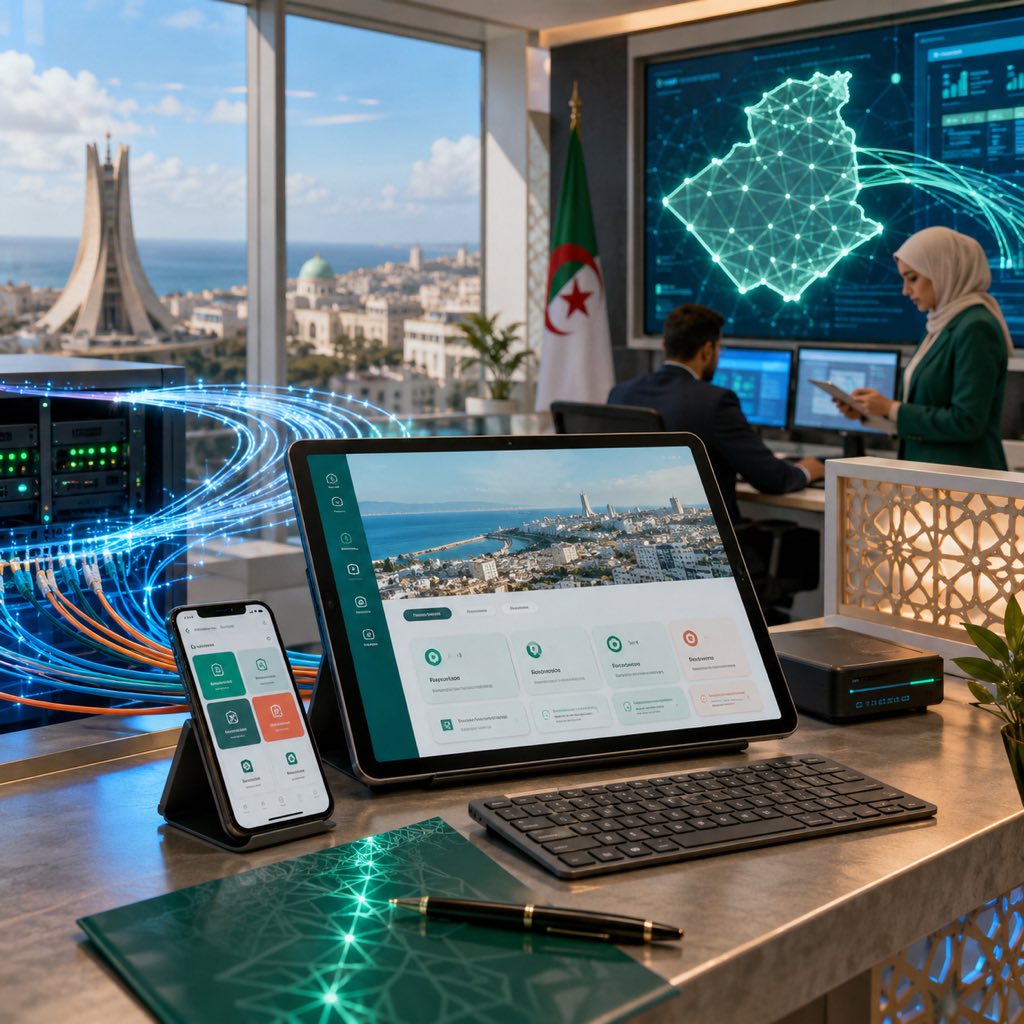
Algeria’s 50-in-5 Membership: What Was Committed and When
On April 2, 2026, Algeria formally joined the 50-in-5 global campaign, a UNDP-backed initiative targeting 50 countries building core Digital Public Infrastructure (DPI) within five years. The campaign, launched in November 2023 with 11 first-mover countries, focuses on three interconnected layers: digital identity, digital payments, and data exchange. Algeria joins approximately 30 nations — including India, Estonia, Brazil, Ghana, and Rwanda — within the initiative.
The commitment was framed by President Tebboune’s vision of strengthening digital sovereignty and expanding financial inclusion. High Commissioner for Digitization Meriem Benmouloud has outlined over 500 digital transformation projects for 2025-2026, with 75% focused on transparency and administrative simplification. The 50-in-5 membership slots directly into this work: it provides access to shared DPI implementation blueprints, technical assistance, and peer-learning from countries that have already deployed similar infrastructure at scale.
The strategic logic behind 50-in-5 is well-documented. India’s UPI became the world’s fifth-largest payment network by volume. Estonia’s X-Road enables over 99% of government services to be accessed digitally. Brazil’s Pix payment system onboarded over 150 million users within three years of launch. For Algeria, the question is which of these models is most directly applicable — and what the e-service delivery timeline looks like under the current 500-project roadmap.
Algeria’s DPI Building Blocks: What Already Exists
Algeria’s DPI components are more developed than commonly recognized. The delivery gap is not absence of infrastructure — it is the interoperability layer connecting these components into end-to-end e-services.
Digital Identity (E-Tawki3): The E-Tawki3 framework provides the legal basis for digital identity and electronic signatures in Algeria. In November 2025, the Council of Ministers approved a new draft law on digital trust services, updating the 2015 electronic signature legislation. The new law gives full legal value to digital documents including digital signatures, digital seals, timestamps, and web authentication. Critically, it links the digital ID system with Algeria’s existing biometric national ID card infrastructure — a connection that, once technically operational, enables strong remote authentication for all government services.
Digital Payments (Algeria Post + Bank of Algeria): Algeria Post operates the country’s largest payment network: over 29 million CCP accounts and 18 million Edahabia cards distributed through more than 4,000 post offices. The BaridiMob mobile application and Barid Pay QR system enable digital retail transactions. In early 2026, Algeria Post launched CCP Business Cashless for merchants, targeting one billion digital transactions by 2028. Bank of Algeria Instruction 06-2025 introduced tiered digital wallets with transaction limits ranging from approximately 100,000 DZD to 1,000,000 DZD (~$740 to ~$7,400), creating the PSP licensing framework that enables fintech innovation on top of this infrastructure.
Data Exchange: This is the weakest pillar and where the 50-in-5 technical assistance will be most valuable. Individual ministries have digitized their own services, but cross-ministerial data sharing — the backbone of any seamless e-service — remains limited. The planned Interactive National Portal and interoperability platform, both part of the 500-project strategy, are the vehicles for closing this gap.
Advertisement
What Algerian Public-Sector IT Teams Should Prioritize
The 50-in-5 commitment creates an accountability framework. Over the next five years, Algeria will report annually on DPI deployment progress. The following three priorities determine whether that progress translates into measurable e-service delivery rather than infrastructure that sits unused.
1. Deliver the Unified Authentication Layer as the Entry Point for All Services
The most impactful near-term deliverable is a working single sign-on (SSO) system linking the biometric national ID card and E-Tawki3 to all government digital portals. Currently, a citizen accessing two different government services must authenticate separately for each. A unified authentication layer — modeled on Estonia’s X-Road identity component — collapses this into a single credential. The November 2025 trust services law provides the legal foundation; the technical deployment of the bridge between the biometric card system and E-Tawki3 is the execution step. Public-sector IT teams should prioritize this integration in their 2026-2027 project roadmaps, as it is the prerequisite for every other e-service improvement.
2. Publish Open APIs for the Payment Infrastructure
Algeria Post’s payment network is extensive, but its value multiplies when third parties — PSPs, fintech startups, business software providers — can build on top of it programmatically. Bank of Algeria Instruction 06-2025 creates the PSP licensing framework; the next step is standardized, documented APIs that let licensed PSPs connect to Algeria Post’s infrastructure without bilateral agreements for every integration. The 50-in-5 campaign promotes interoperable, open-standard DPI specifically to prevent this kind of vendor lock-in. Publishing well-documented payment APIs accelerates merchant adoption of digital payments and builds the fintech ecosystem that the Fintech Strategy 2024-2030 targets.
3. Establish the National Data Exchange Backbone Before Services Proliferate
The 500-project digitization roadmap risks creating 500 siloed systems if data exchange architecture is not established before individual project delivery begins. Algeria and the UNDP signed a two-year cooperation agreement in November 2025 covering digital standards integration — the data exchange backbone design should be one of the first deliverables under this agreement, not a follow-on project. A well-designed exchange layer (similar to Estonia’s X-Road protocol) enables ministries to share verified data, eliminates the need for citizens to physically present the same document to multiple agencies, and makes composite e-services — like a business registration process that simultaneously checks identity, tax status, and location permits — technically feasible.
Algeria’s Regional Positioning Under 50-in-5
The 50-in-5 membership has a dimension beyond domestic deployment. Algeria’s participation positions the country within a peer-learning network that includes DPI leaders from multiple continents. This matters practically: common implementation challenges — identity fraud, API security, offline access in low-connectivity areas — have already been solved in other member countries, and the 50-in-5 framework is designed to transfer those solutions rather than require each country to solve them independently.
In August 2025, Algeria joined the Pan-African Payment and Settlement System (PAPSS) as the 18th member country. This adds a continental dimension to Algeria’s payment infrastructure: PAPSS enables cross-border settlements in African currencies, and its integration with Algeria Post’s CCP network creates the technical pathway for Algerian businesses to transact across the African Continental Free Trade Area (AfCFTA) without correspondent banking intermediaries.
The combination — 50-in-5 for domestic DPI deployment and PAPSS for continental payment integration — gives Algeria a coherent infrastructure strategy for both national e-government and regional digital trade. The delivery timeline is ambitious: five years for 50-in-5 commitments, a 2028 target for one billion digital transactions, and the 2030 digital economy GDP target of 20%. All three tracks run simultaneously, and progress on each depends on the interoperability layer that connects the existing building blocks.
Frequently Asked Questions
What is the 50-in-5 campaign and what did Algeria commit to?
The 50-in-5 campaign is a UNDP-backed initiative launched in November 2023, targeting 50 countries building core Digital Public Infrastructure within five years. Algeria joined on April 2, 2026, committing to design, implement, and scale digital identity, digital payment, and data-exchange systems. The campaign provides access to shared blueprints, technical assistance, and peer-learning from countries like Estonia, India, and Brazil that have already deployed DPI at scale.
What e-services does Algeria’s DPI commitment cover?
Algeria’s 50-in-5 commitment covers three infrastructure layers: digital identity (E-Tawki3 framework and the new trust services law linking it to biometric ID cards), digital payments (Algeria Post’s 29 million CCP accounts and 18 million Edahabia cards, plus Bank of Algeria Instruction 06-2025 PSP licences), and data exchange (the planned interoperability platform across ministries). These layers underpin services ranging from tax filing and business registration to social benefit distribution and cross-border payments via PAPSS.
How does Algeria’s PAPSS membership connect to the 50-in-5 programme?
Algeria joined the Pan-African Payment and Settlement System (PAPSS) in August 2025 as the 18th member country. PAPSS enables cross-border payment settlements in African currencies, and its integration with Algeria Post’s CCP infrastructure creates a payment pathway for Algerian businesses operating under the African Continental Free Trade Area (AfCFTA). Together with 50-in-5’s domestic DPI mandate, PAPSS membership gives Algeria both a national e-government infrastructure strategy and a continental digital trade integration strategy running in parallel.
Sources & Further Reading
- Algeria Joins Global 50in5 Campaign to Develop Digital Public Infrastructure — AL24 News
- Algeria Approves Draft Legislation on Digital ID and Trust Services — Biometric Update
- Digital Policy Alert: Algeria Digital Digest — Digital Policy Alert
- Algeria Digital Economy and Tech Strategy Overview — Techpression
- Algeria’s Fintech Ecosystem in 2026: Building Momentum — The Fintech Times
🔗 Related Intelligence
Algeria and the 50in5 Pledge: Building Digital Public Infrastructure for Sovereignty

Algeria’s Digital Transformation Playbook: From Experimentation to Economic Infrastructure

Algeria’s Digital Strategy 2030: Progress Review and the Opportunity Map for Builders

500 Digital Projects by 2026: Where Algeria Stands at the Mid-Year Mark