What OpenAI Actually Launched
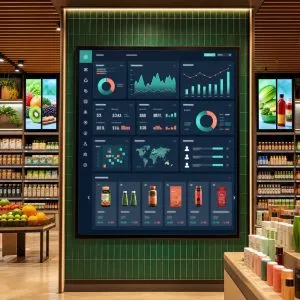
The ChatGPT Ads Manager launched in beta on May 5, 2026, enabling advertisers to create and manage campaigns directly within the ChatGPT interface through a self-serve platform. According to Search Engine Journal’s coverage of the launch, advertisers can buy ads on a cost-per-click basis and manage campaigns through a dedicated dashboard with budget control, pacing management, and conversion tracking.
This is not OpenAI’s first advertising move. The company had already run a managed advertising program with agency partners — Axios reported in March 2026 that OpenAI had banked over $100 million in revenue from its U.S. ad pilot after just six weeks. The self-serve Ads Manager removes the $50,000 minimum spend threshold that previously limited the program to large brands and agencies, opening the platform to the long tail of advertisers that made Google and Meta’s self-serve models the foundations of the digital advertising economy.
The agency and technology partnerships already in place are notable in their scale. OpenAI’s partner network includes Dentsu, Omnicom Group, Publicis Groupe, and WPP on the agency side, and Adobe, Criteo, Kargo, Pacvue, and StackAdapt on the technology side. These are not exploratory relationships — they are the same holding companies and ad-tech vendors that manage the global media buying infrastructure for thousands of major advertisers. Their presence signals that the largest advertising buyers on the planet are already treating ChatGPT as a mainstream ad channel.
The Business Model Shift
The Ads Manager launch marks a fundamental transformation in OpenAI’s business model. ChatGPT is no longer primarily a subscription product or a developer API — it is a media property with an advertising revenue line. This matters for the AI industry’s economics as a whole.
OpenAI’s current primary revenue comes from ChatGPT subscriptions ($20/month consumer, $25-30/month enterprise) and API fees for developers. The advertising target of $2.5 billion for 2026 and $100 billion by 2030 would, if achieved, dwarf both. For context: Reuters reporting indicates OpenAI’s total revenue for 2026 is expected in the $11-12 billion range. Advertising at $2.5 billion would represent roughly 20-22% of total revenue in year one — a meaningful diversification of a business currently dependent on subscription and API revenue.
AdExchanger’s analysis noted that performance data from early campaigns indicated conversion rates approaching double those of traditional search in certain retail categories and clickthrough rates roughly three times higher than comparable formats. These numbers, if they sustain at scale, would make ChatGPT advertising among the highest-performing digital ad formats ever measured — and would create a structural incentive for advertisers to shift budget from Google and Meta.
Advertisement
What Digital Marketing Leaders Should Do About It
1. Run a Controlled Test Before the Platform Gets Crowded
Early platforms reward first movers disproportionately. Google’s self-serve AdWords model, when it launched, gave early adopters years of cheap clicks before competition normalized CPCs upward. ChatGPT’s current CPC rates are not yet public, but the removal of the $50,000 minimum threshold suggests OpenAI is optimizing for volume over premium pricing in the self-serve rollout. Advertisers who test now — with modest $5,000–$10,000 pilots across two or three campaign types — will build learnings and optimization benchmarks that will be worth far more than the media cost when the platform matures and prices rise.
2. Think Intent Differently Than You Do for Search
ChatGPT’s advertising model operates in a context that is fundamentally different from keyword-triggered search advertising. A user asking ChatGPT “what’s the best accounting software for a 10-person company?” is not executing a search query — they are having a conversation with an AI they trust to give unbiased recommendations. OpenAI has explicitly stated that advertisements will not influence ChatGPT’s organic outputs, maintaining a separation between paid and editorial content. The implication for advertisers is that the ad placement must feel native to the conversational context — branded comparisons, use-case examples, and specific capability claims perform better than awareness-focused creative designed for display or social feeds. Audit your best Google Performance Max creative and consider what would need to change to fit a dialogue-driven environment.
3. Prepare a First-Party Data Integration Plan Now
The ChatGPT Ads Manager supports conversion tracking via a Conversions API and pixel-based tracking, plus aggregated reporting that preserves user privacy. As AdExchanger noted, benchmarks are still limited at this stage. Advertisers who integrate their CRM data with the Conversions API from day one will accumulate the first-party attribution data that will become the premium signal in a privacy-constrained advertising ecosystem. The general direction of digital advertising — away from third-party cookies toward publisher-mediated first-party signals — makes ChatGPT’s architecture a template for what future ad platforms will look like, not an exception.
4. Model the Budget Shift Scenario Before Your Competitors Do
If ChatGPT advertising consistently delivers two times the conversion rate of search at comparable CPCs, rational budget reallocation would direct 15-25% of search budgets toward the platform within 12-18 months. Google generated approximately $295 billion in ad revenue in 2025, primarily from search. A 15% shift in search advertiser spending would represent roughly $44 billion — a number that dwarfs OpenAI’s $2.5 billion 2026 target but puts the long-term $100 billion projection in a comprehensible context. CMOs who model this scenario now — identifying which of their current Google campaigns are most vulnerable to ChatGPT-context displacement — will be better positioned to manage the transition than those who treat it as a future problem.
The Antitrust Question
The launch of ChatGPT Ads Manager creates a competitive dynamic that will attract regulatory attention. Google’s advertising dominance is already the subject of antitrust proceedings in multiple jurisdictions; a credible AI-native competitor entering the ad market changes the regulatory calculus.
More immediately, the question of what “organic” means when the recommending system is also the advertising system requires transparency standards that do not yet exist. OpenAI has committed to separating paid and organic outputs — but AdExchanger’s analysis notes that the measurement infrastructure is still being built. Advertisers who are paying to appear in a conversational interface have legitimate questions about disclosure standards that will be answered gradually, through industry practice and regulatory guidance, over the next two to three years.
The deeper structural question is what happens to advertising at scale when the recommendation layer is AI rather than algorithmic ranking. Search advertising works because the user is signaling intent through their query. ChatGPT advertising works because the user is delegating research to an AI. The degree to which that delegation can be monetized without eroding the trust that makes the delegation valuable is the defining tension of the next advertising cycle.
Frequently Asked Questions
How does ChatGPT advertising work and how is it different from Google Ads?
ChatGPT advertising operates within the ChatGPT conversational interface, where users are having extended dialogues with an AI assistant. Unlike Google Ads, which trigger on keyword queries, ChatGPT ads appear in a context where users are asking for recommendations, comparisons, or information. The platform launched May 5, 2026 with cost-per-click and cost-per-impression buying models, a self-serve Ads Manager dashboard, and conversion tracking via Conversions API. OpenAI maintains that ads do not influence ChatGPT’s organic outputs, preserving a separation between paid and editorial responses.
What are OpenAI’s advertising revenue targets?
OpenAI is targeting $2.5 billion in advertising revenue for 2026 and $100 billion annually by 2030. Reuters reported that OpenAI’s managed ad pilot (before self-serve launch) generated over $100 million in U.S. revenue after just six weeks. For context, Google generated approximately $295 billion in ad revenue in 2025 and Meta approximately $196 billion. OpenAI is not yet competing at that scale, but the $100 billion 2030 target would represent roughly 20-25% of Google’s current annual ad revenue — a credible disruption scenario if conversion performance sustains.
Which agencies and ad-tech companies have partnered with OpenAI for advertising?
OpenAI’s launch partners include the four largest global advertising holding companies — Dentsu, Omnicom Group, Publicis Groupe, and WPP — plus technology partners Adobe, Criteo, Kargo, Pacvue, and StackAdapt. These relationships were established before the self-serve launch and indicate that global enterprise advertisers were already running managed campaigns through ChatGPT. The holding company partnerships give OpenAI immediate access to the media buying relationships that control the majority of global advertising spend.
Sources & Further Reading
- OpenAI Launches Self-Serve Ads Manager for ChatGPT — Search Engine Journal
- OpenAI Launches Self-Serve Ad Platform — Axios
- Will OpenAI’s New Measurement Tools Prove Its Worth as an Ad Channel? — AdExchanger
- ChatGPT Ads Expand with Self-Serve Buying — Search Engine Land
- New Ways to Buy ChatGPT Ads — OpenAI
- ChatGPT Advertising: The Complete 2026 Guide — 2Point Agency
🔗 Related Intelligence

ChatGPT Ads Hit $100M in 6 Weeks: OpenAI’s $100B Advertising Bet

GPT-5.5 and OpenAI’s Super-App Bet: What the Unified AI Platform Means for Enterprise

Workspace Agents in ChatGPT: Shared Context Is Becoming the New Enterprise Advantage

Agentic Commerce Arrives: Shopify, ChatGPT, and Copilot Checkout Rewire How the Web Sells