Where Algeria’s Agrifood Chain Breaks
Algeria is one of Africa’s largest agricultural producers. The country exports dates, olive oil, figs, and wine to European and Gulf markets, while feeding a domestic population of 47.4 million through an informal distribution network built on proximity, trust, and daily cash transactions. But between the farm gate and the supermarket shelf, an estimated 30% of perishable goods disappear — not to pests or drought, but to a cold chain that simply does not exist in digital form.
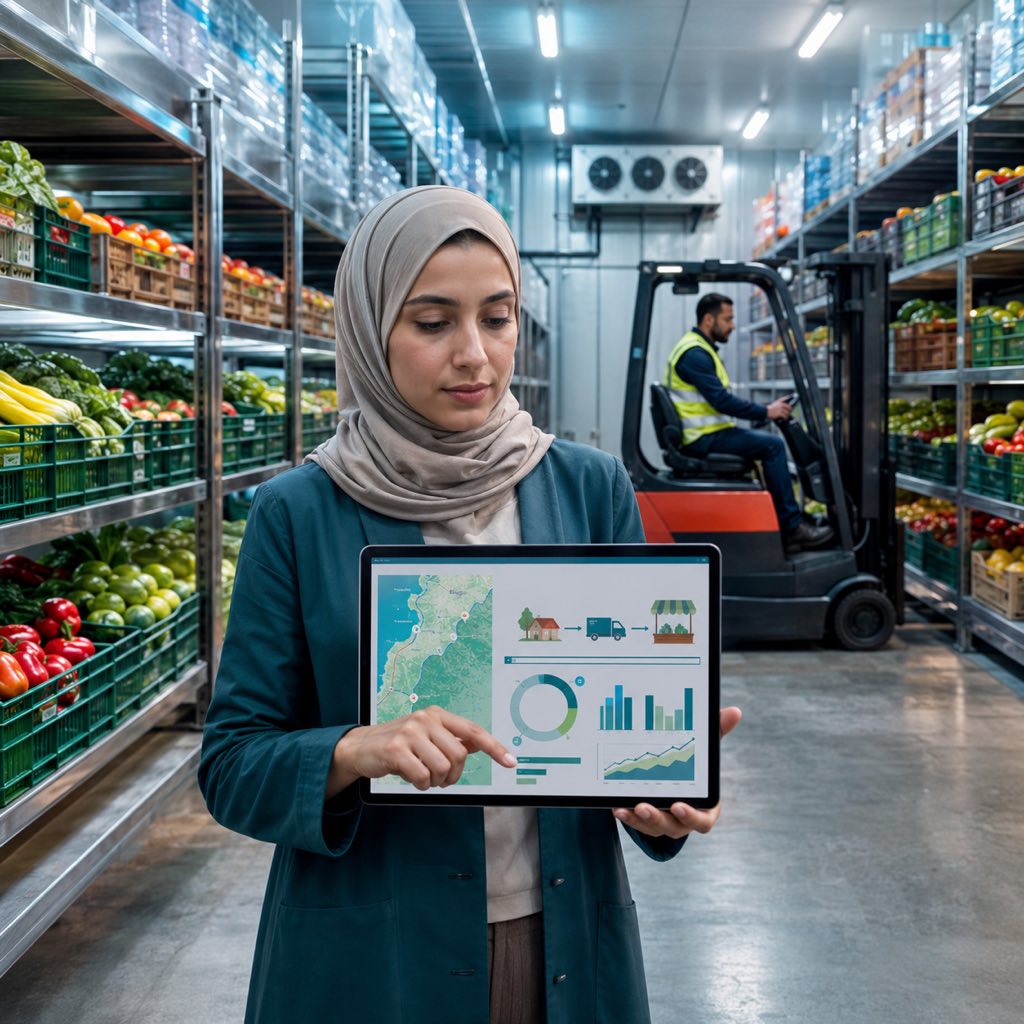
The infrastructure gap is visible at every node: refrigerated trucks operate in Algeria’s coastal cities but are booked through phone calls and personal networks. Temperature-monitoring along a multi-leg journey — from a date farm in Biskra to a cold store in Algiers to an export container at Bejaia port — has no digital continuity. A Biskra co-operative announced its “Biskra Green” initiative in early 2026 that successfully reduced post-harvest losses by 95% using a redesigned physical logistics plan, securing a nationwide distribution contract with three major hypermarket chains within its first year. That single initiative illustrates both the size of the problem and how swiftly it can be solved when supply chain discipline is applied.
Meanwhile, Africa’s startup ecosystem raised $887 million in the first four months of 2026, with logistics and transport emerging as one of the fastest-growing funded sectors on the continent — driven by the realization that consumer-app growth without underlying supply chain infrastructure is unsustainable. Algeria’s startup ecosystem has not yet produced a cold chain digital platform. That is the opportunity.
The Infrastructure That Exists — and What It Cannot Do
The 10 Algerian startups to watch in 2026 paint a clear picture of where capital and talent have concentrated: super-apps (Yassir at $193M cumulative, Temtem One at $5.7M), fintech (Gifty), IoT for precision agriculture (Qareeb), and travel-tech (Volz, the first Algerian Startup Fund exit at $5M Series A). What this list reveals by omission is equally telling: no dedicated cold chain operator, no B2B marketplace for perishables, no temperature-compliance SaaS for export logistics.
Yassir’s delivery arm runs last-mile food delivery at a 15% commission model — a consumer aggregation play, not a B2B infrastructure layer. The Felhanout ecosystem (Felhanout + NResto + Ndeliv) is building a no-commission restaurant SaaS with a logistics layer still in beta, targeting 90 partner restaurants in Algiers as of April 2026. These are demand-aggregation models, not supply-chain platforms that move perishables across 400 kilometers from Médéa to Oran with temperature logs intact.
The distinction matters because cold chain infrastructure solves a different problem: it enables B2B contracts, not consumer orders. A hypermarket chain buying 20 tons of cherry tomatoes from a Mitidja producer needs digital documentation, temperature compliance certificates for EU import, and a guaranteed 48-hour delivery window. None of that exists as a Algerian startup product today.
Advertisement
What Founders Should Build in This Space
1. Start with the export corridor, not domestic retail
The highest-margin, most verifiable opportunity is not the Algiers supermarket shelf — it is the Bejaia-to-Marseille export corridor. European importers buying Algerian agri-products must comply with EU cold chain regulations (EC Regulation 853/2004 and related hygiene standards). A startup that provides a digital temperature log from farm to port, exportable as a PDF certificate, charges a B2B subscription rather than fighting for restaurant commissions. The addressable market is every Algerian agricultural exporter — more than 8,000 registered exporters, the vast majority of which track compliance on paper.
Morocco’s agritech exporters already use digital traceability tools for EU compliance; Algerian exporters do not. The first mover that deploys GPS-enabled temperature loggers with a mobile dashboard and integrates with the Algerian phytosanitary authority (ONILEV) for export dossiers owns the compliance layer. This creates a licensing moat that commodity cold store operators cannot replicate.
2. Build the B2B marketplace around verified supply, not demand
The B2B marketplace failure mode in Africa has been building a digital storefront without solving the supply reliability problem. As TechCabal reported, African startup funding now concentrates in larger rounds within the $10M–$49M bracket — investors are moving toward B2B infrastructure that solves specific, verifiable problems, not consumer aggregation.
For an Algerian agrifood B2B marketplace, “verified supply” means: grower certification, available stock by SKU and grade, harvest date, and a logistics window. The marketplace charges a 3-5% transaction commission from the buyer (never the seller, which eliminates the early-adoption friction that killed other African marketplaces). A co-operative in Adrar with 50 tons of Deglet Nour dates ready for the Gulf market and a buyer in Dubai should transact without a phone call. The technical complexity is low; the operational complexity — visiting farms, verifying stock, certifying grades — is high. That is the moat.
3. Integrate with the Algerian Startup Fund and ANPT for pilot customers
The Algeria Startup Challenge has a dedicated Foodtech category with institutional backing. The Algerian Startup Fund (ASF) has already proven it backs infrastructure plays: Volz, a travel-tech logistics startup, was its first exit. Cold chain and agrifood B2B are infrastructure categories. A labeled startup under the ASF program gains access to the ANPT technology parks, where co-location with government partners accelerates the regulatory navigation that cold chain compliance requires. Founders should not build cold chain in a vacuum — they should plug into the institutional layer first.
The Structural Lesson
Algeria’s foodtech gap is not a technology problem. Refrigerated trucks exist. GPS trackers cost under $50. Mobile broadband penetration reaches 76.9% of the population. The gap is a coordination problem: no platform connects the Biskra date farmer, the temperature-compliant truck, the Bejaia port cold room, and the European importer’s compliance team into a single digital workflow.
That coordination layer is the business. It commands a subscription or transaction fee because it solves a regulatory obligation — EU import compliance, ONILEV export certification — not just a convenience. The startups that understand this distinction will be building infrastructure, not apps. Infrastructure attracts capital differently: not seed rounds chasing monthly active users, but Series A rounds chasing verified B2B transaction volume.
Africa’s startup funding wave is already moving in this direction. Algeria’s cold chain founders who launch in 2026 will be entering the market as investor appetite for B2B logistics infrastructure is accelerating, not decelerating. The timing is correct. The infrastructure gap is real. What is missing is the builder.
The cold chain opportunity also has a compounding quality that consumer apps lack: each export customer who passes EU compliance documentation through a digital platform creates a data record of Algerian agricultural supply — volumes, grades, seasonal windows, route reliability. That dataset, accumulated across hundreds of exporters over two to three seasons, becomes a proprietary market intelligence asset that is itself fundable. A startup that builds the compliance layer first earns the data layer by default.
Frequently Asked Questions
What is the cold chain gap in Algeria’s food sector?
Algeria’s cold chain infrastructure consists of physical refrigerated trucks and cold stores concentrated around coastal cities, but no digital platform connects temperature monitoring, compliance documentation, and B2B logistics across the full export journey. Estimates suggest up to 30% of perishable produce is lost to spoilage, representing a major economic loss and a barrier to EU export compliance.
How can Algerian startups access funding to build in this space?
The Algerian Startup Fund (ASF) has demonstrated appetite for logistics and infrastructure plays — its first exit was Volz, a travel-tech company. Labeled startups under the startup.dz program gain access to ASF funding, ANPT technology parks, and the Algeria Startup Challenge ecosystem. Internationally, competitions like TechCrunch Battlefield 200 and GITEX Africa are open to Algerian founders with validated B2B models.
Why is B2B infrastructure more fundable than consumer food delivery in Algeria in 2026?
Africa-wide startup funding data from 2026 shows investors concentrating capital in B2B infrastructure deals ($10M–$49M rounds) rather than consumer aggregation apps. B2B cold chain and agrifood marketplaces command subscription or transaction revenue tied to regulatory compliance — a more predictable revenue model than consumer delivery, which competes on commission rates and faces market saturation in major cities.
Sources & Further Reading
- Africa Startup Funding H1 2026: $887M Despite Deal Slump — TechCabal
- 10 Algerian Startups to Watch in 2026 — Mag Startup
- Algeria Startup Challenge Foodtech Category — Algeria Startup Challenge
- Algeria’s Public Startup Fund First Exit: Volz Raises $5M — Launch Base Africa
- Africa Cold Chain Logistics Market Growth — Mordor Intelligence
🔗 Related Intelligence
Felhanout’s Restaurant OS: How One Algerian Startup Is Building a B2B SaaS Layer for Food
From Sahara to Shelf: Startups Building Algeria’s Agri-Export Tech Stack

Algeria Goes Global: How 50+ Startups Are Cracking 19 International Markets

Algeria’s B2B SaaS Wave: Enterprise Software Startups Challenge Foreign Solutions