A Gulf Anchor for Algerian Sovereign Cloud
Algeria’s digital infrastructure push gained a significant external partner on May 5, 2026, when the Algerian and Omani governments formalized a bilateral agreement to cooperate on data center development. The deal, reported by Data Center Dynamics and confirmed by the SAMENA Telecommunications Council, establishes a framework for joint infrastructure investment spanning both countries — a first for Algeria in terms of formalized Gulf data center partnerships.
The timing is significant. Algeria has spent the past three years building the regulatory and physical scaffolding for a sovereign cloud ecosystem: the ARPCE data center licensing framework (Décision No. 48), the Oran AI data center commissioned in late 2025 under the Ministry of Digitization, and a series of public-private colocation projects from operators including AYRADE, ICOSNET, and Algérie Télécom. The Oman agreement is the first to externalize that effort — creating a pathway for Algerian infrastructure to serve data flows beyond national borders.
Oman’s digital transformation authority, the Digital Oman initiative launched under Vision 2040, has positioned the country as a Gulf hub for secure cloud infrastructure, leveraging its geographic position between the Arab world, Africa, and South Asia. For Algeria, a partnership with Oman offers something hyperscaler deals do not: a bilateral arrangement that does not require routing workloads through US- or EU-based cloud providers, keeping sovereign data flows within Arabic-speaking, non-Western jurisdictions.
What the Oran AI Data Center Signals About Algeria’s Ambitions
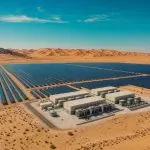
Algeria’s domestic data center trajectory provides context for why the Oman deal matters beyond a diplomatic headline. The Oran facility — positioned by the New Lines Institute analysis as Algeria’s bid to become North Africa’s AI infrastructure leader — operates at modest capacity compared to hyperscaler standards, but represents the first purpose-built AI-ready data center on Algerian soil.
The gap between Algeria’s current capacity (6 data centers on the Data Center Map as of early 2026) and the continent’s market trajectory is substantial. The Africa and Middle East colocation market is projected to reach $11.1 billion by 2030, according to analysis cited across industry sources. South Africa and Egypt currently dominate African colocation capacity; Algeria’s installed base is a fraction of both.
The Oman partnership does not close this gap directly — it is a framework agreement, not a construction contract. But it establishes something strategically more durable: a Gulf counterpart willing to co-develop and potentially co-finance facilities in both countries, reducing Algeria’s dependency on either hyperscalers or single-source domestic investment.
Also relevant: Djezzy’s May 2026 announcement of an AI cloud platform built in partnership with Algeria Venture and Taubyte, as reported by Tech Africa News. That deal layered a private-sector AI workload layer on top of Algeria’s public cloud ambitions — and a Gulf-linked data center network would give both Djezzy’s platform and the Oran facility an audience beyond 47 million Algerian users.
The financial context behind the Oman deal is also instructive. Oman’s state-backed data center operator — OmanTel’s infrastructure arm — has actively co-developed facilities with Arab government partners under Vision 2040. The SAMENA Telecommunications Council’s confirmation of the Algeria-Oman agreement places it within a pattern of Gulf operators seeking to diversify data center networks beyond the UAE and Saudi Arabia, treating North Africa as a strategic extension of Gulf-anchored regional cloud infrastructure. For Algeria, that demand-side dynamic means the Oman partnership is less about charity and more about mutual market access — a structurally durable foundation for long-term co-investment.
Advertisement
What Algerian CTOs and Operators Should Do About It
1. Map Your Data Residency Requirements Against the New Framework
The Oman agreement creates, for the first time, a bilateral channel through which Algerian enterprises can route workloads to a Gulf jurisdiction without using US or EU hyperscaler infrastructure. Before this agreement matures into operational colocation capacity, Algerian enterprise IT leaders should audit which of their workloads are subject to Law 18-07 (the data protection law requiring localization of sensitive personal data) and which could legitimately operate in a Gulf partner jurisdiction. The distinction matters: financial and health data almost certainly stays in-country; general compute and AI inference workloads may have more flexibility. Getting this map built now — before contracts are signed — avoids expensive re-architecture later.
2. Position for Colocation Procurement Before Hyperscalers Arrive
Algeria’s colocation market is in a pre-competitive window. With only 6 data centers in the country and a bilateral Gulf deal adding potential capacity, the operators moving now — whether to lease colocation space or negotiate anchor-tenant agreements — will secure the best terms. Algerian enterprises running on-premise infrastructure should assess whether their hardware refresh cycles, which typically fall on 3-5 year intervals, align with the 2026-2028 window when new colocation capacity from the Oman partnership is likely to come online. Hyperscalers will eventually enter the North African market; early commitments to sovereign colocation partners protect negotiating leverage.
3. Use the Oman Model as a Template for Other Gulf Partnerships
The Algeria-Oman agreement’s structure — a bilateral government-to-government framework that enables private-sector joint ventures — is replicable. UAE, Qatar, and Saudi Arabia all have active digital infrastructure investment programs with Africa exposure. Algeria’s Ministry of Digitization should document the Oman deal’s legal structure (particularly how data sovereignty is handled cross-border) and use it as a reference template for future outreach. Algerian tech operators and investors should track the framework’s progress and position early — the first movers in cross-border Gulf-Algerian data center JVs will capture a structurally advantaged position in North Africa’s emerging sovereign cloud market.
What Comes Next
The Algeria-Oman pact is best understood as a precursor agreement — the kind that tends to produce operational results 18-36 months after signature, once procurement frameworks are established and financing is arranged. For Algeria, the near-term test is whether the Ministry of Digitization can translate diplomatic agreement into a technical specification: what capacity, what connectivity (the Medusa and 2Africa subsea cables both touch Algeria’s coast), and what data sovereignty terms.
The broader trajectory is clear: Algeria is building a sovereign cloud strategy that is structurally distinct from hyperscaler dependency and from isolation. The Oman deal is a data point, not a destination — but it is the kind of data point that reshapes what is possible.
Frequently Asked Questions
What exactly did Algeria and Oman agree to on May 5, 2026?
The two governments signed a bilateral cooperation agreement on data center development, establishing a framework for joint infrastructure investment in both countries. The agreement is a government-to-government framework — not yet a construction contract — that enables private-sector joint ventures and sets a template for cross-border sovereign cloud partnerships between Algeria and Gulf states.
How does this differ from Algeria simply using AWS or Azure infrastructure?
A bilateral data center agreement means Algerian workloads can route through Gulf-jurisdiction infrastructure without passing through US- or EU-controlled hyperscaler networks. This matters for Law 18-07 compliance (Algeria’s data localization requirement) and for public institutions that cannot host sensitive data on foreign hyperscaler infrastructure. The Oman deal preserves Algerian data sovereignty in a way that AWS or Azure Middle East regions cannot, since those remain under US legal jurisdiction.
When will this agreement produce actual data center capacity?
Bilateral framework agreements of this type typically require 18-36 months to produce operational colocation capacity — procurement frameworks must be defined, financing arranged, and construction or retrofitting completed. Algerian enterprises should treat 2027-2028 as the earliest window for operational capacity from this partnership, and use the current period to map requirements and negotiate positions.
—
Sources & Further Reading
- Algeria and Oman Govts Partner to Establish Data Centers — Data Center Dynamics
- Algeria-Oman Data Center Partnership — SAMENA Telecommunications Council
- Why Algeria Is Positioned to Become North Africa’s AI Leader — New Lines Institute
- Djezzy Unveils AI Cloud Platform with Algeria Venture and Taubyte — Tech Africa News
- Algeria Data Center Map — Data Center Map
🔗 Related Intelligence

The Algeria–Oman Data Center Template: A Replicable Model for Gulf-Africa Infrastructure Deals

Algeria as Africa’s Digital Transit Hub: The Cloud Corridor Strategy for 2026–2030
Algeria’s Infrastructure Window: Attracting Gulf AI Data Center Investment in 2026
Algeria’s Sovereign Cloud: How the Mohammedia-Blida Data Centers Reshape Digital Control