What Was Actually Signed in Algiers
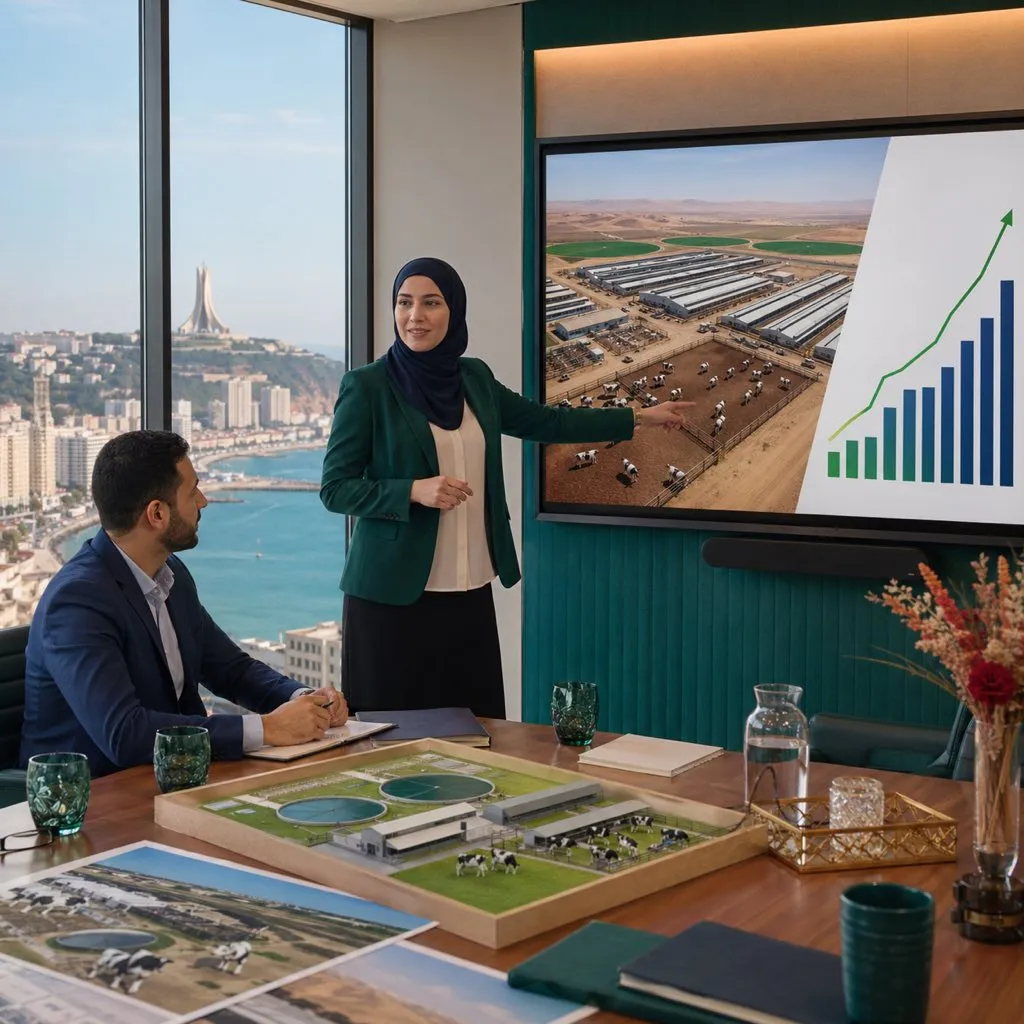
On Thursday, April 24, 2026, Qatar’s Baladna and Algeria’s state-owned national investment fund signed phase-two contracts of the joint dairy mega-project at a ceremony in Algiers. The package, valued at more than $635 million, formally launches the construction phase of what is now planned as the world’s largest integrated dairy farm by both herd size and contiguous land footprint. Phase two pays for the formation of the herd, the start of civil works, the completion of an on-site concrete plant, accommodation facilities for staff, and the launch of the dairy cow import programme. The full project is budgeted at approximately $3.5 billion across four stages, with full commissioning targeted within nine years of the 2025 launch.
The site sits in Adrar province, in southwestern Algeria, on a contiguous land bank exceeding one million square metres. Once operational, the farm is designed to host 270,000 head of cattle and produce 1.7 billion litres of milk annually, alongside powdered milk, animal fodder, and meat processing. Ownership is split 51-49: Baladna controls 51 percent of the joint venture and Algeria’s national investment fund holds the remaining 49 percent. That structure puts operating control in Doha-headquartered Baladna’s hands while keeping nearly half the equity — and most of the long-term political legitimacy — on the Algerian side.
Baladna will also operate a dedicated air-freight programme to move 30,000 head of dairy cattle from nine U.S. states into Adrar over ten months. That is not a marginal logistics line item. Live-cattle airlifts at this scale require dedicated freighter aircraft and are exceptionally rare in global agri-trade — the closest precedent is Baladna’s own emergency airlift into Qatar during the 2017 Gulf blockade.
Why a $3.5 Billion Mega-Farm in Adrar
Algeria imports roughly half its dairy needs, with the powdered-milk import bill consistently among the country’s largest food-import lines. The project’s headline policy logic is import substitution: 1.7 billion litres of annual production would cover a meaningful share of domestic dairy consumption and reduce hard-currency outflows that have been a chronic strain on Algeria’s balance of payments since the 2014 oil-price shock. For a Qatari operator, the project doubles as an export platform — Baladna’s existing strategy in Qatar relies on dairy exports across the Gulf, and Adrar’s location offers logistical access to West African and Sahel markets.
Adrar itself was chosen for three reasons: contiguous large-scale agricultural land at scale not available in northern Algeria, deep aquifer access, and the federal government’s strategic decision to anchor mega-projects in the south to spread economic activity beyond the coastal belt. The province has hosted Algeria’s solar pilot programmes for the same reasons. The downside is climate — Adrar averages summer highs above 45°C — which forces capital-heavy cooling, water management, and shading infrastructure into the project budget. The U.S. cattle airlift is partly a function of this: heat-tolerant Holstein and Brown Swiss genetic lines available in U.S. registries are scarce in regional alternatives.
The most striking feature is not the scale but the timeline. Phase two is targeting first milk within an aggressive window relative to the project’s nine-year full-commissioning horizon, which means the herd formation, civil works, and concrete plant must all advance in parallel. That kind of compression is unusual for agritech infrastructure and signals how much political weight the deal carries on both the Algerian and Qatari sides.
The Stress Test for Algeria’s Agritech Ecosystem
A project of this scale does not exist in isolation. It will create demand for veterinary services, cold-chain logistics, feed production, irrigation engineering, dairy processing equipment, and downstream packaging — every one of which is a potential opening for Algerian agritech startups and SMEs. The question is whether Algeria’s startup ecosystem can absorb that demand or whether it will be served entirely by Qatari and international suppliers. The answer matters because mega-projects with weak local-supplier programmes have historically left thin domestic legacies once construction phases end.
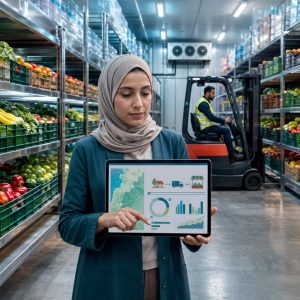
Adrar is approximately 1,500 kilometres from Algiers by road, with no rail connection. Cold-chain milk distribution from Adrar to the northern population centres requires either dedicated refrigerated trucking corridors or the build-out of regional processing plants closer to consumption. Either path is a multi-billion-dinar opportunity for Algerian logistics and processing operators. Similarly, the 270,000-head herd will require ongoing veterinary, feed, and reproductive services at industrial scale — services that today are largely import-dependent in Algeria. This is the layer where Algerian agri-startups stand the most realistic chance of capturing meaningful project revenue.
The ANADE and ASF programmes that finance Algerian micro-enterprises are not designed for the scale this project demands, but they are designed for the kinds of firms that could supply it. The bridge between mega-project demand and ANADE-financed supply is precisely the gap that the High Commissioner for Digitization and the broader startup ecosystem will be measured against over the next two years.
Advertisement
What Could Slow It Down
Algeria’s track record with mega-projects of foreign-direct-investment scale is mixed. The Bellara steel complex with Qatar’s Aqs and Algerian state partners took roughly twelve years from announcement to operational commissioning. The Saudi-Algerian phosphate project at Bled El Hadba has slipped repeatedly. Land-tenure disputes, customs delays on imported equipment, and the practical logistics of moving heavy industrial cargo through Algerian ports have historically extended timelines well beyond initial announcements. None of these risks are unique to Baladna, but all of them apply.
A second category of risk is climate and water. Adrar’s water table is fed from non-renewable Saharan aquifers, and a 270,000-head dairy operation is extremely water-intensive — roughly 100-150 litres per cow per day for drinking alone, before feed irrigation. The published technical plan has not specified renewable water sourcing or solar-driven desalination, both of which would meaningfully change the project’s carbon and water footprint. International ESG-sensitive lenders are likely to scrutinise this as the project moves into operational phases.
A third risk is geopolitical. The deal sits inside a broader Qatar-Algeria diplomatic and investment alignment that has accelerated since 2024. A reset in either capital — for instance, a change in Qatari foreign-investment posture or an Algerian electoral cycle that re-prioritises domestic operators — could change the operating environment. None of these risks invalidate the deal, but they shape the realistic probability distribution around the published timeline.
What This Means for Algerian Agritech Founders
1. Build for the supplier-tier opportunity, not the headline contract
Algerian agritech founders who try to compete with Baladna on operating the dairy farm are misreading the opportunity. The actual opportunity is in the supplier tiers: cold-chain logistics from Adrar to the north, veterinary diagnostics for an industrial herd, feed processing using locally produced barley and alfalfa, on-farm IoT sensors for water-use monitoring, and downstream packaging and B2B distribution. Each of these is a well-defined SaaS, hardware, or services business with a defined anchor customer. Founders should map Baladna’s likely procurement timeline — civil works (now), herd formation (next 18 months), milk operations (2027-2028) — and build to slot into the corresponding supplier tier with a clear procurement-grade offer.
2. Pre-position with ANADE and ASF financing aligned to Baladna milestones
The Algerian financing instruments that exist — ANADE’s 75K triple-financing, ASF startup label, and bank loans backed by FGAR guarantees — were not designed to win Baladna-tier contracts directly. They were designed to capitalise smaller firms that can become Baladna suppliers. Founders should work backwards from Baladna’s procurement calendar and apply for the financing instrument that lands cash and inventory in time for the project window. ANADE’s 18-month disbursement curve, in particular, is well-suited to founders preparing for the 2027 milk-operations phase. Filing in late 2026 with a Baladna-aligned business plan is significantly more compelling to ANADE evaluators than a generic agritech pitch.
3. Build local-content arguments into every pitch
Algerian regulators and the Council of Participation in the State (CPE) are paying close attention to the local-content ratio of Baladna and similar mega-deals. Founders pitching to Baladna or its tier-one contractors should explicitly quantify the Algerian-content share of their offering — staff hired in Algeria, supplies sourced in Algeria, IP and ownership domiciled in Algeria. This is not just a moral or political argument; it is increasingly the procedural basis on which contracts are awarded under the 2024-2026 industrial localisation push. A pitch that bundles competitive technical capability with a credible 60-70 percent Algerian-content commitment is materially more competitive than a pure technical pitch at parity price.
Where This Fits in Algeria’s 2026 Ecosystem
The Baladna project is the largest foreign-direct agritech investment in Algerian history, but it is not the only mega-deal of the cycle. The Qatari investment alongside Algerian state partners across phosphates, steel, and now dairy reflects a deliberate post-2024 strategy of anchoring industrial capital in the south of the country. The startup ecosystem that has grown up around ANADE, ASF, and the Algerian Startup Fund operates at a different scale entirely, but the connective tissue between them is exactly where the next two years of policy and capital flows will be decided.
For Algerian agritech specifically, the critical question is whether the ecosystem produces a generation of supplier-tier firms with the capital, certifications, and operational discipline to win Baladna’s purchase orders against international competitors. If it does, the project’s domestic legacy will outlast the construction window. If it does not, Adrar will become a high-output but largely import-dependent operation that produces dairy without producing a meaningful Algerian agritech industry around it. The choice is not Baladna’s to make — it is the ecosystem’s, and the next 18 months of supplier-tier preparation will determine the answer.
Frequently Asked Questions
What exactly does the $635 million phase-two contract cover?
Phase two pays for herd formation, civil works, completion of an on-site concrete plant, accommodation facilities for staff, and the launch of the dairy cow import programme that will airlift 30,000 head of cattle from nine U.S. states into Adrar over ten months. It is the construction-phase tranche of the overall $3.5 billion four-stage project, signed April 24, 2026.
Why airlift cattle from the United States rather than buying regionally?
Adrar’s climate and the project’s industrial dairy specifications require heat-tolerant Holstein and Brown Swiss genetic lines that are scarce in regional alternatives. The 30,000-head airlift across nine U.S. states is engineered around U.S. dairy registries that maintain those genetic lines at industrial scale. Live-cattle airlifts at this scale are exceptionally rare and require dedicated freighter aircraft.
Can Algerian startups realistically win contracts on a project this size?
Not at the operating-tier level — Baladna will run the farm. The realistic opportunity is in supplier tiers: cold-chain logistics, veterinary services, feed processing, IoT monitoring, and downstream B2B distribution. Algerian founders who pre-position with ANADE or ASF financing aligned to Baladna’s 2026-2027 procurement calendar, and who can credibly commit to 60-70 percent Algerian content, are the most likely domestic winners.
Sources & Further Reading
- Qatar and Algeria launch phase two of $3.5bn farm project — AGBI
- Baladna Algeria launches dairy cattle airlift from the United States — Gulf Times
- Algeria, Qatar and Germany seal US$3.5b deal for world’s largest dairy project — AgriTech MEA
- Baladna Algeria launches dairy cattle airlift — The Peninsula Qatar